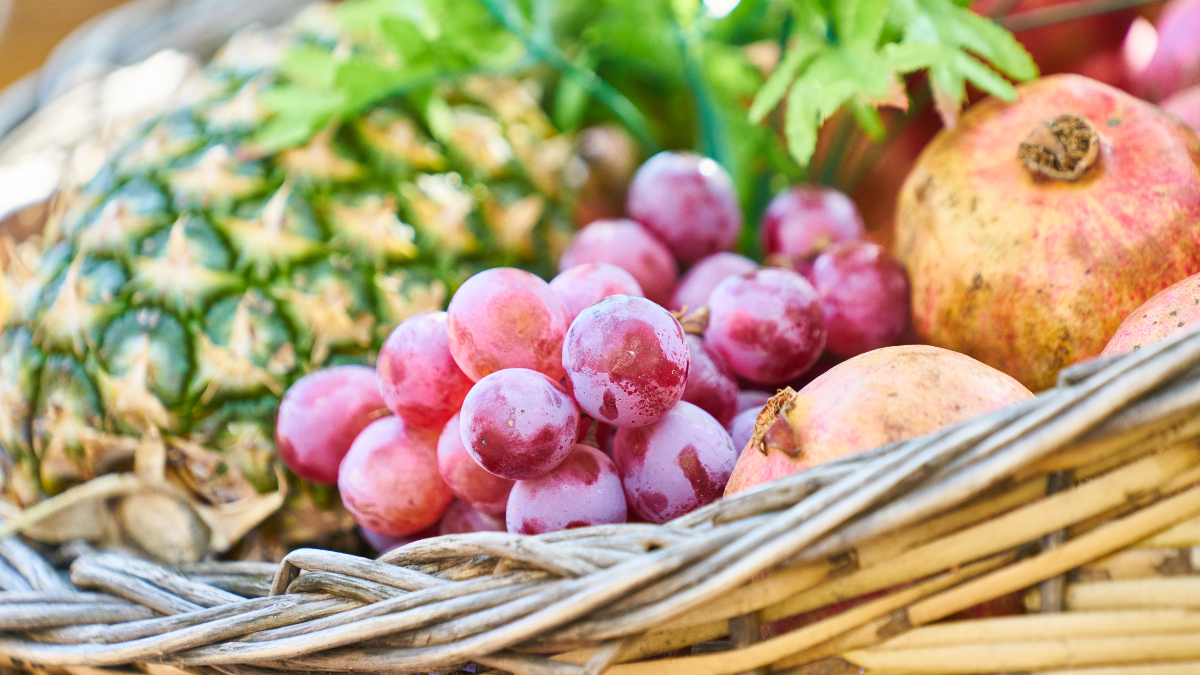
Vitamin B12 Fruits: Do Any Fruits Contain B12?
Fruit belongs on your plate. But for vitamin B12, look to other foods, and remember that absorption matters too.
Table of Contents
Looking for vitamin B12 fruits? Ordinary fresh fruits are not reliable natural sources of vitamin B12. Bananas, apples, oranges, guava, berries and pomegranate can be part of a varied diet, but eating more of them will not meet your B12 needs. For vegetarians, milk, curd and other dairy foods can contribute B12; eggs are another option for those who eat them. Foods specifically fortified with B12 can also contribute. A vegan diet needs a dependable B12 source through fortified foods or suitable supplementation.
ICMR-NIN’s 2020 recommended dietary allowance for adult men and women is 2.2 micrograms of B12 a day. This reference is not a supplement dose or a treatment plan. Nutritional needs differ during pregnancy, breastfeeding and childhood.
When buying fortified foods, check which nutrients were added. India’s +F logo identifies fortification, but does not always mean B12: standard milk fortification adds vitamins A and D. Look for vitamin B12 on the label and check the amount in the serving you actually eat.
Digestion matters too. B12 from food must be released and absorbed in the small intestine. Some digestive conditions, stomach or bowel surgery, and prolonged use of certain medicines can affect B12 status. Do not stop prescribed medicines yourself.
Persistent tiredness, numbness, tingling or balance changes deserve medical assessment. These symptoms have several possible causes; fruit lists and self-prescribed supplements cannot establish a diagnosis. Keep enjoying fruit, while making a separate plan for B12 that fits your diet, health history and advice from your clinician or dietitian.
Lists of B12-rich bananas, oranges or apples often confuse vitamin B12 with other vitamins found in plant foods. A food can provide some B vitamins without providing B12.
Vitamin B12 is made by certain microorganisms. In everyday diets, natural sources include animal foods such as dairy, eggs, fish and meat. The NIH Office of Dietary Supplements distinguishes these from plant foods with B12 added through fortification.
If a fruit-based product has B12 added, that is a property of the finished product. It does not make the original fruit a natural B12 source. Nor are dried fruits, nuts or unfortified dal dependable replacements.
Vitamin B12 supports healthy red blood cells, nerve function and DNA formation. It is important, but an extra dose does not automatically mean extra energy. NIH guidance says B12 supplements do not improve energy or endurance in people who already get enough.
ICMR-NIN’s 2020 reference tables list an adult recommended dietary allowance, or RDA, of 2.2 micrograms a day for both men and women. The RDA describes intake for healthy adults; it is not the dose used to address a diagnosed deficiency. Pregnancy, breastfeeding and childhood have their own requirements.
Start with what you already eat. A katori of curd alongside lunch is relevant to B12; the banana eaten afterwards has a different place in the meal. Dairy can contribute, but the amount depends on the food, product and portion. An occasional spoonful is not a guarantee of adequate intake.
| Food or product | B12 status | What to check |
| Milk, curd and cheese | Natural sources | How much and how often you eat them; amounts vary. |
| Eggs, if you eat them | Natural source | Whether eggs are regularly part of your diet. |
| B12-fortified atta, rice or breakfast cereal | Contains added B12 | The named nutrients and B12 amount on the label. |
| B12-fortified plant drinks or nutritional yeast | Potential vegan options | The specific product must list B12; versions without added B12 are not equivalent. |
| Ordinary fruit, vegetables, pulses, nuts and unfortified grains | Not dependable B12 sources | Keep them for dietary variety, without counting them towards B12 intake. |
For someone who eats dairy, practical choices could include plain curd with poha or milk alongside breakfast. If eggs fit your diet, an egg bhurji can be one source. For a vegan meal, a plant drink is relevant only if its label lists added B12. These are ways to include sources, rather than a complete plan that guarantees enough B12.
NHS vegan-diet guidance identifies B12-fortified products and notes that supplementation may be needed. A clinician or dietitian can help you choose a reliable approach, especially if dairy, eggs and fortified foods are limited.
Fortification means adding nutrients to a food. FSSAI’s fortification framework includes B12 in fortified wheat flour and rice. Its standard fortification of milk adds vitamins A and D, so the +F logo alone is not a B12 guarantee.
Before counting a product as a B12 source:
For example, switching from dairy milk to an unfortified almond drink does not preserve the same B12 contribution simply because both are poured into a glass.
Eating a B12 source is one part of the story. The digestive system has to make the vitamin available to the body.
Stomach acid and digestive enzymes help release B12 from proteins in food. After further processing in the small intestine, B12 binds to intrinsic factor, a protein made in the stomach. The complex is absorbed in the ileum, the final part of the small intestine. B12 added to fortified foods does not need that initial release from food protein, although absorption still matters.
Some gut microbes make B12, but production in the colon occurs beyond the main absorption site. A review in PLOS Pathogens explains why this cannot be treated as a dependable B12 supply for humans. “My gut bacteria will make enough” is not a reliable dietary plan.
Certain digestive conditions and some stomach or bowel operations can affect absorption. Long-term use of metformin or some acid-suppressing medicines may also affect B12 status in some people. This does not mean everyone taking these medicines becomes deficient. Keep taking prescribed medicines and ask your clinician whether a B12 assessment is appropriate.
A 2018 study of 119 young, healthy vegetarian graduates in Pune found low blood B12 in roughly half, using the study’s threshold, despite no clinical signs of deficiency. This small, selected group does not establish how common deficiency is across India. It does show why symptoms alone cannot establish B12 adequacy.
If your diet has few reliable B12 sources, discuss how to maintain an adequate intake with a clinician or dietitian. During pregnancy or breastfeeding, get advice suited to that life stage rather than applying a general adult figure.
Persistent tiredness, unusual weakness or breathlessness warrant assessment. Numbness, tingling, or changes in balance and coordination also need prompt medical attention. NHS guidance describes these among possible B12-deficiency symptoms, but they can have other causes.
A clinician considers your symptoms, diet, medicines and medical history alongside blood tests. Testing guidance notes that symptoms and B12 results do not always agree, and further tests may be needed. One result does not answer every question about the cause.
If a deficiency is diagnosed, follow the treatment advice given to you. Increasing fruit, changing one food or choosing a supplement yourself may leave the underlying problem unaddressed.
For everyday food planning, you can ask Happy Tummy GPT: “I eat a vegetarian Indian diet. Help me plan varied meals and identify which food labels to check for B12 fortification.” Take questions about symptoms, test results and supplement doses to your clinician.
Disclaimer: This article provides general nutrition information and is not a diagnosis or treatment plan. Speak to a qualified healthcare professional about symptoms, suspected deficiency, medical conditions or supplements. Do not stop or change prescribed medicines without medical advice.
No ordinary fresh fruit is a reliable natural B12 source. Bananas, apples and oranges do not meet B12 needs; dairy, eggs and specifically B12-fortified products can contribute.
Vitamin B12 foods for vegetarians include dairy and eggs, if eaten. Specifically B12-fortified products can also contribute; adequacy depends on the amounts consumed and your ability to absorb B12.
Fruit cannot correct vitamin B12 deficiency. A clinician considers symptoms, diet and test results before recommending treatment; dietary changes alone may not address an underlying absorption problem.
No. Vegans need a dependable B12 source through verified B12-fortified products or suitable supplementation. Ordinary fruit, vegetables and unfortified plant drinks cannot reliably provide enough vitamin B12.
No. B12 absorption involves digestive processes, intrinsic factor and the ileum. Fruit cannot address an absorption problem; a clinician can investigate the cause and recommend appropriate care.