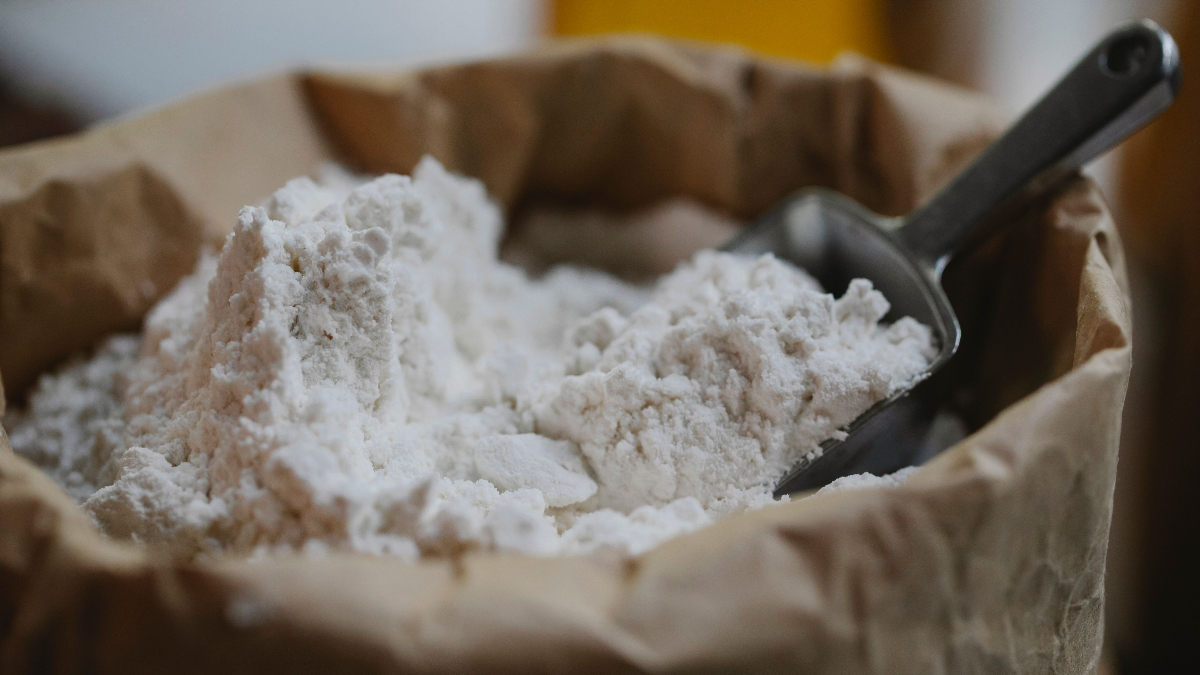
One Atta or Three? The Case for a Multi-Flour Kitchen
Most Indian kitchens already run more than one flour. That instinct is sound — but not for the reason most people give, and the actual reason is worth knowing.
Table of Contents
Using more than one flour can introduce different grains, minerals, fibre components and flavours into an Indian diet. But it doesn’t necessarily increase total fibre intake.
According to the Indian Food Composition Tables 2017, bajra contains 11.49g dietary fibre per 100g, whole-wheat atta 11.36g, ragi 11.18g and jowar 10.22g. These are broadly comparable. The bigger fibre difference is between whole-grain flours and refined maida, which contains 2.76g per 100g.
A multi-flour kitchen can be useful, but it isn’t compulsory. One whole-grain flour used consistently, alongside varied pulses, vegetables and fruit, can also form part of a balanced diet.
Read this if: you keep two or three flours and wonder whether you should simplify; you keep one and wonder whether you should diversify; or you have been told to switch to a millet flour and want to know what you would actually gain.
A note on what this is not: it is not a ranking. I am not going to tell you which flour is best, because on the evidence the question is poorly posed. What follows is about what each one brings.
Let me start by removing the reason most people rotate flours, because it is often the wrong one.
Rotating between the familiar whole-grain flours used in Indian rotis will not necessarily raise your fibre intake.
On the Indian Food Composition Tables 2017, the grains sit within a fairly narrow band: bajra at 11.49g per 100g, whole-wheat atta at 11.36g, ragi at 11.18g and jowar at 10.22g.
Aashirvaad Chakki 100% Khapli Atta has a reported total dietary fibre content of 11.4g per 100g in its product-specific nutrition documentation.
These are, for practical purposes, very similar numbers.
So if a household switches from whole-wheat rotis to jowar rotis expecting a substantial fibre gain, there may be very little to gain on that measure alone.
The gain, if there is one, is elsewhere — and the elsewhere is genuinely interesting.
Three things vary in ways that matter, even when the total fibre figures are similar.
Grains differ considerably in their mineral composition.
Ragi, or finger millet, is the standout calcium source among the familiar Indian cereals. Bajra, or pearl millet, is notably higher in iron than regular whole wheat in the Indian reference tables.
Those are real differences that a total-fibre figure cannot show.
But the amount of a mineral in a grain is not necessarily the amount the body will absorb. Phytates and other components of the grain, as well as preparation methods and the rest of the meal, can influence mineral availability.
So the figures tell us what the grains contain. They do not guarantee that eating a particular roti will correct a nutritional shortfall.
Two flours with similar total fibre values do not necessarily contain identical kinds of fibre.
Wheat contains fibre components such as arabinoxylans. Millets also contain different mixtures of non-starch polysaccharides and other compounds, depending on the grain and how it has been processed.
Different fibres can behave differently in the digestive tract. Some are fermented more readily by gut microorganisms, while others contribute to stool bulk or have different water-holding properties.
There is an interesting connection here with the American Gut Project, which found an association between eating a wider variety of plant foods and greater gut-microbiome diversity.
But the finding needs to be read carefully.
The study was observational and concerned plant-food variety across the diet — not whether using three different flours instead of one produces a measurable improvement in the gut microbiome. The popular “30 plants a week” figure came from that research, but it is not a compulsory target or a proven threshold.
So grain rotation can contribute to dietary variety. That is a sensible reason to consider it.
It isn’t proof that changing the atta in your dabba will transform your gut bacteria.
Wheat has gluten, which helps give dough its stretch and allows a roti to be rolled and puffed.
Jowar, bajra and ragi do not naturally contain gluten, so their doughs behave differently.
Traditional jowar and bajra bhakris are often shaped by hand, sometimes with hot water used to help the dough come together. They can also become firmer as they cool.
Khapli, being emmer wheat, contains gluten too, but differences in wheat proteins, milling and water absorption can affect how its dough handles.
This is not primarily a nutritional point.
But it is often the one that decides whether a household actually sustains the change.
A flour might look excellent in a nutrient table and still be a poor fit for the person making twenty rotis every evening.
Ragi’s calcium content is frequently quoted, and different numbers circulate in nutrition articles.
The Indian Food Composition Tables 2017 list 364mg calcium per 100g of ragi, under food code A010.
For comparison, the same reference data put regular whole-wheat atta at approximately 31mg calcium per 100g and milled white rice at approximately 7.5mg.
That makes ragi a particularly calcium-rich cereal on a per-100g basis.
Bajra also stands out for iron. IFCT 2017 lists approximately 6.42mg per 100g, compared with around 4.10mg in regular whole-wheat atta.
There is a qualification worth making about all of these figures.
They describe the composition of the raw grain or flour, not the nutrients in a standard cooked serving and not necessarily the proportion absorbed by the body.
And they are reference averages. The actual values can vary with variety, growing conditions, processing and laboratory methods.
I mention that because it is worth carrying into all nutrition reading: a number repeated confidently across many websites has not thereby been verified.
In this case, the 364mg ragi figure can be traced to the Indian tables and is also reported by the ICAR–Indian Institute of Millets Research.
Sources: ICMR-NIN, Indian Food Composition Tables 2017, Tables 1 and 5; ICAR–Indian Institute of Millets Research, Nutritional Value of Millets (2023).
Because different grains genuinely bring different things to a kitchen, and because dietary variety is worth cultivating without turning it into a rule.
A household using wheat through much of the week, jowar or bajra occasionally, and ragi in a familiar preparation now and then is not necessarily increasing total fibre.
It is introducing different grains, mineral profiles, flavours and fibre components through ordinary cooking.
That may help widen the range of foods eaten across the week, particularly if the rotation is part of an otherwise varied diet.
It is also worth noticing how deeply these grains are embedded in Indian food traditions.
Bajra rotla in Gujarat and Rajasthan. Jowar bhakri across Maharashtra and the Deccan. Ragi mudde in Karnataka. Whole-wheat rotis across much of northern India.
These regional staples developed in response to crops, climate, availability and cooking traditions, not because someone designed a modern grain-rotation plan.
That they offer different foods and nutrients is a useful additional reason to keep them in the kitchen.
And if your family already enjoys more than one, there is no reason to abandon the habit.
Here is the comparison that matters.
| Flour or grain | Total fibre (g/100g) | What it brings, and where it fits |
|---|---|---|
| Whole-wheat atta | 11.36 | Contains gluten, making dough easier to roll and puff. A dependable everyday flour. |
| Khapli atta (emmer wheat) | 11.4 | Another wheat option with gluten. Dough handling and water needs depend on the flour and milling. |
| Bajra (pearl millet) | 11.49 | Higher iron than regular wheat in IFCT reference values. Often used for rotla or bhakri; traditionally popular in winter. |
| Ragi (finger millet) | 11.18 | Particularly calcium-rich. Works in roti, porridge, dosa and mudde. |
| Jowar (sorghum) | 10.22 | Mild flavour; commonly used in bhakri and roti. A familiar starting point in many millet-cooking traditions. |
| Maida (refined wheat flour) | 2.76 | Much lower in total dietary fibre than the whole-grain options above. |
Values are per 100g of raw grain or flour. Whole wheat, bajra, ragi, jowar and maida values are from IFCT 2017; the Khapli figure is from the branded product’s reported nutrition information. These are not measurements of equal-sized cooked rotis.
Read the fibre column top to bottom and the argument largely makes itself.
The whole-grain options are close together. Maida is the clear low-fibre outlier in this particular comparison.
Which is why the more meaningful question, when fibre is your concern, is often whole grain versus refined.
Everything above that is a question of what else you want from a flour, what the rest of the meal supplies and what your family will actually eat.
A whole-wheat roti and a bajra roti need not be competitors.
They can simply be two different ways of making dinner.
The point is to fit the flour into an existing kitchen, not redesign the kitchen around the flour.
Mixing millet flour into wheat atta does not make the resulting roti gluten-free.
If there’s wheat in the blend, there’s gluten in the roti.
Jowar, bajra and ragi are naturally gluten-free grains, but packaged flours may be exposed to wheat or other gluten-containing grains during milling and handling.
For someone with coeliac disease, a wheat-containing blend is unsuitable. Even pure millet flour needs appropriate gluten-free sourcing and cross-contact precautions.
Khapli is also a wheat, irrespective of its ancient-grain history, and is not suitable for someone with coeliac disease.
For everyone else, the question is mostly culinary: which flour or combination gives you a roti you enjoy making and eating?
I would not want this read as an instruction to complicate a kitchen that is working.
If a household is feeding several people on a tight budget, buying in bulk, cooking at speed, or has one person doing all of it, a single reliable whole-grain flour is a perfectly good answer.
It may be considerably better than an ambitious rotation that lapses after a fortnight.
Three flours that go stale in the back of a cupboard are worse than one that gets used.
And there is no nutritional requirement to collect every grain in your atta tin. Pulses, vegetables, fruit, nuts and seeds also contribute to the variety of nutrients and fibres in a diet.
The instruction I would actually give is smaller than the article’s title suggests:
Make sure the flour you use most is a whole grain, if that suits your dietary needs, and add a second only when there is a real reason and a real appetite for it.
Everything beyond that is refinement.
“Which flours do I actually use in a month, and what would a simple rotation look like for my kitchen? Consider the meals we already cook, how much time we have, and whether changing flours would add anything useful beyond our usual whole-wheat rotis.”
This article is intended for general educational and informational purposes and does not constitute personalised medical or nutritional advice.
Nutrient values refer to raw grains or flours unless otherwise stated. Actual nutritional content varies with the grain variety, processing, product formulation, serving size and preparation. Product-specific nutrition figures should be checked against the currently approved label.
Jowar, bajra and ragi are naturally gluten-free grains, but products may be subject to gluten cross-contact. Khapli and other wheat flours contain gluten. Anyone with coeliac disease, wheat allergy or another medically prescribed dietary restriction should follow their doctor’s or qualified dietitian’s advice and choose suitable products.
If you are managing a diagnosed nutritional deficiency or digestive condition, changing flours alone should not be considered a treatment.
Poulomi Mukherjee, M.Sc. Food and Nutrition
Poulomi Mukherjee holds a Master’s degree in Food and Nutrition. She works in nutrition education and writes for Happy Tummy on gut health, fibre and the evidence behind everyday food choices.
Either approach can work. Using different whole grains can introduce variety in minerals, fibre components and flavour, but a single whole-grain atta can also form part of a balanced diet. The wider meal pattern matters more than the number of flour containers in the kitchen.
Not meaningfully on a per-100g comparison of the raw ingredients. IFCT 2017 lists bajra at 11.49g fibre, whole-wheat atta at 11.36g and jowar at 10.22g per 100g. The actual amount in a roti depends on how much flour is used.
For variety in mineral composition, fibre components, taste and cooking traditions rather than expecting a large increase in total fibre. Ragi is particularly rich in calcium, while bajra contains more iron than regular whole-wheat atta in Indian reference tables. A varied grain intake may complement a varied diet, but grain rotation alone has not been shown to improve gut-microbiome diversity.
Yes. The Indian Food Composition Tables 2017 report 364mg calcium per 100g of raw ragi, compared with approximately 31mg per 100g of regular whole-wheat atta. These are composition values, not a measure of how much calcium the body will absorb from a cooked serving.
There is no general evidence-based reason to make a complete switch. Wheat and millets offer different culinary and nutritional characteristics, and both can fit into a varied diet. Using millets occasionally, or choosing recipes already familiar to your household, may be more sustainable than replacing every wheat roti.
No. Any blend containing wheat contains gluten. People with coeliac disease must avoid it. Jowar, bajra and ragi are naturally gluten-free in pure form, but their packaged flours must also be protected from gluten cross-contact.
Not automatically. The product-specific Khapli figure of 11.4g total dietary fibre per 100g is almost identical to IFCT 2017's 11.36g for regular whole-wheat atta. Khapli differs in wheat variety, flavour and potentially dough behaviour, but those differences do not establish universal nutritional superiority or easier digestion.
Yes, if gluten isn't a medical concern. A wheat-and-millet blend can make it easier to introduce millet flour while retaining some of the handling properties of wheat dough. The proportions and water requirements will vary. The final roti still contains gluten because it contains wheat.
That depends on what your kitchen already makes. Jowar can be approachable if your family likes bhakri, bajra can work well in rotla or khichdi, and ragi is easy to introduce through porridge, dosa or mudde. Starting with a familiar dish is usually more useful than trying to identify one universally easiest millet.
As many as it will actually use. One dependable whole-grain flour used regularly can be a better choice than three opened packets that go stale. Add another flour when there is a culinary preference, practical reason or nutritional variety you genuinely want.