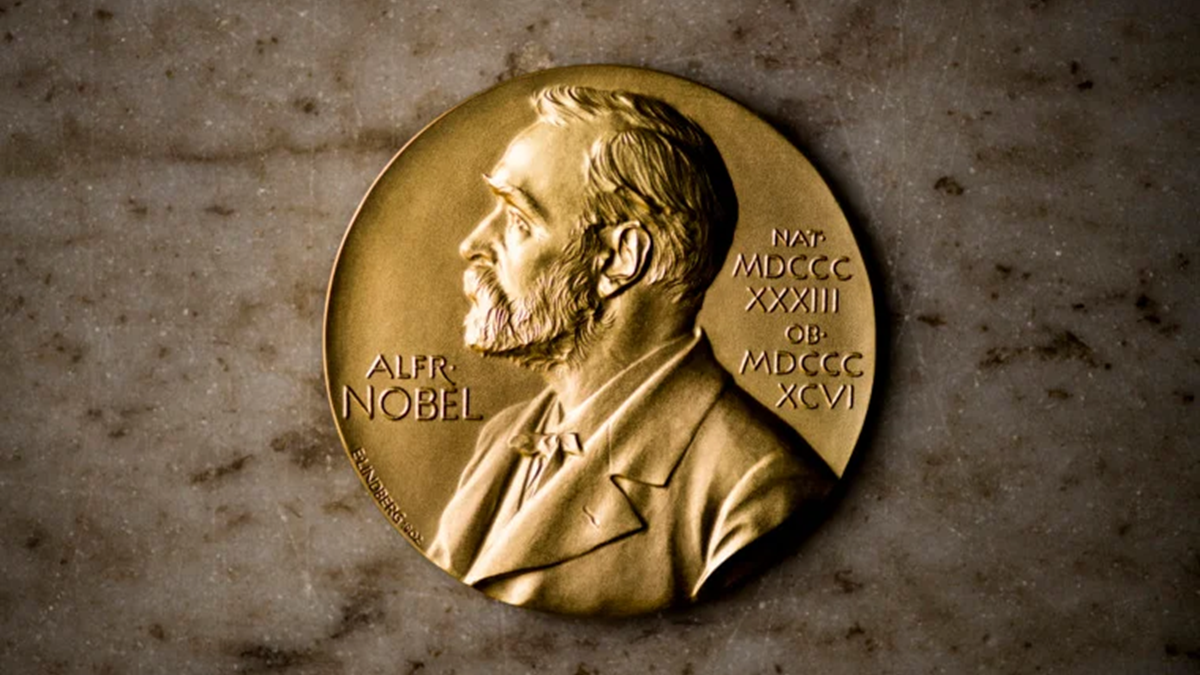
6 Nobel Prize Discoveries That Changed How We Think About Food and the Gut
A dog that drooled before dinner, chickens that fell ill on polished rice, and a doctor who drank bacteria. These discovery stories still shape how we think about food and the gut.
Six Nobel Prize discoveries help explain food and the gut: Pavlov’s work on digestion; Eijkman’s rice-and-vitamin findings; Marshall and Warren’s discovery of the ulcer bacterium; Ohsumi’s research on cell recycling; and Julius and Patapoutian’s identification of heat and pressure sensors. Metchnikoff’s later interest in fermented milk adds another chapter, although his prize was for immunity. Together, these stories connect nerves, nutrients, microbes and cell biology to everyday food questions. The practical lesson is to keep the discovery separate from the dietary promise: a Nobel Prize does not establish that a particular food or fasting routine improves digestion.
It’s Nobel week in Stockholm. Over the past 120-odd years, these prizes have recognised discoveries that overturned ideas doctors had held for decades. Here are six of those stories, and what each means for what’s on your plate today.
1. Ivan Pavlov (1904): Digestion Starts Before the First Bite
Most people know Pavlov for his dogs and a bell. Fewer know that his Nobel Prize, awarded in 1904, wasn’t for that at all. It was for his work on the physiology of digestion. Through experiments on dogs in the 1890s, Pavlov showed how the nervous system influences digestion, and how the sight and smell of food could get gastric juices flowing before a single bite reached the stomach.
His famous work on conditioned reflexes, where dogs learned to salivate at a signal, grew out of this research. The bigger idea has stood the test of time: digestion involves the nerves as well as the stomach.
On your plate: Give the meal a little attention: sit down if you can, smell your food, and take your first few bites without rushing. For the next part of the story, see how digestion starts in the mouth.
2. Élie Metchnikoff (1908): The Scientist Who Championed Soured Milk
Metchnikoff (also spelled Ilya Mechnikov) shared the 1908 Nobel Prize with Paul Ehrlich for research on how the body defends itself, including his discovery of cells that engulf and digest bacteria. But it’s his later work that makes him a gut-health name. According to his Nobel Prize biography, he studied bacteria in the human intestine and proposed that some of their by-products harmed the body over time. His suggested remedy was a diet including milk fermented by lactic acid-producing bacteria, which for a time became widely popular.
Not all of Metchnikoff’s ideas have held up. His theory that gut bacteria “poison” us into old age was far too simple, and his work did not establish fermented milk as a route to a longer life. But his interest in friendly bacteria helped spark more than a century of research into what we now call probiotics.
On your plate: Dahi and chaas need little introduction in an Indian kitchen. Enjoy them if you like them and tolerate them. Fermentation alone does not make a food a proven probiotic: that depends on the specific live microbes, their amount and evidence of a health benefit.
3. Christiaan Eijkman (1929): What Polishing Took Out of Rice
In the 1890s, Eijkman was a Dutch doctor in Java investigating beriberi, a disease that can damage nerves and weaken muscles. He noticed that chickens fed polished white rice developed similar symptoms, and that they recovered when given unpolished rice. The observation helped lead researchers to a protective nutrient in the outer layers removed by polishing, later identified as vitamin B1, or thiamine. Eijkman shared the 1929 Nobel Prize with Frederick Gowland Hopkins for discoveries that helped establish the importance of vitamins.
The difference is still there in today’s rice. The Indian Food Composition Tables 2017 give the following values per 100 g of uncooked rice. These are comparisons of uncooked grains, rather than figures for a cooked bowl.
Rice entry
Vitamin B1 (mg per 100 g)
Total dietary fibre (g per 100 g)
Brown rice, raw
0.27
4.4
White rice, raw and milled
0.05
2.8
Parboiled rice, milled and uncooked
0.17
3.7
Source: IFCT 2017, rice entries A013–A015. Values rounded; varieties and preparation can affect composition.
The same tables put whole-wheat atta at nearly three times the thiamine and about four times the fibre of refined maida, per 100 g.
On your plate: Polished white rice is fine as part of a varied diet. Brown rice and whole-wheat atta can add variety and nutrients alongside familiar dal and sabzi; neither choice needs to become a verdict on the whole meal. Our comparison of brown rice vs white rice goes into more detail.
4. Barry Marshall and Robin Warren (2005): The Bug That Changed Ulcer Care
For much of the 20th century, stomach ulcers were blamed on stress, spicy food and too much acid. In 1979, Robin Warren, a pathologist in Perth, Australia, noticed small, curved bacteria in stomach biopsies, with inflammation nearby. His younger colleague Barry Marshall managed to grow the bacterium in the lab. Together, their work established Helicobacter pylori as an important cause of gastritis and peptic ulcers, earning them the 2005 Nobel Prize.
The medical world was sceptical. So, in 1984, Marshall did something drastic: he drank a culture of the bacteria himself. He developed gastritis—inflammation of the stomach lining—confirmed by a biopsy. His self-experiment demonstrated gastritis; the link to ulcers rested on the wider body of research. His Nobel lecture also records a twist often lost in retellings: follow-up biopsies were already bacteria-free before he took antibiotics.
On your plate: Spicy food does not cause stomach ulcers. H. pylori infection and NSAIDs, a group of painkillers that includes ibuprofen, are the most common causes. Food changes cannot diagnose or treat the problem. Persistent upper-abdominal pain deserves medical assessment. Black, tarry stools, vomiting blood or sudden severe abdominal pain need urgent medical care.
5. Yoshinori Ohsumi (2016): Autophagy, and What It Doesn’t Prove About Fasting
Autophagy means “self-eating”. It’s how cells break down and recycle some of their own components. In the early 1990s, Ohsumi worked with yeast cells whose recycling machinery could not finish breaking down material. When he starved those cells, small packages of cell material accumulated inside them, making the process visible. He went on to identify genes that control autophagy. His 2016 Nobel Prize recognised discoveries about this recycling machinery.
That link with starvation is why this Nobel turns up so often on social media, usually as proof that intermittent fasting “cleans out” your cells. The leap is a big one: the prize-winning work was done in yeast, and autophagy is an ongoing biological process, not a switch with a universal timetable.
Human research has moved on. An exploratory 2025 trial in 121 adults with obesity measured recycling activity in blood immune cells. After six months, it found a difference between an intermittent-fasting group and usual-care controls. The authors cautioned that a decline in the controls may partly explain the result. The study did not establish a health benefit from the change.
On your plate: If you fast for religious or personal reasons, do it for the reasons that matter to you. Ohsumi’s Nobel does not prescribe a particular fasting window that everyone should follow.
6. David Julius and Ardem Patapoutian (2021): The Sensors Behind Chilli Heat and Touch
Why does a green chilli feel hot? David Julius used capsaicin, the compound that gives chillies their heat, to hunt for the nerve receptor that responds to it. In 1997, his team found TRPV1, which senses painful heat. Capsaicin triggers the same receptor, which is why chilli “burns” without actually raising the food’s temperature. Ardem Patapoutian identified Piezo1 and Piezo2, proteins that help cells sense mechanical force. Their 2021 Nobel Prize was for discoveries about temperature and touch.
One particularly interesting gut connection followed the prize. In 2023, Patapoutian’s laboratory and collaborators reported in Cell that Piezo2 in sensory nerves helps the gut detect its contents and pace how quickly they move. Removing Piezo2 from those nerves in mice sped up transit and made stools wetter. In a small study of 12 people with rare mutations affecting PIEZO2, bowel habits and bowel sensation were altered too; some could not feel when they needed to go.
On your plate: The heat you enjoy is a sensory response, and tolerance varies. If a very spicy meal leaves you with heartburn or discomfort, ease up on the chilli; if it doesn’t, there is no need to give up your mirchi.
Honourable Mentions
1934, Minot, Murphy and Whipple: their work on liver therapy for anaemia helped lead towards the later discovery of vitamin B12.
1945, Fleming, Chain and Florey: their work on penicillin transformed medicine. The antibiotic story belongs in the wider history of discoveries that changed how doctors approach infections.
What These Nobel Prize Discoveries Have in Common
Most of these breakthroughs started with someone noticing something odd: dogs drooling too early, chickens falling ill on the “better” rice, bacteria where none were supposed to live. Several overturned what experts were sure they knew.
For the rest of us, a useful habit is to ask two questions whenever “Nobel Prize-winning science” appears on a food claim: what was actually discovered, and what has been tested in people? That leaves room for dahi, whole grains and your favourite mirchi without giving any of them a job the evidence has not earned.
Disclaimer: This article is for general information and does not replace personalised medical advice. Persistent or concerning digestive symptoms need medical assessment; dietary changes should not replace prescribed care.
FAQs
Why did Pavlov win the Nobel Prize?
Pavlov won the 1904 Nobel Prize for research on the physiology of digestion. His experiments showed how the nervous system influences digestive secretions, including responses before food reaches the stomach.
Which scientist drank bacteria to investigate stomach ulcers?
Barry Marshall drank a culture of H. pylori in 1984 and developed gastritis. His experiment supported bacterial causation of gastritis; wider research established the link to ulcer disease.
Does spicy food cause stomach ulcers?
Spicy food does not cause stomach ulcers. H. pylori infection and NSAID painkillers are the most common causes. Persistent pain needs medical assessment rather than assumptions about chilli.
Does polishing rice remove vitamin B1?
Yes. Polishing removes outer layers containing thiamine, or vitamin B1. IFCT 2017 lists more thiamine in raw brown rice than raw milled white rice, per 100 g.
Does fasting trigger autophagy in humans?
Human studies have begun measuring autophagy during fasting. Results remain limited and tissue-specific; they do not establish a universal fasting window or show that everyone benefits from it.
Did Metchnikoff win a Nobel Prize for probiotics?
Metchnikoff shared the 1908 Nobel Prize for immune research. His later interest in fermented milk influenced probiotic research, but the prize did not establish a health benefit from dahi.
You are now being directed to an external website https://www.callr.live/aashirvaadexperts/premium-plan.
This link is provided for your information and convenience only and ITC Limited is not
responsible for the contents or services provided by Brand Touch India or any information that
you share with Brand Touch India.