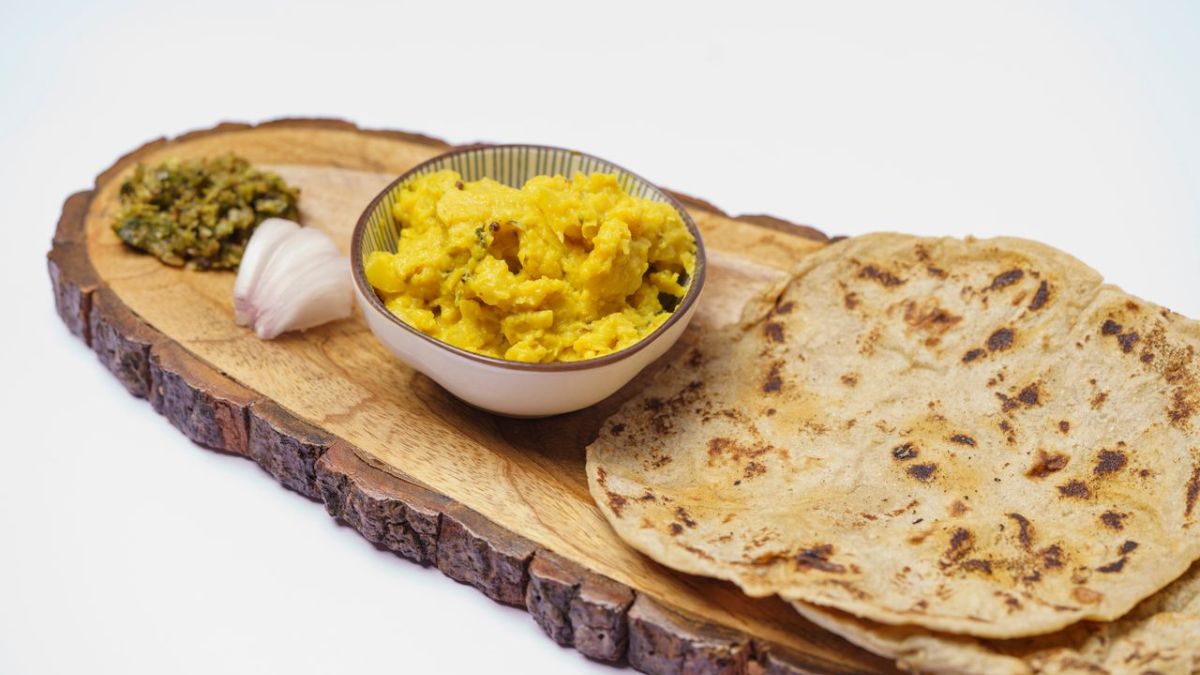
What Makes a Roti Meal Gut-Aware? A Simple Checklist
From the flour you choose to how slowly you eat, these small details can change how your everyday roti meal feels.
Table of Contents
From the flour you choose to how slowly you eat, these small details can change how your everyday roti meal feels.
You sit down with two rotis, a small bowl of dal, and a quarter plate of aloo sabzi that’s been sitting on the stove since lunch. It’s a perfectly ordinary dinner. Nothing wrong with it, exactly. And yet, by nine o’clock, there’s that familiar heaviness… not quite indigestion, not quite fullness… just a low-grade sense that something didn’t quite work. Sound familiar?
The answer usually isn’t in what you ate. It’s in what was quietly missing.
A roti meal that works with your gut rather than against it isn’t complicated to put together. It doesn’t require a nutrition degree or a kitchen restock. What it does require is a moment of honest attention, a quick scan of the plate before or after you eat, to notice which of a handful of simple elements actually showed up. The point is to notice which ones you’re routinely skipping, because that pattern is usually the culprit.
Start at the base: the atta itself. Refined flour or maida in any significant quantity contributes very little in the way of fibre, which means food moves through the digestive system faster and with less support. Whole wheat is the everyday standard for a reason. Multigrain blends add their own kind of variety.
Heritage grains like Aashirvaad Chakki 100% Khapli Atta, made from ancient Emmer wheat, sit in the same whole-grain territory — around 11.4 grams of dietary fibre per 100 grams of flour, comparable to a good whole wheat atta and well ahead of refined flour’s roughly 2.76 grams. What it offers on top of that is a different eating experience: naturally low-gluten, with a nuttier flavour and a heartier, more rustic bite.
The distinction isn’t about declaring one atta better than another. It’s simply about asking: does the flour in my roti bring any fibre to the plate at all? If the answer is reliably yes, the first element is accounted for.
Dal, rajma, chana, moong, chole, any of these alongside a roti meal, creates something the gut genuinely responds well to. Pulses are dense in both protein and fibre; they slow down the digestive process in a way that tends to leave you steadier rather than spiked, and they add bulk and substance to the meal that vegetables alone don’t quite replicate.
Many of us eat pulses three or four times a week and assume that’s sufficient. That said, it’s worth paying attention to the days when the pulse quietly disappears from the plate, replaced by a second helping of sabzi or an extra roti, because those are often the days that end with the nine o’clock heaviness mentioned earlier.
A roti meal with only a gravy-heavy curry, a paneer dish with very little actual vegetable content, or on rushed weeknights just pickle and curd, is more common than most of us would like to admit. A vegetable doesn’t need to be elaborate. A simple palak tossed with garlic, a small bowl of sliced cucumber and tomato, and even a quickly made raita with grated carrot count.
The gut benefits from the variety of fibres that different vegetables bring. One type of fibre from the grain, a second type from the pulse, and a third from the vegetable create a kind of layered, complementary effect, each one feeding different aspects of the digestive process. It’s less about volume and more about variety.
Fibre, in any form, needs water to do its job properly. Without adequate hydration, a high-fibre meal can actually leave you feeling more sluggish and uncomfortable than a lighter one. This is the quiet irony of eating more whole grains without drinking enough water; the very thing that’s supposed to support digestion ends up creating friction instead.
There is also something to be said for the timing. A glass of water with the meal, or shortly before, is quite different from drinking nothing during dinner and making up for it two hours later. The gut works in real time. It benefits from support in real time.
A roti meal eaten standing at the kitchen counter, phone in one hand, answering a message between bites, is a fundamentally different experience for the digestive system than the same meal eaten sitting down, without distraction, over fifteen or twenty minutes. The mechanics of digestion begin in the mouth, chewing breaks down food before it ever reaches the stomach. Rushed eating bypasses that first stage entirely.
This is the element that nobody wants to hear, because it’s the one that requires the most genuine adjustment. Changing your flour is easy. Slowing down is harder. The upshot is that even a modest improvement, sitting down, taking a breath before you start, and putting the phone face-down, makes a real difference to how the meal lands.
Perhaps the most intuitive and the most consistently ignored factor is the portion of your food. A gut-aware roti meal is one that ends at comfortable fullness, not at the point where the top button of your salwar needs attention. The stomach needs room to move food through. When a meal is genuinely overfull, that process slows, and the discomfort that follows is the body doing its best with too much input at once.
With fibre-rich foods in particular, whole grain rotis, dal, and vegetables, the sense of fullness arrives a little later than you expect. Eating to the point of satisfaction, then pausing, is a habit that takes a few weeks to recalibrate but tends to stick once it does.
To bring it back to the scan: fibre in the flour, a pulse on the plate, at least one vegetable, enough water, an unhurried pace, and a portion that doesn’t overfill. Just figure out which one or two things are usually, quietly, absent. Most people find it’s the same one or two every time—either the water, the pace, or the vegetable that gets skipped because the dal was thick enough. Once you know your usual gaps, you’re not starting from scratch every day, you’re just nudging the one or two things that your particular version of a roti meal tends to miss.