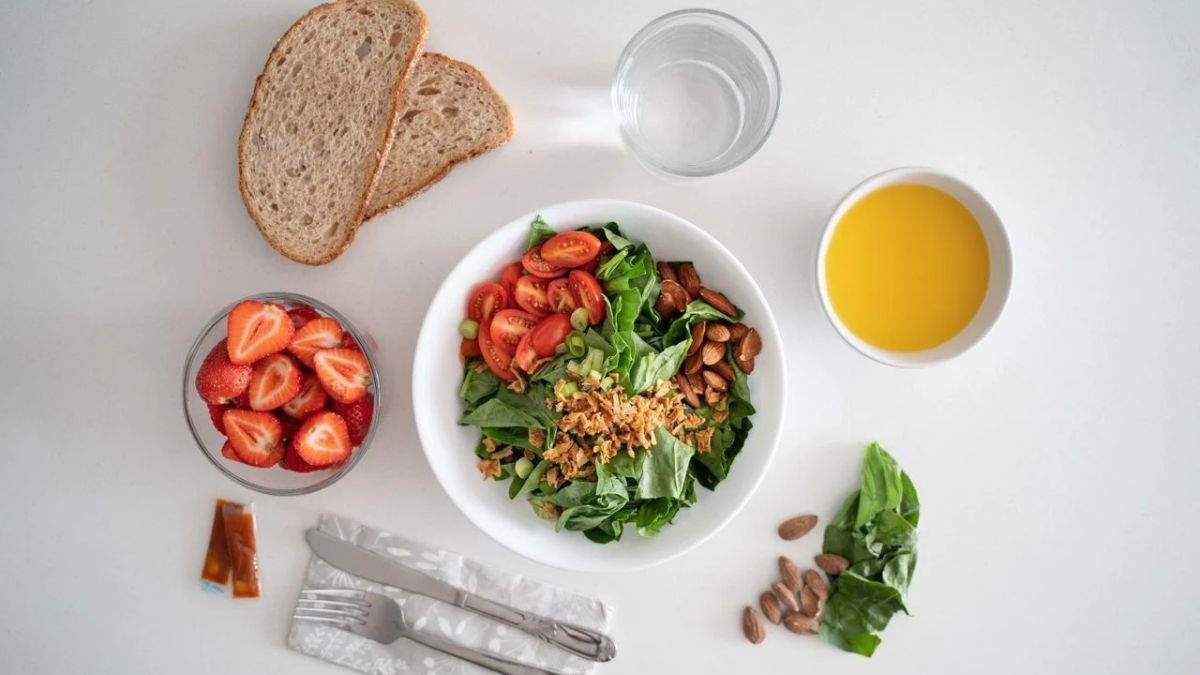
Daily Routine for Gut Health: How to Build One That Actually Sticks
A routine designed for chai breaks, late meetings and real Indian days.
Table of Contents
A daily routine for gut health starts with ordinary, repeatable habits: regular opportunities to eat, a varied plate, enough fluids, movement and time to sleep. It does not require a fasting window, expensive powders or a timetable that falls apart whenever lunch runs late.
Build meals around familiar foods such as dal, seasonal vegetables, fruit, whole grains and a protein source that suits you. Plain curd can fit if you eat dairy and tolerate it. Add fibre gradually rather than changing everything overnight; a sudden increase can cause gas and bloating. Drink enough alongside it, and follow individual advice if you have been prescribed a low-fibre diet or fluid restriction.
For adults, WHO recommends at least 25g of naturally occurring dietary fibre daily. Around six to eight cups or glasses of fluid is a general starting guide, rather than a fixed water prescription; heat, activity and health can change your needs.
Break up sitting with movement you can manage. A gentle walk after lunch is a useful place to start, while your wider activity pattern matters too. Choose a realistic bedtime and allow yourself a wind-down period. If reflux occurs at night or when lying down, finishing meals at least three hours beforehand may help.
Start with one change you can repeat for a week. There is room for chai breaks, family meals and festival sweets. Seek medical advice for persistent or recurring digestive symptoms, and prompt help for blood in stools, unexplained weight loss, severe pain or difficulty swallowing.
A new routine can look convincing on Monday. There is warm water, a planned breakfast and an after-dinner walk. Then an early meeting, a delayed lunch, chai with colleagues and a 1 am bedtime arrive, and the plan quietly disappears.
That does not automatically make it a discipline problem. The routine may have been designed for an imaginary day rather than the one you actually have.
A daily routine for gut health is a practical pattern of eating, drinking, moving and resting. It should make everyday care easier to repeat. It cannot guarantee symptom-free digestion, and it does not need to organise your entire life around your stomach.
Start with the part of the day that regularly goes wrong, and make one change there.
A useful meal pattern fits around your day. For an office worker, that may mean breakfast before leaving home, lunch around midday, a snack if needed and dinner at a fairly steady time. For a student, a parent, a shift worker or a shop owner, the clock times will look different.
There is no universally perfect breakfast time or magic hour for dinner. Predictability can simply mean knowing when you are likely to eat next and having something available if the day changes.
If bloating is a problem, smaller, more frequent meals may help. A long gap followed by a very large meal can make symptoms harder to manage for some people.
If dinner will be much later than usual and you are hungry, fruit, plain curd or a small portion of roasted chana can bridge the gap. The aim is to avoid arriving at dinner uncomfortably hungry, rather than adding a compulsory snack.
A varied diet does not require imported ingredients, expensive powders or products labelled “probiotic”.
ICMR-NIN’s My Plate for the Day places vegetables, fruit, leafy greens, roots and tubers at roughly half the day’s plate. Its 2,000 kcal reference pattern includes 400g vegetables and 100g fruit daily, alongside cereals, pulses, milk or curd, nuts, seeds and oils. The vegetable allowance excludes potato. These are reference amounts, rather than a personal prescription for every adult.
Dal, rajma, whole chana, seasonal sabzi and fruit all fit that picture. Whole chana is a familiar way to add fibre. Plain curd can be part of the pattern if you eat dairy and it suits you.
Small changes are easier to repeat than announcing that you will eat “clean” from tomorrow:
The roti deserves a line of its own. Whole-wheat atta contributes fibre, and Khapli can be one of your whole-grain choices. Ordinary whole-wheat atta works here too: you do not need a premium flour to build this routine. Choose for taste, variety, availability and budget. Khapli is still wheat and contains gluten.
For adults, WHO recommends at least 25g of naturally occurring dietary fibre daily. Your individual needs and tolerance may differ.
Getting there in one leap can be uncomfortable. If breakfast is white bread and tea, you do not need to replace it overnight with a giant bowl of raw vegetables, seeds and bran. A sudden fibre increase can cause gas and bloating.
Add fibre over a few weeks, one manageable change at a time. If pulses give you wind, try smaller portions of thoroughly cooked pulses and see what you tolerate. Follow soaking and cooking instructions where needed, particularly for dried beans.
Enough fluid helps fibre work better and supports softer stools. Fibre is not one uniform substance: different types behave differently, so “more” is not always the answer to digestive discomfort.
If you have been advised to follow a low-fibre diet, follow that advice. Persistent constipation also deserves assessment rather than an endless increase in bran, seeds or supplements.
Around six to eight cups or glasses of fluid a day is a general NHS hydration guide, not a fixed requirement for plain water alone. Tea, coffee and milk count too, and food supplies some fluid.
Keep a bottle or glass within reach and drink regularly. Someone working outdoors in the heat may need more than someone sitting in an air-conditioned office. Needs also vary with activity, pregnancy, breastfeeding, illness and health conditions.
Water is an easy everyday choice. Follow any prescribed fluid restriction rather than forcing yourself to meet a generic target.
Eight or nine hours of spreadsheets, video calls and emails can leave very little movement in the day. You can begin by interrupting that pattern.
Walk for a few minutes after lunch, pace during a phone call or walk over to a colleague instead of sending a message. Choose movement that suits your mobility and surroundings. Regular physical activity may help with constipation, and exercise can help some people manage bloating.
A short walk breaks up sitting. If it is gentle, it may not count towards your moderate-intensity activity, but it still gives you a place to begin.
For wider health, WHO advises adults to get 150–300 minutes of moderate-intensity aerobic activity a week, or 75–150 minutes of vigorous activity, or an equivalent combination. Muscle-strengthening activities on at least two days a week also matter. Build up in a way that suits your health and ability.
Late dinners, long commutes and a client call at 10 pm can push bedtime further back than intended. You do not need to become someone who sleeps at 9.30 pm. Pick a realistic wind-down point instead.
NHS sleep advice recommends broadly consistent sleep and wake times and time to relax before bed. Dimming the lights and putting the phone aside can be part of that routine.
If you have reflux at night or when lying down, finishing meals at least three hours before lying down or going to bed may improve symptoms. Avoid making the last meal uncomfortably large. This is conditional reflux advice, rather than a universal dinner deadline.
If night shifts or caregiving make your preferred schedule impossible, work with the day you have. Frequent or persistent reflux needs medical advice; a timetable is not a substitute for treatment.
A routine that cannot accommodate birthday cake, Sunday biryani or festival mithai will be difficult to sustain. WHO describes a healthy diet through adequacy, balance, moderation and diversity. There is room for cultural preferences within that pattern.
A routine for gut health should not make you wary of your grandmother’s halwa or reluctant to eat at a friend’s wedding.
The more useful question is what everyday eating looks like. Keep nourishing foods available most days, and enjoy the occasion. If you have an allergy, intolerance or a medical eating plan, continue to follow the advice that applies to you.
Choose a change small enough to repeat on a busy day: a vegetable at lunch, a short walk, a drink within reach or a few minutes to wind down before bed.
Try it for a week. At the end, consider whether it was manageable and whether you want to keep it. Seven days is a practical trial for a habit, rather than a deadline for your digestion to improve.
If it did not fit, adjust it. A ten-minute walk that never happens can become a few minutes you actually take. Lunch does not need to move to an ideal time; it may simply need a reliable food option when the meeting runs over.
Speak to a doctor if bloating, constipation, reflux or abdominal discomfort persists, worsens or keeps coming back. Seek prompt advice for unexplained weight loss, blood in stools, persistent pain or difficulty swallowing.
Sudden, severe abdominal pain, vomiting blood or black, sticky stools need emergency medical care. NHS guidance on stomach pain explains the warning signs. Difficulty swallowing also needs assessment rather than a change in meal timing alone.
If tracking food or symptoms makes you anxious, leave the tracking aside and seek individual support. The routine should help you care for yourself, rather than make meals another source of worry.
This article provides general information for adults and is not a substitute for personalised medical, dietetic or exercise advice. A daily routine cannot diagnose or treat a digestive condition. Follow your healthcare professional’s guidance if you have persistent symptoms, a prescribed diet or fluid restriction, or limitations on physical activity. Children, pregnant or breastfeeding people and older adults with specific nutritional, mobility or health needs may require individual advice.
Around six to eight cups or glasses of fluid is a general guide. It includes drinks such as tea and coffee, rather than water alone. You may need more in the heat or with activity. Follow individual advice if you have a fluid restriction.
WHO recommends at least 25g of naturally occurring dietary fibre daily for adults. Build up gradually with enough fluid. A clinician or dietitian can advise if you have a digestive condition, symptoms that worsen with fibre or a prescribed low-fibre diet.
An easy walk is a practical way to add movement. Regular activity may help with bowel regularity and bloating, but it does not cure a digestive condition. The overall activity pattern matters more than walking at a particular minute after lunch.
There is no single rule for everyone. If reflux occurs at night or when lying down, finishing meals at least three hours beforehand may help. Frequent reflux should be checked by a doctor.
Yes. An occasional sweet can fit within a varied eating pattern. The usual meals and habits matter, alongside any medical advice you have been given. You do not need to compensate for a celebration by skipping meals.