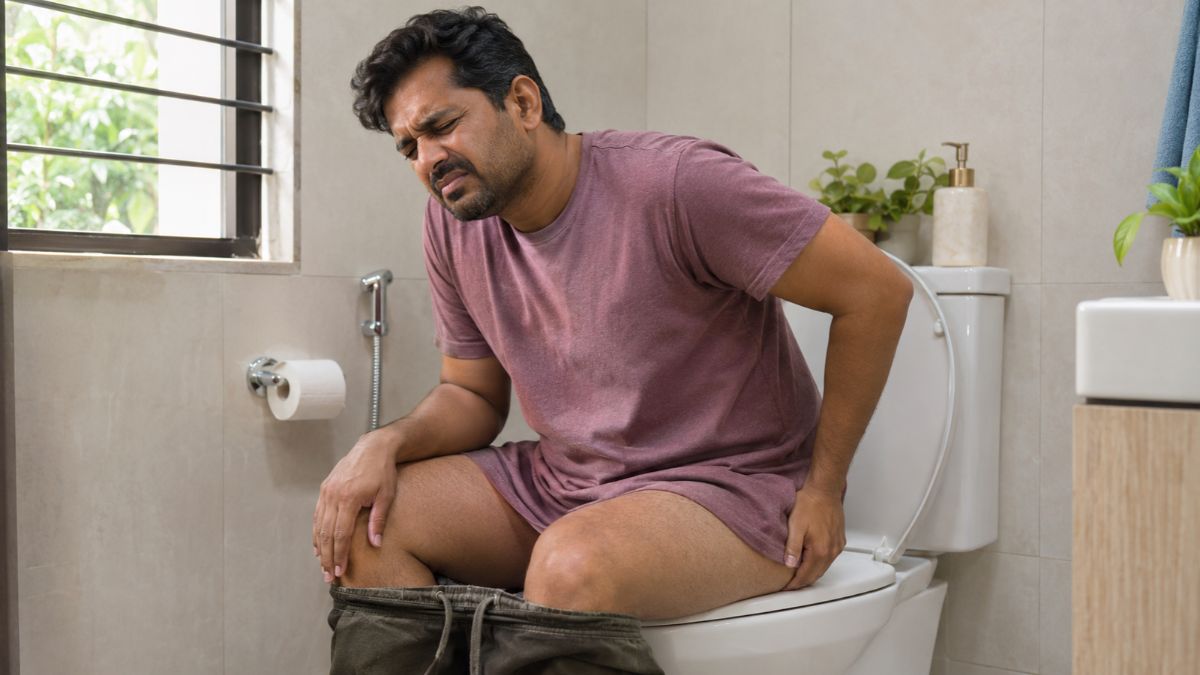
Piles, Fissures and Constipation: The Link Worth Understanding
Constipation, piles, and anal fissures are different conditions with a close link. Learn the symptoms, what to do, and when to see a doctor.
Table of Contents
Expert reviewed by Qurath Ain, Certified Nutritionist and Clinical Dietitian
Constipation, piles (haemorrhoids), and anal fissures are three different conditions, but they are closely connected. Persistent constipation and repeated straining can increase the likelihood of developing piles or fissures, although one doesn’t automatically lead to the other.
Constipation means infrequent bowel movements, difficulty passing stools, or hard stools. Piles are swollen blood vessels in or around the anus or lower rectum. Anal fissures are small tears in the lining of the anus. Hard stools and straining place extra pressure on the tissues around the anus and can stretch and injure its delicate lining.
Piles may cause painless bright red bleeding, itching, a feeling of fullness, or a lump around the anus. Fissures often cause sharp pain during and after passing stool, which can last minutes or even hours, with small amounts of bleeding. Because symptoms overlap, only a healthcare professional can make the correct diagnosis, and rectal bleeding should never be assumed to be piles.
To support healthy bowel habits, eat fibre from a variety of foods, drink enough fluids, stay physically active, respond to the urge to go, avoid prolonged sitting and straining on the toilet, keep the anal area dry, and gently clean yourself after each bowel movement.
Arrange a medical review for constipation lasting several weeks, persistent pain during bowel movements, recurrent rectal bleeding, or a lump around the anus that doesn’t improve. Seek prompt medical attention for heavy rectal bleeding, black or tarry stools, severe abdominal pain, fever with rectal symptoms, unexplained weight loss, or persistent vomiting.
Constipation is something almost everyone experiences from time to time. Maybe you’ve gone a couple of days without a bowel movement. Or you’ve had to strain more than usual. Perhaps your stools have been hard, dry, or difficult to pass.
Often, things settle once your routine returns to normal. But when constipation becomes frequent or persistent, it doesn’t just affect comfort. It can increase the risk of other problems around the anal region — most commonly haemorrhoids (piles) and anal fissures.
These three conditions are different. One doesn’t automatically cause the others. But they’re closely connected, and understanding that connection can help you recognise symptoms early and know when it’s time to seek medical advice.
First of all, let’s be clear: they’re not the same condition. People often use the terms interchangeably. In reality, constipation, piles, and fissures are three different conditions.
Constipation refers to infrequent bowel movements, difficulty passing stools, or hard stools. Haemorrhoids (piles) are swollen blood vessels in or around the anus or lower rectum. Anal fissures are small tears in the lining of the anus.
Although they’re different, they often appear together because they can share some of the same contributing factors.
When stools become hard and difficult to pass, people often need to strain during bowel movements. Repeated straining and the passage of hard stools can place extra pressure on the tissues around the anus. Over time, this may contribute to the development or worsening of piles in some people.
Hard stools can also stretch and injure the delicate lining of the anus, leading to an anal fissure. That’s why healthcare professionals often pay close attention to bowel habits when someone presents with either condition.
Think of constipation as a risk factor, not a guarantee. Many people experience constipation and never develop piles or fissures. Likewise, piles and fissures can occur for reasons other than constipation.
But persistent constipation increases the likelihood that the anal tissues will be exposed to repeated strain and trauma.
Although both can cause discomfort during bowel movements, the symptoms are often different.
| Piles (haemorrhoids) | Anal fissures |
|---|---|
| Swollen veins in or around the anus | Small tear in the lining of the anus |
| May cause painless bright red bleeding during bowel movements | Often causes sharp pain during and after passing stool |
| May cause itching or a feeling of fullness | Pain may last minutes or even hours after a bowel movement |
| Some people notice a lump around the anus | Bleeding is usually small in amount and accompanied by pain |
Only a healthcare professional can make the correct diagnosis, especially because symptoms can overlap.
Constipation isn’t defined only by how often you use the toilet. It can include:
The important point is that bowel habits vary between individuals. What’s normal for one person may not be normal for another.
Many people focus only on how often they pass stools. But how you pass them also matters.
Repeated straining places extra pressure on the pelvic floor and the veins around the anus. Similarly, hard stools can increase friction as they pass through the anal canal.
Reducing unnecessary straining is one reason healthcare professionals often recommend addressing constipation early instead of waiting for symptoms to become severe.
One of the biggest misconceptions is: ‘It’s probably just piles.’ Although piles are a common cause of bright red bleeding during bowel movements, blood should never be automatically assumed to be caused by haemorrhoids.
Bleeding from the rectum always deserves medical assessment, particularly if:
These symptoms require proper evaluation rather than self-diagnosis.
Yes. Someone with constipation may also develop piles, a fissure, or, occasionally, both at the same time. That’s one reason it’s difficult to diagnose yourself based only on internet searches.
The location of pain, the type of bleeding, and the underlying cause all need to be considered together.
If constipation has become a recurring problem, try tracking your bowel habits for a week.
| Question | Day 1 | Day 2 | Day 3 | Day 4 | Day 5 | Day 6 | Day 7 |
|---|---|---|---|---|---|---|---|
| Did I have a bowel movement today? | □ Yes □ No | □ Yes □ No | □ Yes □ No | □ Yes □ No | □ Yes □ No | □ Yes □ No | □ Yes □ No |
| Was I straining? | □ Yes □ No | □ Yes □ No | □ Yes □ No | □ Yes □ No | □ Yes □ No | □ Yes □ No | □ Yes □ No |
| Were the stools hard? | □ Yes □ No | □ Yes □ No | □ Yes □ No | □ Yes □ No | □ Yes □ No | □ Yes □ No | □ Yes □ No |
| Any pain? | □ Yes □ No | □ Yes □ No | □ Yes □ No | □ Yes □ No | □ Yes □ No | □ Yes □ No | □ Yes □ No |
| Any bleeding? | □ Yes □ No | □ Yes □ No | □ Yes □ No | □ Yes □ No | □ Yes □ No | □ Yes □ No | □ Yes □ No |
Keeping a log won’t diagnose the problem, but it can make it easier to identify patterns and discuss them with your healthcare professional.
Although treatment depends on the underlying cause, everyday habits that support bowel health include:
These measures may help reduce constipation for many people, but persistent symptoms still deserve medical evaluation.
Arrange a medical review if you experience:
Seek prompt medical attention if you have:
Try this prompt:
“I’ve been experiencing constipation. Here’s my seven-day bowel habit log, including stool consistency, straining, pain and any bleeding. Help me organise this information into a clear summary that I can discuss with my healthcare professional. Please don’t diagnose the cause or recommend treatment.”
Constipation, piles, and anal fissures are different conditions, but they’re closely connected. Persistent constipation and repeated straining can increase the likelihood of developing piles or fissures, although one doesn’t automatically lead to the other.
The most important message is not to ignore ongoing symptoms. Pain during bowel movements, recurrent bleeding, or persistent constipation deserve proper medical evaluation rather than self-diagnosis. Paying attention to your bowel habits — and seeking help when patterns change — is often the first step towards addressing the problem.
This article is intended for general educational purposes only and should not be considered medical advice. If you experience persistent constipation, rectal bleeding, severe pain, unexplained weight loss, black stools, or other concerning symptoms, seek prompt medical evaluation from a qualified healthcare professional.
No. Many people with constipation never develop piles, but repeated straining and hard stools may increase the risk in some individuals.
Yes. Passing hard stools can sometimes tear the lining of the anus, resulting in a fissure.
Piles are swollen veins; fissures are tears in the anal lining. Fissures often cause sharp pain, whereas piles may cause painless bleeding, though symptoms vary.
No. Rectal bleeding should never be assumed to be piles; have it assessed by a healthcare professional.
Yes. Some people have both, particularly if constipation and straining have been ongoing.