Navratri Lunch Box Ideas for Office: Beyond Tea and Vrat Snacks
Start with what your family’s vrat allows, then plan for the commute, the lunch break and four o’clock hunger.
Table of Contents
A Navratri lunch box for the office can combine one permitted base, a dry vegetable dish, curd, paneer or nuts where allowed, and whole fruit. Rajgira paratha, sama khichdi, kuttu roti and singhara roti are options in many households; your family’s vrat rules come first. Pack cooked food and dairy chilled, with frozen cold packs and an insulated bag, or keep hot dishes properly hot. Food that tastes good without reheating still needs safe storage. The method below helps you plan around your commute, office facilities and appetite.
The regular lunch routine can become a little more challenging during Navratri. When you are on a vrat, the reliable options at work can shrink to fruit, tea, boxed snacks or whatever the nearby café happens to have. Those quick options may not fill you up for the whole workday.
If you want to make your packed vrat lunch as easy as possible, follow a few simple guidelines: base it on what your family eats during Navratri, add a vegetable and some fresh fruit, include a protein-containing option where it matches your vrat rules, and carry water if your chosen observance allows fluids.
Every family’s Navratri menu will be somewhat different. Certain flours are part of some families’ fasts, while others cut them out completely. Depending on the kind of vrat and family custom, dairy, nuts and vegetables might differ too. And unlike a fasting day at home, an office day comes with its own constraints: a commute, no stove, often no microwave, and a desk where the tea keeps coming. So instead of prescribing one dish, here is a flexible method for building a Navratri lunch that works at the office, on days your fast allows a midday meal.
A day of tea, a banana and a packet of fried vrat namkeen can feel like enough at 11am. By 4pm, you may be ready for something more substantial. A lunch with a base, a vegetable and, where your fast allows, curd, paneer or nuts gives you a wider choice of foods. Caffeinated drinks and greasy foods may worsen existing digestive symptoms for some people, but tolerance varies. Make time to eat, too, rather than taking every bite hunched over your laptop.
When you’re making your lunch, the first thing to ask is: what can you eat during your vrat? Depending on your family’s traditions, that might include rajgira (amaranth), sama ke chawal (barnyard millet), sabudana, singhara (water chestnut) flour or kuttu (buckwheat) flour.
The point is not to add unnecessary complexity to lunch. Choose one permitted base. For the office, there’s one extra question: will it still taste good two or three hours after you pack it? Your base could be:
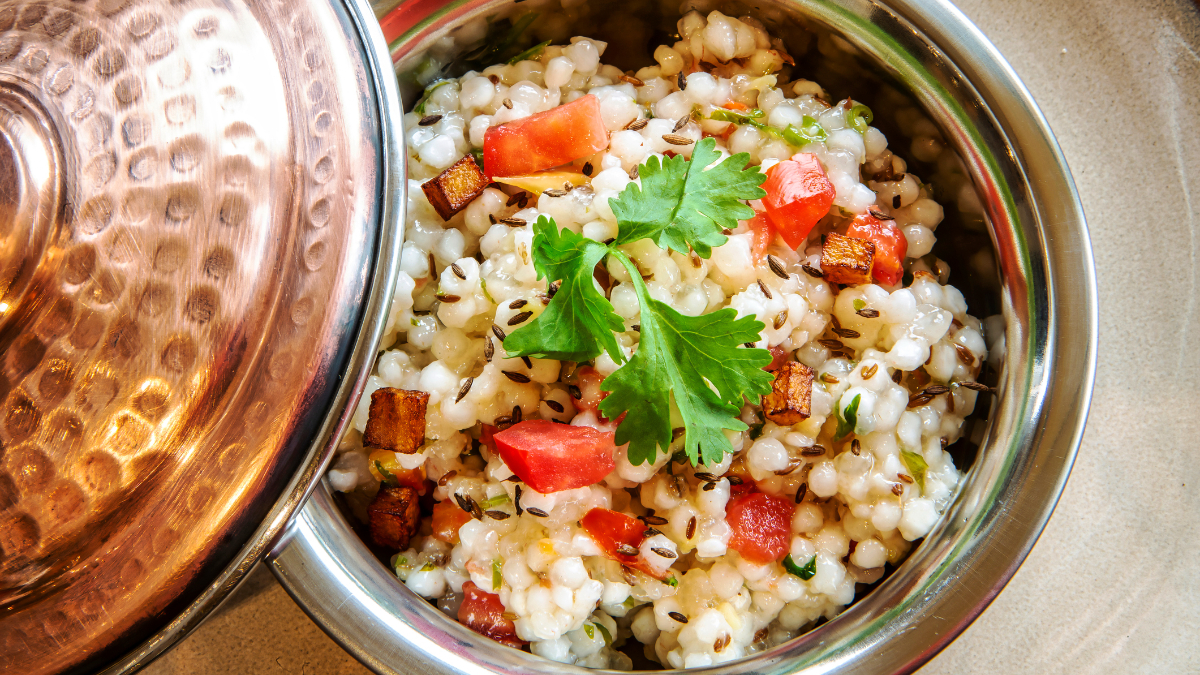
A word on sabudana: sabudana khichdi is delicious hot but can become firmer and chewier once it cools, so it may suit offices where you can reheat it. It is also mostly starch, with little protein or fibre of its own, so pair it with permitted peanuts, curd or vegetables. Our guide to sabudana and gut health explains how to build around it. If you’re buying kuttu atta this season, our vrat flour safety guide covers what to check. Whichever base you choose, good texture at lunchtime is separate from safe storage.
This is where a packed vrat lunch can move beyond the familiar combination of tea and snacks. Rather than viewing your lunch as a single dish, think of it as a set of components you can mix and match through the week, based on what’s allowed at home and what you have in your kitchen.
For instance, you can pair kuttu roti with a dry pumpkin or bottle gourd sabzi. Sama rice pairs well with a simple vegetable preparation, and a few slices of cucumber bring a refreshing touch to lunch. Drier sabzis travel better than gravies, which can leak or turn the roti soggy. A dry sabzi is still cooked food, though, and needs to stay properly hot or chilled.
The idea is to avoid making potatoes the answer to every vrat lunch simply because they are convenient. Rotating permitted vegetables adds variety and a wider mix of fibre and other nutrients, without needing a completely different meal every day.
If you are allowed dairy, nuts or peanuts during your vrat, they can help make your lunch more substantial. A few easy choices to consider:
You don’t have to include everything. One of these alongside your main lunch can be just right. Since vrat practices vary, this is where your family’s traditions really come into play: a food often labelled ‘vrat-friendly’ isn’t automatically allowed in every household. Makhana is a good example; our guide on eating makhana in a Navratri fast covers when it fits. It can add crunch, but a small serving is not the lunch’s main protein source.
A piece of fruit or a serving of permitted fresh produce can be the simplest addition to your work lunch, and it spares you the effort of cooking anything extra. Whole fruit, such as a banana, apple, guava or orange, travels better than cut fruit. Wash produce under safe running water before eating or cutting it, and use a clean knife and container. If you do pack cut fruit or cucumber, keep it chilled and separate from anything that could make it soggy.
One small office tip: keep a little sealed box of sendha namak and roasted jeera powder in your drawer, if your fast permits them. If the office pantry only stocks regular salt, you have your own seasoning ready; a pinch can make plain fruit or cucumber more appealing.
The WHO’s Five Keys to Safer Food advise prompt refrigeration of cooked and perishable food, preferably below 5°C, and keeping hot food above 60°C until serving. This applies to cooked sama, sabudana, vegetables and sweet potato, as well as dairy and cut produce. Food that is pleasant to eat without reheating still needs temperature control.
Cooked food and other perishables should not sit at room temperature for longer than two hours; shorten this to one hour if the surroundings are hotter than about 32°C. Count the total time outside safe hot or cold storage during cooling, travel and waiting at work. Refrigerating food later does not make a lunch that has spent too long warm safe again. A handful of simple habits can really make an impact:
For a hot lunch, use a food jar designed to maintain a safe hot temperature. Preheat it with boiling water, empty it, then add piping-hot food and keep it closed until lunch. Pack cold dairy separately. If you have neither reliable chilling nor hot storage, plan around whole fruit and shelf-stable permitted foods such as plain nuts or dry roasted makhana, or arrange a freshly prepared meal. Our guide to leftover food safety has more on packing tiffins.
Navratri traditionally spans nine days, so it helps to have a rotation rather than a new idea every morning. Here’s one example for office days; swap in whatever your family’s vrat allows.
Packing rule for every row: Keep cooked dishes safely hot or chilled; keep curd, paneer, chaach and cut cucumber cold. Use the storage method that fits your commute and office facilities.
| Day | Base | Vegetable and protein | Fresh |
| Monday | Rajgira-potato paratha | Dry pumpkin sabzi; curd (kept cold) | Apple |
| Tuesday | Sama pulao | Lauki and roasted peanuts | Cucumber (kept chilled) |
| Wednesday | Kuttu roti, rolled thin | Dry arbi or pumpkin sabzi; paneer (kept cold) | Guava |
| Thursday | Boiled sweet potato with jeera | Curd (kept cold); a few nuts | Orange |
| Friday | Singhara roti | Lauki sabzi; chaach (kept cold) | Banana |
Cook a small batch of plain sama or boiled sweet potato the night before, divide it into shallow containers and refrigerate promptly. Don’t wait for a large pot to cool on the counter for hours. Pack it chilled the next morning, or reheat thoroughly before transferring it to a preheated hot-food jar. Tomorrow’s lunch is already half-done.
This is perhaps the biggest reason to pack lunch in the first place. During Navratri, your office cafeteria may stick to its usual menu, while nearby restaurants offer only a few vrat options. Even when something is marked ‘vrat-friendly’, it can be tricky to know exactly which flour, salt or cooking fat has gone into it.
A packed lunch gives you much more control over what’s in your meal, and it saves you turning every lunch break into a food hunt. For the 4pm slump, a small desk stash helps too: plain roasted makhana, a few nuts or peanuts, and whole fruit keep something you know fits your fast within easy reach.
A packed lunch is only one part of getting through a long workday comfortably. If fluids are part of your fast, keep a water bottle at your desk rather than relying on tea and coffee breaks; it’s particularly easy to forget about water when meetings and deadlines take over the day. Adequate fluid helps fibre work better, although needs vary. Follow any fluid limits your clinician has given you.
You don’t need a special fasting drink to make hydration interesting. Plain water is a perfectly practical option, and nimbu pani, coconut water or chaach can work too, if they fit your family’s vrat and suit you. They are optional, and chaach still needs to stay cold. The simplest strategy is also the one most likely to work: fill your bottle before you leave home.
Celebrating Navratri while juggling work doesn’t have to mean sipping tea, munching on fruit and relying on packaged vrat snacks until dinner. A bit of planning makes the lunchbox a much more convenient option: decide what you’ll eat and how you’ll keep it safe before the morning rush.
Above all, keep the lunchbox simple! You don’t need a new, fancy vrat recipe every morning. A simple rotation of allowed ingredients gives you plenty of variety for the workweek, without making lunch feel like another item on your to-do list.
Disclaimer: This article provides general food and packing information, not medical advice or a universal fasting rulebook. Seek individual medical advice before fasting if you have a medical condition, take regular medicines, are pregnant or breastfeeding, or are planning a fast for a child or an older adult. Do not change or skip prescribed medicines on your own. If you feel faint, very unwell or cannot keep fluids down, seek medical care rather than pushing through a fast.
Pack a permitted base, a dry vegetable dish, curd, paneer or nuts if allowed, and whole fruit. Keep cooked food properly hot or chilled, and dairy cold.
Use an insulated bag with two frozen cold sources to keep food chilled. For hot dishes, use a preheated food jar that keeps them above 60°C.
Yes, if your fast permits it. Sabudana khichdi can firm up as it cools; keep it chilled or hot, and reheat thoroughly if you prefer it warm.
Yes, if dairy is allowed and suits you. Pack curd cold in a separate container, use frozen cold packs during travel, and refrigerate it at work when possible.
It offers more control over ingredients and storage, but is not automatically safer or healthier. Café food can work too; ask about ingredients and how it is handled.