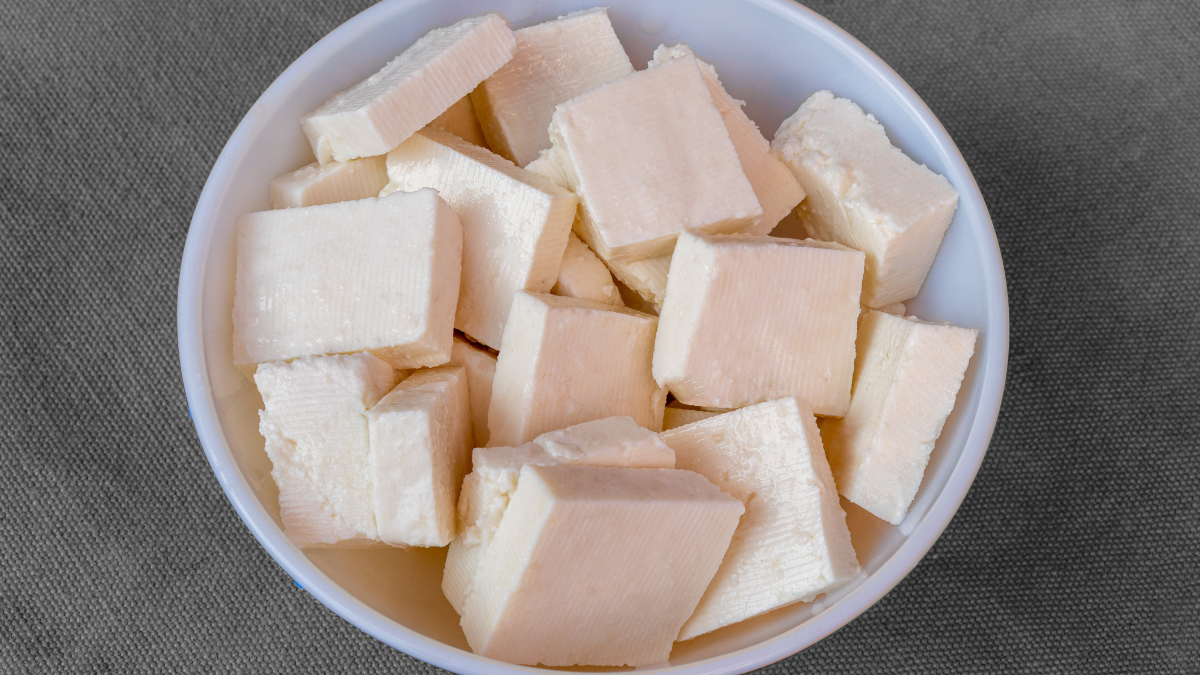
Analogue Paneer: Is Your Paneer Really Paneer?
What milk replacements change on your plate, what the gut research can tell us, and how to check a packet or ask when eating out.
Table of Contents
Analogue paneer is a paneer-like product in which non-milk ingredients replace some or all of the milk components. Under FSSAI’s definition, a dairy analogue resembles a milk product in taste, texture or function. Recipes may use vegetable fat, starch, milk solids or plant protein, so nutrition can differ considerably from dairy paneer. Check the ingredients, protein and fat figures, and storage instructions. Appearance and a home iodine test cannot establish authenticity or safety. The September 2026 FSSAI proposal concerns selling and describing these products as paneer.
Paneer is a familiar protein choice in many vegetarian Indian households. We order paneer tikka, put it in a lunchbox or cook it into a sabzi, usually assuming that the white cubes came from milk. That is why this discussion matters: people should know what they are buying and what it contributes to their plate.
FSSAI’s draft notification, dated 22 September 2026 and published in the Gazette on 23 September, proposes restricting the manufacture and sale of analogue products as paneer. It also proposes removing the word ‘paneer’ from the names, labels and marketing of products already licensed or registered in the dairy-analogue category.
The notification allows 60 days for public comments from the date the Gazette becomes available. It is a draft proposal, not a final nationwide ban. Existing dairy-labelling requirements and any applicable state restrictions still matter. Simply putting ‘analogue’ on a pack does not settle every question about whether it can legally be sold.
State action is separate from this national proposal. An Indian Express report published on 23 August 2026 described Karnataka’s one-year ban on the manufacture, processing, storage, transport and sale of analogue paneer. The report noted exemptions for standardised categories such as frozen desserts, processed cheese and mixed-fat spreads. The legal position therefore depends on applicable state orders as well as national rules.
Dairy paneer is made by heating milk and curdling it with a permitted acid, such as citric acid, lemon juice or sour whey, then draining and pressing the curds. Its protein and fat come from milk. Commercial paneer may also use added milk solids and permitted additives.
An analogue replaces milk components with other ingredients. Vegetable fat can replace milk fat; starch or other ingredients can help create the body and texture. Formulations vary, and some retain milk ingredients. The finished cubes may look and cook much like paneer, but those similarities do not tell you their nutritional composition.
An analogue is a deliberately formulated substitute. Adulteration is a different practice: unauthorised additions or removal of components compromise the composition or quality of the food being sold. Secretly adding starch to a product sold as dairy paneer is one example. Selling a substitute as something it is not also misleads the buyer.
Neither a low price nor a rubbery texture can tell you which problem, if any, you are looking at. Authenticity and food safety require more reliable information than a squeeze test or a viral video.
A published review shows that dairy paneer’s composition varies with the milk and method used. Cow’s or buffalo’s milk, lower-fat or full-fat milk, and the moisture left in the finished product can all affect the figures. For packaged paneer, use the actual nutrition panel rather than assuming every product has the same protein content.
An analogue made mainly from fat and starch may provide substantially less protein. Another formulation may contain added plant or milk protein. There is no single protein figure that fairly describes the entire category.
Compare products per 100 g first, then consider your serving. If a label states 18 g of protein per 100 g, a 50 g portion supplies 9 g. That calculation is more useful than counting cubes, which can differ greatly in size.
Where a pack also gives the percentage of the recommended dietary allowance (%RDA), check the serving size used. The percentage is a general labelling reference; your individual nutrient needs may differ.
Palm oil and some other fats used in substitutes contain substantial saturated fat. Dairy paneer also contains saturated fat. You cannot assume that every analogue has more saturated fat than every dairy paneer, or that a vegetable-fat product is automatically lower in it.
Check total fat and saturated fat per 100 g, then consider the portion and the oil, cream or butter added to the dish. A packet’s figures describe the product, not the finished paneer makhani.
Partially hydrogenated fat raises a separate concern about industrial trans fats. FSSAI has limited industrial trans fats in food products containing edible oils or fats to no more than 2% of their total oil or fat content since 1 January 2022. Palm oil itself is not synonymous with partially hydrogenated fat.
Added starch can help give a substitute its structure, but it does not make that product equivalent to a whole grain or a pulse. Ordinary dairy paneer is not a meaningful source of dietary fibre either.
For an everyday meal, look at what sits beside the cubes. A paneer sabzi with vegetables, whole-wheat roti and a serving of dal brings more variety than a plate built entirely around paneer. For practical ideas, read our guide to increasing fibre in an Indian diet.
Emulsifiers help ingredients such as fat and water stay mixed. Researchers are studying how particular additives interact with gut microbes, but the findings need to be read at the level of the substance and amount tested.
Animal research has also raised questions about inflammation. In a 2015 study published in Nature, the emulsifiers carboxymethylcellulose (CMC) and polysorbate 80 promoted intestinal inflammation in mice and colitis in susceptible mice. That supports investigating possible links with inflammatory bowel disease, but it does not show that eating analogue paneer causes the condition in people.
In a small controlled-feeding trial published in Gastroenterology in 2022, 16 healthy adults received either an emulsifier-free diet or the same diet with 15 g of carboxymethylcellulose, or CMC, each day for 11 days. The CMC group showed lower microbial diversity, reductions in stool short-chain fatty acids and a modest increase in discomfort after meals.
The trial did not test analogue paneer. It cannot tell us that every emulsifier has the same effect, or that a particular paneer-style product will cause digestive symptoms. A label may list different additives and does not usually reveal the amount of each one.
The practical conclusion is to assess the whole product. An unfamiliar additive name is not, by itself, evidence that a food will harm your gut. It is also not proof that the product is an analogue: FSSAI permits specified additives in dairy paneer within defined limits.
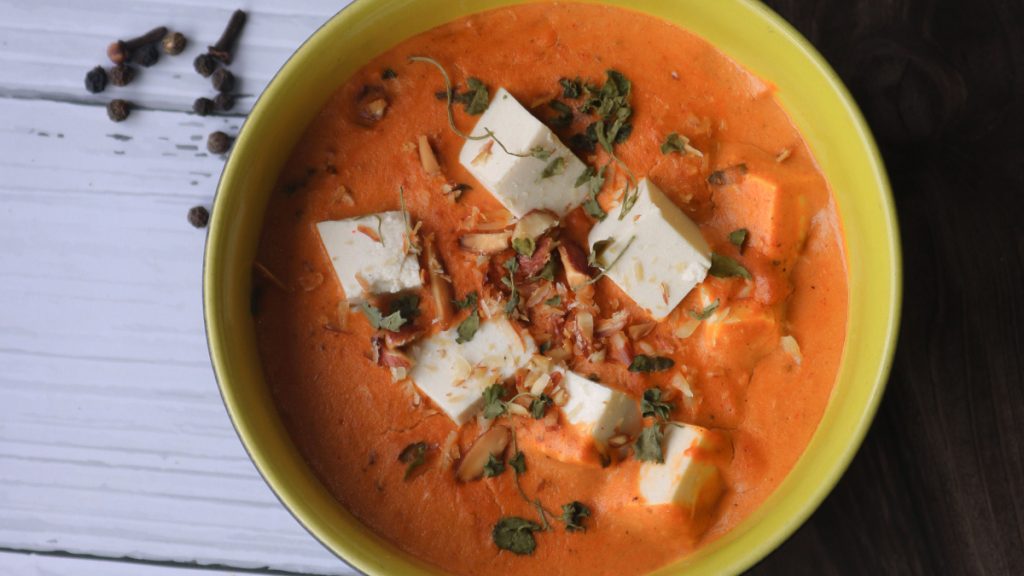
A useful first question is: am I choosing a milk-based food, or a substitute whose ingredients and nutrition I have actually checked?
| Check | What to look at | What it helps you decide |
| Product name | Read the description alongside the large front-of-pack wording. | Whether the seller is presenting a dairy product or a substitute. |
| Ingredients | Look at the milk ingredients and any vegetable fat, starch or other components. | What supplies the product’s protein, fat and structure. An additive alone is not proof of imitation. |
| Nutrition panel | Compare protein, total fat and saturated fat per 100 g. For %RDA figures, check the stated serving size. | What your usual portion supplies, and how the label’s reference serving compares with what you eat. |
| FSSAI details | Look for the FSSAI logo and licence or registration number. | Identifies the responsible food business. It does not, by itself, certify the product’s contents or how it has been stored. |
| Storage and date | Check the use-by or expiry date, pack condition and storage instructions. | Whether its date and visible storage conditions match the packet’s instructions. Genuine paneer also needs proper storage. |
Price is a reason to ask questions, not a certificate of authenticity. An unusually cheap product deserves a closer look, but an expensive one still needs an honest label.
Ask a specific question: ‘Is this made from milk, or is it a substitute containing vegetable fat or other replacements?’ A restaurant or caterer may be able to check its supplier’s packet or product information. The dish name alone does not answer the question.
With loose paneer, ask about the source and storage as well as the ingredients. If the seller cannot clarify what it is, you can choose another dish rather than trying to identify the cubes after they have disappeared into a gravy.
FSSAI’s household iodine test is a check for starch. A blue reaction indicates starch; it does not identify every possible replacement or contaminant. No blue reaction does not prove that the paneer is genuine, nutritious or safe.
Testing a piece coated in a starch-containing gravy can also give a misleading impression of the cube itself. Home screening is not a substitute for laboratory testing. Never eat a sample treated with testing chemicals.
If you enjoy making paneer, the familiar method still works: heat milk, add an acid, drain the curds through a clean cloth and press them. Making it fresh at home also gives you control over the ingredients and hygiene.
It does not remove the need for food safety. Use milk from a reliable source, clean equipment and proper refrigeration. If you use the leftover whey in roti dough or dal, handle and store it safely too.
For the wider meal, there is no need to rely on one food for all your protein. Depending on what you eat and tolerate, dal, whole pulses, tofu, curd and dairy paneer can take different turns on the plate.
Want help planning that variety? Ask Happy Tummy GPT: ‘Suggest three affordable vegetarian dinners using dal, tofu or paneer, with vegetables and whole grains.’
You should be able to enjoy a paneer dish knowing what is in it. Read the packet, ask the seller and compare the nutrients you need. Those ordinary habits give you a firmer basis for choosing than appearance or a blanket promise about an entire food category.
Disclaimer: This article provides general information and is not a substitute for personalised medical or dietary advice. Follow individual guidance from your healthcare professional, including for children, during pregnancy and for older adults. If you have a food allergy, verify ingredients and follow your clinician’s advice. Seek medical attention if symptoms after eating are severe, persistent or keep returning. Blood in the stool, unexplained weight loss, severe or persistent pain, or difficulty swallowing require prompt medical assessment. Food-labelling and regulatory information was checked on 6 October 2026 and may change.
Recipes vary. A paneer-like substitute may contain vegetable fat, starch, plant protein, milk solids and additives, with non-milk ingredients replacing some or all of the milk components. Its saturated fat content depends on the fats used. Check the ingredient list and nutrition panel.
As checked on 6 October 2026, the September 2026 FSSAI notification is a draft proposal, not a final nationwide ban. It concerns manufacturing and selling analogues as paneer, and their use of the name. Karnataka’s one-year restriction was reported by Indian Express on 23 August 2026. Applicable state orders and existing food rules also need to be considered.
The name alone cannot establish safety or nutritional quality. Consider the formulation, permitted ingredients, manufacturing and storage, and whether it meets your nutritional needs. The small trial of the emulsifier carboxymethylcellulose did not test analogue paneer or establish that every product harms the gut.
Start with the ingredient list and supplier information. An iodine test detects starch but cannot confirm authenticity or food safety. Appearance, softness and price are not conclusive either. If adulteration is suspected, proper laboratory testing is needed.
Not necessarily. Some fat-and-starch formulations may contain much less protein; others include milk or plant protein. Compare the actual protein figures per 100 g and calculate what your portion supplies.
Not necessarily: some formulations contain milk ingredients. Check both ingredients and allergen information. People with a milk allergy should not assume that an analogue is milk-free; follow their clinician’s advice and verify the product or dish.