Why Food in J-Dramas and Anime Looks So Good...and Is It Good for Your Gut?
From the quietly observed meals of Midnight Diner and The Makanai to Naruto’s ramen bowls and Ponyo’s ham-topped noodles, J-dramas and anime know how to make us hungry. But what do natto, miso, sushi, ramen and curry actually offer your gut?
The food shown in J-dramas and anime is not automatically good—or bad—for your gut. Natto and miso are fermented, but fermentation alone does not make a food a proven probiotic. Natto can contain viable spores of Bacillus subtilis var. natto, although human evidence for a meaningful digestive benefit remains limited. Sushi, ramen and Japanese curry are better judged as complete meals: fish, vegetables and toppings may add protein, fibre and variety, while rice, noodles, broth, sauces and portion size change the balance.
In other words, a bowl looking restorative on screen does not make it probiotic in real life. Look at the food, its preparation and the rest of the meal—not simply the halo created by the scene.
How J-Dramas and Anime Make Food Look Irresistible
Live-action J-dramas and anime use different tools to make food irresistible.
Doramas give meals time and intimacy: the clink of a bowl, quiet chewing or a dish prepared for someone who needed care. Anime can heighten colour, steam, texture and movement until even a simple noodle lift feels momentous.
Midnight Diner can build an entire live-action story around one dish. The Makanai: Cooking for the Maiko House turns everyday cooking into a language of affection, while The Solitary Gourmet makes choosing lunch feel like an expedition.
Anime works its own magic, whether it is Naruto returning to ramen or Ponyo staring delightedly at a ham-topped noodle bowl.
In both forms, food is doing narrative work. We want the warmth, relief or belonging around the meal as much as the meal itself.
That makes these dishes tempting candidates for a “best to worst” gut-health ranking. The science resists such a tidy scoreboard. Natto and miso raise questions about fermentation and living microorganisms. Sushi, ramen and curry raise questions about meal composition. Those are not the same questions.
First, Fermented Does Not Automatically Mean Probiotic
A fermented food has been transformed by microorganisms and the chemical changes they set in motion.
A probiotic must contain live microorganisms delivered in an adequate amount, with evidence that they provide a health benefit.
A fermented food may contain living microorganisms, microorganisms that have been killed by heat or processing, or none by the time it is eaten. Even when microorganisms remain alive, their presence does not by itself prove a digestive benefit.
Natto is the strongest candidate on this list for live-microbe interest, but the human evidence is not strong enough to promise a digestive benefit or classify an ordinary serving as a proven probiotic product.
What Is Natto?
Natto is made by fermenting cooked soybeans with Bacillus subtilis var. natto. This organism forms spores—dormant, protective structures that can tolerate difficult conditions better than many non-spore-forming bacteria.
Natto is also usually eaten without further cooking, so viable spores may still be present when it reaches the plate. These facts make natto scientifically interesting. They do not, by themselves, prove that eating it produces a meaningful health outcome.
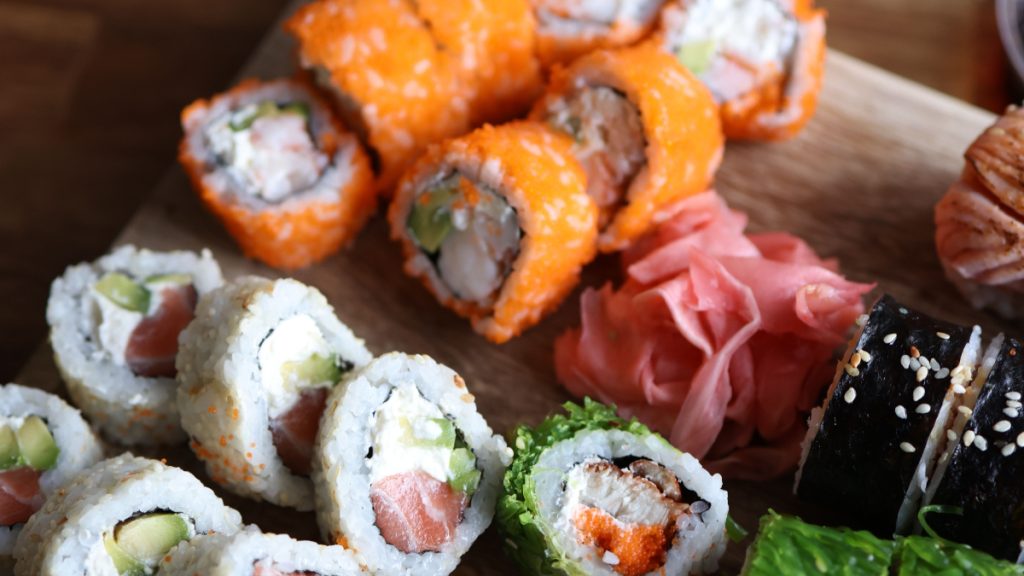
Sushi can vary considerably by its filling, topping and portion. Although the rice is seasoned with vinegar, modern sushi is not automatically a fermented or probiotic food. Image via PEXELS
What the Human Evidence Actually Shows
A 62-day open study randomly assigned participants to a branded natto-powder capsule or a no-product control. Although 205 adults consented to take part, only 116 were included in the final analysis.
The researchers reported sex-specific changes in the relative abundance of Bifidobacterium and Blautia, but no improvement in defecation status. “Relative abundance” describes the proportion of microbial DNA assigned to a group; it does not show that the absolute number of those organisms increased.
The test product was also a particular capsule rather than an ordinary bowl of natto, and several researchers disclosed connections with companies involved in the product or microbiome analysis.
Two older food studies add useful but modest evidence. A 1999 study involving seven healthy volunteers reported changes in certain faecal bacteria and organic acids after they ate 50 g of natto daily for 14 days.
A 2009 crossover study compared 40 g of natto with boiled soybeans in 44 healthy women. More Bacillus was recovered from stool after natto, suggesting that viable spores reached the large intestine. However, bowel frequency, stool volume and stool characteristics did not improve.
Together, these studies support survival in the digestive tract and possible microbiota effects. They do not establish natto as a treatment, guarantee better digestion or prove that it is superior to kimchi or another fermented food.
Why Is Natto So Sticky?
Natto’s famous strings consist largely of poly-γ-glutamic acid, a polymer produced during fermentation. The same process gives natto its assertive aroma and savoury, earthy flavour.
Neither its stickiness nor its smell tells you how many viable microorganisms are present—or whether eating it will produce a health benefit.
Fermentation also produces the enzyme nattokinase, while natto itself supplies vitamin K. Their presence should not be turned into a claim that an ordinary serving prevents or treats cardiovascular disease. Nattokinase supplements are formulated products and are not equivalent to eating natto.
Is Miso Soup a Probiotic?
Miso soup contains a fermented ingredient, but the finished bowl cannot automatically be called probiotic. Whether viable microorganisms remain depends on the product and how it was handled.
Miso production begins with koji, usually rice, barley or soybeans inoculated with the mould Aspergillus oryzae. The koji is mixed with soybeans and salt, after which bacteria and yeasts may contribute during fermentation.
Some miso paste contains live microorganisms when sold; some has been pasteurised. Stirring miso into very hot broth can reduce viability further. Adding the paste after taking the pan off the heat may preserve more living organisms than prolonged boiling, but it still does not create a standardised probiotic dose.
The soup remains made with a fermented ingredient even when few or no microorganisms are alive. Its overall nutritional profile also depends on how much paste is used, the saltiness of the broth and whether the bowl contains tofu, seaweed, mushrooms or vegetables.
Is Sushi Good for Your Gut?
Sushi does not have an automatic probiotic benefit, but it can still form part of a varied meal.
Sushi rice is seasoned with vinegar, which is produced through fermentation. The prepared rice is not itself fermented, however, and adding vinegar does not turn it into a live-culture food. Raw fish is not a ferment either.
Nigiri pairs rice with fish or another topping. Maki wraps rice and fillings, often in nori. Sashimi is sliced fish served without rice. These formats do not have fixed nutrition scores.
Fish can provide protein, while oily fish can contribute long-chain omega-3 fats. Nori and vegetable fillings add variety. Rice quantity, fried fillings, creamy sauces, soy sauce and the size of the order can change the meal considerably.
That is why “balanced” and “portion-controlled” should not be treated as built-in qualities of sushi. Sashimi with vegetable maki and edamame is a different meal from a large platter of fried rolls covered in mayonnaise. The name on the menu is only the beginning of the assessment.
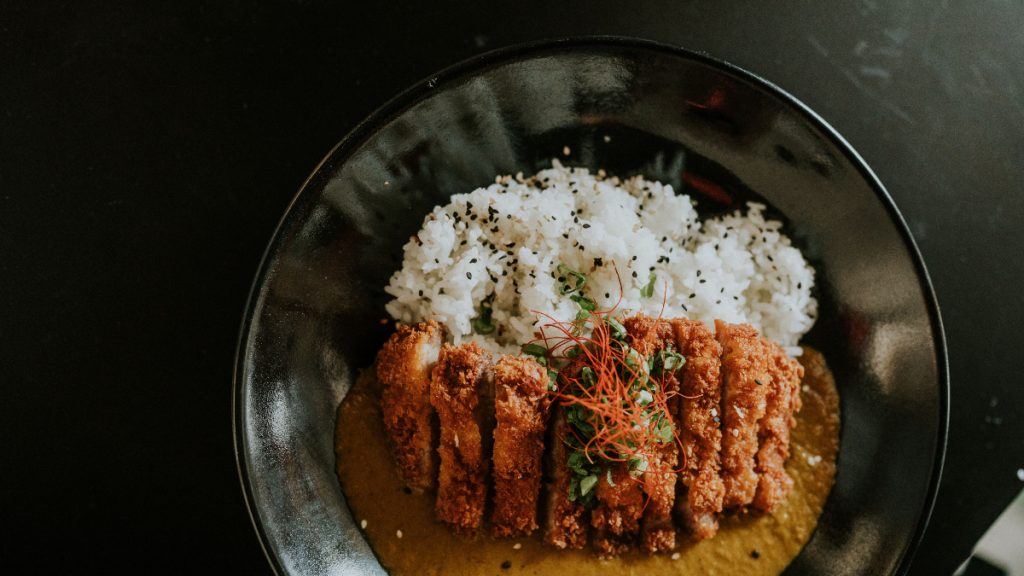
Crisp cutlet, rice and a rich curry sauce make Japanese katsu curry classic comfort food. Its overall balance depends on the portion and what else accompanies it. Image via PEXELS
Are Ramen and Japanese Curry Good for Your Gut?
Neither ramen nor Japanese curry has one fixed gut-health or nutrition score. Recipes vary too widely.
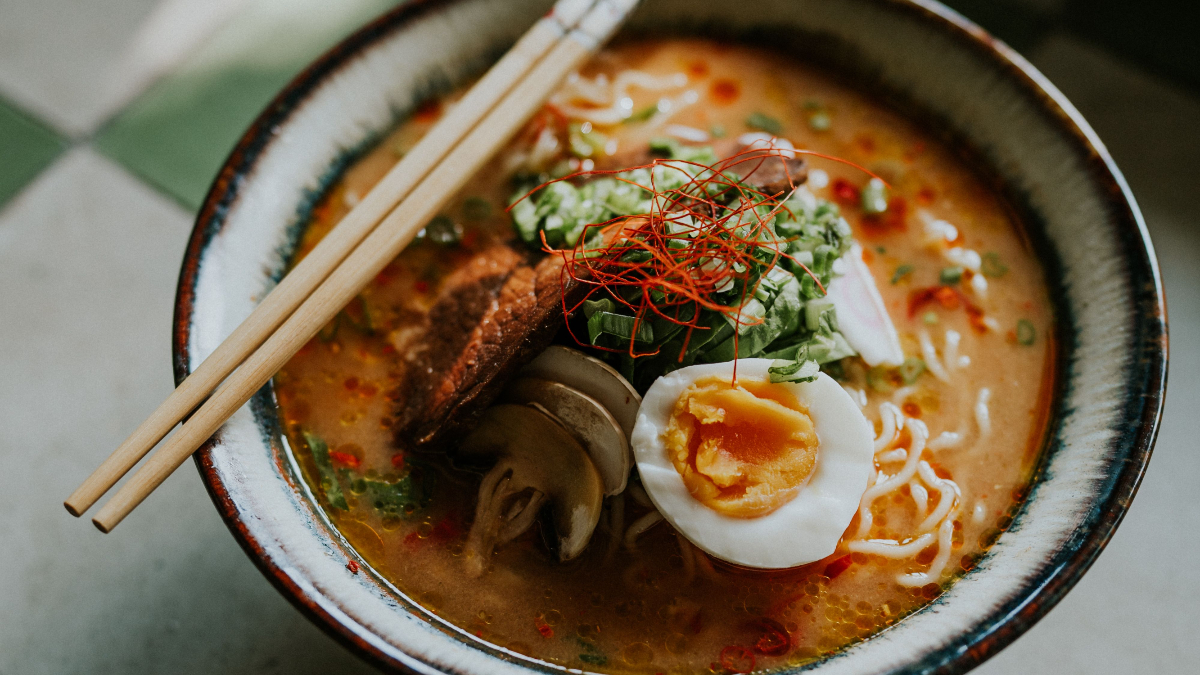
Ramen ranges from clear shio or shoyu broth to rich tonkotsu, with substantial differences in noodles, meat, egg, seaweed, oil and vegetables. Many restaurant and instant versions can be high in sodium, and a noodle-heavy bowl may provide little fibre. But that description does not fit every ramen bowl.
Miso ramen contains a fermented ingredient. Once the miso has spent time in hot broth, however, it should not be assumed to provide viable probiotic microorganisms.
Japanese curry is typically a thick, roux-based sauce served with rice, vegetables, meat, beans, tofu or a fried cutlet. Its fibre, protein, fat, sodium and energy content therefore depend on the recipe and serving.
Calling every curry rice “low-fibre” or an “indulgence” turns a highly variable meal into a moral category. Looking at what is actually in the bowl is more useful.
Japanese Screen Foods at a Glance
FOOD
WHAT IT IS
WHAT NOT TO ASSUME
Natto
Fermented whole soybeans that may contain viable B. subtilis var. natto spores; also supplies soy protein, fibre and vitamin K.
Survival through digestion does not prove a clinical benefit, and natto is not established as superior to other fermented foods.
Miso paste or soup
A fermented paste made using koji. Living microorganisms depend on the product and preparation.
Fermented does not automatically mean probiotic; pasteurisation and hot broth can reduce viability.
Sushi or maki
Rice with fish, vegetables or other fillings. Vinegar is a fermented ingredient.
Sushi rice and raw fish are not live fermented foods, and the format is not automatically balanced or portion-controlled.
Ramen
Noodles, broth and toppings whose composition varies widely.
Miso broth does not guarantee viable microorganisms, and one bowl cannot represent every ramen style.
Japanese curry rice
Rice with a roux-style curry sauce and variable vegetables, protein and toppings.
It is not inherently low-fibre or an “unhealthy treat”; assess the ingredients, serving and wider eating pattern.
How to Make a Screen-Inspired Bowl More Filling
You do not need to optimise a pleasurable meal into joylessness. A few ordinary choices can make it more substantial:
Keep vegetables such as cabbage, carrots, mushrooms, spinach or spring onions in the bowl.
Include a useful protein source such as egg, tofu, fish, chicken, beans or edamame.
Adjust the rice or noodle portion to your appetite instead of treating the on-screen serving as a template.
Use salty broth and sauces to taste; you do not have to finish every drop of broth for the meal to count.
Comfort, pleasure and cultural curiosity are valid parts of eating too.
“I’m making a Japanese-style ramen or curry bowl at home. How can I add more fibre and protein without losing the character of the dish?”
The Honest Takeaway
Natto is the most relevant food here for a discussion of viable microorganisms, but its human evidence remains preliminary and product-specific. Miso is unquestionably fermented; whether live microorganisms survive depends on the paste and preparation.
Sushi, ramen and Japanese curry are better understood through their ingredients, accompaniments and portions than through a probiotic label.
That answer is less dramatic than a league table. It is also considerably more useful: enjoy the meal that the screen made you crave, then judge the actual food in front of you.
Disclaimer:This article provides general information and is not personalised medical or dietary advice. Conventional natto and most common miso products contain soy; check labels carefully if you have a soy allergy. Natto is rich in vitamin K. If you take warfarin or another vitamin K antagonist, speak to your anticoagulation team before adding, removing or substantially changing how often you eat it. The same dietary warning does not automatically apply to every anticoagulant, so follow the guidance for your medicine. Nattokinase supplements are not equivalent to natto and should be discussed with a doctor or pharmacist, particularly if you take medicines that affect clotting.
FAQs
Is natto safe to eat every day?
For most people without a soy allergy, natto can be one of many foods in a varied diet. There is no research-based daily quantity that guarantees a gut benefit. People taking warfarin or another vitamin K antagonist require specific guidance because natto is rich in vitamin K; substantial changes in intake should be discussed with their anticoagulation team.
Do people in Japan eat natto for breakfast?
Yes. Natto is commonly served over rice at breakfast, often with mustard, tare or soy sauce and spring onions. It may also appear in rolls, side dishes and other meals. It is a familiar Japanese staple, although that does not mean everyone in Japan eats or enjoys it.
Does cooked miso soup still count as a fermented food?
Yes. Miso was produced through fermentation, so the soup contains a fermented ingredient. Heating can reduce or eliminate viable microorganisms, however, which means the finished soup should not automatically be described as probiotic or as a live-culture food.
Is sushi rice fermented?
No. Sushi rice is seasoned with vinegar, which is produced through fermentation, but the prepared rice is not normally fermented. It does not become a live-culture food simply because vinegar was added.
Is Japanese curry the same as Indian curry?
No. Japanese curry is generally a thick, mild and sometimes slightly sweet roux-based sauce, commonly served with rice. “Indian curry” is not one dish: Indian cooking includes an enormous range of regional gravies, dry preparations, spice bases and techniques. Neither category has one fixed nutritional profile.
Is ramen high in calories?
It can be energy-dense, but there is no single useful calorie figure for “ramen”. An instant noodle packet, a clear shio bowl and rich tonkotsu ramen with extra noodles, oil and pork are very different meals. The product label or restaurant information is more useful than a universal estimate. Fibre, protein, vegetables and sodium matter alongside calories.
Does the nattokinase in natto prevent blood clots?
Eating natto has not been shown to prevent or treat blood clots, and it should never replace prescribed medical care. Nattokinase supplements may contain concentrated amounts and are not equivalent to the food. Check supplements with a doctor or pharmacist if you take anticoagulant or antiplatelet medicines.
You are now being directed to an external website https://www.callr.live/aashirvaadexperts/premium-plan.
This link is provided for your information and convenience only and ITC Limited is not
responsible for the contents or services provided by Brand Touch India or any information that
you share with Brand Touch India.