


Dry Winter Skin from Poor Gut? Probiotic Fixes
Find out how foods rich in probiotics can help your skin and gut stay healthy. Learn how yogurt, kefir, kimchi, and other foods can naturally help you feel better.
Table of Contents
The cold, dry air of winter can damage your skin, making it tight, flaky, and sensitive. But did you know that things can not be as easy as they seem?
Your gut health has a significant impact on how your skin looks and feels, especially in winter.
If your digestive system isn’t working correctly, it can lead to inflammation that makes your skin dry and lifeless. Probiotics are helpful germs that help your skin shine, and your gut stay healthy.
You may already know that probiotics can help with intestinal problems, but they might also be the secret weapon against the dryness of winter.
In this piece, we’ll talk about how your gut and skin are connected and whether taking probiotics could be the key to getting smoother, healthier skin this winter.
Are you ready to shine from the inside out? Let’s get started!
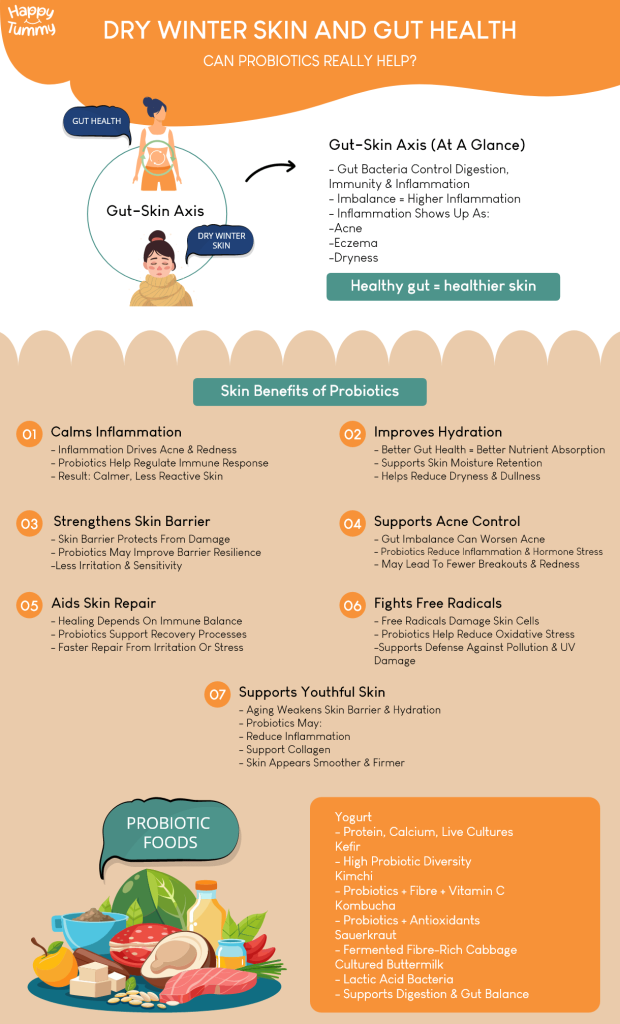
The stomach is home to trillions of bacteria that are incredibly crucial for digestion, immunity, and even inflammation.[1] When the balance of these bacteria is off, it can cause inflammation that shows up as skin problems like acne, eczema, or dryness.
It is typically known as the “gut-skin axis.”[2] In short, an imbalance in gut flora can affect the skin through the gut’s immune system, hormones, and nutrient absorption.
It is thought that maintaining a healthy gut microbiome not only supports digestion but also promotes overall skin health.
There is growing evidence that taking care of your gut could be a step toward better, firmer skin. However, more research is needed to properly grasp this connection.
Aashirvaad Atta and Multigrains introduced the Digestion Quotient. Now you can take a two-minute quiz to see how well your digestive system is performing.
Probiotics are live microorganisms, or “good” bacteria, that can be excellent for your health if you consume enough of them.
These good bacteria help maintain a healthy gut microbiome by supporting digestion and boosting the immune system.[3]
Two popular types of probiotics are Lactobacillus and Bifidobacterium.[4] You can obtain them from foods like yogurt, kefir, and fermented vegetables, as well as from supplements.
By keeping the gut’s natural bacteria alive, probiotics can help with stomach problems, boost the immune system, and make skin healthier. They are often used to maintain gut balance and improve overall health.
Aashirvaad Atta with Multigrains collaborated with renowned nutritionists to make the My Meal Plan test.
The test tells you how much fibre you consume each day, then creates a meal plan tailored to you.
Probiotics are good for more than just your digestive health; they can also help your skin a lot.
Here are some of the most critical ways probiotics can help your skin look healthier.
A lot of the time, inflammation is what causes redness, irritation, and skin problems like acne or rosacea. Probiotics may help with this problem by maintaining gut flora balance, which is essential for regulating the immune response.[5]
When the gut is in balance, it may help manage systemic inflammation that shows up on the skin.[6]
Probiotics may help calm overly strong immune responses that trigger flare-ups.
Adding foods or supplements rich in probiotics to your diet could help calm skin prone to inflammation.
Adding them to your diet may help calm your skin tone and promote the growth of healthy gut bacteria.
For healthy, beautiful skin, you need to keep it moisturized. Probiotics may help with this by boosting your skin’s natural moisture levels.
When the gut microbiota is in balance, it may help the skin stay hydrated by making it easier for nutrients to be absorbed.
Probiotics may help the skin retain moisture, which can help prevent dryness and dullness that can occur when the skin is dehydrated.
Adding probiotics to your daily diet could be a simple way to improve your skin’s moisture.[6]
You might add foods high in probiotics, like kefir or yogurt, to your meals, or you may look into high-quality probiotic supplements for an added boost.
The skin’s barrier function is essential for protecting it from harmful bacteria, pollutants, and other factors that can harm it.
Probiotics may assist this barrier by keeping the gut healthy, which could make the skin more resilient.[7]
A healthy microbiota could support the skin’s natural defenses, help manage inflammation, and reduce the likelihood of irritation or damage.[8] This can be really helpful for skin that is easily irritated.
Adding probiotics to your everyday routine can give you an extra layer of protection.
Maintaining a healthy gut can help treat acne and enhance the body’s natural detoxification and immune processes.
The evidence from the gut-skin axis indicates that dysfunction of gut microbes can result in systemic inflammation, which could aggravate acne.
Probiotics can help balance factors associated with acne development, including inflammation and hormone fluctuations, by promoting a healthier gut microbiome. In the long run, it can help manage breakouts and make the complexion less red. [9]
The use of probiotics-rich foods (yogurt, kefir, fermented vegetables) or probiotics with proven clinical effects might thus be used in the management of acne as part of a more comprehensive skincare and dietary strategy.
It might take a long time for the skin to heal on its own when it is hurt or irritated. Probiotics might help by supporting the body’s healing.
A healthy gut microbiome is known to modulate inflammation and immune responses, both of which are vital for skin healing.
Probiotics may help the skin recover more quickly from cuts, irritation, or environmental damage by boosting blood flow and nutrient absorption.[10] If you eat probiotics every day, they might help your skin heal faster.
Healthy skin reflects overall good health that requires dietary modifications, regular physical activity, stress management, adequate sleep, and proper hydration.
You could try to eat more foods high in probiotics, such as fermented vegetables or yoghurt, to help your skin heal faster over time.
Aging is a natural process and is associated with physical changes and moderated nutritional needs. The skin ages over time, yet keeping it soft, healthy, and strong can help slow the signs of aging.
As skin ages, both the barrier function and the microbiome undergo significant changes.
The natural decline in skin lipids, combined with reduced cellular turnover, compromises the skin’s ability to retain moisture, leading to dryness, wrinkles, and increased susceptibility to external damage.
Probiotics might help by managing inflammation and increasing collagen production. Both of these things are vital for keeping skin looking young. [11]
A healthy microbial environment, including probiotics & prebiotics, aims to restore the skin’s natural defenses, enhance barrier function, and potentially delay the visible signs of aging.[12]
A healthy gut microbiota may help the body repair skin cells and combat signs of aging. Probiotics may help improve your skin’s appearance by making fine lines and wrinkles less noticeable.
Adding foods or supplements high in probiotics to your diet may help you look younger. This could provide your skin with a natural internal boost, helping it look younger.
Free radicals are unstable molecules that can harm skin cells, cause various skin problems, and make skin look older.
Probiotics may help manage oxidative stress by improving gut flora, which can help the body fight free-radical damage. [13]
Probiotics may help protect the skin from factors such as pollution and UV radiation by managing inflammation and possibly boosting antioxidant activity.
To help your skin fight free radicals more effectively, eat probiotic-rich foods or take probiotic supplements every day.
Adding foods high in probiotics to your diet is a good method to boost your immune system and gut health. Here are six great probiotic meals that are good for your health:
Adding these probiotic foods to your everyday diet will improve your gut and overall health.
Eating probiotic foods like yogurt, kefir, kimchi, kombucha, sauerkraut, and miso can be a great way to improve your gut and overall health.
These foods are rich in probiotics, which can support digestion, strengthen your immune system, and improve your skin health.
But it’s important to realize that no single diet or supplement can provide your body with all the nutrients it needs.
A healthy diet that includes a wide range of nutrients is essential for long-term health and energy. It’s always a good idea to talk to a doctor before making significant changes to your diet, especially if you already have health problems.
Probiotics can be a helpful complement, though. A healthcare professional can help you select the correct mix of probiotics and other essential nutrients that are right for you.
Make wise choices to maintain long-term good health across all areas.
Probiotics may help with skin issues, including acne, eczema, and redness, by allowing control and support of body-wide inflammation. A healthy gut microbiome can benefit your skin, but results may vary from person to person. Along with probiotics, dietary modifications, regular physical activity, stress management, adequate sleep, and proper hydration.
There is no recommended dietary intake from the RDA; however, adding 1 or 2 servings of probiotic-rich foods like yogurt, kefir, or kimchi to your daily diet is an excellent place to start. It’s recommended to start with small amounts of probiotics and see how your body reacts.
Most individuals can safely take probiotics, but you should talk to a doctor before adding them to your diet, especially if you have a weak immune system or digestive problems. They can help ensure that probiotics are a good choice for you.