What Can You Eat on Ekadashi? A Meal That Goes Beyond Fried Vrat Food
Ekadashi is the eleventh tithi of both the waxing and waning lunar fortnights. It is traditionally observed as a day of fasting, prayer and restraint, particularly in Vaishnava traditions associated with Lord Vishnu.
What can you eat on Ekadashi? In many traditions, the list includes fruit, milk, curd, paneer, potatoes, sweet potatoes, sabudana, peanuts, nuts and non-cereal flours such as kuttu, singhara and rajgira. Rice, wheat, maize, oats, barley, dals, beans and foods made with them are generally avoided. Many households also skip onion and garlic and use sendha namak instead of regular salt. Ekadashi food rules vary by sampradaya, region and family, so treat your own household or temple practice as the final word.
Ekadashi is the eleventh tithi of both the waxing and waning lunar fortnights. It is traditionally observed as a day of fasting, prayer and restraint, particularly in Vaishnava traditions associated with Lord Vishnu.
The form of the fast can differ considerably. Some devotees observe a nirjala fast without food or water. Others have only water, fruit or milk, while many eat one or more meals prepared without grains and pulses.
That last version is where the Indian kitchen becomes wonderfully inventive. Remove rice, wheat and dal from the pantry, and potatoes, shakarkandi, sabudana, kuttu, singhara, rajgira, fruit, vegetables, curd, paneer, peanuts and nuts step forward.
The practical problem is that many of these ingredients are immediately turned into puris, pakoras, vadas or chips. There is nothing inherently wrong with enjoying a festive puri. It simply does not have to be the entire architecture of the meal.
Before You Plan the Meal, Decide What Kind of Fast You Are Observing
A dish can be called “vrat-friendly” and still not fit every Ekadashi tradition. Start with the rules you actually follow.
Type of observance
What it generally involves
Nirjala fast
No food or water; this meal guide does not apply
Water-only fast
Water but no food
Phalahari fast
Fruit and, in some traditions, milk, curd or nuts
Non-grain Ekadashi meal
Permitted vegetables, roots, fruit, dairy, nuts and selected non-cereal flours
Temple or household-specific observance
Additional rules about salt, spices, dairy, sesame or particular fasting staples
If you are uncertain about an ingredient, ask a knowledgeable family elder or consult the guidance followed by your temple or sampradaya. “Vrat food” is not one universal category.
Ekadashi Food Rules to Check Before You Cook
Most Ekadashi traditions avoid food grains, cereals, dals, beans and pulses. In many Vaishnava households, onion and garlic are also excluded.
A few less obvious details matter:
Green peas and bean-type vegetables may be treated as legumes rather than permitted vegetables.
Many households use sendha namak, or rock salt, instead of regular salt.
Commercial powdered hing may contain wheat flour or another grain-based carrier.
Oil or ghee previously used to fry grain-based food may carry crumbs or residue.
Ready-made vrat mixes and spice blends should be checked for wheat, gram flour and other excluded ingredients.
Some Vaishnava guidance permits sesame specifically on Sat-Tila Ekadashi but excludes it on other Ekadashis.
These rules are religious conventions, not nutrition claims, and practices differ across India.
Samak and kuttu are not the same ingredient
This is a common source of confusion. Samak, also called sama, sanwa or vrat rice, is barnyard millet. Kuttu is buckwheat, a pseudocereal. They are entirely different foods.
Many regional fasting traditions use samak, but stricter Ekadashi observances exclude all cereal grains. If you are specifically building a grain-free plate, leave samak out unless your household tradition explicitly permits it.
Kuttu and rajgira are commonly accepted in many vrat traditions because they are pseudocereals rather than conventional cereal grains. Even here, your own practice remains the deciding factor.
How to Build a Satisfying Ekadashi Plate
Instead of planning the meal around a single fried snack, choose one element from each of these four groups.
1. Choose one base
This could be:
Kuttu, singhara or rajgira cheela
A soft roti made with a permitted fasting flour
Sabudana khichdi
Boiled or roasted potato
Roasted or mashed shakarkandi
One starchy base is usually enough. The rest of the plate can bring texture, freshness and variety.
2. Let a vegetable do some real work
Depending on your household rules, consider pumpkin, bottle gourd, ash gourd or cucumber.
Pumpkin can be cooked with cumin, green chilli and coriander. Lauki can be simmered gently or combined with curd where dairy is permitted. Cucumber can become a simple raita with roasted cumin.
Vegetables need not sit on the edge of the thali as a token spoonful. Give them enough space to carry part of the meal.
3. Add something sustaining
Where permitted, curd, paneer, peanuts and nuts can add substance to a plate otherwise dominated by starch.
Try paneer lightly browned on a tawa, plain curd, cucumber raita, a coarse peanut chutney or a modest handful of nuts. If your household uses ghee during the fast, Aashirvaad Svasti Pure Cow Ghee can be used to tawa-cook a kuttu cheela or finish roasted shakarkandi.
4. Finish with fruit or a fresh side
Guava, papaya, apple, pear, orange, pomegranate, grapes and banana can all bring variety, depending on what is seasonal and locally available.
Fruit can be served on its own or paired with curd and nuts where those foods are permitted. It does not need to be reduced to the banana grabbed hurriedly between meals.
Sabudana Is Useful, but It Need Not Run the Whole Menu
Sabudana is one of India’s most familiar fasting staples. Because it comes from tapioca rather than a cereal grain, it is commonly permitted during Ekadashi.
It also provides plenty of starch but very little fibre or protein. That makes sabudana useful as the energy-giving base of a meal, rather than the only ingredient on the plate. You can read more about what sabudana does—and does not—offer the gut.
Pair sabudana khichdi with peanuts and cucumber raita, for example, or serve a modest portion beside roasted pumpkin and curd. This gives the meal more range than a plate built entirely around sabudana vada.
Packaged sabudana should also be checked if your religious practice requires strict avoidance of grain contact during processing.
Kuttu Is More Versatile Than a Puri
Kuttu, or buckwheat, is botanically a pseudocereal. Its flour is familiar in kuttu ki puri, but deep-frying is only one possibility.
Kuttu flour can become a cheela, a tawa-cooked flatbread or a softer pancake bound with mashed potato. It can also be paired with pumpkin sabzi, cucumber raita or gently cooked potatoes.
Because kuttu contains more fibre and protein than sabudana, it brings something different to a fasting plate. This guide to buckwheat and amaranth explains how the two pseudocereals differ and where their benefits are sometimes overstated.
Potatoes and Shakarkandi Deserve Better Than Chips
Potatoes are dependable in a vrat kitchen, but they are also remarkably easy to underuse. They can be boiled and tossed with cumin, coriander and lime; roasted until crisp around the edges; combined with crushed peanuts; or mashed with curd and herbs.
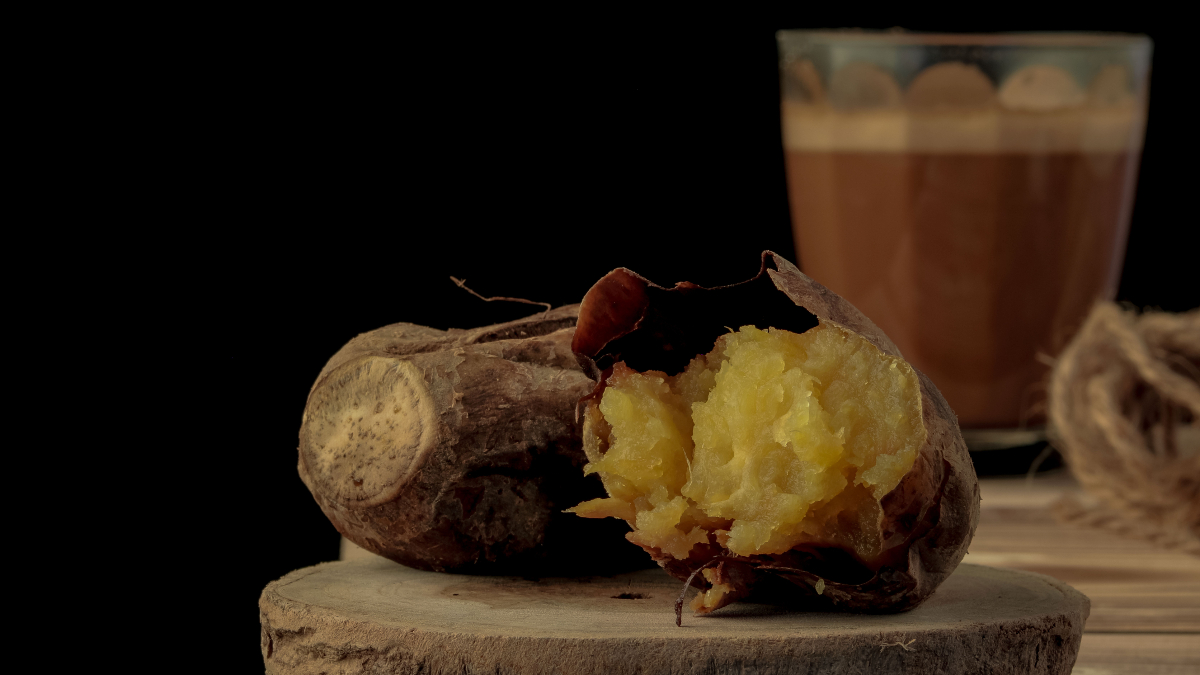
Shakarkandi, or sweet potato, can be roasted whole, cubed and pan-cooked, or mashed with ghee, cumin and lime. Roasted sweet potato with plain curd and crushed peanuts makes a much more substantial plate than a bowl of chips while remaining recognisably part of an Indian fast.
Subject to your household’s rules, these combinations offer an easy place to start:
Kuttu cheela plate: Kuttu cheela, pumpkin sabzi and cucumber raita
Sabudana plate: Sabudana-peanut khichdi, roasted lauki or pumpkin, and plain curd
Shakarkandi plate: Roasted sweet potato, tawa-browned paneer and a seasonal fruit bowl
For a lighter phalahari meal, try fruit with curd and chopped nuts if all three are part of your practice.
These are templates, not prescriptive menus. A good Ekadashi plate is one that respects the observance, uses foods you tolerate comfortably and does not demand an elaborate cooking project.
The Bottom Line
Ekadashi fasting is a devotional practice, not a guaranteed detox or digestive reset. Its meaning comes from the observance itself.
From a food-planning perspective, the most useful shift is simple: do not ask sabudana, potato or a pile of fried snacks to carry the entire day. Within the rules you follow, use vegetables, fruit, dairy, peanuts or nuts to give the plate more variety and staying power.
A puri can belong on the plate. It just need not be the plate.
Ask Happy Tummy GPT
Need to work with the ingredients already in your kitchen? Ask Happy Tummy GPT:
“Help me build a simple Ekadashi meal using kuttu, lauki and curd, without deep-frying.”
One fasting day does not define your everyday digestive habits. To look at the broader picture, take the Digestive Quotient Test.
This article provides general food information and describes commonly followed Ekadashi practices; it is not medical or religious advice. Fasting rules vary by sampradaya, temple, region and household. Follow the guidance relevant to your tradition. Anyone with individual health, nutritional or medication-related needs should seek personalised professional advice before undertaking a fast.
FAQs
What can you eat on Ekadashi fast?
Common choices include fruit, milk, curd, paneer, potatoes, sweet potatoes, sabudana, peanuts, nuts, kuttu, singhara and rajgira. Exact rules vary by household and religious tradition.
Can we eat sabudana on Ekadashi?
Sabudana is commonly permitted because it is made from tapioca starch rather than a cereal grain. Those following strict rules may also want to check how packaged sabudana was processed and handled.
Is kuttu allowed on Ekadashi?
Kuttu or buckwheat is commonly used during Ekadashi because it is a pseudocereal rather than a conventional cereal grain. Some traditions follow stricter rules, so check your household practice.
Are samak and kuttu the same?
No. Samak is barnyard millet, while kuttu is buckwheat. Many regional vrat traditions permit both, but strict grain-free Ekadashi practices may exclude samak because it is a cereal grain.
Can we eat curd on Ekadashi?
Many Ekadashi traditions permit milk, curd and paneer. Devotees observing a stricter fruit-only, water-only or nirjala fast may not include them.
Which vegetables are not allowed on Ekadashi?
There is no single list followed across India. Many Vaishnava practices avoid onion, garlic, peas and bean-type vegetables. Individual households may have further restrictions.
Can we eat regular salt on Ekadashi?
Many households use sendha namak, or rock salt, instead of regular salt during a fast. This is a matter of religious custom, so follow the practice observed in your home or temple.
What is a simple Ekadashi dinner without fried food?
Try kuttu cheela with pumpkin sabzi and cucumber raita, or roasted shakarkandi with tawa-cooked paneer and fruit. Confirm that every ingredient fits your own fasting rules.
You are now being directed to an external website https://www.callr.live/aashirvaadexperts/premium-plan.
This link is provided for your information and convenience only and ITC Limited is not
responsible for the contents or services provided by Brand Touch India or any information that
you share with Brand Touch India.