Makhana for Digestion: Is Fox Nut Actually Good for Your Gut?
A familiar fasting ingredient, now a staple of the snack jar. Here is what the evidence supports.
Table of Contents
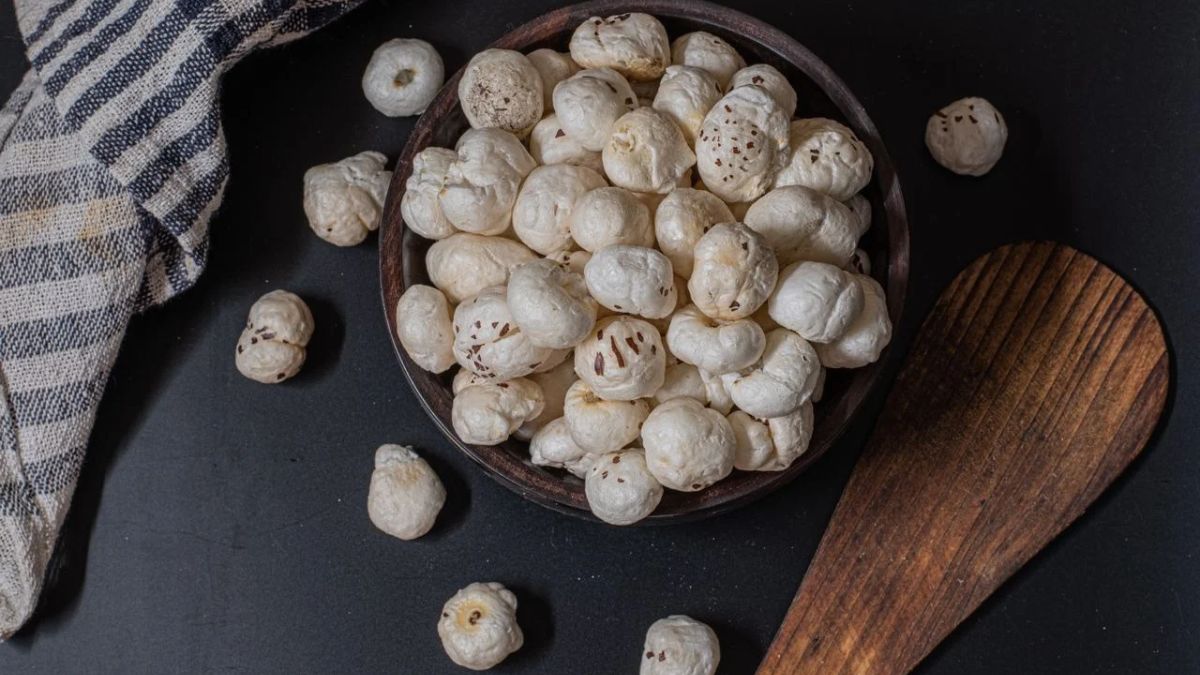
Makhana can be a snack, but it is not an established treatment for constipation, bloating or poor digestion. Also called fox nut or phool makhana, it is the popped seed kernel of Euryale ferox, an aquatic plant in the water-lily family. It is not a tree nut like almond or cashew.
Plain makhana is chiefly a starchy food, with some protein, fibre and minerals. The amount you get depends on the product and portion. Its airy texture does not make it carbohydrate-free or guarantee that it will feel comfortable on everyone’s stomach.
Research on makhana starch is interesting, including experiments on resistant starch. However, laboratory work on treated flour does not prove that eating roasted puffs improves the human gut microbiome. A small human glycaemic-index study also does not establish a digestive treatment benefit or one score for every makhana product.
Preparation matters. Dry-roast plain puffs, or roast them with a little oil or ghee, and season according to preference. On packets, compare similar products per 100g and check ingredients, sodium, fat, total sugars and added sugars. A plain packaged product can be a choice too; homemade is not automatically better.
Enjoy makhana alongside other snack options, such as fruit, roasted chana, nuts or plain curd if tolerated. For fibre, look at meals across the day rather than relying on one snack.
If constipation persists, seek professional advice. Increase fibre gradually if suitable and drink enough. Blood in stool, unexplained weight loss or severe abdominal pain needs prompt medical assessment.
Makhana has moved from fasting meals and kheer to urban snack shelves: roasted with ghee and pepper, tossed in chaat masala or sold with promises of being ‘gut-friendly’. It can be an enjoyable snack. The digestive claims need a closer look.
Makhana, also called fox nut or phool makhana, is the popped seed kernel of Euryale ferox, an aquatic plant in the water-lily family. It is a seed rather than a tree nut such as an almond or cashew.
In India, it is strongly associated with Bihar, although it is also grown elsewhere. ICAR describes the roasting and popping that turn the harvested seeds into the familiar white puffs. What you roast at home has already undergone that processing.
That distinction matters when reading nutrition claims. Raw seeds, popped makhana, makhana flour and a flavoured snack pack are not interchangeable products.
Plain makhana is mainly a starchy food, with protein, fibre and minerals. How much you get depends on the product and the amount you eat. Airy texture does not mean carbohydrate-free, and a large-looking bowl can still contain a modest weight of food.
For a packaged snack, use its own nutrition information. Do not borrow a figure for unpopped seeds or a flour experiment and apply it to the puffs in your bowl. Some research reports crude fibre, which is not the same measure as total dietary fibre on a nutrition comparison.
There is no need to make makhana responsible for your whole fibre intake. Dal, vegetables, fruit and whole grains can contribute across meals. Nor should its name lead you to expect the same nutrient profile as almonds or cashews.
Makhana is not an established treatment for either. The studies discussed here examine food composition, starch properties or blood-glucose responses; they do not demonstrate that ordinary makhana snacking relieves constipation or bloating.
A food can fit a varied diet without having a proven therapeutic effect. ‘Contains fibre’ and ‘treats constipation’ are different claims.
If constipation is the problem, check the broader pattern: fluids, fibre intake, movement, toilet habits and medicines that may contribute. Increase fibre gradually if suitable, and drink enough alongside it. Follow any prescribed fibre or fluid restriction.
The BDA’s 2025 guidance on chronic constipation in adults supports specific options such as psyllium and kiwifruit for particular outcomes. Prunes may also help some people, but findings are less certain and depend on the outcome measured. A doctor, pharmacist or dietitian can help choose an appropriate approach.
Persistent constipation needs assessment. Continuing to change snacks is not a substitute for finding out why symptoms are continuing.
Resistant starch escapes digestion in the small intestine and can be fermented by microbes in the large intestine. Researchers have investigated how makhana starch behaves, including after deliberate modification.
For example, a 2020 laboratory study used an enzyme treatment to increase resistant starch in popped makhana flour and tested digestibility outside the human body. That is useful food-science research, but the treated material is not the same as a handful of home-roasted makhana.
It does not show that eating the snack changes human gut bacteria or improves digestive symptoms. The practical conclusion is to keep those claims separate from the laboratory findings.
There is human research, so it would be inaccurate to describe all makhana science as laboratory-only. A study published in 2022 measured the glycaemic index of a particular roasted preparation in ten healthy adults and reported a low result.
That does not establish a GI for every product, coating or preparation. It also does not establish a benefit for constipation or bloating: those were not the outcomes being tested.
GI is measured using a standardised amount of available carbohydrate. The portion you actually eat and the rest of the meal affect your blood-glucose response; that is different from saying portion size changes the food’s measured GI.
A traditional ingredient or a ‘lightly roasted’ description is not enough to establish a low-GI claim. If you have diabetes, the snack still needs to fit your individual carbohydrate and treatment plan.
The useful choices are familiar kitchen ones:
The aim is a snack you enjoy in a portion that suits your appetite and meals. You do not need to turn it into a digestive remedy.
A plain packaged product can be convenient. A flavoured one may contain more oil, salt or sugar, but the label tells you more than the fact that it came in a packet.
Compare similar products per 100g, then consider your usual serving. Check ingredients, sodium, total fat, saturated fat, total sugars and added sugars. Use a declared fibre figure where available rather than assuming all makhana products are high in fibre.
WHO recommends keeping free sugars below 10% of daily energy, with additional benefit below 5%. Five per cent of a 2,000 kcal diet is 25g. Free sugars include added sugars and those naturally present in honey and syrups; jaggery or honey used as a coating still counts.
For fats, WHO advises adults to keep total fat at 30% of energy or less and favour unsaturated fats. These are whole-diet recommendations, not a test that one snack has to pass on its own.
For more on protein, calories and packet comparisons, see our makhana nutrition guide.
Yes, if you enjoy it and tolerate it. There is no evidence-based serving that guarantees better digestion, and no requirement to eat it daily.
Fruit, roasted chana, nuts or plain curd if dairy suits you can offer other snack choices. Their nutrient profiles differ, so choose according to appetite, preference and the rest of your day rather than naming one snack the winner.
If makhana repeatedly leaves you uncomfortable, note the portion, seasoning and other foods eaten with it. A brief food-and-symptom diary can help a conversation with a clinician or dietitian; it cannot diagnose the cause on its own.
Seek medical review for digestive symptoms that persist, worsen or keep returning. Blood in stool, unexplained weight loss, persistent abdominal pain or difficulty swallowing needs prompt medical attention.
Severe or sudden abdominal pain, particularly with vomiting, a swollen abdomen or inability to pass gas or stool, needs urgent assessment. Do not try to manage these symptoms by changing snacks or adding fibre.
This article provides general information for adults and is not a diagnosis, treatment recommendation or substitute for personalised medical or dietary advice. Makhana should not replace prescribed treatment for constipation, diabetes or any other condition. Food tolerance and nutritional needs vary. Children, pregnant or breastfeeding people, older adults and anyone with a medical condition may need individual guidance. Follow prescribed dietary or fluid restrictions, and seek medical attention for persistent symptoms or the warning signs described above.
It can fit a varied diet, but a digestive-treatment benefit has not been established. The research discussed here does not show that ordinary makhana snacking improves gut bacteria or relieves constipation or bloating.
Do not rely on it as a treatment. Fibre across meals, adequate fluids, activity and toilet habits may help, while persistent symptoms need assessment. Specific constipation treatments should be chosen with professional advice.
It is the popped seed kernel of Euryale ferox, an aquatic water-lily-family plant. It is not a tree nut such as an almond or cashew, and its nutrient profile is different.
One small human study reported a low GI for the roasted preparation tested. That finding cannot be applied to every makhana product. Portion and meal context still matter to blood-glucose response.
Yes, if it suits your appetite and tolerance and fits your overall diet. Daily consumption is not necessary for gut health, and there is no established therapeutic portion.
Tolerance varies. There is not enough evidence to predict that makhana will cause or relieve gas in everyone. Notice portions and preparation, and seek advice for repeated or persistent discomfort.