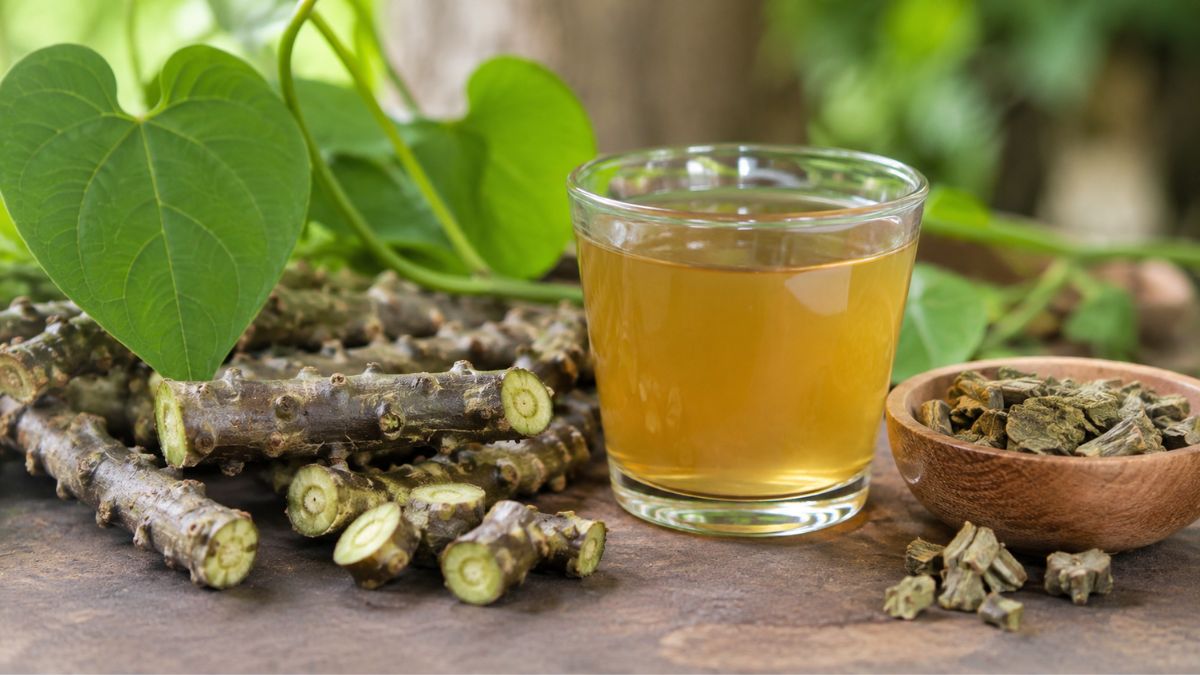
Does Giloy Actually Help Digestion? Cutting Through the Claims
Giloy has a long history in Ayurveda as a digestive herb, but its modern health claims go beyond the available evidence. Its traditional uses, potential benefits and safety concerns explained.
Giloy has a long history in Ayurveda as a digestive herb, but its modern health claims go beyond the available evidence. Its traditional uses, potential benefits and safety concerns explained.
Expert reviewed by Qurath Ain, Certified Nutritionist and Clinical Dietitian
TL;DR
Giloy’s Ayurvedic reputation as a digestive herb — Deepan (appetiser) and Pachan (digestive) — has some scientific logic behind it, and traditional use for indigestion, gas and hyperacidity is long-standing. But the marketing has run ahead of the evidence: much of the human research is preclinical or limited, and there’s also genuine, published evidence linking Giloy to liver injury in some people, especially with prolonged or high-dose supplement use. Use it the way your grandmother did — a mild, food-adjacent decoction, not a supplement-aisle miracle — and talk to a doctor first if you’re pregnant, on medication, or have an autoimmune or liver condition.
Giloy has been a cherished part of Indian households long before it caught the attention of the supplement industry. Your grandmother likely recognised it as the creeper along the boundary wall — the one she’d brew into a kadha whenever someone had a fever or felt a bit off in their stomach.
Today, you’ll find the same plant in five different forms at every pharmacy — juice, churna, tablets, capsules and satva — each making bold claims about benefits ranging from immunity to liver health to diabetes management. So what does Giloy actually do for digestion? Let’s be honest and specific about it.
So, What Is Giloy?
Giloy (Tinospora cordifolia, or “Guduchi”) is a staple of Ayurvedic medicine, native to India. Many Ayurvedic texts call it “Amrita” — the root of immortality. You’ll find it as juice, powder, tablets, and decoctions. Giloy is a medicinal herb. Every part of the giloy plant — the roots, the stem, the leaves, and its flowers — has antioxidant, antimicrobial and anti-inflammatory properties.
In traditional Ayurveda, Giloy belongs to the Rasayana class — herbs regarded as improving longevity, immunity and overall balance. It’s also described as tridoshic, meaning it’s considered suitable for all three doshas (Vata, Pitta, Kapha), which is one reason it’s been used so widely across generations.
The Detox and Immunity Claims, Sorted
MARKETING CLAIM VS. WHAT’S ACTUALLY KNOWN
Immunity. There’s research — much of it preclinical or lab-based — suggesting Giloy may support immune-cell activity and help the body respond to certain infections. That’s a different claim from saying it improves everyday gut health or speeds up digestion, and it’s worth not blurring the two. It is used to improve the immune system and the body’s resistance against infections. The extract has the potential to inhibit pain and suppress inflammation due to the presence of antioxidants like flavonoids and alkaloids.
Detox. There’s no scientific evidence supporting the idea of “detoxifying the gut” with Giloy, or with any food or herb. Your liver and kidneys already do this job continuously, without help from a juice.
Giloy’s Digestion Connection: What the Evidence Says
Liver Function
This is often overlooked when discussing digestion, but it matters. The liver produces bile, which helps process nutrients from meals and filters what the gut absorbs — when it’s functioning well, digestion tends to run more smoothly, and fats are digested more efficiently.
The liver is an important organ and plays a key role in the regulation of metabolism, storage of nutrients and detoxification. The factors that affect liver health are dietary deficiencies, infections, alcohol, drugs, chemicals and inborn errors of metabolism, etc.
No single herb, food or drink can improve liver functioning. Some tips to maintain and support good liver function:
Avoid excess consumption of high-fat foods and sodium; limit the consumption of deep-fried foods. Consumption of alcohol should be limited.
Eat a balanced diet including all food groups.
Eating food with fibre helps your liver work at an optimal level. Fruits, vegetables, whole grains, millets, multigrain, etc are good sources of fibre and contribute to your fibre needs.
Drink at least 8 glasses of water per day, as it prevents dehydration and helps your liver to function better.
Giloy is a beneficial herb; however, it may not help everyone.
Deepan and Pachan (Not Just Ancient Words)
Two terms show up often on Giloy packaging: Deepan (appetiser) and Pachan (digestive). Deepan refers to a herb that’s said to ignite the digestive fire, preparing the gut to receive and process food. Pachan refers to the process of digesting food itself.
According to Ayurvedic theory, most digestive problems — indigestion, gas, bloating, hyperacidity — are thought to stem from Ama, a toxic residue that builds up from slow or incomplete digestion. Traditionally, Giloy has been used to support digestion and help prevent that build-up. However, anything in excess can be harmful, so please consult with your healthcare provider before consuming it.
Instead of seeing Giloy as a solution to symptoms, it’s more accurate to view it as systemic, gradual support.
Indigestion and Hyperacidity
Traditional Ayurvedic texts often position Giloy as a go-to remedy for indigestion, hyperacidity and flatulence — consistent with its Pachan classification, which is why Giloy kadha or powder is traditionally taken after meals. This is one of the more frequently shared uses of Giloy across generations of Indian households. The mechanism is plausible from a food-science standpoint, even though the available clinical evidence in humans remains limited.
Digestive Enzyme Activity
One interesting thread of Giloy research touches on digestive enzymes — the compounds your body produces to break down carbohydrates, proteins and fats. Some lab research has looked at whether Giloy’s natural amylase content (an enzyme that helps break down starch) might support enzymatic digestion directly, not just indirectly. It’s an early, interesting line of research rather than settled evidence. (For more on what digestive enzymes are and whether a supplement is worth it generally, see our digestive enzymes explainer.)
Claim
What Tradition Says
What the Evidence Actually Shows
Immunity
Amrita — broadly immune-supporting
Preclinical/lab support for immune-cell activity; limited human clinical evidence
Digestion (Deepan/Pachan)
Used for indigestion, gas, hyperacidity
Plausible mechanism; traditional use is long-standing; clinical trials in humans are limited
Gut “detox”
Marketed as a detox/cleanse
No scientific evidence — liver and kidneys already do this job
Diabetes management
Marketed for blood sugar
Preclinical evidence only — not established in humans; not a substitute for prescribed treatment
CASE STUDY
Lakshmi, a 52-year-old in Coimbatore, grew up watching her mother simmer Giloy stems into a kadha whenever the family felt “off.” She started making a small cup for herself a few times a week after lunch — not as a cure for anything, just a habit she’d inherited. She didn’t take any packaged tablets or juice, and she checked with her doctor since she’s on thyroid medication. A few months in, she can’t say Giloy transformed her digestion, but she says the after-lunch heaviness she used to get has eased somewhat — and she likes the ritual of it as much as any effect.
How Giloy Is Traditionally Used — and What It Won’t Do
If you’re adding Giloy to your routine in a way that aligns with its traditional, better-supported uses: traditional formulations often pair it with ginger and black pepper, both well-known digestive herbs. Many Ayurvedic practitioners favour a fresh decoction — simmering small pieces of Giloy stem in water and drinking it warm — over pre-packaged juice or tablets. Moderate, regular amounts work better than a large one-off dose, and consistency over weeks matters more than any single serving.
What it’s not going to do: it won’t work overnight — Rasayana herbs are understood to act gradually with regular use, not as an instant fix. It’s not a cure for a diagnosed digestive condition — not IBS, not acid reflux — and any brand implying otherwise is overstating its case. And it’s not a substitute for medical treatment: if you have a diagnosed digestive condition, Giloy might be a reasonable addition to your routine, but only alongside what your doctor has actually recommended, not instead of it.
Quality also varies more than people expect. India’s supplement industry has real regulatory inconsistencies, and the concentration of active compounds differs a lot between products — a commercial juice from a supermarket shelf is a genuinely different thing from a freshly prepared stem decoction. That’s worth knowing before deciding whether something is “working.”
Who Should Be a Little More Careful
A FEW SENSIBLE CAUTIONS
Using it regularly, especially a packaged product? Published Indian case series have linked prolonged or high-dose Giloy use — more often packaged supplements than fresh decoctions — to genuine liver injury in some people, occasionally with autoimmune features. If you notice unusual fatigue, yellowing of the skin or eyes, dark urine, or abdominal pain while taking Giloy, stop and see a doctor.
Have an autoimmune condition? Some of the reported liver-injury cases involved autoimmune features. Talk to your doctor before starting Giloy if you have an autoimmune condition.
Pregnant? Traditional use during pregnancy isn’t well studied. If you’re pregnant, check with your doctor before adding Giloy to your routine.
On regular medication? Giloy’s immune-modulating activity means it’s worth mentioning to your doctor if you’re on any regular medication, particularly anything affecting the immune system or liver. Herbs can interfere with treatments such as dialysis, chemo, etc. Individuals who have kidney, gastro and liver ailments should be cautious and consult with their doctors before consuming.
The Honest Bottom Line
The Deepan and Pachan classification isn’t just clever marketing — it’s rooted in centuries of Ayurvedic observation, and the traditional, food-adjacent use of Giloy has a genuine internal logic behind it. But what the supplement aisle has done to a reasonable traditional herb is turn it into a product that frequently oversells its benefits while saying little about its risks.
Use Giloy the way it was meant to be used — a steady, moderate, food-related companion, not a cure and not a shortcut. Your grandmother’s kadha was onto something. Just go in with clear eyes about what the evidence actually supports, and check with a doctor first if any of the cautions above apply to you.
Ask Happy Tummy GPT
“I’m thinking about trying Giloy for digestion — based on my health history, what should I ask my doctor before starting?”
Frequently Asked Questions
Does Giloy actually help digestion?
There’s a plausible, traditionally supported case for it — Ayurveda classifies it as Deepan and Pachan, and it’s long been used after meals for indigestion, gas and hyperacidity. Human clinical evidence is still limited, so treat it as reasonable food-first support, not the only proven fix.
Is Giloy safe to take daily?
In moderate amounts, traditionally prepared, it’s generally considered safe for most people in the short term. Regular, prolonged or high-dose use — especially of packaged products — is where documented safety concerns (see below) become more relevant, so “daily forever” isn’t automatically the safest choice, especially for individuals with serious health conditions.
Can Giloy cause liver damage?
There’s published evidence — including a multicentre Indian study — linking Giloy use to liver injury in some people, particularly with prolonged or high-dose supplement use. It’s not common, but it’s real and documented, not fringe. Watch for unusual fatigue, yellowing skin or eyes, dark urine, or abdominal pain, and see a doctor if they appear.
Is Giloy safe during pregnancy?
Traditional use in pregnancy isn’t well studied. If you’re pregnant, check with your doctor before adding Giloy to your routine rather than assuming it’s fine because it’s a traditional herb.
Does the form — juice, powder, tablets — matter?
Yes. Many Ayurvedic practitioners favour a fresh stem decoction over packaged juice or tablets, partly because the concentration of active compounds in commercial products varies a lot due to inconsistent regulation. Fresher, simpler preparations are generally the more traditional and better-understood option.
Disclaimer: This is general information, not medical advice. If symptoms continue, are severe, or keep coming back, it’s worth speaking to a doctor. Sudden weight loss, blood in stool, severe or persistent pain, difficulty swallowing, or signs of liver trouble (yellowing skin/eyes, dark urine, unusual fatigue) need prompt medical attention. For children, during pregnancy, or for older adults, follow a doctor’s guidance before making changes.
You are now being directed to an external website https://www.callr.live/aashirvaadexperts/premium-plan.
This link is provided for your information and convenience only and ITC Limited is not
responsible for the contents or services provided by Brand Touch India or any information that
you share with Brand Touch India.