What Your Gut Wishes You Knew Before Reaching for Another Fizzy Drink This Summer
It is hot. You are thirsty. The cold cola is right there and it is absolutely going to fix everything for approximately four minutes. Your gut has watched this transaction many times and would like to propose an alternative.
It is hot. You are thirsty. The cold cola is right there and it is absolutely going to fix everything for approximately four minutes. Your gut has watched this transaction many times and would like to propose an alternative.
The summer cola reach is one of the most understandable reflexes in the world. The heat is real. The thirst is real. The immediate, specific satisfaction of a cold fizzy drink on a hot day is also real — and the gut is not here to take that away from you or pretend it does not happen. It happens. It will probably keep happening. This piece is not an intervention.
It is more of a… context-setting exercise. Because the fizzy drink and the gut have a relationship that is worth understanding, especially when the temperatures are high and the daily fizzy drink has quietly become a habit rather than an occasional pleasure.
What the fizzy drink is not doing for your thirst
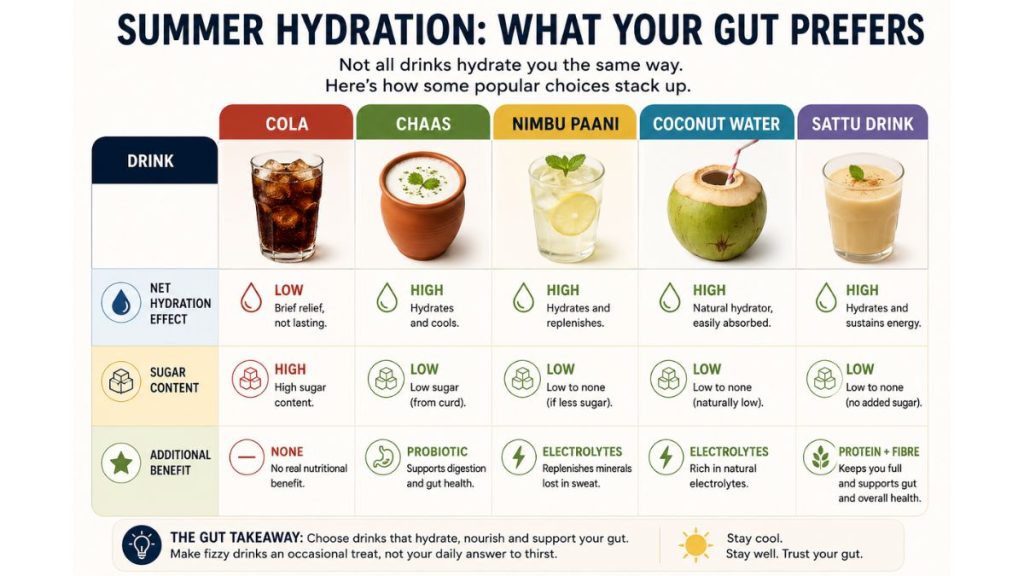
The sensation of a cold carbonated drink quenching thirst is real but brief, and partly illusory. The carbonation produces a cooling sensation in the mouth and throat that signals relief before the actual hydration has happened. The sugar in a standard fizzy drink — and most contain a significant quantity — is processed in a way that actually increases the body’s water requirement rather than meeting it. The net hydration from a sugary cola is considerably less than the volume of liquid consumed.
This is part of why the cola satisfies briefly and then, twenty minutes later, you are thirsty again — sometimes thirstier than before. The cycle of thirst and cola and thirst is not a coincidence. It is the body asking for water and receiving something that does not fully answer the question.
Does a fizzy drink actually quench thirst? Only briefly. The carbonation creates a cooling sensation that feels like relief before real hydration has occurred, and the sugar content increases the body’s water requirement rather than meeting it. This is why a cola often leaves you thirsty again within twenty minutes — the body asked for water and received something that did not fully answer the question.
What the gut notices about daily cola
A fizzy drink once in a while is processed by the gut without particular drama. A fizzy drink that has become the daily summer hydration strategy is a different situation.
The high sugar content — a standard 330ml cola contains roughly 35g of sugar — is a significant quantity to deliver to the gut in one go. The rapid glucose availability produces a familiar blood sugar pattern: quick rise, insulin response, drop, and the craving that follows. In hot weather, when the body is already managing fluid balance under stress, this pattern is more disruptive than it would be in cooler conditions.
The gut microbiome is also affected by high sugar intake over time. The bacterial populations that maintain gut health thrive on fibre, not sugar. A diet consistently high in added sugars tends to favour less beneficial bacterial strains and reduce the diversity that supports healthy gut function. Daily cola through summer months is, among other things, a sustained alteration of the gut environment that most people do not connect to the digestive complaints they notice in that period.
What the gut actually wants in the heat
Cold water, first and most importantly. Not the exciting answer, but the correct one. The body’s thirst signal in summer is asking for water, and water is what answers it most completely. The reason most people resist plain water is that it does not have the sensory satisfaction of a flavoured drink — which is a real issue and worth solving rather than ignoring.
This is where the Indian summer beverage tradition is considerably more intelligent than the cola habit it has been displaced by. Chaas: yoghurt-based, probiotic, genuinely cooling, with the hing and jeera that support digestion. Nimbu paani: hydrating, with the electrolytes that the body actually loses in sweat, genuinely thirst-quenching rather than briefly satisfying. Coconut water: one of the most effective natural hydration drinks available, with the electrolyte balance that summer sweating depletes.
A sattu drink deserves a mention here: roasted grain flour — traditionally chana or barley-based — dissolved in cold water with a squeeze of lemon and a pinch of salt. Cooling, genuinely filling, rich in protein and fibre, and the kind of summer drink that has sustained people through Indian summers for considerably longer than cola has been available. The gut processes it excellently.
The practical swap
The goal is not to eliminate the fizzy drink from your life. It is to make the daily hydration better, so the fizzy drink returns to the occasional pleasure category rather than the daily default. When the gut is adequately hydrated through the day with water, chaas, nimbu paani, and coconut water, the cola craving reduces — not because you are suppressing it, but because the underlying thirst that was driving it has been addressed.
The cola is answering the question briefly. The chaas is answering it properly. Your gut knows the difference even if the brain finds the cola more satisfying for approximately four minutes.
It is hot. Drink the good things. Your gut, which is working harder in summer than it does in winter, will notice the difference.
This article is part of the What Your Gut Wishes You Knew Before… series on Happy Tummy. For general informational purposes only — not medical or dietary advice. Read more of the series here.
You are now being directed to an external website https://www.callr.live/aashirvaadexperts/premium-plan.
This link is provided for your information and convenience only and ITC Limited is not
responsible for the contents or services provided by Brand Touch India or any information that
you share with Brand Touch India.