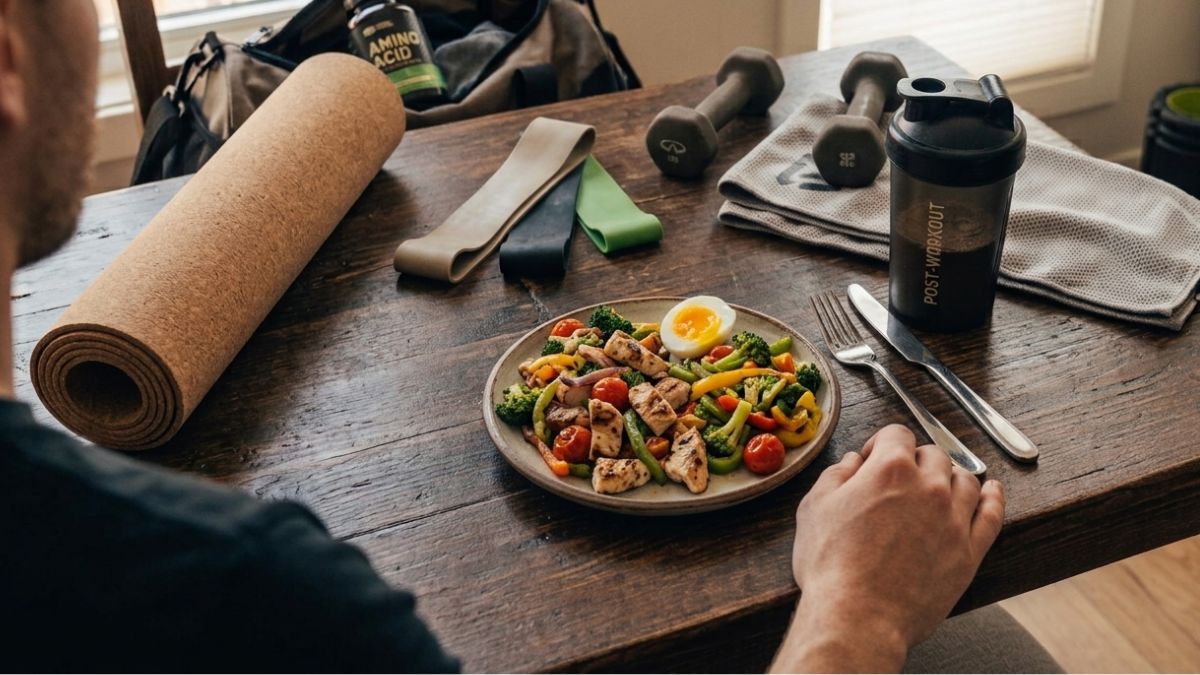
What Your Gut Wishes You Knew Before Your Post-Workout Reward Meal
You went to the gym. You earned it. The reward is coming. Your gut is very much on board with the reward — it just has one or two thoughts about the scale of it.
Table of Contents
You went to the gym. You earned it. The reward is coming. Your gut is very much on board with the reward — it just has one or two thoughts about the scale of it.
Exercise and eating have a complicated psychological relationship, and nowhere is that more visible than in the post-workout meal. The workout is complete. The effort was real. The body did something hard. And the brain, which has a well-developed reward circuitry, connects the effort to the food in a way that can make a post-gym meal feel like a transaction: I did the work, now I get the thing.
This logic is not entirely wrong. Exercise does increase the body’s requirements. Recovery nutrition is genuinely important. The gut and the muscles are both asking for replenishment after a training session. The question is whether the reward meal is calibrated to what the body actually needs for recovery, or to what the brain has decided it deserves after the suffering.
These are often quite different numbers.
After a moderate workout, the body’s primary recovery needs are: protein to repair and build muscle tissue, carbohydrates to replenish glycogen stores, and fluids to replace what was lost. The quantities depend on the intensity and duration of the exercise, the individual’s size, and what was eaten before training. For most people doing a forty-five to sixty-minute gym session, the recovery requirement is a moderate meal — not a small snack, not a large celebratory spread.
The gut processes post-workout food particularly well because exercise increases blood flow to the digestive system during the recovery phase, and the body’s cellular machinery for absorbing protein and carbohydrates is running efficiently. This is the window that nutritionists mean when they talk about post-workout nutrition. The gut is ready. The muscles are ready. A reasonable meal eaten in this window is used well.
A disproportionately large meal in this window is used partially and stored in the ways the body stores excess. The workout did not create a deficit large enough to justify the restaurant order. It created a legitimate need for a good recovery meal, which is a different thing.
There is a specific pattern that derails many fitness routines: the workout is used to justify eating more than would otherwise happen, and the net effect on the body’s energy balance is approximately zero, which then produces frustration that the exercise is not producing results, which sometimes leads to giving up the exercise.
The gut is not making a moral judgment about this. It is describing a mechanical reality: a one-hour moderate workout burns a specific amount of energy. A large post-workout reward meal, if it significantly exceeds that energy expenditure, returns what was spent. The body does not subtract points for effort. It tracks the inputs and the outputs and balances them.
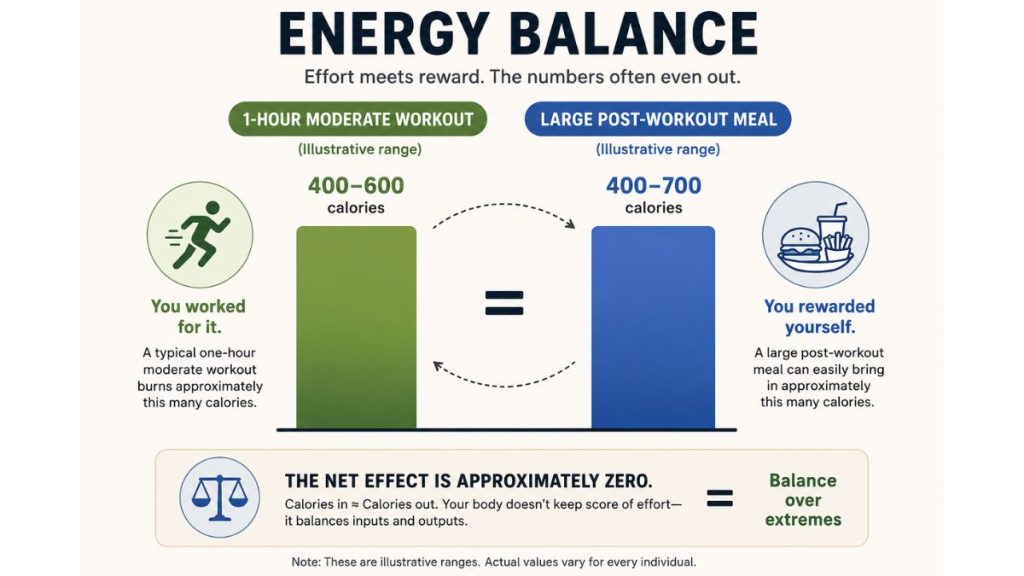
Knowing this is not an argument for joyless post-workout eating. It is an argument for calibrating the reward to the effort, which tends to produce a more honest relationship with both the exercise and the food.
Protein and carbohydrate, in reasonable quantities, from real food. A roti from Aashirvaad Chakki 100% Khapli Atta with egg bhurji or paneer. Dal-rice. Curd with fruit and a small amount of something grain-based. Chicken and a Khapli paratha. These are recovery meals that are doing actual recovery work — the protein supports muscle repair, the whole grain carbohydrate replenishes glycogen, the curd adds probiotics that support the gut microbiome that exercise slightly stresses.
What should I eat after a workout? A moderate meal with protein and whole grain carbohydrate, eaten within an hour or two of finishing — a Khapli roti with egg bhurji or paneer, dal-rice, or curd with fruit and a grain. The goal is recovery, not reward: a meal that replenishes what the workout used, rather than one calibrated to how hard the session felt.
This is also where Aashirvaad Chakki 100% Khapli Atta does some quiet work on the calibration problem from earlier. A roti made from a stone-ground whole grain holds you for longer than the refined flour equivalent of the same size — which means the recovery meal that felt right at the table still feels right an hour later, rather than leaving you reaching for something else because the first meal did not quite land. The reward does not need a second act.
You earned the food. Your gut is just asking that the food earn its place in your recovery, not just your reward circuitry.
The reward meal is not only about nutrition. It is about enjoyment, satisfaction, the pleasure of eating well after doing something hard. None of that requires eating more than the body needs. A genuinely delicious post-workout meal of appropriate size is considerably more satisfying, in the gut and in the brain, than a large meal that leaves you feeling heavy going into the evening.
Your gut is enthusiastic about the reward. It just wants the reward to feel as good as the workout.
This article is part of the What Your Gut Wishes You Knew Before… series on Happy Tummy. For general informational purposes only — not medical or dietary advice. Read more of the series here.