What’s Actually in the Mithai You’re Sharing This Raksha Bandhan?
Besan ladoo, kaju katli, til ladoo, atta ladoo, gulab jamun: they may all sit on the Rakhi thali, but what they bring beyond sweetness varies considerably.
Table of Contents
THE SWEET a sister feeds her brother during Raksha Bandhan isn’t an afterthought. It’s called miṣṭānna in the ceremony itself and is understood to symbolise the sweetness of the sibling bond, so this isn’t really a “should you eat it?” question. It’s a one-bite, once-a-year ritual.
What varies more than people realise is what’s actually in the mithai on offer. Besan and til-based sweets carry protein and fibre alongside the sugar, whole-wheat atta sweets bring whole-grain fibre, while syrup-soaked sweets such as gulab jamun are much more straightforwardly about indulgence. None of that makes one “better” than another for the occasion. It’s simply interesting to know what you’re actually sharing.
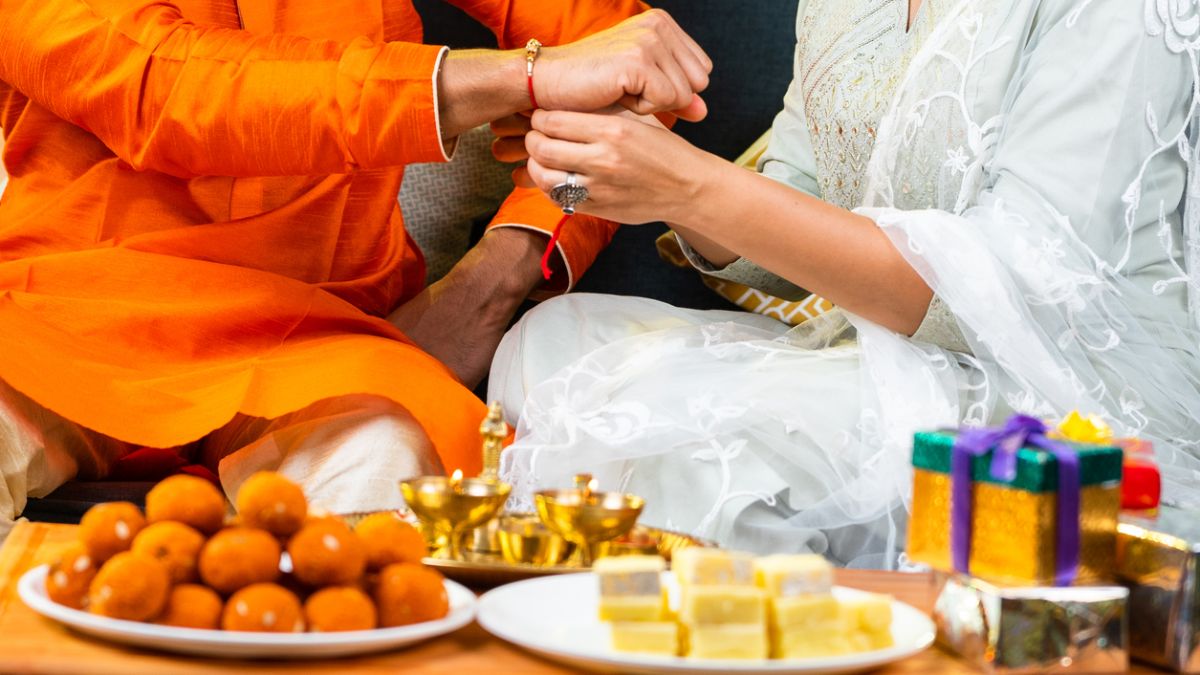
Raksha Bandhan’s central ceremony is simple: a sister ties a rakhi around her brother’s wrist, applies a tilak, prays for his wellbeing, and feeds him a piece of mithai from the puja thali. That last step has its own name in the ceremony’s Sanskrit structure, miṣṭānna, and it isn’t decorative. It’s understood specifically to symbolise the sweetness of the bond being renewed, the same way the thread itself symbolises protection. The brother, in turn, offers a gift and often shares something sweet back.
Some families extend the exchange into a full meal afterwards, others keep it to the single ceremonial bite; either way, the sweet itself isn’t incidental to the ritual the way, say, a particular gift might be.
MORE FROM THIS EXPERT | Is Onam Sadya Healthy for Your Gut? A Nutritionist Explains
Which means this isn’t really a piece about whether you should eat festival sweets. Of course you should — that’s rather the point of the ritual. What’s genuinely interesting, and mostly goes unexamined, is what’s actually inside the mithai on most Rakhi thalis, because it varies far more than the blanket word “sweets” suggests.
The rest of the puja thali carries its own symbolism too, worth knowing if only to appreciate how deliberately this ceremony was put together. Rice grains for prosperity, a diya for the light of protection, turmeric and vermilion for the tilak, alongside the rakhi thread itself. The mithai sits among genuinely meaningful company, not tossed in as an afterthought because festivals involve food, but chosen as one element among several, each standing in for something specific.
Besan ladoo. Roasted chickpea flour, ghee and sugar, rolled into balls and often finished with cardamom. Besan genuinely brings something to the table beyond sweetness: it’s a legume flour, so it carries protein and fibre alongside the carbohydrate, more of both than a plain refined-flour sweet would. That doesn’t cancel out the ghee and sugar it’s cooked with, but it does mean there is more going on nutritionally than sweetness alone.
Kaju katli. Cashew paste cooked down with sugar and set into thin, diamond-cut pieces, sometimes finished with a layer of edible silver leaf. Cashews genuinely bring protein, unsaturated fats and minerals to the mix, but kaju katli still contains a substantial amount of added sugar, so “nut-based” doesn’t automatically mean “lighter” or “better”. It’s a genuinely tasty sweet. The presence of cashews simply doesn’t turn it into something other than mithai.
Til or sesame ladoo. Roasted sesame seeds bound with jaggery. Sesame brings fibre, fat, protein and calcium to the sweet, while jaggery, though still predominantly sugar, can contain small amounts of minerals not present in refined white sugar. Til sweets also sit comfortably within the wider Shravan-season festival calendar that Raksha Bandhan falls within.
Atta or whole-wheat ladoo. Whole-wheat flour, roasted in ghee and bound with jaggery or sugar, sometimes with sesame seeds or nuts. Because whole-wheat flour retains the bran and germ that are largely removed during refining, an atta ladoo brings whole-grain fibre alongside the sweetness. A whole-grain atta, whether standard whole wheat or a Khapli atta such as Aashirvaad Namma Chakki, is therefore contributing something nutritionally meaningful to the recipe rather than simply bulking it out. Atta ladoo may be a less common sight on Rakhi thalis than besan ladoo or kaju katli, but it is one of the options on the table that brings whole-grain fibre with it.
Gulab jamun and rasgulla. Milk-solid or chenna-based sweets soaked in sugar syrup. Gulab jamun is typically made with khoya or milk solids, while rasgulla is made with fresh chenna. Both therefore contain some dairy protein, but the syrup is a defining part of the finished sweet and neither contributes much fibre. Nothing wrong with that on a celebration day; they’re simply among the most straightforward examples of sweets designed primarily to taste sweet.
What actually lands on a given Rakhi thali varies considerably by region and family. North Indian households may lean towards besan or motichoor ladoo; Bengali families frequently centre the celebration on chenna-based sweets such as rasgulla and sandesh; Gujarati and Rajasthani households have their own strong ladoo traditions, sometimes built on wheat or millet rather than besan.
None of this is exhaustive or meant to suggest that one region’s choices are more correct than another’s. “Rakhi mithai” isn’t one fixed thing nationally, any more than “South Indian breakfast” means only one dish.
| Mithai | Usually made with | What it brings beyond sweetness |
|---|---|---|
| Besan ladoo | Besan, ghee, sugar | Protein and fibre from Bengal gram |
| Kaju katli | Cashews, sugar | Protein and unsaturated fats from cashews |
| Til ladoo | Sesame seeds, jaggery | Fibre, fat and calcium from sesame |
| Atta ladoo | Whole-wheat flour, ghee, jaggery or sugar | Whole-grain fibre |
| Gulab jamun / rasgulla | Khoya or chenna, sugar syrup | Some dairy protein; little fibre |
It’s worth being explicit about what this comparison isn’t.
It’s not a best-to-worst list, and treating a besan or atta ladoo as “the good one” and a gulab jamun as “the bad one” misses the point of a festival table entirely. These are different foods built for different moods, textures, degrees of richness and ideas of how sweet you want the moment to taste — not competing entries in a health contest.
The honest, useful version of this information isn’t “eat this, not that.” It’s simply knowing, if you’re curious, what’s actually going into the sweet your sibling is about to feed you, the same way it’s nice to know what’s in any food you love.
MORE FROM THIS EXPERT | Good Gut Health Begins With… Your Breath
This matters more than it might seem, because festival-food conversations can easily turn into quiet rankings against an unstated “healthy” ideal, leaving people feeling as though they need to apologise for enjoying Diwali or Rakhi the way their family always has. A family’s Rakhi table, built around whatever mithai that particular household has always favoured, doesn’t need correcting. It just, if anyone’s curious, has a genuinely interesting answer to the question of what’s actually in it.
If you happen to be the one choosing or making the mithai this year and would like something that brings a little more fibre, protein or nuts alongside the sweetness, til, besan and atta-based sweets are worth knowing about. Not because the others are wrong, but because the ingredients differ.
A box that mixes two or three kinds is also a rather nice way to cover several moods without anyone having to choose: perhaps something syrupy and gloriously indulgent alongside ladoos with a little more texture and substance.
None of this needs to be decided in advance or announced at the table. The point was never to eat differently this Raksha Bandhan, just to know, if you’re the sort of person who likes knowing, what’s actually inside the sweet that’s about to seal this year’s promise between you and your sibling.
There’s something worth sitting with in the fact that Raksha Bandhan built an entire symbolic gesture around sweetness, deliberately, long before anyone was writing nutrition explainers.
The sweetness isn’t there by accident or simply because siblings enjoy dessert. It’s there because sweetness has long worked as a shorthand for affection, comfort and welcome, across cultures far beyond this one festival.
Knowing that a besan ladoo contains fibre while a gulab jamun doesn’t contain much doesn’t change what that first bite is actually doing at the ceremony. It’s still a sister’s wish for her brother’s wellbeing, made edible for a moment.
The decoding is just for the curious.
The ritual doesn’t need the footnote to mean what it’s always meant.
The mithai traditionally symbolises sweetness in the sibling bond being renewed during Raksha Bandhan. It forms part of the ceremonial exchange alongside the rakhi, tilak and prayers for wellbeing.
Among the sweets covered here, an atta ladoo made with whole-wheat flour is likely to be one of the more fibre-containing options because whole wheat retains the bran and germ. Til and besan ladoos also contribute fibre. The exact amount in any finished mithai will depend on its recipe and serving size.
It isn’t particularly useful to rank them that way. Besan contributes protein and fibre, while kaju katli contains cashews and therefore contributes protein and unsaturated fats. Both also contain added sugar and are festival sweets meant to be enjoyed in that context.
Not automatically. Nuts can contribute protein, unsaturated fat, fibre and micronutrients, but the nutritional profile of a mithai still depends on the complete recipe, including how much sugar, ghee or other ingredients it contains.
There is no single Rakhi mithai. Depending on family and region, the thali may include sweets made from besan, sesame, nuts, whole-wheat flour, milk solids or chenna, generally combined with sugar or jaggery.
Not automatically. Jaggery can contain small quantities of minerals that refined sugar does not, but it is still predominantly sugar. What else the sweet contains — sesame, besan, whole-wheat flour, nuts or dairy, for instance — contributes more to the differences between mithais.
There is no useful reason to label an occasional festival sweet “bad for the gut”. Different mithais contain different amounts of fibre, protein and fat alongside sugar, while the wider pattern of what you eat across days and weeks matters far more than one ceremonial serving.
Raksha Bandhan falls on Friday, 28 August 2026 in India.