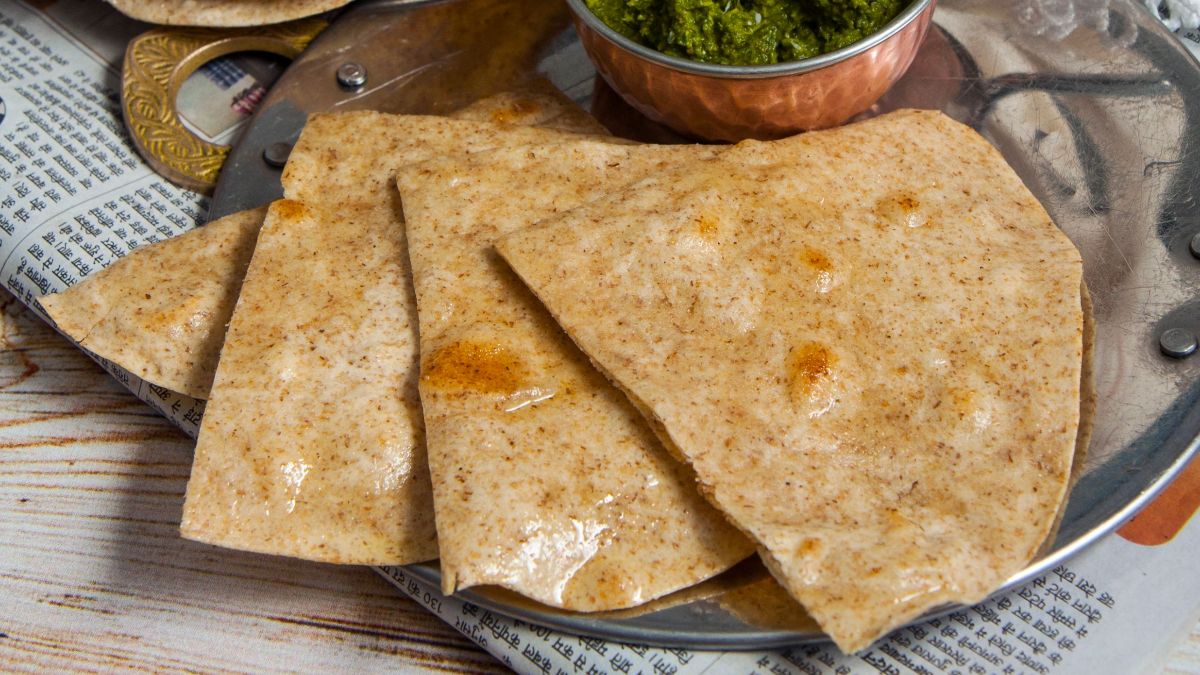
Does Adding Ghee Make a Khapli Roti Unhealthy? Here's What You Need To Know
A little ghee changes the fat and energy content of a Khapli roti, but it doesn’t erase the whole grain underneath. The useful question is how much you use — and what the rest of the meal looks like.
Few foods are as deeply woven into ordinary Indian life as a freshly made roti. Whether served with a simple dal, seasonal sabzi or making a humble cameo appearance at a festive spread, the roti has long been a foundational part of meals across the country. But the roti does not always appear alone. In many households, a small spoonful or light brushing of ghee over the warm surface is the final flourish before it reaches the dining table.
Often, this finishing touch is almost instinctive. Yet in recent years, as conversations around fats, calories and healthy eating have flourished, ghee has found itself at the centre of a nutritional debate. And one question appears time and again: Does adding ghee make a roti unhealthy?
The useful answer is: not automatically.
Adding ghee changes the roti’s nutritional profile because it adds fat and energy, including saturated fat. Whether that matters significantly depends on how much you use, how much visible fat is used elsewhere in the day’s cooking, your individual nutritional needs and what the rest of the meal looks like.
A lightly brushed Khapli roti served with dal and vegetables is therefore quite a different proposition from repeatedly adding generous amounts of ghee to several dishes throughout the day. Instead of judging either the roti or ghee in isolation, it makes much more sense to look at the whole plate.
Quick answer: Does ghee make a Khapli roti unhealthy? No, not automatically. A small amount of ghee adds flavour, fat and calories to the roti, but it does not remove the fibre or whole-grain characteristics of the Khapli atta underneath. Ghee is, however, rich in saturated fat, so portion size and the amount of other visible fats consumed across the day still matter.
What Does Khapli Atta Bring to the Roti?
Khapli wheat, also known as emmer wheat, is one of the older cultivated wheats with a long history in India, particularly in regions such as Maharashtra and Karnataka.
Aashirvaad Chakki 100% Khapli Atta is made entirely from Khapli wheat using a process intended to retain the whole-grain components rather than refining away the bran and germ. A whole-grain flour contains the bran, germ and endosperm of the kernel, which means it retains considerably more of the grain’s original fibre-containing structure than refined flour.
Khapli also brings a distinctive nutty flavour and slightly different dough character to an everyday roti. But it is important not to turn any of this into a miracle-grain story. Regular whole-wheat atta can also be whole grain; Khapli’s value does not depend on pretending every other wheat is nutritionally empty.
And once that roti reaches your plate, the rest of the meal still matters.
What Does Adding Ghee Actually Change?
Ghee is a visible cooking fat. Nutritionally, the most straightforward thing it does when spread over a roti is add fat and energy.
That is not an accidental side effect. It is the ingredient doing exactly what fat does.
Ghee contributes richness, aroma and mouthfeel, and in culinary terms a small amount can transform the experience of a warm roti. It is also predominantly fat and contains a substantial proportion of saturated fatty acids.
WHO recommends that saturated fat contribute no more than 10% of total dietary energy, with a broader shift towards unsaturated fats where possible. This does not translate into “never eat ghee”. It means ghee belongs inside the day’s overall fat intake rather than existing outside the arithmetic because it is traditional.
At the same time, spreading ghee over a Khapli roti does not somehow remove the fibre already present in the whole-grain flour.
What Ghee Changes — and What It Doesn’t
Adding ghee to a Khapli roti…
Yes or no?
Adds fat
Yes
Adds calories/energy
Yes
Adds saturated fat
Yes
Removes the roti’s fibre
No
Turns Khapli into refined flour
No
Automatically makes the meal unhealthy
No
Means quantity no longer matters because ghee is traditional
Also no
That is really the whole argument in one table.
Is Ghee a ‘Healthy Fat’?
This is where labels can become unhelpful.
Ghee is sometimes described online as either a miracle food or something that needs to be banished altogether. Neither description is particularly useful.
It is an edible fat with a particular fatty-acid composition, strong culinary value and a long place in Indian cooking. Because it contains substantial saturated fat, current dietary guidance suggests using it in moderation rather than making it the dominant fat source in the diet. WHO specifically recommends replacing some saturated fat with polyunsaturated fats, plant-source monounsaturated fats or fibre-containing carbohydrate foods.
That doesn’t turn the teaspoon on your roti into a dietary emergency. It simply means the teaspoon counts.
How Much Ghee Is ‘Moderate’?
There isn’t one ideal amount of ghee that every adult should put on every roti.
ICMR-NIN guidance discusses visible fats collectively — cooking oils, ghee, butter and similar fats — rather than issuing a separate daily ghee allowance. The amount varies according to energy requirements, sex, physical activity and physiological status.
For a roughly 2,000-kcal diet, current ICMR-NIN material uses approximately 27–30g of visible fat per day as an example. Sedentary adult guidance also differs between men and women.
The important word is total. If oil has already gone into the breakfast tadka, lunch sabzi, evening snack and dinner dal, the ghee brushed onto three rotis is joining all of those fats. It isn’t being counted in a separate traditional-food category. Which makes a light brush very different from soaking each roti until it glistens.
Does Ghee Help Keep Khapli Rotis Soft?
In practical kitchen terms, a little ghee spread over a freshly cooked roti can help the surface feel softer and richer, particularly when the rotis are being stacked and packed for later.
If you cook lunch before leaving for work, for example, lightly brushed rotis kept covered in a clean cloth or roti box can be more pleasant at lunchtime than rotis left uncovered to lose moisture.
That is a culinary advantage, not a health claim.
And frankly, a soft homemade roti in the middle of a terrible workday does not always need a clinical justification.
The Whole Plate Matters More Than the Smear
Imagine two dinners.
One consists of several Khapli rotis generously coated with ghee, a rich curry prepared with more added fat and very few vegetables.
The second includes two Khapli rotis with a light brushing of ghee, a bowl of dal, a generous seasonal sabzi, curd and some salad.
Both contain Khapli.
Both contain ghee.
But the overall meals are not nutritionally identical.
That is why the question “Is ghee healthy?” can only get you so far. The much more useful questions are:
How much? How often? What else am I eating with it? And how much added fat is already present elsewhere in the meal?
Building a Balanced Indian Plate With Khapli Roti and Ghee
A simple vegetarian dinner might include:
One or two rotis made with Aashirvaad Chakki 100% Khapli Atta
A light brushing of ghee, if you enjoy it
A bowl of dal, rajma, chana or another pulse-based preparation
A generous seasonal vegetable dish
Plain curd
Fresh cucumber, carrot, tomato, radish or another salad
If you eat eggs, fish, chicken or meat, those can provide the protein component instead.
There is nothing mathematically sacred about this exact combination. The point is simply that the roti and its ghee should not have to carry the whole meal.
Vegetables bring variety and fibre. Pulses or other protein foods broaden the nutritional profile. Curd brings dairy and another texture to the plate. The ghee does what it was invited to do: provide a little richness and flavour.
Does Ghee Improve Nutrient Absorption?
Dietary fat does help the body absorb fat-soluble vitamins such as vitamins A, D, E and K. But that general fact about dietary fat should not be stretched into a claim that every Khapli roti therefore needs ghee for its nutrients to “work”.
A mixed meal usually contains fat from several possible sources — cooking oil, dairy, nuts, seeds, eggs or other foods.
So if you like ghee on your roti, enjoy it for what it genuinely brings. There is no need to invent an absorption emergency to justify the spoon.
The Bottom Line
So, does adding ghee make a Khapli roti unhealthy?
Not automatically.
Aashirvaad Chakki 100% Khapli Atta is a whole-grain flour, and a small amount of ghee spread over a roti does not erase that. What the ghee does do is add fat, calories and saturated fat — which means the amount used and the other fats eaten across the day deserve attention.
Nutrition is rarely determined by one ingredient alone. It is shaped by what you choose, how much you use, how the food is prepared, what accompanies it and what your eating pattern looks like over time.
Perhaps that is one of the more useful lessons hidden inside Indian home cooking.
The roti doesn’t need to be stripped bare to qualify as nourishing.
And the ghee doesn’t need to be turned into a superfood to earn a small place on it.
Frequently Asked Questions
Is ghee on roti unhealthy?
Not automatically. Ghee adds fat, calories and saturated fat, but a modest amount can fit within a balanced diet. The total amount of ghee, oil, butter and other fats consumed through the day matters more than the mere presence of a little ghee on one roti.
Does adding ghee reduce the fibre in Khapli roti?
No. Adding ghee does not remove the fibre in the whole-grain Khapli atta. It adds fat to the finished roti; it does not alter the flour into a refined grain.
How much ghee should I put on a roti?
There is no universal per-roti prescription. A light brushing may be enough for flavour and softness. Think about your overall intake of visible fats — including cooking oils, butter and ghee — rather than treating the roti topping in isolation.
How much visible fat does ICMR-NIN recommend?
The amount varies with sex, activity level and energy needs. Current ICMR-NIN material gives roughly 27–30g per day for a 2,000-kcal diet as one example and defines visible fats as cooking oils, butter, ghee and similar added fats collectively.
Is ghee high in saturated fat?
Yes. Ghee contains a substantial proportion of saturated fat. WHO recommends keeping saturated-fat intake at no more than 10% of total energy and replacing some saturated fat with unsaturated fats where possible.
Is ghee healthier than oil?
Not as a blanket rule. Different oils and fats have different fatty-acid profiles. WHO recommends getting most dietary fat from unsaturated sources and limiting saturated fat, so variety and the type of oil used matter as well as quantity.
Does ghee help keep rotis soft?
A light coating can help a freshly cooked roti feel softer and richer, especially when rotis are stacked and kept covered for later eating. This is primarily a culinary effect, not a health benefit.
Do you need ghee on Khapli roti to absorb its nutrients?
No. Dietary fat helps with the absorption of fat-soluble vitamins generally, but a Khapli roti does not specifically require ghee in order to be nutritious. A mixed meal may already contain fat from several other foods.
Can I eat Khapli roti with ghee every day?
That depends on your overall diet and individual health needs. If ghee is eaten regularly, include it when considering your total intake of visible and saturated fats rather than assuming a small amount on each roti does not count.
Disclaimer: This article provides general food and nutrition information and is not a substitute for personalised medical or dietary advice.
Sources
WHO — Saturated Fatty Acid and Trans-Fatty Acid Intake
You are now being directed to an external website https://www.callr.live/aashirvaadexperts/premium-plan.
This link is provided for your information and convenience only and ITC Limited is not
responsible for the contents or services provided by Brand Touch India or any information that
you share with Brand Touch India.