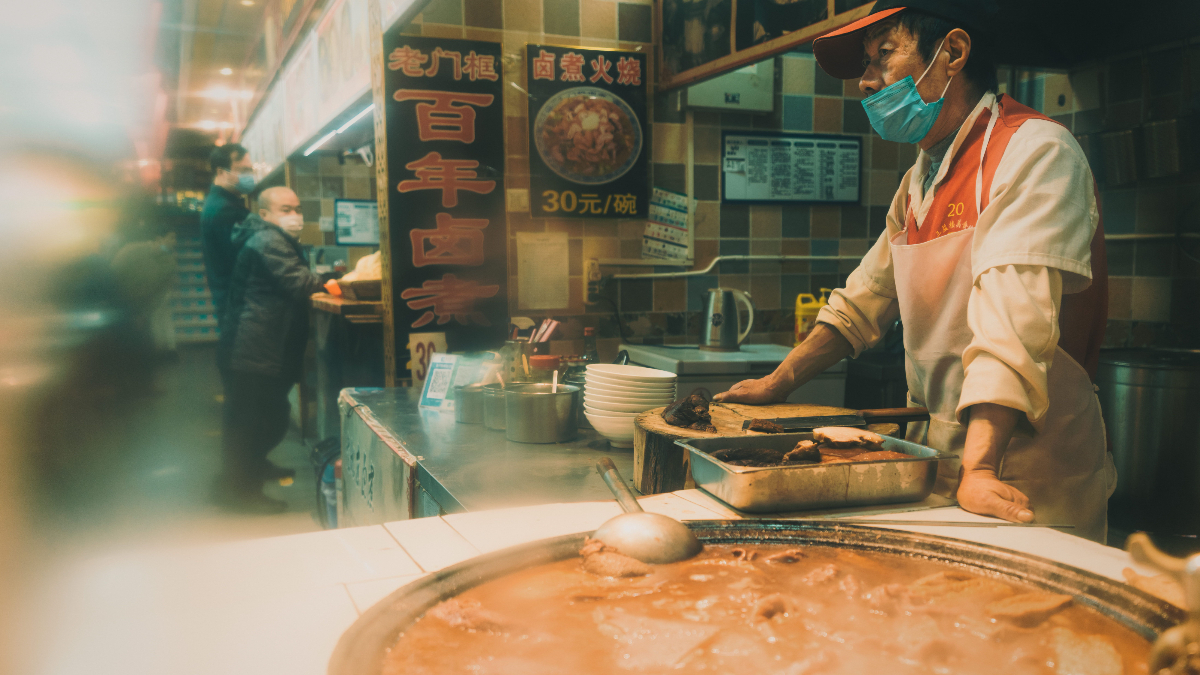
Trying Hot Pot, Malatang in China? What to Check Before You Eat
Hot pot puts you in charge of cooking. Malatang often puts the kitchen in charge. Here’s what travellers in China should check for both.
Table of Contents
Hot pot and malatang have different points at which problems can arise, but their risks are not completely separate. With hot pot, diners handle raw ingredients and cook them in a shared pot, so raw-to-cooked cross-contamination and incomplete cooking need attention at the table. At many malatang shops, ingredients are chosen from shared displays and then cooked for an individual order. That can reduce contact in a communal table pot, but it does not guarantee thorough cooking, safe holding temperatures or protection from allergens.
Hot pot and malatang can look like variations on the same meal: diners choose meat, seafood, tofu, mushrooms, vegetables and noodles, then eat them with a seasoned broth or sauce. The formats often differ, but neither dish has one fixed preparation. Hot pot may use one shared table pot or divided broths. Malatang is often assembled from a self-serve or staff-managed display and cooked as an individual bowl, although some shops use shared broth, batch cooking or other service arrangements.
The useful distinction is therefore about where a traveller should pay closest attention. Hot pot gives diners more responsibility for separating and cooking raw food. Malatang shifts more of the visible handling to the ingredient counter and kitchen. Both still depend on the quality of the raw ingredients, safe storage, clean equipment, adequate cooking and accurate allergen information.
Official hot pot guidance identifies two recurring hazards: pathogens from raw ingredients can reach cooked or ready-to-eat food, and meat or seafood may be eaten before it is fully cooked. The chilli, vinegar, soy sauce or alcohol in a broth or dip does not replace sufficient heat. A bubbling surface also does not prove that every crowded or thick piece has cooked through.
Keep raw meat and seafood on their own plates. Use one set of tongs or chopsticks to place raw food in the pot and a clean set to retrieve cooked food or eat. Do not return cooked food to a plate that held raw ingredients. Add manageable amounts rather than crowding the pot, and let the broth return to a full boil after liquid or cold ingredients have been added. Each ingredient still needs enough time to cook through at its centre.
The Hong Kong Centre for Food Safety advises a core temperature of at least 75°C for larger pieces of food. It gives a stricter target for oysters and shellfish: 90°C internally for 90 seconds, or boiling at 100°C until the shells open and continuing for another three to five minutes. Ask staff to help with cooking instructions if you cannot check temperatures or are unsure whether an item is done. A quick dip is not a dependable cooking method for thick cuts, seafood balls or frozen items.
Practices vary between restaurants, so do not assume that two pairs of chopsticks will always be supplied or clearly marked. Ask for an extra set if needed and decide before the meal which tools will touch raw food. Shared sauce bowls and serving spoons can also be contaminated if a raw utensil is dipped into them. Avoid dipping cooked food into sauces containing raw egg. Allow scalding broth and food to cool to a comfortable eating temperature.
Raw or inadequately cooked shiitake mushrooms, Lentinula edodes, can trigger shiitake dermatitis in susceptible people. This causes an intensely itchy rash with linear, whip-like marks, sometimes appearing hours or days after the meal. The reaction is thought to involve lentinan, a heat-sensitive polysaccharide in the mushroom; the precise mechanism is not fully established.
A French poison-centre review found 59 dermatitis cases from 2014 to 2019, following raw or undercooked shiitake consumption. The median delay before the rash appeared was 48 hours, but the reported range was much wider. ANSES and the DGCCRF advise thorough cooking, including for fresh, dried or powdered shiitake, and warn that quick stir-frying may be insufficient. A brief swish through broth is not enough. Anyone who develops a widespread or severe rash should seek medical advice and mention eating shiitake.
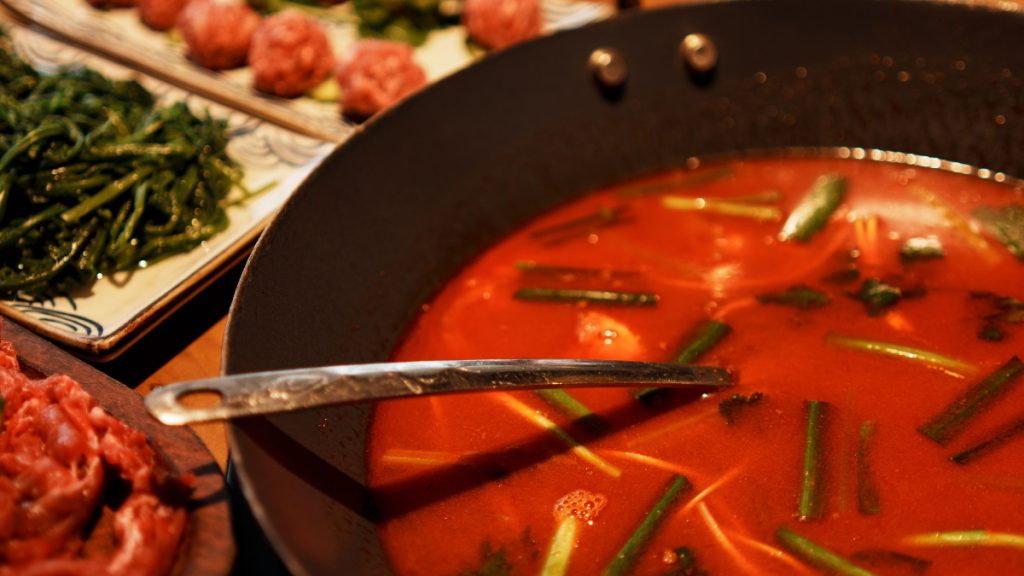
At many malatang shops, customers select ingredients from open trays or chilled displays before staff cook the chosen items. An individual bowl can reduce the particular problem of several diners moving raw and cooked utensils through one table pot. It does not show that the ingredients were held safely, that every item will be cooked completely or that the pot and utensils are dedicated to one order.
Look at the whole service path. Ingredients that require refrigeration should be kept cold, not sitting warm for long periods. The display should be clean, organised and protected from obvious contamination. Shared tongs should not be lying across several trays. The finished bowl should arrive steaming hot, with meat, seafood, mushrooms and frozen or processed items cooked through. These observations reduce uncertainty; they cannot certify everything that happened before the food reached the counter.
The same food storage and handling principles apply at home. Reheating does not reliably remove toxins that may have formed while food was stored unsafely.
Shared tongs, trays, surfaces, cooking vessels and sauce stations can transfer an allergen into food that would otherwise not contain it. The actual risk depends on the shop’s ingredients, layout, cleaning and separation procedures. A separate serving bowl does not establish that an order has been kept separate during preparation.
Peanut, sesame, soy, wheat, egg, fish and shellfish may appear in broths, sauces, noodles, tofu products or processed fish and meat balls. Ask about milk and tree nuts too if these are your allergens. An item called a ‘fish ball’ or ‘beef ball’ may contain several ingredients or a wheat-based binder. Removing one visible item from a bowl does not remove residue transferred earlier by shared equipment or broth.
For a diagnosed food allergy, ask staff to identify the broth, sauces, noodles and processed items and to explain how the order is kept separate from selection through serving. A clean-looking counter is not proof of allergen control. If staff cannot answer clearly or cannot prevent cross-contact, choose another meal. Follow the emergency plan provided by your allergy clinician and carry any prescribed medication.
| Feature | Hot pot | Malatang |
| Typical format | A shared table pot in which diners often cook raw ingredients themselves. | Ingredients are often selected from a shared display and cooked by staff for an individual order. Formats vary. |
| Main point to watch | Raw utensils or plates touching cooked food, plus food removed before it is fully cooked. | Ingredient storage and handling, shared tools or equipment, hidden allergens and complete cooking. |
| Cooking check | Add small batches, let the broth return to a full boil and cook every ingredient thoroughly. Shellfish need particular care. | Choose food cooked to order and check that the finished bowl is piping hot and every ingredient is done. |
| Allergy check | Ask about broth, sauces and ingredients. A divided pot does not guarantee protection from cross-contact; ask how preparation and utensils are kept separate. | Ask whether shared trays, tongs, broth, pots or utensils can transfer your allergen, and whether a separate preparation is possible. |
| Extra concern | Cook shiitake thoroughly and allow scalding broth and food to cool before eating. | Processed balls, noodles, tofu products, broths and sauces can contain ingredients that are not obvious from their names. |
Before departure, keep meals familiar and balanced. Whole grains, including Khapli wheat, can be part of that diet if they suit you. Their fibre supports normal bowel health, but eating a particular grain or flour has not been shown to protect travellers against contaminated food or water.
If you are increasing fibre in your diet, build it gradually and drink enough fluids. A sudden change just before travel can bring bloating or discomfort. Good everyday nutrition supports your usual bowel routine; it does not replace food-safety precautions.
Use the format to decide where to pay attention rather than treating either dish as automatically safe or unsafe.
Hot pot asks diners to manage raw food safely at the table. Malatang often places more of the handling out of sight, so the counter, ingredient information and cooking process deserve closer scrutiny. The two formats change the point of attention; neither removes the basic requirements of clean handling, safe temperatures and thorough cooking.
Disclaimer: This article provides general travel food-safety and nutrition information and is not a substitute for personalised medical advice, diagnosis or treatment. Follow your clinician’s advice if you have a diagnosed food allergy, a medical condition or a prescribed diet. Seek medical care for severe or persistent abdominal pain, repeated vomiting, bloody diarrhoea, high fever or signs of dehydration. A suspected severe allergic reaction with breathing difficulty, throat or facial swelling, faintness or rapidly worsening symptoms requires immediate emergency help. Follow your prescribed allergy action plan and call 120 for an ambulance in mainland China.
It can be when the restaurant handles ingredients well and diners keep raw and cooked food separate and cook everything thoroughly. It is not risk-free because contamination can occur before the food reaches the table, while self-cooking creates opportunities for cross-contamination and undercooking.
Not automatically. An individual order may reduce contact inside a shared table pot, but malatang can still involve poorly stored ingredients, shared tongs or equipment, incomplete cooking and allergen cross-contact. The shop’s actual process matters more than the label on the dish.
Hot pot is commonly a sit-down meal in which diners cook ingredients in a shared table pot. At many malatang shops, customers choose ingredients from a display and staff cook them for an individual bowl. Both have regional and restaurant variations, so these are typical formats rather than universal definitions.
Do not rely on chilli, vinegar, alcohol, soy sauce or another strongly flavoured ingredient to make raw food safe. The broth must be hot enough and the food must cook for long enough. Wait for a full boil after adding raw food or extra liquid and make sure each ingredient is fully cooked.
The answer depends on the allergy and the shop’s controls. Ask about broth, sauces, noodles, tofu products, processed balls and every shared utensil or cooking vessel. If staff cannot identify the ingredients and explain how cross-contact is prevented, choose another meal. Follow your own allergy action plan.
Yes. Raw or inadequately cooked shiitake can cause an intensely itchy, whip-like skin rash called shiitake dermatitis. It may appear hours or days after eating them. Cook shiitake thoroughly instead of giving it a quick dip in the broth, and seek medical advice for a widespread or severe rash. Thorough cooking is an important precaution, not a promise that the dish is completely risk-free.
Yes. Tabletop barbecue, grills and any meal in which diners handle raw meat or seafood need separate raw and cooked utensils and complete cooking. A shared banquet dish that arrives fully cooked does not create the same self-cooking risk, although shared serving utensils and sauces can still transfer food or allergens between diners.