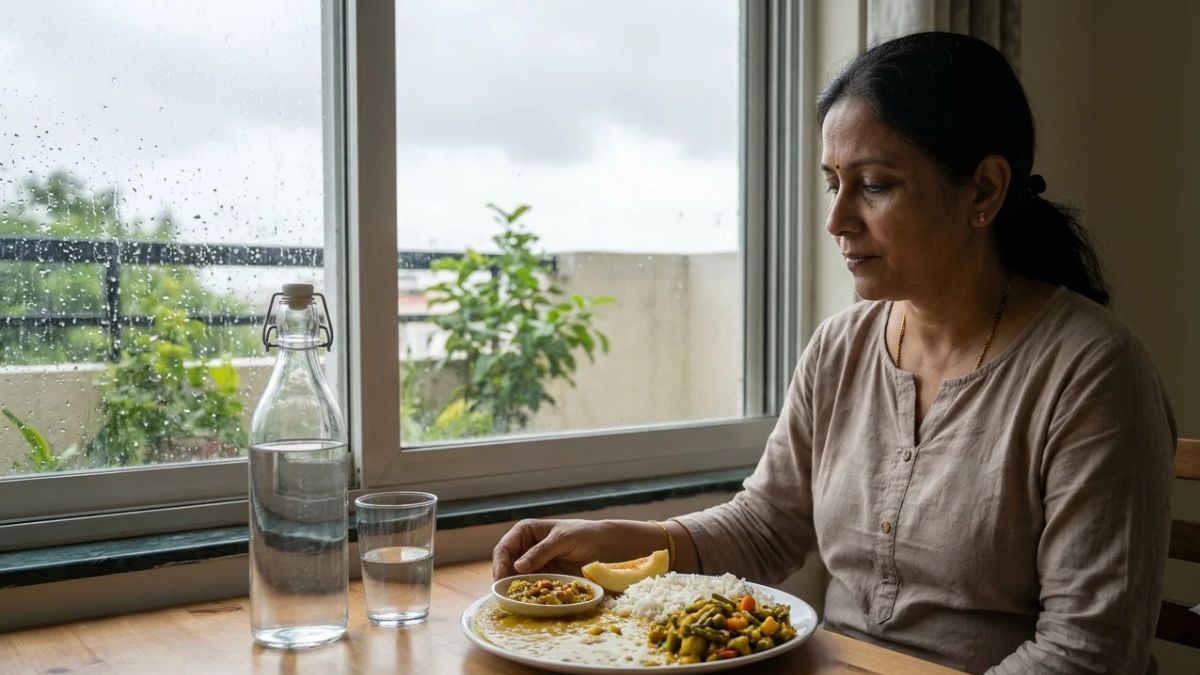
Post-Monsoon Gut Reset: Do You Actually Need One?
What really changes when the rains ease, and what needs no fixing at all.
Table of Contents
No. You do not need a post-monsoon gut reset, juice fast or special tea. The end of the rains is a useful moment to check habits: drinking, eating varied meals, moving more and making time for the toilet. It is not a reason to cleanse your digestive system.
Start with fluids. Around six to eight cups or glasses of drinks a day is an NHS guide, rather than a universal water prescription. Tea, milk and other drinks count; food contributes water too. Needs vary with weather, activity and health. Follow any fluid restriction your clinician has prescribed.
Bring dal, vegetables, fruit and whole grains back into meals if they have slipped out. WHO recommends at least 25g of naturally occurring dietary fibre daily for adults. Increase fibre gradually and drink enough alongside it; a sudden increase can cause gas and bloating. People prescribed a low-fibre diet need individual advice.
Regular movement and responding to the urge to pass stool can support bowel regularity. Constipation involves more than missing a day: hard stools, straining and incomplete emptying matter too. Persistent symptoms deserve assessment, rather than dietary experiments.
Loose stools need attention. Unsafe food or water is one possible cause, and diarrhoea can lead to dehydration. Use safe water, refrigerate cooked food promptly and reheat leftovers thoroughly. Oral rehydration solution can replace lost fluid and salts.
Seek prompt care for blood in stool, severe pain, unexplained weight loss, dehydration or difficulty swallowing. Rebuild the habits that slipped; no seasonal purge is needed.
The phrase ‘post-monsoon gut reset’ sounds tidy: a season of comfort eating, then a fresh start. Real digestion is less dramatic. As the rains ease, walking may get easier, evening snacks may change, and the rest of your routine quietly changes the conditions your gut works in.
The useful question is what slipped during the rains, and what would help you feel more comfortable now.
Much of what changes may be behavioural. Perhaps you stopped carrying a water bottle, cancelled the morning walk or started replacing a meal with snacks. Food availability changes too, and it differs sharply from one region of India to another. There is no single autumn diet for the whole country.
Some studies have observed seasonal shifts in gut-microbiome composition in particular populations. A 2014 study of a North American Hutterite community found differences between summer and winter; seasonal produce availability was one possible explanation. That does not establish a universal pattern, or show that people in India need a gut treatment after the monsoon.
The research is still developing. A change in season is a useful reminder to check your habits, not evidence that your gut needs a purge.
If thirst feels less noticeable as the weather changes, it can be easy to go longer between drinks. The fix is plain: return to a drinking pattern that suits your day. A bottle on the desk and a drink with meals can help you remember.
The NHS suggests around six to eight cups or glasses of fluids a day as a general guide. This means drinks overall, rather than that many glasses of plain water on top of everything else. Milk, tea, coffee and chaas can contribute; dal, fruit and watery vegetables contribute water too.
Needs vary with activity, weather, pregnancy, breastfeeding and health. If a clinician has prescribed a fluid restriction, follow it.
Adequate fluid also helps fibre work properly. Different fibres act differently, but increasing fibre while drinking too little can make constipation harder to manage. More water is not automatically better if you are already adequately hydrated.
Rainy-season eating has a personality of its own: chai with pakoras, bhutta roasted over coals, samosas or chops picked up on the way home, hot momos and fried fish when the streets are wet. There is room for these foods.
The issue is when snacks quietly become the structure of the diet and push out dal, vegetables, fruit and whole grains. ICMR-NIN’s 2024 dietary guidelines encourage variety across food groups. Their 2,000 kcal reference plate includes 400g of vegetables and 100g of fresh fruit a day; individual portions and energy needs vary.
Here is a simple way to bring variety back. Put dal on the plate at lunch. Add a sabzi at both main meals. Keep a fruit in your bag. Rice, roti and other grains can all fit; choose portions and accompaniments that suit your needs.
Whole-grain atta contributes fibre, whether you prefer Khapli or ordinary whole wheat. There is no need to make one flour carry the whole job. Dal, vegetables, fruit, nuts, seeds and other whole grains contribute too.
WHO recommends at least 25g of naturally occurring dietary fibre daily for adults. Build towards an appropriate intake gradually, rather than adding large portions of everything at once. Too much too fast can cause gas and bloating.
A high-fibre diet is not suitable for everyone. If you have been advised to limit fibre because of a bowel condition or after surgery, follow your individual plan.
Constipation can mean hard or infrequent stools, difficulty passing them, straining or a feeling that you have not fully emptied your bowel. It is not defined only by missing a day.
Less fluid, less fibre, less movement and putting off the urge to go can contribute. Medicines and medical conditions can also be involved, so a seasonal change is not a diagnosis.
Look at what changed in your day. Did vegetables and fruit disappear from meals? Did the walks stop? Are you putting off the toilet because the one at work is inconvenient? Adequate fluids, a gradual fibre increase, regular movement and time for the toilet may help. Respond to the urge rather than repeatedly delaying it.
For ongoing constipation, advice needs to be more specific than ‘eat more fibre’. The BDA’s 2025 guidelines on chronic constipation in adults support options such as psyllium and kiwifruit for particular outcomes. Prunes may also help some people, but the findings are less certain and depend on the symptom measured. Much of the evidence is of low or very low certainty.
The guideline found insufficient trial evidence for a generic high-fibre diet as a treatment for chronic constipation. That does not erase fibre’s broader health benefits. A doctor or dietitian can help choose a suitable approach; persistent symptoms deserve assessment.
Loose stools can have several causes, including infections, medicines and food intolerance. Contaminated food or water is one possibility. It is not something to dismiss as a normal seasonal adjustment.
Heat can allow bacteria to multiply quickly in food that is stored poorly. The WHO Five Keys to Safer Food offer practical precautions:
When eating out, an available FSSAI Hygiene Rating can be another useful check. The scheme uses one to five stars, and the rating reflects conditions assessed at inspection. Check the inspection details and validity; a rating is not a guarantee for every meal.
If diarrhoea is causing fluid loss, oral rehydration solution, or ORS, helps replace water and salts. Prepare a packaged ORS exactly as directed, using safe water. Seek medical advice if symptoms persist or warning signs appear.
During prolonged rain, a walk can be the first thing to go. As the weather clears, give it a place in the day again. Regular physical activity can support bowel regularity, although it will not resolve every digestive problem.
For general health, WHO advises adults to aim for 150–300 minutes of moderate aerobic activity a week, or 75–150 minutes of vigorous activity, or an equivalent combination. Add muscle-strengthening activities involving the major muscle groups on at least two days.
Start with an amount that feels comfortable and build gradually. A short walk is a useful beginning; it does not have to be a punishing programme to count.
There is no need to live on juices because you ate fried food in July. The US National Center for Complementary and Integrative Health reports no compelling research supporting detox diets for eliminating toxins, and notes that studies of these programmes have generally been small or of low quality.
Skipping meals for several days or buying a special tea is not an evidence-based way to purge your digestive tract after the rains. Return to meals that nourish you, rather than trying to compensate for a season of eating.
Check four things: fluids, vegetables and fruit, movement, and toilet routine. Pick the one that slipped most and start there.
Keep a brief note of what you changed and how your bowel habits felt. The aim is to notice a pattern, not score a perfect week. If symptoms continue, use those notes to help a conversation with your doctor.
Arrange medical review for constipation that does not improve, recurring digestive symptoms or a new, persistent change in your usual bowel habits. Do not wait for a seasonal routine to fix them.
Seek prompt medical attention for blood or black, tarry stools, unexplained weight loss, persistent abdominal pain or difficulty swallowing. Sudden severe abdominal pain, particularly with vomiting or an inability to pass gas, needs urgent assessment.
With diarrhoea, seek prompt advice for dehydration, high fever, blood in stool, severe pain or inability to keep fluids down. Adults should contact a doctor if diarrhoea lasts more than two days; seek advice sooner if pregnant, older, immunocompromised or otherwise medically vulnerable. Children, especially infants, need earlier assessment.
This article provides general information for adults and is not a diagnosis or a substitute for personalised medical or dietary advice. Digestive symptoms can have many causes. Seek professional advice for persistent, recurring or severe symptoms, and prompt care for the warning signs described above. Children, pregnant or breastfeeding people, older adults and anyone with a medical condition may need individual guidance. Follow prescribed fluid or fibre restrictions, and consult your clinician before starting fibre supplements.
No. There is no established need to cleanse the digestive system after the rains. Check the habits that changed, including meals, fluids, movement and toilet routine. Persistent symptoms need assessment.
Less fluid, less fibre, less movement and delaying the urge to go can contribute. Medicines or medical conditions may also play a part. The timing alone does not identify the cause.
Eat varied meals, increase fibre gradually if suitable, drink enough, move regularly and make time for the toilet. Keep food and drinking water safe. These habits support health without a special seasonal diet.
There is no established benefit from skipping meals to purge your gut after the monsoon. A sustainable meal pattern is a more useful starting point; follow individual advice if you have a medical condition.
Around six to eight cups or glasses of fluids is an NHS guide. Other drinks count, and food supplies water too. Needs vary; follow any clinician-prescribed fluid limit.
Unsafe food or water is one possible cause, but infections, medicines and intolerance can also be involved. Replace fluid losses and seek care for persistent symptoms, dehydration or other warning signs.