Carbohydrate Food List for Gut Health: How to Read Carbs Without the Fear
Rice, roti, potato and banana can all fit. Here is how to tell what each one brings.
Table of Contents
Carbohydrates are not good or bad for your gut. They include sugars, starch and fibre, and the food supplying them matters. Rice, roti, potato, fruit, dal and milk can all fit a balanced diet. A carbohydrate food list becomes useful when it explains what each food brings, rather than putting everything into one bucket.
Start with fibre and the meal. Whole grains, pulses, vegetables and fruit supply fibre alongside nutrients. White rice can fit with dal and sabzi; choosing brown rice is one option, not a requirement. ICMR-NIN advises making at least half of recommended cereals whole grains. Rotate grains according to preference and tolerance.
For packaged foods, read the ingredient list and compare similar products per 100g. Check fibre where declared, total and added sugars, and the portion you actually eat. An ingredient listed first or a fibre number cannot establish overall quality. Whole-grain foods do not contain the same amount of fibre.
WHO recommends keeping free sugars below 10% of daily energy, with further benefit below 5%. Free sugars include added sugars and those in honey, syrups and fruit juice; sugars inside intact fruit are treated differently. Jaggery does not stop counting because it has a traditional name.
Increase fibre gradually and drink enough, unless individual medical advice says otherwise. Carbohydrate amounts still matter if you follow a diabetes or carbohydrate-counting plan.
Cooling rice can change some starch, but food safety comes first: cool quickly, refrigerate promptly, use within 24 hours and reheat only once until steaming hot.
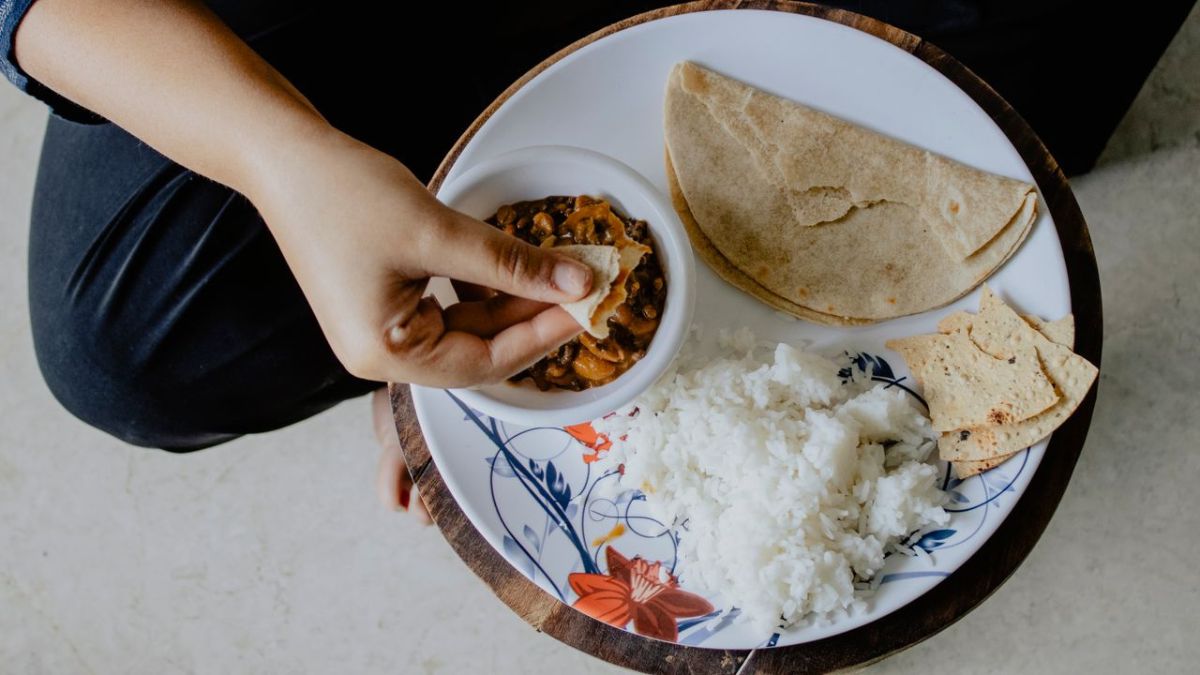
There is a peculiar anxiety around carbs. Rice at dinner is questioned, rotis are counted before they are eaten, and bananas are viewed with suspicion. Some of the confusion comes from treating a nutrient and the food that carries it as the same thing.
Carbohydrates turn up in more places than the rice or roti on your plate. Here are some familiar examples:
| Food group | Everyday examples | What to notice |
| Cereals and millets | Rice, roti, oats, dalia, bajra, ragi, jowar | Whole-grain content, fibre, preparation and portion |
| Pulses | Dal, chana, rajma, moong | Protein and fibre alongside starch |
| Roots, tubers and other starchy vegetables | Potato, sweet potato, corn | Cooking method, portion and the rest of the meal |
| Fruit | Banana, orange, guava, apple | Whole fruit brings fibre and water; juice is a different choice |
| Milk and plain curd | Milk, unsweetened curd | Naturally occurring milk sugar, as well as other nutrients; tolerance varies |
| Sweets, biscuits and sugary drinks | Mithai, cream biscuits, sweetened drinks | Added sugars, ingredients, portion and frequency |
The list is not a ranking. Foods in the same group can differ, and the amount you eat still matters.
Carbohydrates are a major source of energy. The three main types are sugars, starches and fibre. Your digestive system handles them differently: sugars and most starches are digested for energy, while fibre largely escapes digestion in the small intestine.
A plate of rice, an orange and a sweet biscuit all supply carbohydrate. But they bring different combinations of fibre, water, protein, fat and other nutrients. The carbohydrate number alone cannot describe that whole package.
If you count carbohydrates for diabetes or another medical reason, the quantity remains important. Food quality does not replace your individual carbohydrate or treatment plan.
A breakfast cereal might contain plenty of carbohydrate because it is made from grain. That number alone is not a reason to reject it. Ask what the grain is, how much fibre the food supplies and whether sugar has been added.
Fibre can support bowel function, and some types help with fullness. Effects on cholesterol and glucose depend on the fibre and the food; they should not be promised for every carbohydrate-rich product.
Soluble fibre is found in foods such as oats, beans and some fruits. Some forms make a gel with water and slow digestion. Insoluble fibre, found in wheat bran, whole grains and many vegetables, adds stool bulk and can help material move through the gut. Many foods contain a mixture.
A few comparisons help put flour and grain choices in perspective. The following figures come from the Indian Food Composition Tables 2017:
| Food | Total dietary fibre per 100g of raw, uncooked food |
| Wheat flour, atta | 11.36g |
| Refined wheat flour, or maida | 2.76g |
| Brown rice | 4.43g |
| Milled white rice | 2.81g |
| Bajra | 11.49g |
| Ragi | 11.18g |
| Jowar | 10.22g |
These are composition averages, not cooked-serving values. The flour entries refer to uncooked flour and the millet entries to grains; processing can change the composition of the product you buy.
Atta has about four times as much fibre as maida in these entries. The brown–white rice difference is smaller, and the three millets fall in a similar range to atta. That supports variety, not a universal winner.
For a specific flour, such as Aashirvaad Namma Chakki 100% Khapli Atta, use the current pack’s nutrition information. A whole-grain Khapli option and ordinary whole-wheat atta can both have a place; no particular flour is essential.
Do not turn these examples into a classification rule. A food with 3g of fibre is not automatically refined, and a food with 10g is not automatically whole grain. Added fibre can also raise a product’s fibre figure.
Sugars naturally present inside intact fruit or in plain milk are not classified as free sugars in WHO’s guidance. Free sugars include sugars added by manufacturers, cooks or consumers, plus those naturally present in honey, syrups, fruit juices and concentrates.
WHO recommends keeping free sugars below 10% of daily energy, with additional benefit from reducing them below 5%. Five per cent of a 2,000 kcal diet is 25g. These figures refer to free sugars, not all carbohydrate or all sugar naturally present in foods.
ICMR-NIN’s 2024 reference-plate notes separately advise restricting sugar to about 25–30g a day. Keep the two organisations’ recommendations and terminology clear.
On a pack, check both total sugars and added sugars where shown. ‘No added sugar’ does not mean no sugar: fruit juice, for example, can contain free sugars without any being added.
Jaggery, honey and sugar syrups still count when used to sweeten food. Malt extract may contribute sugars, but ‘malt’ is not automatically another name for added sugar in every product. Read the ingredient and nutrition information together. A traditional name does not make a sweetener disappear.
A meal of roti or rice, dal and sabzi brings several food groups together. ICMR-NIN’s 2024 dietary guidelines advise making at least half of recommended cereals whole grains. Their daily plate also gives substantial space to vegetables, fruit, leafy greens, roots and tubers.
That is a guide across the day, not a demand to put fruit onto every dinner plate. Rice can fit; so can potato. Washed, safely cooked potato with its skin can contribute fibre. The preparation, portion and accompaniments all matter.
Resistant starch escapes digestion in the small intestine and can be fermented by microbes in the large intestine. Cooling cooked starch can change how much is resistant, but this does not turn rice into a carbohydrate-free food.
A small 2015 study found more resistant starch in rice that had been refrigerated and reheated. It does not establish a universal digestive benefit or a reason to change a medical meal plan.
Safe storage matters more than trying to reproduce a food experiment. The UK Food Standards Agency advises:
Bacterial spores can survive cooking, and poor storage can make rice unsafe. Reheating does not reliably rescue badly stored rice.
Try this with two similar foods in your kitchen. The aim is a more informed choice, not the lowest possible carbohydrate number.
If your usual meals contain little fibre, add it gradually over a few weeks. Sudden increases can cause gas and bloating. Drink enough alongside it, while following any prescribed fluid limit.
A high-fibre diet is not suitable for everyone. If you have been advised to limit fibre because of a bowel condition or after surgery, follow that plan. Persistent symptoms need assessment rather than repeated food exclusions.
Seek medical review if digestive symptoms persist or keep returning. Blood in stool, unexplained weight loss, persistent abdominal pain or difficulty swallowing need prompt attention. Severe abdominal pain with vomiting or inability to pass gas needs urgent assessment.
This article provides general information for adults and is not a personalised diet plan, diagnosis or substitute for medical advice. Carbohydrate and fibre needs vary with health, activity and treatment. If you have diabetes, a digestive condition, food allergies or prescribed fibre or fluid restrictions, follow your clinician’s or dietitian’s guidance. Children, pregnant or breastfeeding people and older adults may need individual advice. Persistent symptoms and the warning signs described above require medical assessment.
No. Carbohydrates include sugars, starches and fibre. Judge the food, portion and overall diet rather than treating all carbohydrate foods alike. Follow individual advice if you have a medical condition.
Whole grains, pulses, vegetables and whole fruit contribute fibre and other nutrients. Rice, potato and plain milk or curd can fit too. Include a range of foods according to preference and tolerance.
Rice is not inherently bad, and tolerance varies. Brown rice contains more fibre than white rice in the IFCT raw-rice entries, but white rice can fit with dal, vegetables and other foods. Portions still matter.
Not inherently. Potato can fit a balanced meal. Washed, safely cooked skin contributes fibre; cooking method, portion and what you eat alongside it all affect the meal.
Fibre largely escapes small-intestinal digestion; sugars can provide energy. Read fibre where declared and check both total and added sugars. Total sugar alone does not tell you how much was added.
It can change resistant starch content, but a digestive benefit is not guaranteed. Cool rice quickly, ideally within an hour, refrigerate it, eat within 24 hours and reheat only once until steaming hot. Do not leave it out overnight.