ICMR Balanced Diet Chart: What ‘My Plate for the Day’ Means for Your Gut
How a day of ordinary Indian meals adds up, from the first roti to the last spoon of curd.
Table of Contents
ICMR-NIN’s My Plate for the Day is a reference for a whole day of eating, based on about 2,000 kcal. It is not a prescription for every adult or a rule that every meal must contain the same proportions.
The chart lists 250g cereals including millets, 85g pulses, 300ml milk or curd, 400g vegetables, 100g fruit, 35g nuts and seeds, and 27g fats and oils daily. The solid-food amounts refer to raw edible ingredients, not cooked portions; milk and curd are listed by volume. The vegetable allocation excludes potato.
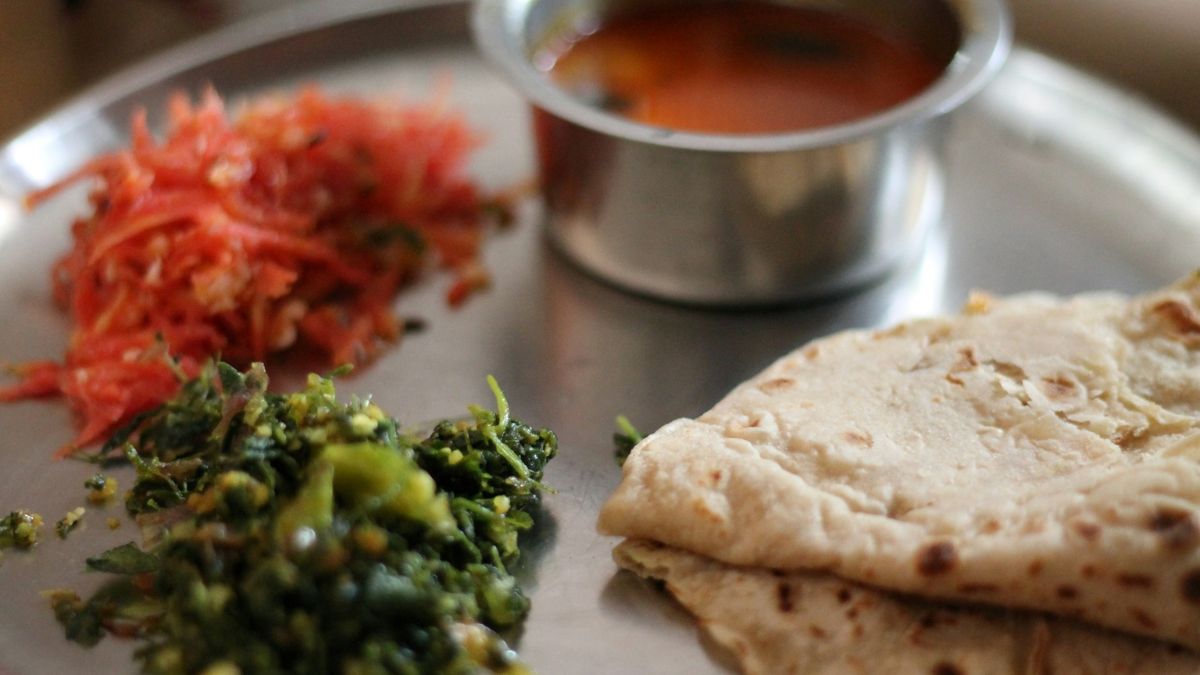
For meals, think about how those groups appear across breakfast, lunch, snacks and dinner. Dal, sabzi, fruit, whole-grain rotis, rice, nuts and curd can all fit. Milk or curd may need an alternative if you cannot tolerate dairy.
ICMR-NIN encourages at least half of cereal intake to be whole or minimally polished grains. Millets can add variety, but no grain guarantees better digestion. Whole-wheat atta and Khapli atta are broadly comparable fibre choices; check the product label and flour quantity when estimating a roti’s contribution.
For gut health, fibre comes from the overall pattern. Different fibres can add stool bulk, hold water or be fermented by gut microbes. Increase fibre gradually and drink enough fluid, following any prescribed restrictions.
WHO recommends at least 25g of naturally occurring dietary fibre daily for adults. ICMR-NIN’s 2020 summary describes about 30g per 2,000 kcal as a safe intake. Individual needs vary. Persistent digestive symptoms require assessment rather than simply adding more fibre to meals.
Picture an ordinary day: poha at eight; roti, dal and sabzi at lunch; rice, rajma and curd at night; and a guava that stayed in the fridge because the afternoon ran away. The question the plate asks is what the whole day added up to.
ICMR-NIN’s My Plate for the Day shows food-group amounts across a day. Breakfast can be light on pulses, dinner can carry the curd, and a mid-afternoon snack can pick up the fruit.
NIN’s accompanying policy brief describes sourcing nutrients from eight to ten food groups daily and encourages variety within groups. Spreading foods across meals is what makes that practical. The gram table groups some categories together, including green leafy vegetables with other vegetables.
These are the amounts in NIN’s approximately 2,000 kcal reference day. Solid foods are measured as raw edible ingredients; milk or curd is measured in millilitres.
| Food group | Daily reference amount | Indian examples |
|---|---|---|
| Cereals, including millets | 250g | Atta, rice, bajra, ragi, jowar |
| Pulses | 85g | Moong, masoor, toor, chana, rajma, lobia |
| Milk or curd | 300ml | Milk, plain curd |
| Vegetables, including green leafy vegetables | 400g | Spinach, methi, lauki, bhindi, cabbage, carrot |
| Fruit | 100g | Guava, papaya, orange, apple |
| Nuts and seeds | 35g | Peanuts, almonds, sesame, flaxseed |
| Fats and oils | 27g | Cooking oil, ghee and other added fats |
Source: ICMR-NIN, My Plate for the Day, food-group table.
These are daily totals, not amounts to add to every meal. The 250g cereal allowance means dry grain or flour before cooking, not 250g cooked rice or rotis. Likewise, 85g pulses means dried pulses, not a bowl of prepared dal.
The table specifies 400g vegetables excluding potato, plus 100g fruit. Treat potato separately from that vegetable allocation. Vegetables and fruit should have a substantial place across the day, rather than becoming a token garnish beside the staple.
The 27g fats-and-oils figure is for added fats. It is not the day’s total fat, which also includes fat naturally present in nuts, seeds, milk and other foods.
The reference cereal-to-pulse amounts, 250g to 85g, work out at roughly 3:1 by raw weight. Cereals and pulses have complementary amino-acid profiles, which can improve the protein quality of a mixed diet. This is not a ratio you must reproduce on every plate.
The document also allows eggs, fish or meat to replace a portion of pulses. It does not require everyone to eat the same foods.
ICMR-NIN’s 2024 Dietary Guidelines, under Guideline 1, recommend at least half of cereals and other grains as whole grains or minimally polished grains. Most Indian meals get their grain through roti and rice, so those are useful places to look.
The difference between whole and refined flour is worth noticing. The Indian Food Composition Tables 2017, or IFCT, list:
| Food | Dietary fibre per 100g raw edible food |
|---|---|
| Whole-wheat atta | 11.36g |
| Refined wheat flour, or maida | 2.76g |
| Brown rice, raw | 4.43g |
| Milled white rice, raw | 2.81g |
| Bajra | 11.49g |
| Ragi | 11.18g |
| Jowar | 10.22g |
These are food-composition averages, not a guarantee for every product or variety. They are also not values for 100g cooked food. Cooking changes water content and therefore the concentration per 100g.
Whole-wheat atta has about four times the fibre of maida on this basis. Brown rice contains more fibre than milled white rice in these entries, but the gap is more modest. White rice can still fit beside dal and sabzi.
Bajra, ragi and jowar are broadly comparable with whole-wheat atta on these fibre figures. They are ways to add variety, rather than automatic upgrades over wheat. Other millets and processed millet products can differ.
Aashirvaad’s current Khapli atta product listing gives 10.7g fibre per 100g flour. Using that value, two rotis made with a total of 60g flour would contribute about 6.4g fibre. The estimate depends on the flour quantity; two rotis are not a standard portion in every home.
That is broadly comparable with ordinary whole-wheat atta. Khapli is a way to vary your wheat, not a necessary step up for fibre. For a packaged flour, use its own nutrition panel rather than substituting a generic database figure.
Whole chana and chana dal are not interchangeable in a nutrition comparison. IFCT lists about 25.22g fibre per 100g whole chana, compared with 15.15g for chana dal.
Whole moong provides about 17.04g, red rajma 16.57g, black rajma 17.74g, and toor dal 9.06g, all per 100g raw dried food. These values describe the pulses before soaking or cooking, not 100g of curry or thin dal.
Moong in a morning chilla and rajma at night can both contribute to the day’s protein and fibre. There is no need to rely on one pulse.
If pulses are scarce in your usual meals, build up gradually. A sudden increase in fibre can cause gas or bloating. Start with an amount you tolerate and cook pulses thoroughly.
NIDDK advises adequate liquids alongside fibre, with the amount adjusted to the person’s needs.
ICMR-NIN’s Guideline 14 describes about eight glasses, approximately two litres, including beverages, for a healthy person, with more needed during hot weather or vigorous activity. This is a general reference, not an instruction to drink eight additional glasses on top of all other fluids.
Follow individual fluid advice if you have a condition requiring a restriction. More water is not, by itself, a treatment for persistent constipation.
Four hundred grams of vegetables sounds like a large salad, but it does not have to be one. Spread vegetables through food you already cook: spinach in dal, peas and carrot in poha, beans in pulao, lauki or bhindi at lunch.
For fruit, a guava or a portion of papaya can contribute to the day’s amount; fruit sizes vary. NIN’s plate advises fresh whole fruit rather than juice. Whole fruit generally retains more fibre than juice.
Milk or curd is one food group in the reference plate. Plain curd fits naturally beside khichdi, rice and rotis if you eat and tolerate dairy. If you avoid it because of allergy, intolerance or preference, discuss suitable nutritional alternatives rather than treating curd as compulsory.
Nuts and seeds contribute different nutrients in small portions. IFCT lists flaxseed at about 26.17g fibre per 100g, and sesame at roughly 17g, depending on the variety. A spoonful contributes a fraction of those figures; it does not replace dal, vegetables or fruit.
Two limits sit beside the plate. WHO recommends keeping total fat to 30% or less of adult energy intake and favouring unsaturated fats.
WHO also advises keeping free sugars below 10% of daily energy, with 5% or less offering additional benefit. Five per cent of a 2,000 kcal day is 25g. Free sugars include added sugars and those in honey, syrups and fruit juice; they do not include sugars within intact whole fruit.
This is an illustrative menu, not a calculated meal plan that has been shown to meet every gram target or provide exactly 2,000 kcal. Portions and individual needs still matter.
On some evenings, a millet-containing atta or a bajra, ragi or jowar preparation can vary the grains in the week. Check the ingredients in a blended atta; a millet mention on the front does not tell you its proportion or fibre content.
The tally for the example day is simple: cereals, pulses, vegetables, fruit, curd, nuts and oil all appeared. That shows variety, not proof that every nutrient target has been met.
Fibre arrives from several foods together, and different fibres behave differently.
Soluble fibre includes fibres that can form gels and slow digestion. Oats, beans, some fruits and psyllium provide soluble fibre. Insoluble fibre, found in wheat bran, whole grains and many vegetables, helps add stool bulk.
Some fibre is fermented by gut microbes. Fibre can also support fullness and bowel function. Effects on cholesterol and blood glucose depend on the fibre type; benefits seen with particular soluble fibres do not make every high-fibre food a treatment.
WHO recommends at least 25g of naturally occurring dietary fibre daily for adults. ICMR-NIN’s 2020 short report describes about 30g per 2,000 kcal as a safe intake.
These are population references. They should not be turned into a blanket 40g prescription for every Indian adult. A dietitian can help adjust intake to your energy needs, health and tolerance.
Increase fibre gradually and drink enough fluid. No single food guarantees better gut health, and this plate is not a treatment for a digestive condition. Its value is in a varied pattern you can repeat.
The chart is a general reference, not an individual prescription. Energy and nutrient needs vary with age, body size, activity, life stage and health.
Anyone with food allergies, a diagnosed digestive condition or specific nutritional needs should seek personalised advice. Children, pregnant or breastfeeding people, older adults and people with high activity levels may need different quantities or proportions.
A high-fibre diet is not suitable for everyone. If you have been advised to eat less fibre or restrict fluids, follow that advice.
Speak to a doctor if digestive symptoms persist, become severe or keep returning. Unexplained weight loss, blood in the stool or difficulty swallowing need prompt assessment. Sudden severe abdominal pain, vomiting blood or black, tarry stools need emergency medical help.
Look back at the foods that appeared today. Was there a fruit you meant to eat, a vegetable you could add to dal, or a pulse you already enjoy?
Choose one manageable addition if it suits your needs. The chart works best as a guide to variety across the day, rather than a reason to make every meal identical.
This article provides general nutrition information and is not a substitute for medical advice, diagnosis or treatment. The 2,000 kcal plate is a reference model, not a personalised meal plan. Food-composition values are averages, and product labels may differ or change. Follow individual advice for food allergies, digestive conditions, pregnancy, childhood, older age, prescribed low-fibre diets or fluid restrictions. Do not use the chart to delay assessment of persistent or concerning symptoms.
It is a food-group reference for about 2,000 kcal across a day, rather than an individual prescription or a medical diet.
Daily reference amounts: cereals 250g, pulses 85g, milk/curd 300ml, vegetables 400g, fruit 100g, nuts/seeds 35g, added fats/oils 27g. Solid foods are measured raw.
It brings together fibre from whole grains, pulses, vegetables, fruit, nuts and seeds. Different fibres support bowel function; no food guarantees digestive health.
No. The chart covers the whole day. Distribute food groups across meals and snacks in a way that fits your needs.
WHO recommends at least 25g daily for adults. ICMR-NIN’s 2020 summary describes about 30g per 2,000 kcal as safe; individual needs vary.