Karthigai Deepam Special: Traditional Tamil Nadu Foods And Pori Urundai
Pori urundai, aval pori, adai and more: discover the familiar ingredients and household traditions behind Karthigai Deepam foods.
Table of Contents
Karthigai Deepam foods include pori urundai and aval pori preparations, alongside adai, vadai, paniyaram and adhirasam in some households. Rice, lentils, coconut and jaggery are familiar ingredients, while the dishes offered vary by family and regional custom.
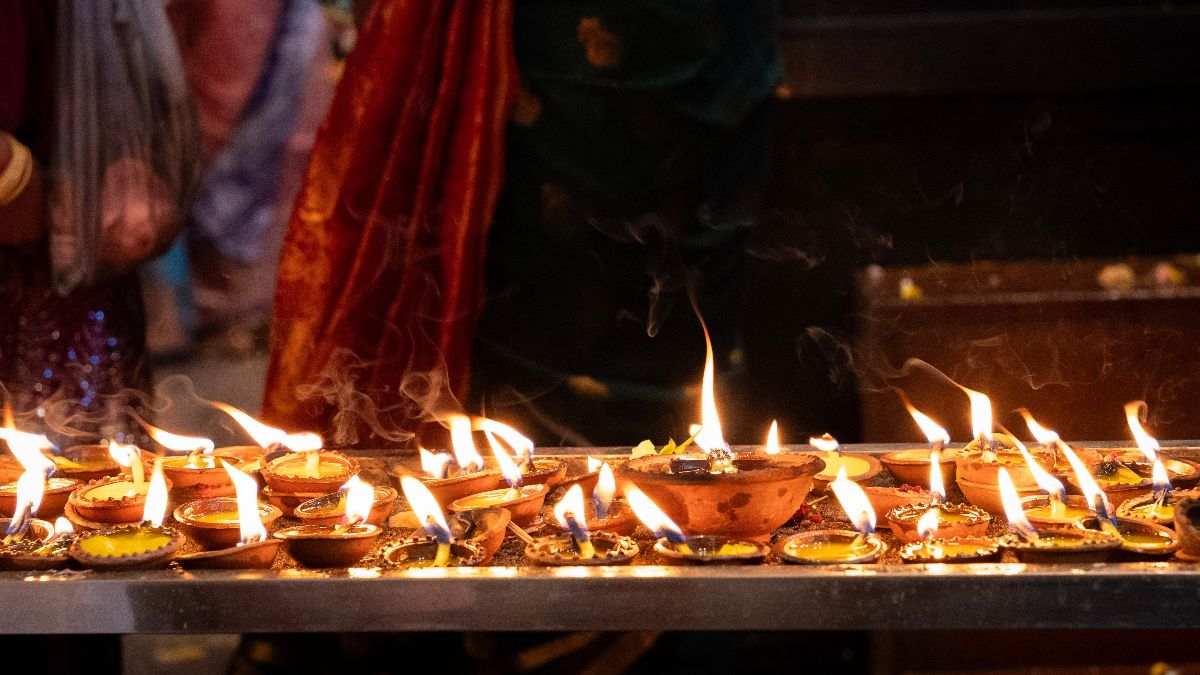
The Tamil month of Karthigai runs from November 17, 2026 to December 15, 2026. Deepam is observed when the Krittika nakshatra coincides with the Pournami or full moon. Karthigai Deepam is one of the oldest recorded festivals of Tamil culture. Household observances can extend over three days of light, devotion and family togetherness, in honour of the gods Shiva and Muruga. During that time, homes are cleaned, decorated with kolam, and lit with rows of clay lamps, while delicious smells waft over from the kitchen. And those are usually very familiar and nostalgic scents, from rice being puffed to jaggery being melted into a glossy syrup, and so on.
The food is uncomplicated and homely, yet closely associated with the season as well as the way the festival is observed at your home. While homes and temples dress up for the occasion, the celebrations at Tiruvannamalai are the highlight of the occasion, mainly due to the lighting of the Maha Deepam atop Arunachala hill. The occasion has a long literary and cultural history, with multiple references to Karthigai celebrations appearing in classical Tamil literature. And the food traditions are just as rooted in culture and history.
Pori urundai is perhaps the most recognisable festive preparation for this occasion, but it is not the only one. Depending on family customs and regional practice, the offering may include aval pori, adai, vadai, paniyaram, and adhirasam, among others. These preparations draw on rice, lentils, coconut and jaggery in different forms, making the festival table a mesmerising reflection of Tamil Nadu’s everyday ingredients being transformed for a special festival. In 2026, Karthigai Deepam falls on November 24.
Karthigai Deepam is occasionally described rather simply as another festival of lights, but its seasonal setting gives it a unique character of its own. In her ethnographic study, Indira Arumugam examines how the festival’s lamps, household rituals and food offerings are connected to the season. Her account of Vaduvur describes shorter days, cooler nights, misty mornings and rain as part of the setting in which families light and decorate their homes.
This connection between the season and the festival is worth remembering when looking at its food as well. The dishes are not designed around elaborate menus or a single prescribed feast. Instead, households prepare small offerings using familiar and seasonal pantry ingredients.
Few preparations are as closely associated with Karthigai Deepam as pori urundai. The name clearly describes the essential idea: puffed rice bound together with melted jaggery and shaped into compact balls. The combination is modest, but getting the texture right requires some effort and attention. The puffed rice should remain light and crisp, while the jaggery must hold the ingredients together without making the finished sweet unpleasantly hard or sticky. Plus, the choice of puffed grain can vary. For example, arisi pori is puffed rice, while nel pori is puffed paddy. Another variety is aval pori, or puffed flattened rice, which is also used in jaggery-based festive preparations.
As these variations are not merely different names for the same ingredient, the finished sweet can feel slightly different depending on what goes into it. To make a simple pori urundai, first you need to melt your jaggery with a little water and keep cooking until it attains the appropriate syrupy consistency. The puffed rice is then quickly mixed in, before the syrup cools down and begins to set. After that, the mixture is shaped while it is still warm, often with lightly greased hands. Now, this is the part that can be tricky for first-time makers. If the syrup is undercooked, then the balls may not hold their shape, while if it is cooked too much, the jaggery can become excessively hard once it is cooled.
Some versions also include roasted gram, sesame seeds, coconut pieces, or a little cardamom. These additions give the festive sweet more texture and aroma, but they are not essential to every household preparation. The appeal of a good pori urundai lies in its contrast of a crisp, airy centre held together by the deep caramel-like flavour of jaggery. It is also convenient for making ahead of time, which makes it very well suited to a festival when the entire household is busy arranging lamps and completing the evening rituals.
ALSO READ | Goan Bebinca: Ingredients, Layering Technique And Portuguese Influence
Aval pori can be used to make urundai or other jaggery-based preparations. Arumugam’s ethnographic account records a mixture of rice flakes, puffed rice, jaggery, grated coconut and roasted Bengal gram under the name aval pori in Vaduvur. It appears alongside vadai, adai, paniyaram and adhirasam among the foods prepared for the main day. This is a documented local preparation, rather than a single recipe followed by every household.
Depending on household practice, the sweetened pori may be served loose, as a brittle or shaped into balls. Raks Kitchen records a family tradition of making aval pori as a brittle and nel pori as urundai. Coconut adds a fresh, mildly sweet note here, while roasted gram brings a firmer, toasty bite. It is a good example of how a handful of pantry staple ingredients can produce a preparation with a pretty different eating experience simply by changing their proportions and form.
The Karthigai Deepam spread is not focused on sweets only. Adai, a savoury lentil-and-rice pancake, is made and offered during rituals in several homes. For making it, rice and a selection of lentils are soaked, then ground into a coarse batter and seasoned, commonly with dried red chillies, curry leaves and asafoetida. Unlike a soft dosa, adai is generally thicker and heartier, with a textured surface and crisp edges when cooked on a hot griddle. Its ingredients also make it pretty different from the festival’s jaggery-based sweets. And then there is vadai to offer another savoury contrast.
Urad dal is commonly used for making this familiar medu-vadai style, although household preparations and shapes do vary. The batter is commonly ground to a thick consistency, then seasoned and fried until the outside is crisp while the centre remains softer and fluffier. In the context of a festive offering, vadai brings another essential savoury, fried element to a spread otherwise dominated by rice, coconut and jaggery-based treats.
Thanks to families that prepare a more elaborate offering for Karthigai Deepam, paniyaram and adhirasam also find a place of honour for themselves during this festive season. Paniyaram is made by cooking batter in a special moulded pan, producing small, rounded pieces with a lightly crisp exterior and a soft centre. Sweet versions may use rice batter with jaggery, while savoury versions can include chillies, curry leaves and other seasonings of choice. The same paniyaram pan can therefore produce both sweet and savoury snacks.
Adhirasam is another traditional Tamil sweet made using rice flour and jaggery. A dough of rice flour and jaggery syrup is prepared and left to rest, then shaped into discs and deep-fried. Unlike pori urundai, adhirasam has a dense, chewy centre with a gently crisp edge, rather than an airy crunch. The quality of the jaggery syrup and the handling of the dough are crucial for perfecting the final texture. Both pori urundai and adhirasam are part of Tamil Nadu’s festive food traditions and are made for other celebrations too. Their inclusion in a Karthigai Deepam spread varies from one household to another.
The ways in which families carry out Karthigai Deepam’s food traditions within their homes play a large part in their domestic festival rituals. One person may check the jaggery syrup, another arrange the lamps, and another prepare the savoury batter or clean the brass and clay lamps for the evening. These shared tasks show how cooking is part of the household’s preparations for the festival.
Pori urundai is fondly remembered because a few common ingredients can become a distinctively festive offering. Alongside aval pori, adai, vadai, paniyaram and adhirasam, it shows how Tamil Nadu’s festival cooking gives familiar grains and pulses a special place on the table.
Karthigai Deepam foods include pori urundai and aval pori preparations, alongside adai, vadai, paniyaram and adhirasam in some households. Rice, lentils, coconut and jaggery are familiar ingredients, while the dishes offered vary by family and regional custom.
Pori urundai is a sweet made by mixing puffed rice with jaggery syrup and shaping the mixture into balls while it is warm. It is closely associated with Karthigai Deepam, and the choice of puffed grain and added ingredients varies between households.
Aval pori is puffed flattened rice, while nel pori is puffed paddy. Arisi pori is ordinary puffed rice. These terms describe different forms of rice, rather than interchangeable names for the same ingredient.
The jaggery syrup's consistency is important. Undercooked syrup may not bind the puffed rice firmly enough, while overcooked syrup can make the coating too hard. The mixture also needs to be shaped before it cools and sets.
Karthigai Deepam falls on Tuesday, 24 November 2026. Household observances may extend over three days, while the festival at Tiruvannamalai's Arunachaleswarar temple spans ten days.