Vanaspati, Reused Oil and Trans Fats: What to Avoid
India’s trans-fat rules have changed the vanaspati conversation. The habit still worth changing is at the kadhai.
Table of Contents
Avoid industrially produced trans fats and repeated deep-frying in the same oil. India caps trans fat tightly, but reheated frying oil can still develop harmful breakdown products. Oil used once may be filtered and used for a curry within a day or two, provided it has not deteriorated. Smoke, persistent foam, darkening or thickening mean discard it; their absence does not prove safety.
The other pieces in this series, tofu versus paneer and ghee versus butter, deliberately declined to name a winner, because the evidence didn’t support one. Trans fats are different. Industrially produced trans fats increase the risk of heart disease, and that’s the reason India’s food regulator, the Food Safety and Standards Authority of India, has progressively capped them. There’s no good-intentions case to be made for them, and no traditional wisdom to balance against. It’s simply a matter of knowing where they come from.
Most industrially produced trans fats come from partial hydrogenation, a process that turns liquid vegetable oil into a more solid, long-lasting fat. That process helped make vanaspati popular for decades: cheaper than ghee, stable at room temperature, and useful for frying, mithai and bakery goods. Today, the formulation and compliance with current limits matter.
Small amounts of trans fats also occur naturally in milk and meat from ruminant animals, such as cows, sheep and goats. These count towards the World Health Organization’s advice to keep total trans-fat intake below 1% of total energy. Industrially produced trans fats should be avoided.
The cooking method matters too. WHO describes the trans-fat increase from high-temperature frying as modest compared with partial hydrogenation. With repeated frying, the concern extends to the wider breakdown of the oil. Even a household that has never bought vanaspati needs to pay attention to the way it fries.
This is the part many people don’t know, and it changes the conversation. Since 1 January 2022, FSSAI’s standards have capped trans fat in vanaspati, refined oils, bakery shortening, margarine and fat spreads at no more than 2% by weight. Its separate food-products rule limits industrial trans fat to 2 g per 100 g of total oils and fats in foods made with added edible oils or fats. That follows WHO’s recommended national-limit approach: the denominator is the fat, not the whole food.
So the old warning, that vanaspati is loaded with trans fat, needs updating for products made within today’s rules. That isn’t the same as vanaspati being a good everyday choice. Its saturated-fat content still matters. ICMR-NIN’s 2024 dietary guidelines advise avoiding partially hydrogenated fats such as vanaspati as the cooking medium. Favour suitable oils rich in unsaturated fats, in limited amounts.
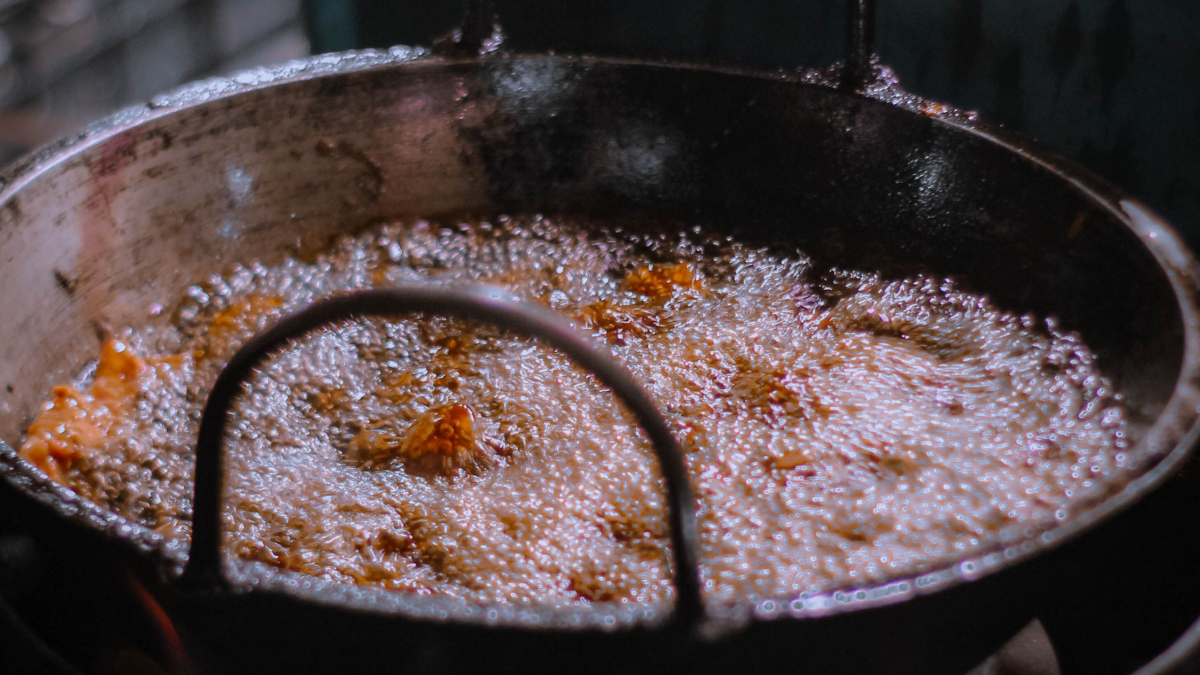
Here’s where an everyday risk still sits. When oil is heated to frying temperature again and again, it breaks down. It may darken and thicken as degradation products build up. Total polar compounds, or TPC, are used to assess that deterioration. FSSAI’s rules say that used vegetable oil or fat with TPC above 25% must not be used. You cannot read that percentage from the colour of a kadhai.
Reusing oil often comes from an entirely sensible wish not to waste something expensive, with the pan topped up rather than emptied. But adding fresh oil does not remove the degraded compounds already there.
The rules have changed the picture for oils and fats, but a few places still deserve a second thought.
None of this means avoiding fried food outside the house altogether. It means choosing where you buy it with the same care you’d give to anything else you eat.
FSSAI’s household guidance and ICMR-NIN’s dietary guidelines offer a practical approach:
The habit most worth dropping is the kadhai of oil kept for weeks and topped up before each round of frying. Topping up with fresh oil dilutes the problem without removing it.
Festive frying is a joy and nobody needs to give it up. A few habits make it better:
Different suitable cooking oils have something to offer. Groundnut and mustard oils can both have a place in an Indian kitchen. I suggest a combination across meals, through a commercially prepared blend or by rotation, rather than relying only on sunflower or any single oil. Groundnut, soybean, sunflower and rice bran are examples to consider. Match the oil to the cooking method; variety does not mean using more of it.
When buying fried snacks or mithai, check the shop’s FSSAI licence or registration, handling and storage. These checks cannot establish the condition of its frying oil. The same food-storage principles apply during Diwali as through the year.
Honestly, a modest one. The strongest reasons to avoid trans fats and heavily degraded oil concern general health rather than your gut specifically. But a heavy, fried meal can leave some people with that uncomfortable, overfull feeling after festive eating. Fatty or greasy foods can trigger indigestion in some people. Fresh oil matters for safety; keeping fried food as the treat rather than the whole meal may help with comfort.
You can also break the old-school habit of assuming a festive dish must be deep-fried. Explore air-frying, shallow-frying, pan-frying, tandoor cooking or baking. These can use less oil; the oil content and nutrients retained depend on the recipe, temperature and time. Enjoying fried foods occasionally is fine, but making them a daily habit can add more energy than you need.
The festive season is a time to enjoy, indulge and celebrate with friends and family. It can completely change your routine, food habits and eating pattern. However, it is a temporary phase, and you can get back to your routine once it’s over.
Here are a few tips I would give as a nutritionist to help you enjoy the festival without guilt:
If you have cardiovascular disease, diabetes, kidney disease or a digestive condition, follow your individual advice on portions, preparation and food restrictions. Deep-fried foods may need limiting, especially if they worsen symptoms or do not fit your care plan.
If you are following a weight-management plan, mindful portions can help you stay close to your usual energy needs. Enjoy the occasion, then return to your normal meals without guilt.
This is the rare fats question with a straight answer. Industrial trans fats are worth avoiding, and India caps them tightly. The habit worth changing is at the kadhai: fry in fresh oil, avoid repeated deep-frying, and only reuse oil for a curry within a day or two if it has not deteriorated. Don’t wait for smoke, foam or darkening before reconsidering an old batch. The Diwali snacks can stay. They’re just made with better oil habits.
Disclaimer: This article provides general nutrition and food-safety information and is not a substitute for personalised medical advice, diagnosis or treatment. If symptoms continue, are severe, or keep coming back, it’s worth speaking to a doctor. If you have been advised to limit fried food, particular fats, sugar or fluids for a health reason, follow your doctor’s or dietitian’s guidance.
It can, but vanaspati manufactured under India’s rules from 1 January 2022 must contain no more than 2% trans fat by weight. It should not automatically be described as loaded with trans fat. The saturated-fat content and overall diet still matter; ICMR-NIN advises avoiding partially hydrogenated fats as the cooking medium.
There is no universal safe count. Avoid repeated deep-frying. FSSAI and ICMR-NIN advise that oil used once may be filtered and used for curry preparation within a day or two. Discard deteriorated oil rather than reusing it, and remember that filtering does not reverse the damage.
It dilutes the degraded oil but doesn’t remove its breakdown products. Starting with fresh oil is the better household habit, rather than keeping an old batch going through repeated top-ups.
Not down the drain. Let it cool, then mix small amounts with an absorbent material and bin them according to local rules, or give larger amounts to an authorised collection service where available.
India’s industrial-trans-fat definition excludes trans fats from dairy, meat, fish and their products. That does not make natural trans fats harmless. WHO’s advice to keep total trans-fat intake below 1% of energy includes both industrial and naturally occurring sources. Ghee and other dairy fats also contribute saturated fat, so portions matter.