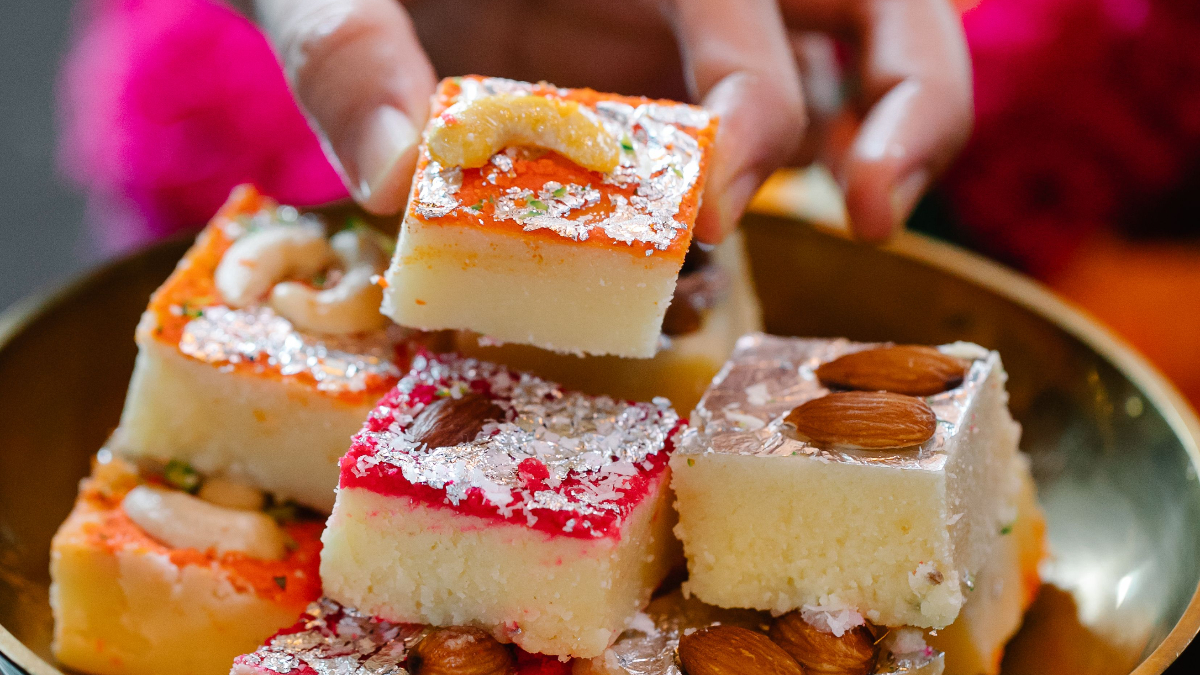
Which Indian sweets are the healthiest?
There isn’t one Indian sweet that wins a universal “healthiest” title. Recipes, portions and your own tolerance matter too much for a fixed ranking. A small serving of a non-fried sweet is one practical option, but kaju katli can still be rich in fat, and a milk-based rasgulla may not suit someone who doesn’t digest lactose well. What separates them comes down to frying, milk, syrup and how much you eat. With that in mind, here’s the box, sweet by sweet.
What makes some mithai heavier than others?
- Frying. Gulab jamun, jalebi and motichoor are all fried before they meet the syrup. That adds fat, and rich, fatty foods can contribute to stomach pain or heartburn in some people. It doesn’t mean everyone will feel uncomfortable after the same sweet.
- Milk. Khoya, chhena and rabri are all made from milk. If your body doesn’t digest lactose well, milk sweets can bring on bloating, wind and cramps. The lactose content and the amount you tolerate vary. Fresh, moist milk sweets also need particular care with storage.
- Syrup. A sweet that absorbs sugar syrup brings that sugar with it. Leaving extra syrup in the bowl reduces the syrup you eat; it doesn’t remove sugar already in the sweet.
- Nuts and besan. Cashews and gram flour bring some protein, and besan some fibre, though sugar and added fat still do plenty of the talking.
And, above all, how much you have. Recipes vary by maker and region, so these descriptions are a guide to familiar versions. Check ingredients if you need to avoid something.
Your mithai box, sweet by sweet
Soan papdi
What’s in it: besan, wheat flour, sugar, and ghee or vegetable fat, often with cardamom and nuts. It belongs to the same family as patisa, though textures and recipes vary. How it sits: not deep-fried in the way a jamun is, but rich in sugar and fat, and so airy that portions vanish. Worth knowing: packaged soan papdi may list vegetable fat. Since 1 January 2022, FSSAI has capped industrial trans fats at 2% by mass of the total oils and fats in foods made with edible oils or fats. Read the ingredients and nutrition panel for the type of fat, saturated fat, trans fat and sugar.
Kaju katli
What’s in it: cashew paste or powder and sugar, sometimes with ghee or milk, often finished with silver varq. How it sits: it isn’t fried, and the cashews contribute some protein and unsaturated fat. But a cashew-rich sweet can still contain plenty of fat and added sugar; “not fried” doesn’t automatically mean light. People ask: is kaju katli good for weight loss? It isn’t a weight-loss food, though a modest portion can fit into an individual eating plan. The size of the diamond matters.
Besan ladoo
What’s in it: besan roasted slowly in ghee, then sugar and cardamom. How it sits: gram flour gives it some protein and fibre, but the ghee and sugar make it dense rather than light. People ask: is besan ladoo good for constipation? It isn’t an established treatment. The British Dietetic Association’s guidelines for chronic constipation in adults identify specific options, including kiwifruit, prunes and psyllium. Besan in a ladoo doesn’t give the finished sweet those same benefits.
Motichoor ladoo
What’s in it: tiny pearls of besan batter — fine boondi — fried in ghee or oil, mixed with sugar syrup and pressed into balls. How it sits: fried and syrup-soaked, so it’s one of the richer sweets in the box. A small ladoo can be your chosen serving; there’s no need to sample every box at once.
Gulab jamun
What’s in it: often khoya with a little maida, rolled into balls, deep-fried, then soaked in syrup. Milk-powder versions are common too. How it sits: fried, usually milk-based and syrupy all at once, which makes it a rich sweet. People ask: is gulab jamun good for loose motion? No. NHS advice for diarrhoea prioritises fluids and suggests avoiding fatty or spicy foods while you’re unwell. Eat when you feel able, choosing foods you tolerate; save the gulab jamun for when you’ve recovered.
Jalebi
What’s in it: usually a maida batter, often fermented for its gentle tang, piped into hot oil and dunked in syrup. Instant versions exist too. How it sits: fried and syrupy, so enjoy it fresh and in a small serving. Fermentation contributes flavour; it doesn’t make deep-fried jalebi a probiotic food. People ask: is jalebi good for health? As an occasional sweet, it’s simply that: a sweet. Paired with rabri, it becomes richer still.
Rasgulla
What’s in it: chhena, fresh curd cheese, shaped into balls and simmered in sugar syrup. How it sits: it isn’t fried, but its fat content depends on the milk and recipe, and the syrup adds sugar. People ask: is rasgulla good for loose motions, diarrhoea or gastric trouble? It isn’t a remedy for any of them. During diarrhoea, replace fluids and eat foods you tolerate. Squeezing out syrup doesn’t turn rasgulla into a treatment or guarantee that it will be gentler on your stomach.
Rasmalai
What’s in it: flattened chhena discs soaked in thickened, sweetened milk flavoured with cardamom and saffron. How it sits: not fried, but rich in dairy, so it may bother someone who doesn’t digest lactose well. Fresh rasmalai is also perishable: keep it refrigerated and follow the maker’s storage and use-by instructions.
Barfi, peda and kalakand
What’s in them: milk barfi and peda are often made with khoya or other milk solids and sugar; kalakand has a moist, grainy milk base. Recipes may include nuts, and barfi also comes in versions based on other ingredients. How they sit: generally not fried, but the milk versions can be rich in milk fat and sugar. Worth knowing: shelf life varies with the recipe, packaging, temperature and handling. FSSAI withdrew its 2020 mandatory best-before display rule for loose sweets on 7 November 2023; its order allows voluntary display. Check any date shown and ask the shop when the sweets were made, how to store them and when to eat them. Follow the label on sealed packs, including instructions after opening.
Put together, the box starts to make more sense.
So which sweet should you pick?
If you want a non-fried sweet, kaju katli and rasgulla fit that description. That’s a difference in preparation, not a promise about how they’ll feel in your stomach. Besan ladoo remains a dense sweet, and dairy-rich rasmalai may be a poor fit if lactose bothers you. Choose something you enjoy, take a small serving and stop when you’ve had enough. If having your sweet after a meal helps you keep the portion modest, make that your routine.
How do I enjoy the mithai box without the aftermath?
- Choose a small serving of one or two favourites, rather than a piece from every box whenever you pass the table. Take your time over it so you can enjoy the sweet you chose.
- Check storage instructions as soon as a box arrives. Refrigerate perishable sweets promptly and keep them chilled between servings. Follow any storage and use-by instructions; the fact that another sweet keeps well doesn’t tell you how long this one will last.
- Share generously, while the sweets are fresh and safely stored. If you’re visiting several homes, you can appreciate the hospitality without accepting another helping.
- Read the sugar-free boxes carefully. Some use sugar alcohols, also called polyols, such as sorbitol, mannitol or xylitol. These can cause gas, bloating or loose motions, particularly in larger amounts. “Sugar-free” doesn’t mean that a sweet is free of carbohydrate, fat or calories.
- Take a gentle walk if you feel up to it. Regular movement can help with bloating, including when you’re already feeling bloated.
For some readers, the ingredients need a closer look.
Should anyone go easy on mithai?
If you have diabetes, follow your doctor’s or dietitian’s guidance on portions and carbohydrate intake; the “sugar-free” label isn’t enough to decide. If lactose doesn’t agree with you, consider your tolerance for khoya and chhena sweets. If fried or fatty food triggers acidity, avoid your triggers and leave three or four hours between eating and bed. If you have IBS, some sugar alcohols and lactose may trigger symptoms, but tolerance varies. A restrictive low-FODMAP diet should be guided by a suitably trained professional. With a food allergy, check ingredients and cross-contact with the shop or manufacturer; mithai may contain milk, nuts or wheat.
Speak to a doctor about unexplained weight loss, blood in the stool, persistent or recurring pain, or difficulty swallowing. Seek urgent medical advice for bloody diarrhoea, vomiting that prevents you keeping fluids down, or signs of dehydration. Sudden, severe abdominal pain or vomiting blood needs emergency care.
Before you go
- Today: pick one or two favourites from the box and enjoy a small serving after a meal, if that suits you.
- When a box arrives: check which sweets need refrigeration, and share perishable ones while they’re fresh.
- Ask Happy Tummy GPT: tell it what’s in your mithai boxes and ask for general ideas for fitting modest portions around your usual meals.
- Plan it in: keep regular, balanced meals in place around the sweets with My Meal Plan. Follow your clinical team’s advice if you have a medically prescribed diet.
Sources
FSSAI. Guidance Note on Elimination of Trans Fatty Acids (2022), section V, printed page 3: the 2% limit and its basis.
FSSAI. Order dated 7 November 2023 withdrawing mandatory best-before display on loose sweets and allowing voluntary display.
FSSAI. Guidance Note on Safety and Quality of Traditional Milk Products (2020): perishability and storage; date-display advice was subsequently superseded by the 2023 order above.
British Dietetic Association. Evidence-based dietary guidelines for chronic constipation in adults (2025), explained by Dr Eirini Dimidi in February 2026.
NHS. Diarrhoea and vomiting: fluids, eating and when to seek help.
NHS. Lactose intolerance.
NHS. Good foods to help your digestion: fatty foods and digestive symptoms.
NHS. Bloating: regular movement and when to seek medical advice.
US FDA. Interactive Nutrition Facts Label: Sugar Alcohols.
NHS. Heartburn and acid reflux.
US FDA. Are You Storing Food Safely? Perishable food storage.
NICE. Irritable bowel syndrome in adults, recommendations: sorbitol and professionally supervised dietary restriction.
ISAPP. Do fermented foods contain probiotics?
WHO. Healthy diet: varied diets, free sugars and unsaturated fats.
Recipe and ingredient references: Verka soan papdi ingredients; Dadu’s on patisa and soan papdi; Sanjeev Kapoor’s kaju katli; Sanjeev Kapoor’s motichoor ladoo; Unilever Food Solutions’ gulab jamun; Kunal Kapur’s jalebi.
Disclaimer: This article is for general information only and is not a substitute for personalised medical advice, diagnosis or treatment. If you have diabetes, a food allergy or intolerance, IBS or another digestive condition, or have been advised to follow a specific diet, follow your doctor’s or qualified dietitian’s guidance. Seek individual advice when using dietary changes to manage symptoms in children, during pregnancy or in older adults. Food-storage instructions and individual tolerance vary.
FAQs
Is soan papdi healthy?
It’s a sweet made with sugar, flour, besan and fat, sometimes with nuts. Its airy texture doesn’t make it low in sugar or fat. A modest serving can be part of Diwali; check the ingredients and nutrition panel rather than judging by how light it feels in your hand.
Is kaju katli healthy?
Cashews contribute some protein and unsaturated fat, but kaju katli still contains added sugar and can be rich in fat. It isn’t necessarily “mostly sugar” either: recipes vary. Its lack of deep-frying is one difference, not proof that it is healthier or easier to digest than every other sweet.
Is besan ladoo good for constipation?
It isn’t an established constipation treatment. Besan supplies some fibre, but a ladoo also contains ghee and sugar. Kiwifruit, prunes and psyllium are among the specific options in the BDA guidelines for adults with chronic constipation. Ask a clinician or dietitian about persistent symptoms and suitable treatment.
Is gulab jamun good for loose motion?
No. It is usually milk-based, fried and syrupy, and fatty foods can be troublesome during diarrhoea. Prioritise replacing fluids and eat when you feel able, choosing food you tolerate. A pharmacist can advise on oral rehydration sachets. Mithai is not a remedy for loose motions.
Is rasgulla good for diarrhoea?
No. Rasgulla is not a diarrhoea remedy, and removing syrup does not establish that it is a gentle recovery food. Replace fluids and eat tolerable foods as your appetite allows. Milk-based sweets may be troublesome if lactose is not agreeing with you.
Are there healthy Indian sweets for Diwali?
There is no universal healthiest mithai. Recipes, serving size, the rest of your diet and individual tolerance all matter. Choosing a favourite in a small portion is more useful than treating a non-fried, nut-based or sugar-free sweet as something you can eat without limits.