Is Sushi Safe in Japan? What to Know Before You Eat
Freshness, wasabi and a restaurant’s price tag cannot tell you whether sushi is safe. Here’s what matters, from the filling to the way it is stored.
Table of Contents
Sushi can be prepared and handled to reduce food-poisoning risks, but it is not risk-free. Raw fish adds parasite and bacterial risks; cooked or vegetarian fillings avoid the live raw-fish parasite risk, but hygiene and rice storage still matter. For raw seafood, ask about validated parasite-control freezing. Cooking seafood thoroughly is the safer choice, especially for people at higher risk of serious foodborne illness. Japan’s reputation for sushi does not guarantee the safety of an individual meal.
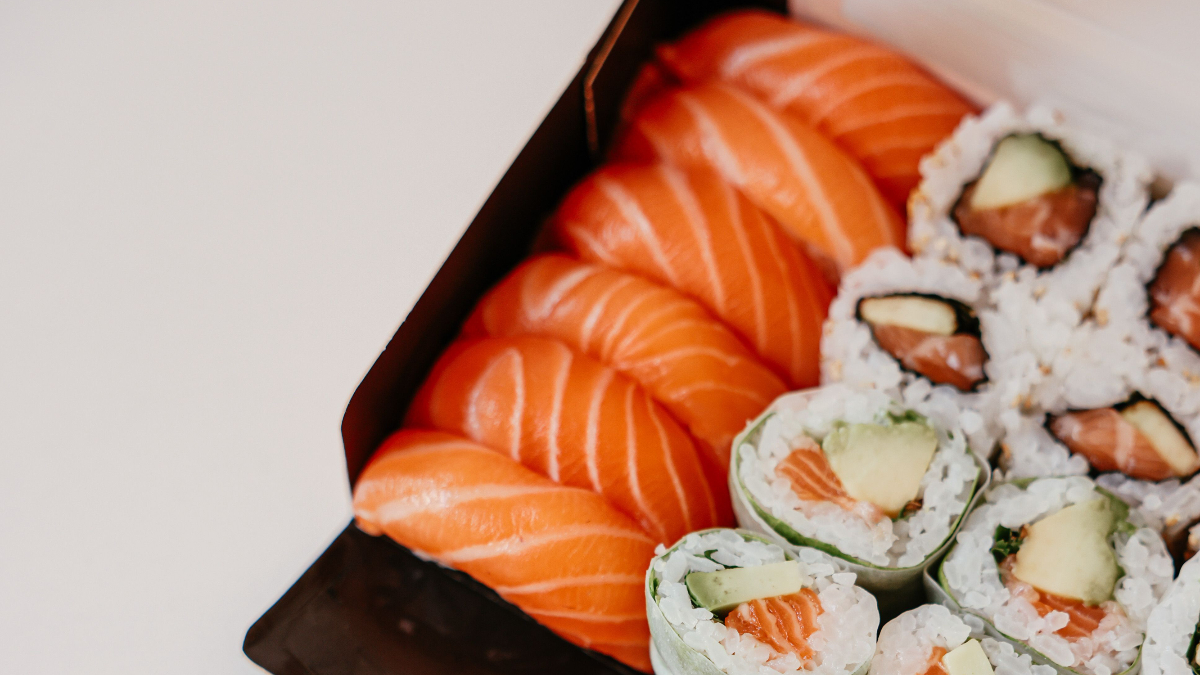
Sushi can contain raw or cooked seafood, egg or vegetables, alongside vinegared rice. Ask what is in the roll rather than assuming everything on a sushi menu is raw.
Fully cooked seafood or a vegetable filling avoids the live-parasite risk from eating raw fish. A seared surface with a raw centre does not do the same job as cooking through. Cooked and vegetarian options still need clean preparation and proper storage; utensils used for raw seafood can contaminate ready-to-eat ingredients if they are not cleaned properly.
Yes. Raw seafood can carry harmful bacteria as well as parasites. Freezing does not kill all harmful germs, and contamination during preparation can affect other ingredients too. Fresh-looking fish alone cannot settle the question.
Rice matters as well. The UK Food Standards Agency explains that Bacillus cereus spores can survive cooking; bacteria can then multiply and produce toxins if cooked rice is left at room temperature for too long. Sushi businesses use controlled rice preparation, acidification and holding procedures. Adding a splash of vinegar at home is not a substitute for those controls.
For travellers, the practical checks are simple: eat takeaway sushi promptly, follow its storage and use-by instructions, and keep chilled sushi cold during transport. Do not leave it in a warm bag while sightseeing. Neither a cooked filling nor a vegetarian label removes the need for those checks.
Japan has yatai stalls, festival food, market counters, restaurants and convenience stores. Those settings serve very different foods. Treating all of them as one ‘street food’ category obscures the question that matters: was a particular food handled in a way that controls its relevant hazards?
Anisakiasis is linked to eating seafood that contains live parasite larvae, not to eating outdoors. A skewer cooked through and a plate of raw fish present different parasite risks even if they come from the same market. Equally, a polished dining room does not make raw seafood parasite-free.
Anisakiasis can occur when a person eats raw or undercooked marine fish or squid containing live larvae of Anisakis and related parasitic worms. The larvae may attach to or penetrate the stomach or intestinal wall. The condition is reported in several parts of the world and is associated with raw-seafood traditions in more than one country.
Most recognised cases in Japan involve the stomach. Anisakis exposure can also cause allergic reactions, including hives and, more rarely, anaphylaxis. The Food Safety Commission of Japan’s risk profile notes that some parasite proteins can remain allergenic after the larvae have been killed. If you have diagnosed or suspected Anisakis allergy, do not assume cooking or freezing makes the seafood suitable for you; follow an allergy specialist’s advice.
Japan’s January 2025 risk profile gives two very different figures for 2018–2019. Food-poisoning statistics recorded an average of 407 patients a year, while analysis of health-insurance claims estimated an average of 19,737 medically treated patients a year. The larger number is an estimate derived from claims data, not the number officially recorded in food-poisoning surveillance. Neither figure describes the current year.
Anisakis began to be counted as a separate category in Japan’s food-poisoning statistics in 2013. Awareness, diagnosis and reporting affect the numbers, so the source and period matter when reading a headline about cases.
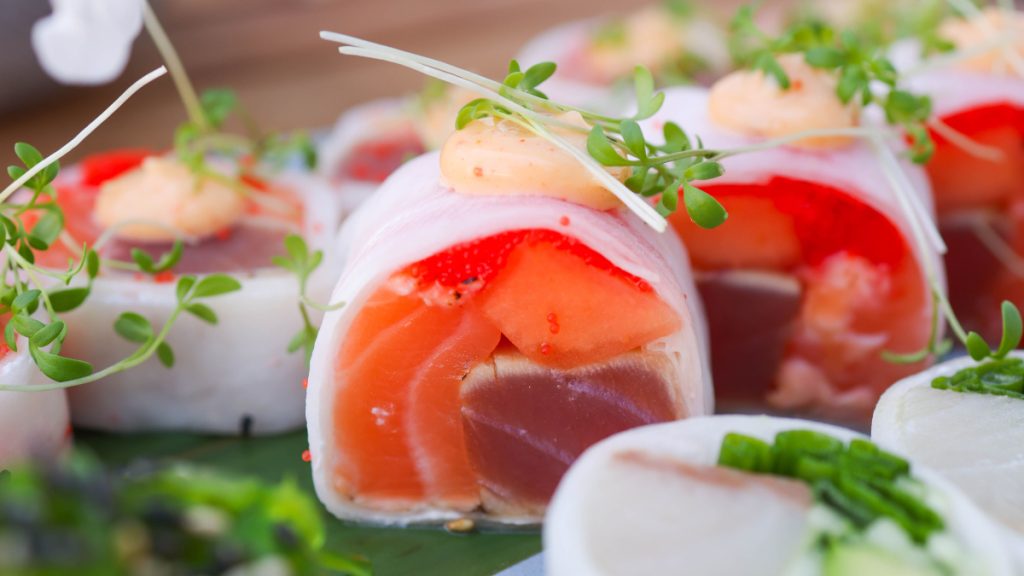
Mackerel is especially prominent in Japanese case reports. Tokyo’s public-health guidance also names salmon, herring, sardine, Pacific saury, cod, trout and Japanese flying squid. That list is not a ranking, and occurrence varies by species, origin, season and handling.
A dish name does not reveal its parasite controls. Shime saba, for example, is vinegar-cured mackerel, but culinary amounts of vinegar do not reliably kill Anisakis larvae. Nor do the words ‘fresh’, ‘farmed’ or ‘sashimi-grade’ prove that validated freezing occurred. Controlled aquaculture and feed can reduce exposure for some farmed fish, but ‘farmed’ should not be treated as a universal guarantee.
Japanese guidance cites freezing the centre of the food at −20°C for at least 24 hours, or heating the centre to 60°C for one minute, to kill Anisakis larvae. These are parasite-control conditions, not a complete seafood-safety guarantee. For seafood cooking in general, the US CDC cites an internal temperature of at least 63°C.
Freezing schedules differ by jurisdiction and process. The CDC lists US FDA options including −20°C or below for seven days in total, alongside specific faster methods using −35°C. Those procedures are not interchangeable with holding the centre at −20°C for 24 hours. A freezer’s setting alone does not establish when the centre of a thick piece reached the required temperature. This is a reason to ask about a validated process, not to improvise with a freezer whose performance is unknown.
| Measure | What it can do | Important limit |
| Cook thoroughly | Adequate heat kills live larvae. General CDC seafood advice is an internal temperature of at least 63°C. | The centre must reach the target. Browning or searing the surface is not enough. |
| Freeze under a validated process | The correct time and temperature can kill live larvae. | A brief chill or an unverified home freezer does not demonstrate parasite control. Freezing does not kill all harmful germs. |
| Inspect and trim | Prompt gutting and removal of visible larvae can reduce contamination. | Larvae can be missed; visual inspection is not a substitute for validated freezing or cooking. |
| Cure or season | Vinegar, salt, soy sauce and wasabi change flavour or texture. | Normal culinary use does not reliably kill the larvae. |
Tokyo’s prevention advice explains why curing and condiments are unreliable. The FDA’s seafood guidance also makes clear that freezing does not kill all harmful germs. Cooking remains the safer choice for reducing the wider risks of eating raw seafood.
You cannot reliably tell from appearance, price, reputation or general cleanliness whether a particular fish was frozen for parasite control. Ask: ‘Was this fish previously frozen for parasite control?’ If staff cannot confirm the process, choose a cooked-through seafood dish.
Pregnant people, young children, older adults and people with weakened immune systems should avoid raw or undercooked fish and shellfish. Anyone who has been medically advised to avoid raw seafood should follow that advice even if the fish was previously frozen.
Freezing need not mean an obviously inferior meal. A small randomised, double-blind study of 40 adults found no statistically significant overall preference for unfrozen over previously frozen mackerel or squid sushi. It measured taste preference, rather than establishing that diners could not distinguish the two. The finding does not show that every species, freezing method or diner will give the same result, or tell you what a particular restaurant does.
Before and during travel, familiar meals with wholegrains, pulses, fruit, vegetables and enough fluid can support normal bowel function. The NHS’s advice on fibre and fluids explains their role in preventing constipation. If you are increasing fibre in your usual diet, do it gradually and according to your tolerance. These habits do not prevent anisakiasis or replace food-safety controls.
Acute gastric anisakiasis often causes sudden, intense upper-abdominal pain within several hours of eating affected seafood, sometimes with nausea or vomiting. Intestinal disease can appear later. Allergic symptoms can include hives, itching or swelling; breathing difficulty may signal a medical emergency.
Seek prompt medical assessment for severe or persistent abdominal pain or repeated vomiting after raw or undercooked seafood. Food-poisoning warning signs also include bloody diarrhoea, a high fever, vomiting that prevents you keeping fluids down, or dehydration, such as passing very little urine or feeling dizzy on standing. These need medical advice too. Call emergency services for breathing difficulty, facial or throat swelling, faintness or other signs of a severe allergic reaction. In Japan, call 119 for an ambulance. Tell the clinician exactly what seafood you ate and when. Gastric larvae can often be identified and removed during endoscopy; this is not a condition to diagnose or treat at home.
For anisakiasis specifically, seafood cooked through is the lower-risk choice because adequate heat kills live larvae. Ordinary food-safety concerns still apply: thick pieces need to be cooked at the centre, and cooked food should be served hot rather than left lukewarm for long periods.
Convenience stores can be practical for travellers, but no shop format guarantees that every item is safe for an entire trip. Check the use-by information, keep chilled products at the stated temperature, follow heating instructions and do not carry refrigerated meals around unrefrigerated. The same food-storage and reheating principles apply beyond your home kitchen. These checks do not prove that raw fish has undergone parasite-destruction freezing.
A sensible Japan food plan does not require distrusting an entire food culture. Use five checks:
The useful message is specific: anisakiasis is a raw-seafood parasite risk that can be controlled. Understanding the food and its preparation is more useful than judging an entire destination by one hazard.
Disclaimer: This article provides general nutrition and food-safety information and is not a substitute for medical advice, diagnosis or treatment. Follow local food-safety guidance and your clinician’s advice, especially if you are pregnant, immunocompromised or have a seafood or Anisakis allergy. Cooking or freezing does not necessarily remove allergens. Severe or persistent abdominal symptoms, bloody diarrhoea, repeated vomiting or signs of dehydration need medical assessment; signs of a severe allergic reaction require emergency care.
Safety depends on the ingredients, preparation and storage. Raw fish carries risks that cooked fillings avoid, while every type of sushi needs good hygiene and careful handling of the rice. If you are at higher risk of serious foodborne illness, avoid raw seafood and follow your clinician’s advice.
It avoids the live-parasite risk from raw fish, but it can still become unsafe through contaminated ingredients, shared equipment or poor rice storage. Fresh preparation, clean utensils and correct chilling still matter.
There is no single timetable. Symptoms can begin within hours or take days, depending on the cause; timing alone cannot identify the food responsible. Severe stomach pain, bloody diarrhoea, persistent vomiting or signs of dehydration need medical assessment. Tell the clinician what you ate and when.
There is no blanket rule for every traveller. Cooked seafood avoids the live-parasite risk when properly prepared; validated freezing can control that risk in fish served raw. Neither makes every dish risk-free. If you are pregnant, immunocompromised or otherwise advised to avoid raw seafood, choose cooked options. The same precaution applies to young children and older adults.
It can be a practical option, but ‘convenience store’ is not a guarantee. Buy food within its use-by period, follow heating and storage directions, keep chilled items cold and eat them promptly. A varied diet also matters over a longer trip.
You usually cannot tell from the appearance, menu wording or price. Ask the business directly. If staff cannot confirm a parasite-control process, order a cooked-through dish.
Not by curing alone. Shime saba is treated with vinegar and salt, but normal culinary curing does not reliably kill Anisakis larvae. Validated freezing can control the live-parasite risk; Tokyo’s guidance allows freezing after salting and vinegaring, too. Chilling, hygiene and other food-safety controls still matter.
The Japanese figures cited here are not tourist-specific, so they cannot answer that question. For an individual meal, the useful checks are what seafood you are eating and how it was prepared.