Root-to-Stem Cooking: 10 Vegetable Parts Indian Kitchens Never Wasted
From lauki peel and cauliflower stalks to pea pods and watermelon rind, Indian kitchens have long cooked parts that many of us now discard. Here is what to save, how to use it and which scraps to leave alone.
Root-to-stem cooking uses edible peels, stalks, leaves, pods and seeds instead of automatically binning them. Indian kitchens already have dishes for lauki peel, cauliflower stalks, radish greens, raw banana peel, tender pea pods, pumpkin peel and seeds, coriander stems, jackfruit seeds, leafy-green stalks and watermelon rind. These parts can add fibre and plant variety without adding to the shopping list. Wash them thoroughly, cook tougher parts well, and leave unsafe scraps alone — especially extensively green or heavily sprouted potatoes and any bottle gourd that tastes bitter.
What’s Really in the Kitchen Bin
Observed every year on 29 September, the United Nations’ International Day of Awareness of Food Loss and Waste asks us to look at what is lost before and after food reaches the kitchen. The UN Environment Programme’s Food Waste Index Report 2024 estimates that households account for around 60% of the food waste generated across homes, food service and retail — more than the other two sectors combined. For India, the report estimates household food waste at about 55 kg per person a year, based on 2022 data.
That estimate includes both edible and inedible parts, so it does not mean every kilogram could have been saved. Eggshells and bones will still reach the bin. But so do plenty of usable peels, stalks, leaves, pods and seeds, often trimmed off in a hurry.
Indian kitchens have long built dishes around these parts, partly from thrift and partly from the understanding that food was worth using well. Lauki peel became bhaja or chutney; tender pea pods became sabzi; jackfruit seeds went into curries and dals. Many of these dishes also bring extra fibre or another plant part to the plate.
What Root-to-Stem Cooking Adds to Your Diet
Edible peels, stalks and leaves can contribute insoluble fibre, which adds bulk to stools and may help support regular bowel movements. Leaves bring another source of greens, while edible seeds can contribute protein and, depending on the seed, unsaturated fat.
The wider benefit is variety. Different plant foods provide different fibres and plant compounds for gut microbes to use. Cooking the cauliflower leaves as well as the florets, or the radish greens as well as the root, expands that range without asking you to buy a special ‘gut-health’ ingredient.
Tougher peels and stalks can also be more fibrous than the parts you usually eat. If you have a sensitive stomach or are not used to much fibre, begin with a small amount. Chop it finely, cook it until tender or use it in a ground chutney, and see how you feel.
Ten Vegetable Parts Worth Saving
Lauki peel
Bottle gourd peel is traditionally stir-fried into lau khosha bhaja in Bengal. Many home cooks also grind the cooked peel into chutney with green chilli, garlic and roasted peanuts or sesame. Peel the lauki, chop the peel finely and cook it until tender.
Cauliflower stalks and leaves
The thick central stalk is edible. Remove any woody outer layer, slice the tender centre and add it to the same sabzi as the florets. The inner leaves can be cooked like other greens or used in a dry sabzi.
Radish, beetroot and turnip greens
Punjabi and other North Indian kitchens cook mooli ke patte into saag or bhurji, or knead them into paratha dough with the grated root. Beetroot and turnip greens can be cooked much like spinach. When the leaves are fresh, one bunch gives you more than one usable part.
Raw banana peel
Bengal’s kanchkolar khosha bata turns boiled raw-banana peel into a paste with mustard and green chilli. Some Kerala kitchens make a thoran with the peel and grated coconut. Use the peel of a raw green cooking banana, not a ripe eating banana, and cook it thoroughly.
Tender pea pods
In parts of North India, tender pea pods become matar ke chhilke ki sabzi. Peel away the thin inner membrane if it is tough, then cook the fleshy outer pod. Young, fresh, bright-green pods work best.
Pumpkin peel and seeds
Thin-skinned pumpkin can often be cooked with its peel, as it is in several Bengali and Kerala preparations. Pumpkin seeds can be washed, dried and roasted for a snack or added to chutneys, salads and chaats.
Coriander stems
Coriander stems carry plenty of flavour. Chop the tender stems finely into dals, sabzis and chutneys, then keep the leaves for the final garnish. Trim only the coarse or damaged ends.
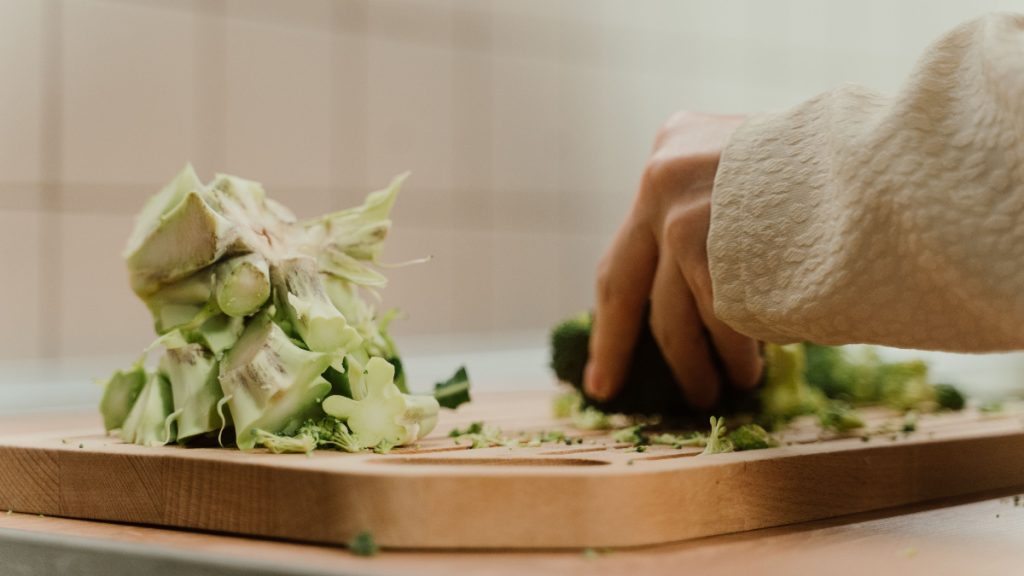
Broccoli stalks need not automatically become kitchen waste: peel away the tough exterior and the tender centre can be added to sabzi, soups or stir-fries. Image via PEXELS
Jackfruit seeds
Jackfruit seeds — chakkakuru in Malayalam and kathal bichi in Bengali — are boiled or roasted and added to curries, stir-fries and dals. They must be fully cooked. Peel away the outer skin after boiling; the cooked centre has a chestnut-like texture.
Spinach, methi and amaranth stalks
Tender stalks from leafy greens cook down well when chopped finely and added to the pan shortly before the leaves. Give thicker pieces a little extra cooking time and discard the woody lower ends.
Watermelon rind
The firm white layer between the red flesh and hard green skin is cooked as a sabzi in parts of Rajasthan and Gujarat. Remove the dark-green outer skin, dice the white rind and cook it much like a gourd.
The Vegetable Parts Best Left Alone
Root-to-stem cooking is not an invitation to eat everything. Some parts are safer in the bin.
Green or heavily sprouted potatoes. Green patches and sprouts can contain higher levels of glycoalkaloids, natural toxins concentrated in the peel and around sprouts. Cut away a small green patch and all sprouts generously. Discard potatoes that are extensively green, badly damaged, heavily sprouted or bitter-tasting.
Bitter bottle gourd. An unusually bitter lauki can contain high levels of cucurbitacins and has caused serious illness, particularly when consumed as juice. Taste a tiny raw piece before cooking or juicing. If it is bitter, discard the whole gourd; do not try to cook away or dilute the bitterness.
Raw or undercooked arbi leaves. Colocasia leaves contain calcium oxalate crystals that can irritate the mouth and throat. Traditional dishes such as patra and alu vadi cook them thoroughly, often with tamarind or kokum. Follow a trusted recipe and do not eat the leaves raw.
Spoilt trimmings. Discard mouldy, rotten or badly bruised parts, as well as peels or leaves that cannot be cleaned properly.
How to Wash Vegetable Peels and Leaves Safely
Peels and outer leaves can carry soil, dust and surface residues, so wash them carefully when you plan to eat them. Rinse produce thoroughly under clean running water. Scrub firm vegetables with a clean produce brush where appropriate. For leafy greens, separate the leaves and rinse around the base, where grit can hide.
Soaking is not required. Do not use soap, detergent or special produce washes, since these can leave their own residues. Washing can reduce surface dirt and some contaminants, but it does not make mouldy, rotten or unsafe plant parts suitable to eat.
How to Make Root-to-Stem Cooking a Habit
Save only usable trimmings. Keep clean, dry stalks and peels in a covered box in the fridge and use them promptly in sabzi, dal, chutney or paratha dough.
Cook attached greens first. Leaves lose freshness faster than roots, so plan to use radish, beetroot and turnip greens early.
Change the texture. Finely chopping, grating or grinding tougher vegetable parts can make them easier to cook and eat.
Clean and dry edible seeds. Pumpkin seeds should be separated from the pulp, washed and dried before roasting.
Use stems during cooking. Add chopped coriander stems to the pan and save the leaves for the finish.
The Honest Takeaway
Root-to-stem cooking will not solve food waste on its own, and the aim is not to make every kitchen scrap edible. It is a practical way to use more of the vegetables you already buy while adding fibre and plant variety to meals.
Begin with one familiar change: slice the cauliflower stalk into the sabzi, cook the radish greens or save the lauki peel for chutney. The bin gets a little lighter, and the plate gains something useful.
Ask Happy Tummy GPT
Want to check the peels, stems and leaves from the vegetables you buy regularly? Try this prompt in Happy Tummy GPT: “Which parts of the vegetables in my weekly shopping list can I safely cook, and how can I use them in Indian meals?”
Lauki peel, raw green-banana peel, thin pumpkin peel and the white portion of watermelon rind can all be cooked in familiar Indian dishes. Edibility depends on the vegetable's condition and the preparation. Wash the produce well, remove tough outer layers where needed and follow a suitable recipe.
Are vegetable peels good for digestion?
Many edible peels provide insoluble fibre, which adds bulk to stools and may support regular bowel movements. They also add plant variety. Tough peels can be uncomfortable if you suddenly eat a large amount, so start small, chop them finely and cook them well.
How should I wash vegetable peels before eating them?
Rinse the whole vegetable thoroughly under clean running water before peeling or cutting it. Scrub firm produce with a clean brush where appropriate. Soap, detergent and special produce washes are not recommended, and soaking is not required.
Can I eat potato skin?
Yes, the skin of a firm, sound potato can be eaten after thorough washing. Remove sprouts and any small green patches generously. Discard potatoes that are extensively green, badly damaged, heavily sprouted or bitter-tasting.
Why should I never eat bitter lauki?
An unusually bitter bottle gourd may contain high levels of cucurbitacins, which can cause severe vomiting, abdominal pain, diarrhoea, bleeding and other serious symptoms. If a tiny raw taste is bitter, discard the entire gourd. Do not cook it or use it for juice.
Which vegetable leaves and stalks can I cook?
Fresh radish, beetroot, turnip and cauliflower leaves can be cooked much like other greens. Tender cauliflower, spinach, methi and amaranth stalks are also usable. Arbi leaves need a trusted recipe and thorough cooking; they should not be eaten raw.
You are now being directed to an external website https://www.callr.live/aashirvaadexperts/premium-plan.
This link is provided for your information and convenience only and ITC Limited is not
responsible for the contents or services provided by Brand Touch India or any information that
you share with Brand Touch India.