Monsoon Food Safety: A Realistic Guide to Eating Well Without the Fear
Monsoon food safety is less about avoiding foods and more about handling them well, from fresh cooking and safe water to timely refrigeration and sensible eating out.
Table of Contents
| TL;DR Monsoon food safety is about handling, not avoidance. Cook fresh, refrigerate leftovers within two hours, reheat until piping hot, drink safe water, and be a little choosier about street food — you don’t need to give up curd, cut fruit or eating out. Skip to the kitchen checklist if you’re short on time. |
Monsoon food safety comes down to one thing more than any other: how food is handled, not which food is on your plate. The advice that does the rounds every June — no street food, no leafy greens, no curd, no cut fruit — treats every food as suspicious, when the actual risk is much narrower. Rain and humidity let bacteria multiply faster, so it’s food left out too long, badly stored leftovers, or unsafe water that cause most monsoon stomach trouble, not vegetables or curd themselves. Handle food well and there’s no reason to eat differently this season than any other.
Take a bowl of fresh dal. Perfectly fine, whatever the weather. Leave that same bowl out for six hours on a humid afternoon, then reheat it half-heartedly, and it’s a different bowl of dal altogether. The same logic covers salads, rice, curries, even your evening snacks — freshness and handling do the heavy lifting, not the ingredient list.
| What is the food safety “danger zone,” and why does monsoon make it worse? The danger zone is the temperature range in which bacteria multiply fastest — roughly 5°C to 60°C, per FSSAI’s food handling guidelines. Cooked food is meant to stay either hot (above 60°C) or properly refrigerated (below 5°C); anywhere in between, for more than about two hours, is when trouble starts.Monsoon doesn’t create new risks so much as it makes this window more dangerous — kitchens run warmer and more humid, food left on the counter cools more slowly, and that “in-between” stretch is exactly where bacteria like E. coli, Salmonella and Staphylococcus thrive. Reheating to piping hot (around 75°C, held for a couple of minutes) is what pushes food back out of that zone before you eat it.Sources: FSSAI food handling guidelines; Food Safety Works, “Temperature Requirements for Safe Food Handling.” |
Not necessarily — just get a bit more choosy about where you eat. Before you order, take a quick read of the stall.
A stall that passes most of these is a safer bet than any blanket “avoid all street food” rule. It’s also worth checking if the outlet displays an FSSAI hygiene rating — a simple 1-to-5 smiley score that many eateries and delivery platforms now carry, and a genuinely useful shortcut when you’re deciding where to eat.
| A familiar Tuesday: Meera’s office canteen Meera works in a Bengaluru office and, like most of her team, eats out for lunch most days. Every monsoon, without fail, someone in her team goes down with a stomach upset by August — and every year, the instinct is to blame “outside food” broadly and swear off the canteen for a week. This year, she looked a little closer. The problem wasn’t the canteen itself — it was the same chaat stall near the metro station that kept its cut fruit and papdi uncovered through the day, refilled from a large batch made that morning. By 4 pm, that fruit had been sitting in humid, 30°C-plus air for hours — squarely inside the danger zone. Meanwhile, her actual canteen, which cooked in small batches and kept things covered and moving, never caused a problem all season. Meera didn’t need to give up eating out. She needed to notice which specific habits — turnover, covering, batch size — actually predicted risk, and choose accordingly. That’s the shift this piece is asking for: from blanket avoidance to specific attention. |
Skip them, and you’re skipping a meaningful chunk of a balanced diet for very little safety gain. The fix here is hygiene, not avoidance.
Wash produce thoroughly under clean, running water before you cook or eat it — this removes the surface dirt and pathogens picked up during monsoon transport and storage, which is where most of the actual risk sits, not in the vegetable itself. If you’re buying pre-cut fruit from a stall, it’s worth wondering how long it’s been sitting exposed before you buy it; fruit you wash and cut yourself at home doesn’t carry that same risk. Leafy vegetables need an extra rinse or two given how much grit and run-off they can carry in the rains, but there’s no reason to cut them from your plate.
This is where most monsoon slip-ups actually happen — not at the street stall, but in your own kitchen. The extra dal that sits on the counter a little too long after dinner, gets refrigerated late, then gets reheated half-heartedly the next day, is a much bigger risk than almost anything you’d eat outside.
| Handling choice | What it means for safety |
| Cooling leftovers within 2 hours of cooking | Keeps food out of the 5–60°C danger zone before bacteria get a foothold |
| Leaving food out overnight, uncovered | Hours inside the danger zone — highest-risk habit on this list |
| Refrigerating in a shallow, covered container | Cools food faster and more evenly than one deep pot |
| Reheating until piping hot throughout (not just warm) | Pushes food back above 60°C, where most bacteria stop multiplying |
| Reheating briefly, “just enough to take the chill off” | Often stays inside the danger zone — feels safe, isn’t |
None of this is complicated in practice: cool leftovers quickly, refrigerate them in a shallow container rather than one deep pot (it cools faster), and reheat until they’re steaming hot right through, not just lukewarm. It’s the one habit worth actually tightening up this season, more than any food you’d cut from your diet.
Food safety conversations tend to skip the drinks, which is a gap worth closing. Stick to safe, boiled or filtered drinking water, be wary of ice from sources you can’t vouch for, and use clean water to wash your produce too. Monsoon flooding and waterlogging can let sewage and run-off mix into water supplies in a way that doesn’t happen as often the rest of the year, which is part of why India sees a genuine second spike in foodborne and waterborne illness during the rains, alongside the peak-summer spike — nearly half of all disease outbreaks tracked by India’s disease surveillance programme are food- or water-related, and both seasons show up as clear peaks in that data. However careful you are with your meal, contaminated water can undo all of it.
It also helps to stop obsessing over what to avoid and think instead about what you should actually be eating more of. Monsoon isn’t the season to survive on pakoras and endless cups of chai — vegetables, dal and whole grains still deserve their place on your plate, and they’re genuinely useful here: fibre-rich, home-cooked food is easier to control for freshness than most things you’d buy ready-made. Rotis made with Aashirvaad Chakki 100% Khapli Atta, for instance, give you about 11.4g of fibre per 100g — on par with regular whole wheat atta — and alongside fresh vegetables and a simple dal, they make for a solid, digestion-friendly monsoon meal that’s also easy to cook fresh in small batches, which, as we’ve seen, is exactly the habit that keeps food safe this season.
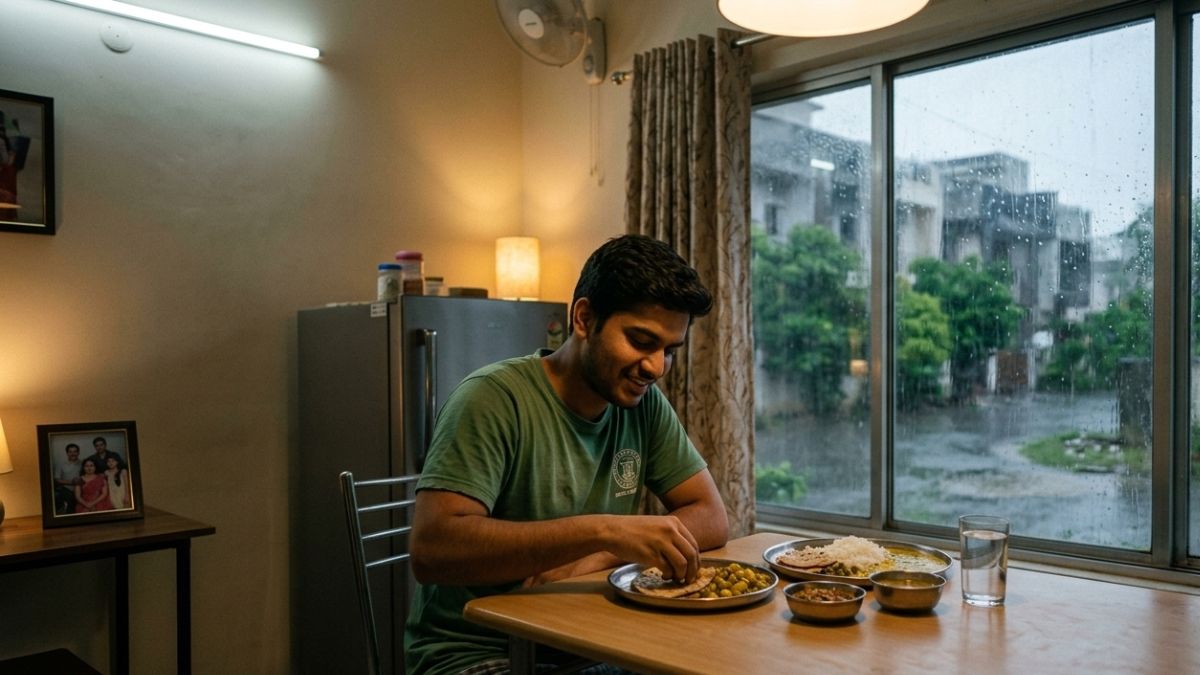
| A simple monsoon comfort plate: Khapli roti, dal and sautéed seasonal vegetables This isn’t a fussy recipe — it’s the kind of small-batch, freshly-cooked plate that naturally sidesteps most monsoon food safety risks, because there’s nothing left over to mishandle.Ingredients (serves 2): 1 cup Aashirvaad Namma Chakki 100% Khapli Atta, plus extra for dusting · water, as needed, to knead ½ cup split moong or toor dal, washed · 1 small onion, 1 tomato, chopped · 1 cup seasonal vegetables (bottle gourd, pumpkin or beans), chopped · 1 tsp cumin seeds, a pinch of turmeric, salt to taste · 1 tbsp ghee or oil. Method: Knead the Khapli atta with water into a soft dough; rest 15 minutes, then roll and cook rotis fresh on a hot tawa. Pressure-cook the dal with turmeric and salt until soft; mash lightly. Temper cumin seeds in ghee, add onion and tomato, cook until soft, then add the vegetables and a splash of water; cover and cook until tender. Serve the roti, dal and sabzi hot, straight from the stove — the freshest, and safest, way to eat it. Because this plate is cooked fresh and eaten immediately, in the quantity you’ll actually finish, it skips the exact handling risks this article covers — no counter-cooling, no reheating, no danger-zone window at all. |
Skip the anxiety and run through this instead:
Tick most of these, and you’re already doing what actually matters — far more than any list of foods to avoid.
Try this prompt: “I’ve been experiencing digestive symptoms during the monsoon. Here’s what I’ve been eating, whether it was home-cooked or eaten outside, how leftovers were stored, and any symptoms I’ve noticed. Can you help me identify any food safety patterns?”
So no, monsoon doesn’t call for fear — just a bit more attention to how your food is handled, from the stove to the fridge to the tap. Keep eating the meals you love; just keep them fresh, clean and properly stored.
Read next: The Monsoon Gut Guide — What Actually Changes When the Rains Arrive · Is Street Food Always Bad for Your Gut?
Ate something today that felt a bit risky? Log it in Happy Tummy and see how your tummy actually handled it.
If you develop severe diarrhoea, persistent vomiting, high fever, blood in your stool or signs of dehydration, seek medical attention promptly. If symptoms continue, are severe, or keep coming back, it’s worth speaking to a doctor.
Monsoon food safety follows the same core rules as any season — cook fresh, store cold, reheat hot — but humidity and rain make the “danger zone” window riskier, so timing and storage matter more than usual.
Yes. Curd itself isn't the problem; freshness and storage are. Keep it refrigerated, make or buy it in small batches, and eat it within a day or two of preparation.
Yes, as long as they're washed thoroughly under clean running water. Monsoon leafy greens carry more grit and run-off, so an extra rinse helps more than skipping them entirely.
Around two hours at room temperature, per FSSAI guidance — less if your kitchen is especially warm or humid. After that, refrigerate or discard rather than risk it.
It can be, if you choose stalls with fresh cooking, covered ingredients and fast turnover. Blanket avoidance isn't necessary — reading the stall's habits is more useful than a flat “never.”