Fermented Foods and Your Gut: What’s Actually Happening
India’s fermented food traditions go far beyond curd and idli. Here’s what fermentation changes, which foods retain live cultures, and what “probiotic” really means.
Table of Contents
India has one of the world’s richest fermented food traditions — dahi, idli, dosa, achaar, kanji, koozh, ambali, and dozens of regional preparations that have been part of everyday eating for thousands of years. The modern language of ‘probiotics’ and ‘gut microbiome health’ has been layered onto these traditions recently, and not always accurately. One of the most common misunderstandings: idli and dosa, despite coming from a fermented batter, don’t contain live bacteria when eaten, because cooking kills them. This piece unpacks what fermentation actually does in each context, so the traditional wisdom can be credited for what it genuinely offers.
Fermentation is the process by which bacteria or yeast convert sugars and starches into acids, alcohol or gases. In the context of Indian fermented foods, it’s primarily lactic acid fermentation — bacteria produce lactic acid, which acidifies the food, preserves it, and creates the characteristic tang of dahi, the sourness of a well-rested idli batter, and the depth of flavour in a properly fermented achaar. What fermentation does to food: it changes flavour and texture, it produces beneficial acids, and in some cases it leaves behind live bacteria in the finished product. Whether live bacteria are present at the point of eating depends entirely on what happens to the food after fermentation.
This is the nuance most fermented-food content misses. Idli and dosa batter ferments overnight, producing live lactic acid bacteria that give the batter its characteristic sour flavour and airy texture. But then the batter is cooked at high temperature — steaming for idli, griddle-cooking for dosa — which kills the bacteria. The finished idli or dosa contains no live bacteria. This doesn’t make them worse food — the fermentation still matters. It changes the food’s nutritional character (improves bioavailability of some minerals, partially breaks down phytic acid), and the resulting texture and flavour are shaped by fermentation in ways cooking doesn’t undo. But ‘idli is a probiotic food’ isn’t accurate, because no live cultures survive the cooking process.
| ⓘ Live Cultures: Which Foods Have Them, Which Don’t Dahi (curd): live cultures present — genuine probiotic food when fresh Chaas (buttermilk): live cultures present — same as curd, more dilute Idli/dosa: fermented batter, but cooking kills bacteria — no live cultures in the finished food Traditional brine-fermented achaar: may contain live bacteria — depends on the specific preparation Vinegar-pickled achaar: typically no live bacteria — vinegar is not a fermentation product here Kanji (fermented drink): contains live bacteria when freshly made and uncooked |
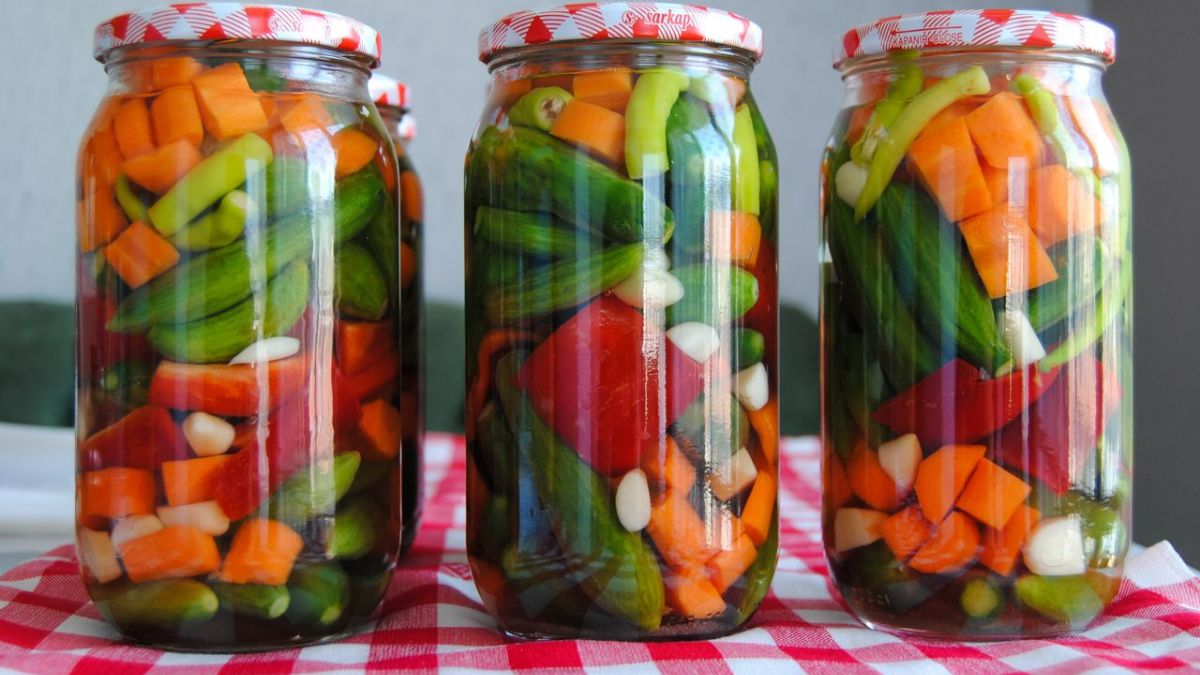
Traditional Indian achar — made in clay or glass jars, with oil and salt as the preserving agents, left to ferment over weeks in sunlight — is a genuine fermented food with live bacterial action. Modern commercially produced achaar is more variable: some use vinegar as a preservative, which is not a fermentation product and doesn’t produce live cultures; others use traditional oil-and-salt methods that preserve some fermentation character. The distinction matters for the probiotic angle: traditional home-made or small-batch fermented achaar may genuinely contain live bacteria; commercial vinegar-based achaar typically doesn’t. Reading the label doesn’t always clarify this easily.
Kanji — a fermented drink made traditionally from black carrots and mustard seeds in North India, or from fermented rice water in South India — is one of India’s more genuinely probiotic traditional preparations, since it’s consumed as a drink after fermentation without cooking. Traditional North Indian kanji, made in the days leading up to Holi, is left to ferment in sunlight over several days, producing a sour, mildly salty drink with live cultures present. This is genuine probiotic territory in the same way fresh dahi is — not as studied or standardised as yoghurt, but the fermentation and live culture basis is real.
Getting this right isn’t pedantry — it matters for practical reasons. If someone is eating idli as their main ‘probiotic food’ and otherwise has a diet low in actual live fermented foods, they may believe they’re getting gut-microbiome benefits from a source that doesn’t actually deliver them. The genuinely live fermented foods in the Indian diet are curd, chaas, fresh kanji, and — conditionally — traditionally prepared achaar. Building more of these into a regular diet is a different, more targeted action than eating more idli, which is excellent for other reasons but not for live cultures.
Even setting live cultures aside, fermented foods make genuine nutritional contributions: improved bioavailability of minerals (fermentation reduces phytic acid, which otherwise binds to minerals), predigestion of some compounds that would otherwise be harder to absorb, and in some cases production of B vitamins during fermentation. Idli and dosa get these benefits even though they don’t carry live bacteria. And dahi and chaas get both the nutrient benefits and the live culture benefit. The full picture of why fermented foods matter in Indian cooking goes beyond ‘probiotics’ to a broader set of transformations that fermentation accomplishes.
Beyond the broadly familiar, India’s fermented food geography is extensive. Sinki (fermented radish taproot) and gundruk (fermented leafy greens) are traditional to Sikkim, Nepal and parts of the Northeast, dried after fermentation and used as flavouring agents. Hawaijar is a fermented soybean preparation from Manipur with a pungent character similar to natto or doenjang. Ambali and koozhu — fermented ragi or millet porridges from Karnataka and Tamil Nadu — are traditional daily foods in some communities. None of these need to be incorporated into a kitchen that doesn’t already know them, but knowing they exist is part of understanding that India’s fermented food culture is both broader and deeper than the curd-and-idli-batter summary most mainstream content offers.
For households that want to consciously increase their intake of actual live-culture fermented foods: fresh curd is the most accessible — eaten fresh, set recently, not store-bought with a long shelf life. Chaas from fresh curd has the same benefit, more volume. Traditional brine-fermented achaar, if your household makes or buys it in the traditional style, adds occasional variety. Kanji — if you’re in a region or season where it’s available — is worth including. None of this requires a kimchi jar or a kombucha subscription; the live fermented foods this piece is recommending are already part of the Indian culinary tradition for most households.
Disclaimer: This article is for general informational purposes only — not medical or dietary advice.
No — the batter ferments before cooking, but high-temperature cooking (steaming, griddle) kills the bacteria. Idli and dosa don't contain live cultures when eaten, though they still benefit from fermentation in other ways.
Kanji (fermented carrot/rice drink), ambali and koozhu (fermented millet porridges from South India), gundruk (fermented leafy greens from Northeast India), and sinki are among the lesser-known traditional fermented preparations.
No — fresh curd and chaas are genuine probiotic foods available in most Indian kitchens. The live-culture benefit doesn't require imported fermented products.
Not quite — fermentation still improves mineral bioavailability and partially breaks down phytic acid, even though no live bacteria survive cooking. They're nutritious foods; they're just not probiotic foods.
Fresh dahi (curd), chaas (buttermilk), traditional brine-fermented achaar made with oil and salt, and freshly made uncooked kanji all genuinely contain live cultures. Idli, dosa and vinegar-based achaar do not.
Depends on how it's made. Traditional brine-fermented achaar made with oil, salt and spices may contain live bacteria. Commercial achaar made with vinegar typically doesn't. Reading the label doesn't always clarify this.
Kanji is a traditional fermented drink made from black carrots and mustard seeds (North India) or fermented rice water (South India). When freshly made and consumed uncooked, it genuinely contains live cultures.
Regular inclusion of genuinely live fermented foods — fresh dahi most practically — is associated with gut microbiome diversity. This series describes it as a reasonable, beneficial inclusion rather than a proven clinical prescription.