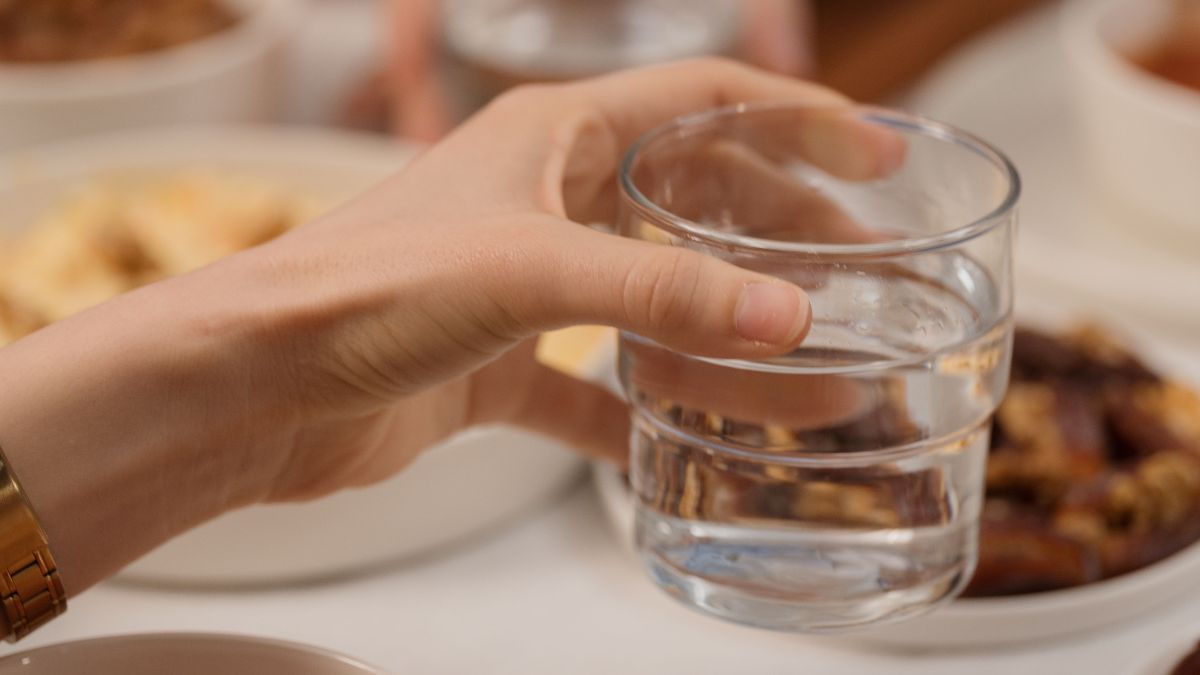
Drinking Water With Meals: Does It Affect Digestion?
Does water with food dilute stomach acid or interfere with digestion? For most healthy people, no. Here’s where the 30-minute rule goes wrong — and when drinking patterns may genuinely matter.
Table of Contents
| TL;DR |
|---|
| Drinking water with meals doesn’t switch off digestion or meaningfully “dilute” stomach acid for most healthy people. Water can briefly raise stomach pH, but the effect is short-lived. If you feel overly full after drinking a lot with food, volume may be the issue rather than digestion failing. People with reflux may find that very large meals and fluid volumes worsen symptoms, but there is no universal 30-minute rule. Sip if it feels comfortable; don’t force it either way. |
For most healthy people, the answer on water and digestion is reassuringly simple: drinking water with your meals is unlikely to harm digestion, and for many people it genuinely helps with staying well hydrated through the day. The idea that it dilutes your stomach acid and switches off digestion is one of the most common pieces of food advice around, and it doesn’t hold up against how digestion actually works.
If you’ve ever asked for a glass of water during lunch, there’s a good chance someone has stopped you. Don’t drink water while eating. It dilutes your digestive juices. Wait at least 30 minutes after your meal. It’s one of the most common pieces of digestive advice, and one that’s been around for decades. But is there any truth to it?
Does water really dilute stomach acid?
Water can temporarily change the acidity inside the stomach — but temporary is the important word. In a small study of healthy adults, 200ml of water raised gastric pH almost immediately, but the effect lasted only around three minutes. That is very different from saying water disables digestion.Mayo Clinic similarly notes that water during or after meals does not cause problems with digestion or improperly thin the digestive fluids the body uses to process food. Water itself participates in normal digestion and can be consumed with a meal as part of overall hydration.
So yes, a glass of water changes what is physically inside the stomach for a moment. No, it does not wash away your digestive machinery.
ALSO READ | Does Warm Water Help Digestion? What Science Says
Just think about what happens when you eat. Your food doesn’t travel through a dry pipe. Digestion naturally involves fluids from the moment you start chewing. Saliva helps begin the digestive process, and fluids continue to play a role as food moves through your digestive system. Water isn’t an interruption to digestion — it’s part of the environment in which digestion happens.
Devansh grew up being told never to drink water with meals, and for years he sat through family lunches with an empty glass, waiting for the socially sanctioned thirty minutes to pass before he could drink.
Curious after reading about the myth, he tried the opposite for two weeks — sipping water normally through meals — then compared notes with how he usually felt. He noticed no difference in bloating, heaviness or digestion either way. What he did notice was that meals felt less rushed and slightly more comfortable when he wasn’t fighting the urge to drink water he actually wanted.
Devansh had spent years managing a rule that wasn’t really doing anything for him one way or the other. The habit had outlived any evidence for keeping it.
| Myth | What’s actually true |
|---|---|
| Water dilutes your stomach acid | It can briefly raise stomach pH, but the effect is short-lived and does not switch digestion off |
| Water flushes food out of your stomach too fast | Liquids and solids move through the stomach differently, but water does not simply wash undigested solid food through the digestive tract |
| You must wait 30 minutes before or after eating to drink water | No established evidence supports a universal 30-minute waiting window for healthy people |
| Cold water stops digestion | Cold water can temporarily affect stomach motility, but it has not been shown to stop or damage digestion in healthy people |
| Drinking water with meals always causes bloating | A large amount of food plus fluid can make some people feel physically fuller, but this is not evidence that digestion has stopped |
Have you ever noticed yourself slowing down because you paused for a sip of water? That tiny break can make a meal feel less rushed. Some people also find that sipping water makes chewing and swallowing more comfortable, particularly with dry or fibre-rich foods.
The key word here is sipping. There’s no need to force large amounts of water while eating if it makes you uncomfortable. Nor is there any need to deliberately sit through a meal thirsty because somebody once told you the glass had to wait.
Your body is usually very good at telling you what feels comfortable.
Some people say they feel overly full if they drink a large amount of water with a meal. That doesn’t necessarily mean water is harming digestion. It may simply mean your stomach feels physically fuller because you’ve added food and a substantial amount of fluid at the same time.
If that happens, try sipping smaller amounts with meals and drinking more of your fluids between meals instead. There is no need to force a pattern that consistently leaves you uncomfortable.
ALSO READ | The Lemon-Honey Morning Ritual: What It Does and Doesn’t Do
Reflux deserves a little more nuance. Gastric distension from larger meals can make reflux more likely, and one small study in people with GERD found more reflux after larger-volume liquid meals than smaller, more frequent ones. That does not prove that an ordinary glass of water with lunch causes reflux, but it does explain why somebody who already has reflux may feel better avoiding very large volumes of food and drink at once.
The useful lesson is not “never drink with meals”. It is “notice whether volume makes your particular symptoms worse”.
Whether you drink water before, during or after meals, your total fluid intake across the day is far more important than obeying an exact timing rule. That’s especially true if your meals include plenty of fibre.
Whole grains, fruits, vegetables and pulses all contribute fibre, and adequate fluids help support comfortable bowel function. Rotis made with Aashirvaad Chakki 100% Khapli Atta, for example, can contribute whole-grain fibre as part of a balanced meal. The point is not that you need to wash every fibre-rich bite down with water. It is that fibre and hydration are parts of the same overall dietary pattern.
Notice what’s missing? There’s no stopwatch.
There are situations where a doctor or dietitian may recommend specific eating or drinking patterns because of a medical condition. People managing reflux, swallowing difficulties, delayed gastric emptying, heart or kidney disease, or another condition may be given advice that is very different from generic hydration guidance.
For reflux specifically, evidence-based guidelines focus much more strongly on issues such as avoiding very large meals, identifying personal trigger foods and avoiding meals close to bedtime than on banning water during meals.
But for most healthy people, there’s no strong evidence that drinking water with food is harmful.
Don’t let myths make eating complicated. Healthy eating already comes with enough rules. Don’t eat this. Only eat that. Wait exactly 30 minutes. Never drink water with meals. At some point, the rules become harder to digest than the food.
If your meals are balanced, you’re eating at a comfortable pace and staying hydrated through the day, you’re already doing many of the things that matter most.
Try this prompt: “Here’s my meal diary from the last five days, including when I drank water, what I ate and any digestive symptoms I noticed afterwards. Can you help me identify whether drinking water with meals seems to be affecting my digestion, or whether other habits might be more important?”
Sometimes the answer isn’t in the glass of water — it’s in everything else happening around the meal.
For most people, drinking water with meals isn’t something to worry about. It doesn’t switch off digestion or dilute your stomach acid in a way that prevents your body from processing food.
If sipping water during meals feels comfortable, there’s no reason to avoid it. The bigger priority is staying hydrated consistently throughout the day, not stressing about whether your glass of water arrived five minutes too early.
Do you drink water with your meals? Log it and see if it actually tracks with how you feel afterwards.
For most healthy people, drinking water with meals does not interfere with normal digestion. Water can briefly raise stomach pH, but that change is quickly reversed and does not mean digestive enzymes or stomach acid have stopped working.
Only temporarily in the literal sense that adding water can briefly change the stomach’s pH. A study in healthy adults found that a glass of water raised gastric pH for only a few minutes. There is no evidence that an ordinary amount of water with food dilutes stomach acid enough to prevent digestion.
No established evidence supports a universal 30-minute rule for healthy people. If you are thirsty during or immediately after a meal, you do not need to wait simply to protect digestion.
A large meal plus a large amount of fluid can simply make the stomach feel fuller because of the combined volume. If that repeatedly bothers you, sip smaller amounts during meals and have more of your fluids between them.
Water itself is not generally considered a reflux trigger, and replacing drinks such as soda with water may actually help some people with GERD. However, very large meal volumes can increase gastric distension and reflux, so some people with reflux may feel more comfortable with smaller amounts at a time.
There is no general digestive advantage to choosing one of these timings. Drink when it feels comfortable and build adequate hydration across the whole day.
No. Liquids can leave the stomach differently from solid food, but drinking water does not simply carry inadequately digested solids out with it.
Cold water can produce small, temporary changes in gastric motility, but it has not been shown to shut down or harm digestion in healthy people. Preference and comfort matter much more than following a temperature rule.
Water with the meal itself is not a constipation treatment. What matters more is getting adequate fluids across the day alongside enough dietary fibre, movement and other supportive habits.
Disclaimer: This article provides general food and nutrition information and is not a substitute for personalised medical or dietary advice. Persistent difficulty swallowing, severe or recurring reflux, frequent vomiting or other continuing digestive symptoms should be assessed by a healthcare professional.