What Is the Gut Microbiome, and Why Does Everyone Suddenly Care?
The gut microbiome is a complex community of microorganisms that influences digestion, immunity, metabolism and mood. Here’s what shapes it and how to support it through everyday Indian foods.
The gut microbiome is a complex community of microorganisms that influences digestion, immunity, metabolism and mood. Here’s what shapes it and how to support it through everyday Indian foods.
Expert reviewed by Qurath Ain, Certified Nutritionist and Clinical Dietitian
TL;DR
Your gut microbiome is the community of trillions of bacteria, viruses and fungi living mainly in your large intestine — individual to you, and shaped by birth, diet, sleep, stress and medicines. It matters because it’s linked to digestion, immunity, metabolism and mood. You can’t buy a better microbiome, but you can feed it — and on an Indian plate, more plant variety is the single most useful lever most people have.
There are, by most estimates, tens of trillions of bacteria living inside you right now — not on you, inside you, mostly in your large intestine. Together with viruses, fungi and other microorganisms, they make up your gut microbiome: a living, individual-to-you community that influences everything from digestion to immunity to mood. Unlike most wellness trends, this one has genuine scientific weight behind it. Doctors, dietitians and researchers are paying close attention — and increasingly, so is everyone else, from probiotic-sachet displays at the pharmacy to the kombucha bottles now sitting next to the buttermilk in city supermarkets.
Worth noting, though: the conversation around gut bacteria gets noisy fast. Between the supplement ads, the “gut reset” claims and the breathless wellness content promising transformation in thirty days, it can be hard to separate what’s real from what’s simply well-marketed. So let’s start from the beginning.
A Whole Ecosystem Inside You
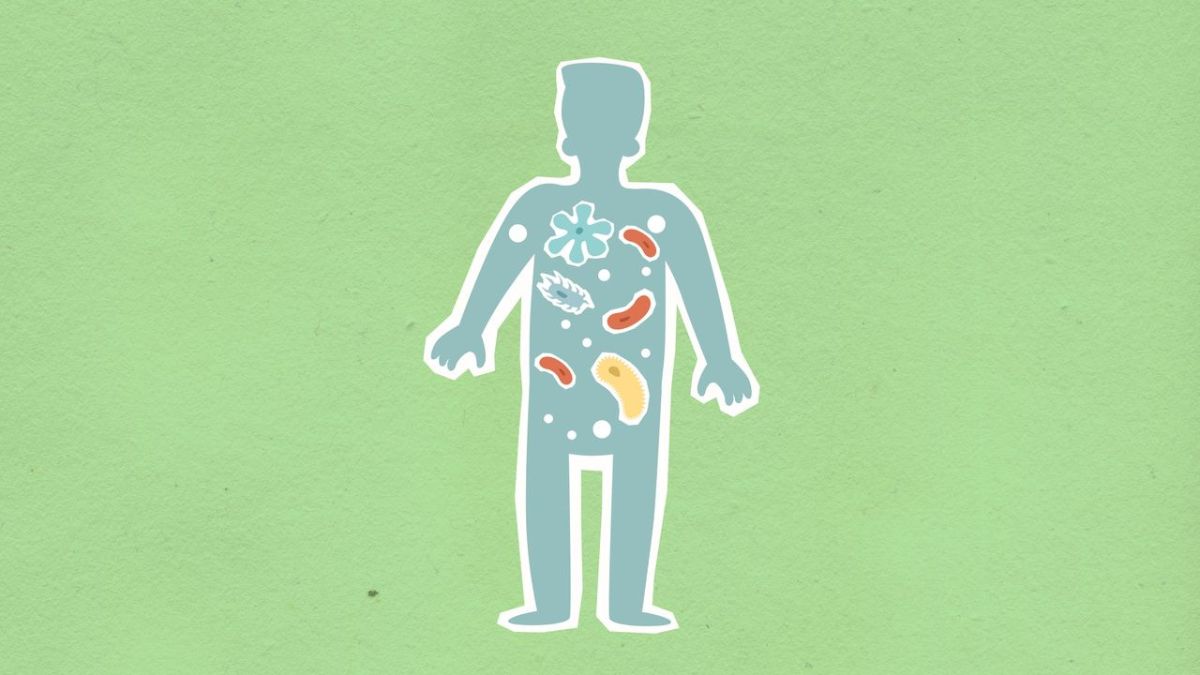
Your gut microbiome is not just bacteria. It’s a whole ecosystem — bacteria, yes, but also viruses, fungi and other microorganisms, all coexisting in a relationship with your body that’s been developing since the moment you were born. The very first microbes you encounter, during birth and through early feeding, begin shaping the community that lives in your gut for the rest of your life.
Scientists have identified well over a thousand different bacterial species in the human gut, and each person’s microbiome is as individual as a fingerprint. What lives in yours is influenced by where you grew up, what you ate as a child, whether you’ve taken antibiotics, how much you sleep, how much stress you carry — even whether you have a pet.
The microbiome isn’t static, either. It shifts constantly in response to what you eat and how you live. That’s both the challenge and the opportunity.
Why Is Everyone Suddenly Talking About the Gut Microbiome?
There’s been a decade of research showing gut bacteria matter more than we once assumed. The gut microbiome is now considered one of the key elements contributing to the regulation of host health. Here’s the short version of why:
WHY IT MATTERS
Digestion and nutrient absorption. Gut bacteria help break down complex carbohydrates, fibre and even some medicines — helping your body extract more from the food you eat.
Immunity. A large share of your immune system is organised around your gut lining, and your gut bacteria help your body learn to tell friend from enemy.
Chronic-condition links. Researchers have linked an imbalanced microbiome — often called dysbiosis — to a range of chronic health concerns, including metabolic conditions like diabetes and obesity. This is an active, evolving area of research: having any of these conditions doesn’t mean your gut bacteria are “unbalanced,” and the relationship isn’t fully understood yet.
Metabolism and weight. The composition of your gut bacteria is linked to how your body stores fat, manages blood sugar and regulates hunger.
Mood, via the gut-brain axis. The gut and brain are in constant two-way contact, and some gut bacteria produce compounds — including serotonin — that can influence mood and stress levels. The science here is still developing, and nobody is claiming that eating more fibre cures depression. But the connection is real.
Enzyme activity. The gut microbiome also plays a role in the synthesis and activation of various enzymes needed to carry out physiological functioning of the body
Given how much the gut microbiome touches, it’s no wonder it’s become a popular subject — not just in laboratories, but in kitchens and grocery stores too.
What Actually Affects Your Gut Bacteria
Diet is the biggest lever most of us have. Gut bacteria feed on what you feed them, and a diet rich in diverse plant foods — vegetables, legumes, wholegrains, fruits, nuts and seeds, fermented, probiotic and prebiotic-rich foods — appears to support a more varied, robust microbial community. Fibre is the critical ingredient here, and on an Indian plate, that diversity is easier to build than it sounds: a bowl of dal, two rotis, a seasonal sabzi and a fistful of nuts already draws from four different plant families before lunch is over.
Whole-grain attas — including Aashirvaad Namma Chakki 100% Khapli Atta — are comparable to whole wheat atta on fibre, and both bring meaningfully more to the table than refined maida. Used alongside dal and vegetables, a whole-grain atta is one practical way to add to that plant variety — not a fix on its own.
Some researchers, including a well-known US-based gut-microbiome citizen-science project, suggest aiming for as many as 30 different plant foods a week as a rough guide to variety. It sounds like a lot — until you start counting herbs, spices, dals and grains separately. Indian cooking, with its habit of layering ingredients into a single dish, often gets you closer to that number than a simpler cuisine would.
Fermented foods get a lot of credit too, and deservedly so — this is one part of Indian food culture that was already ahead of the trend. Curd, chaas (buttermilk), idli and dosa batter, and traditional pickles all introduce live microorganisms to the gut, and there’s reasonable evidence they help support microbial diversity — alongside their international cousins like kimchi and kefir. The effects vary between individuals, and the research is ongoing.
A bowl of curd is not going to undo the effect of a diet built almost entirely around packaged snacks and fried food.
Antibiotics are a more complicated story. They’re life-saving medicines that have transformed modern healthcare — and they’re also genuinely disruptive to the gut microbiome, with a single course able to alter the community for months. This isn’t an argument against taking antibiotics when you need them. It’s an argument for not taking them when you don’t. Antibiotics should be taken only when prescribed by the doctor and for the recommended time period only.
Sleep and chronic stress affect gut bacteria too. The gut has its own network of nerves and is in constant two-way contact with the brain, so what unsettles your nervous system can unsettle your gut — and what happens in your gut can feed back into how you feel. It’s a loop, not a straight line.
Feeding It, the Indian-Kitchen Way
A quick, practical starting list — none of it requires a special shop or a supplement aisle:
Plant food group
Everyday Indian source
One easy way to add it today
Legumes
Moong, masoor, toor, chana, rajma
Mix two dals into one pot instead of cooking just one
Count them — they’re plant foods too, and they add up fast
CASE STUDY
Meera, a 34-year-old marketing manager in Pune, didn’t set out to “fix her gut” — she just made one small swap. Her Sunday dal went from a single lentil to a mixed dal (moong-masoor-toor) three times a week, and roasted peanuts replaced biscuits at her evening chai break. Nothing dramatic happened overnight. But six weeks in, she noticed she felt less bloated after lunch — and had quietly added two new plant foods to her week without going near a supplement aisle.
What This Means for Your Plate Today
Here’s what’s genuinely useful to take from all this: your gut microbiome isn’t a product you can buy, optimise or perfect in a weekend. It’s a living community that responds to the life you build around it — plant variety, reasonable sleep, time outdoors, thoughtful use of antibiotics, and fermented foods when they appeal to you.
If you want one number to hold onto: ICMR recommends about 25- 30 g of fibre a day for Indian adults, and most of us fall well short of it — variety of plant foods matters as much as the total.
Supplements and microbiome-testing kits have their place in certain clinical contexts, best discussed with a doctor. For most people, though, the most meaningful thing you can do for your gut bacteria is also the most ordinary: eat more plants, and eat them in greater variety.
Ask Happy Tummy GPT
“Looking at what I usually eat in a day, what’s one plant food I could add this week to increase my gut diversity?”
Frequently Asked Questions
What is the gut microbiome?
It’s the community of trillions of bacteria, viruses, fungi and other microorganisms living mainly in your large intestine. It’s unique to you, and it influences the overall host health, digestion, immunity, metabolism and mood.
What foods are good for the gut microbiome?
A wide variety of plant foods matters more than any single “superfood” — dals, whole grains like atta and millets, vegetables, fruits, nuts, seeds and fermented foods like curd and chaas all contribute.
Can antibiotics damage the gut microbiome?
Antibiotics can genuinely disrupt gut bacteria, sometimes for months. That’s not a reason to skip a course you actually need — it’s a reason not to take antibiotics you don’t.
How long does it take to improve gut bacteria?
Lifestyle changes like diet, physical activity, sleep, hydration and stress management can shift gut bacteria within days, but building a more stable, diverse community takes weeks to months of consistent habits — not one meal, and not one “detox.”
Is the gut microbiome the same as probiotics?
No. The microbiome is the whole existing community of microbes in your gut; probiotics are specific live bacteria (in food or supplement form) that may add to it. They’re related, not identical.
Disclaimer: This is general information, not medical advice. If you’re dealing with persistent digestive symptoms — not just curiosity about your gut bacteria — it’s worth speaking to a doctor rather than self-diagnosing from an article.
You are now being directed to an external website https://www.callr.live/aashirvaadexperts/premium-plan.
This link is provided for your information and convenience only and ITC Limited is not
responsible for the contents or services provided by Brand Touch India or any information that
you share with Brand Touch India.