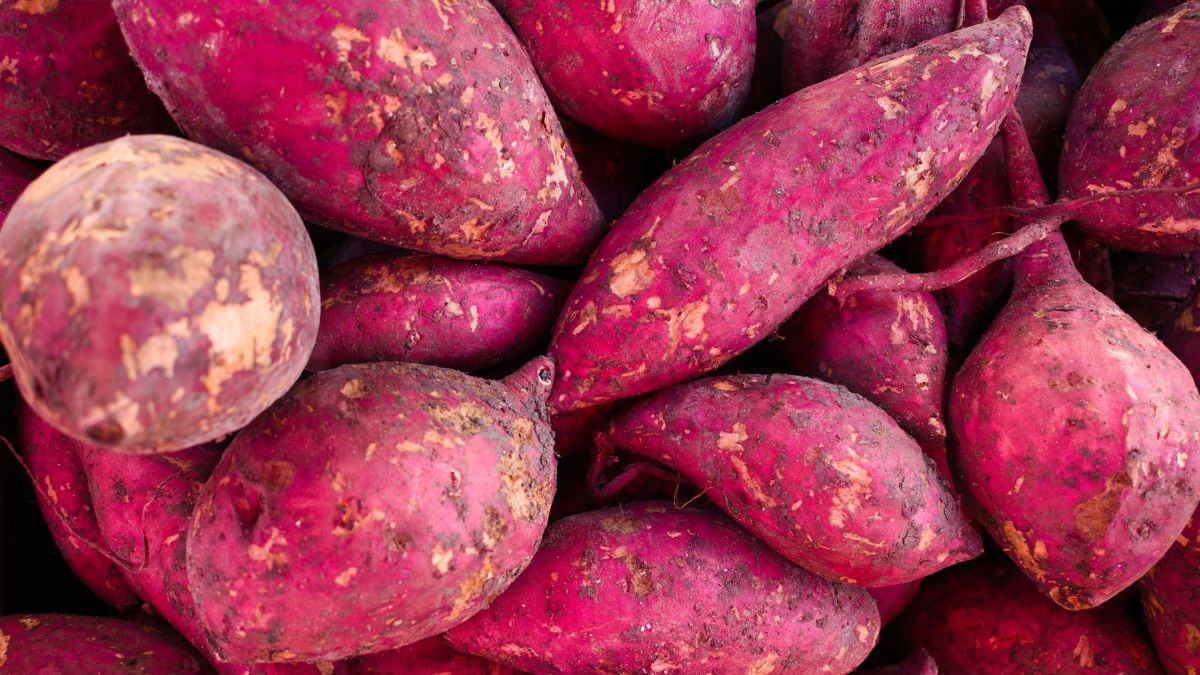
Sweet Potato for Gut Health: Fibre Benefits and the Honest Science
Sweet potato contributes useful fibre, but its gut-health case is more modest than the internet often suggests. Here is what the evidence supports and how to eat it comfortably.
Table of Contents
Sweet potato contributes useful fibre, but its gut-health case is more modest than the internet often suggests. Here is what the evidence supports and how to eat it comfortably.
Is sweet potato good for gut health? Yes—mainly because it provides dietary fibre. IFCT 2017 lists approximately 4 g of total dietary fibre per 100 g edible portion. That fibre can contribute to stool bulk and gives gut microbes material to ferment, although human research on sweet potato itself is still limited. Its soft cooked texture may also feel comfortable for some people, but tolerance varies. Think of shakarkandi as one helpful part of a varied, fibre-rich Indian plate—not a gut remedy on its own.
Most of us grew up eating shakarkandi without giving it much thought: roasted on a coal cart in winter, boiled for a quick chaat, or sliced into a simple sabzi. It did not arrive through a wellness trend, and it does not need one to earn a place on the plate.
The useful part is straightforward. Sweet potato is a starchy vegetable that contributes fibre, along with other nutrients. The fibre matters most to this gut-health conversation; claims about one food ‘resetting’ the microbiome or calming the gut go beyond what the evidence can show.
Sweet potato contains a mix of dietary fibres. Some help add bulk to stool, while some can be fermented by gut microbes. Both roles can support normal digestive function as part of an overall fibre-rich diet. ICMR-NIN uses about 40 g of fibre a day as the reference point for Indian adults, so a 100 g portion of sweet potato supplies roughly one-tenth of that amount—not the whole day’s needs.
That is why variety matters. A plate that also includes dal, vegetables, fruit, whole grains, nuts and seeds gives the gut a broader mix than any single ‘hero’ food can. Read more about why fibre variety matters.
When gut microbes ferment certain fibres, they produce compounds such as short-chain fatty acids. Those compounds are part of the normal relationship between fibre, microbes and the cells lining the colon. That general mechanism is well established; it does not mean one serving of sweet potato will transform a person’s microbiome.
Research specific to sweet potato is promising but early. A 2020 laboratory study found that fibre isolated from sweet potato processing residue changed microbial activity in an in-vitro fermentation model. Other studies of sweet potato fibre and peel fractions are also largely laboratory or animal work. These findings suggest prebiotic potential, but they are not the same as evidence that an ordinary serving produces a specific benefit in people.
If the term feels abstract, this plain-English guide explains what the gut microbiome is and why it matters.
Once cooked, sweet potato becomes soft and easy to chew. Some people find that texture comfortable, especially when the food is boiled, steamed or well roasted. But ‘easy to digest’ is not a universal property. A large portion, the skin, or any sudden increase in fibre can cause gas or bloating in someone who is sensitive.
If your usual diet is low in fibre, start with a modest portion, drink enough water and see how your body responds. Persistent pain, repeated diarrhoea or constipation, or symptoms that keep returning need a clinician’s advice rather than a food experiment.
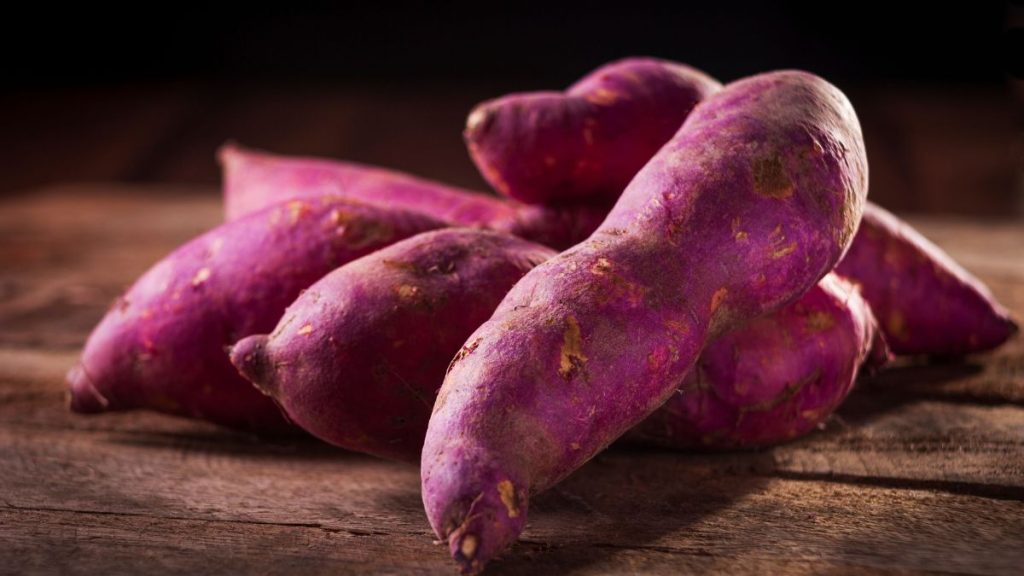
There is a reason roasted shakarkandi belongs to Indian winter memory. It is warm, mildly sweet and filling without needing elaborate preparation. Enjoyment matters because food habits are easier to sustain when the food is familiar and satisfying.
That is enough. The gut and brain do communicate, but it would be a leap to say sweet potato creates a ‘calmer gut’ through the gut–brain axis. A comforting meal can feel good without needing to be turned into a biological promise.
Sweet potato is useful, not magical. Its strongest gut-health case is the ordinary one: it contributes about 4 g of fibre per 100 g, fits easily into Indian meals and can add another plant food to the week. The microbiome research is interesting, but much of it is based on isolated fibre in laboratory or animal models, not everyday servings in humans.
Eat shakarkandi because you like it and because it helps widen the mix of fibre-rich foods on your plate. That is a good decision without turning it into a cure, cleanse or shortcut.
Want ideas that fit your usual meals? Ask Happy Tummy GPT: “How can I add sweet potato to my Indian meals while keeping my fibre intake varied?”
For a broader look at your everyday digestive habits, take the Digestive Quotient Test.
This is general information, not medical advice. If symptoms continue, are severe, or keep coming back, it is worth speaking to a doctor. Sudden weight loss, blood in stool, severe or persistent pain, or difficulty swallowing need prompt medical attention.
Yes. Sweet potato contributes dietary fibre, which can support normal bowel function and provide fermentable material for gut microbes. It works best as one part of a varied diet, not as a stand-alone gut remedy.
It can in some people, particularly after a large portion or a sudden increase in fibre. Start with a smaller serving, increase gradually and use your own tolerance as the guide.
Boiling produces a soft texture that some people find comfortable. The fibre remains useful, but boiling does not guarantee symptom relief and individual tolerance still matters.
Its fibre may help support regular bowel movements when the overall diet contains enough fibre and fluids. Ongoing or painful constipation needs medical advice rather than relying on one food.
Sweet potato contains starch and naturally occurring sugars. Its effect on blood glucose varies with the variety, portion, cooking method and the rest of the meal, so one fixed glycaemic-index label is not very useful. Follow individual clinical advice if you monitor blood glucose.
Sweet potato contains fermentable fibre, and laboratory studies of isolated sweet potato fibre suggest prebiotic potential. Evidence from ordinary servings in people is still limited, so ‘may support’ is more accurate than claiming a proven microbiome effect.
It can fit into a daily diet if it suits you, but there is no need to eat it every day. Rotating sweet potato with other vegetables, pulses, fruit, whole grains, nuts and seeds gives you a wider range of fibres.