Ultra-Processed Snack Edition: Why ‘Small’ Snacks Can Still Affect Your Tummy
Why a day of biscuits, namkeen and chips can leave you puffy, thirsty and unsatisfied, and how fibre- and protein-rich snacks can change the way your gut experiences the day.
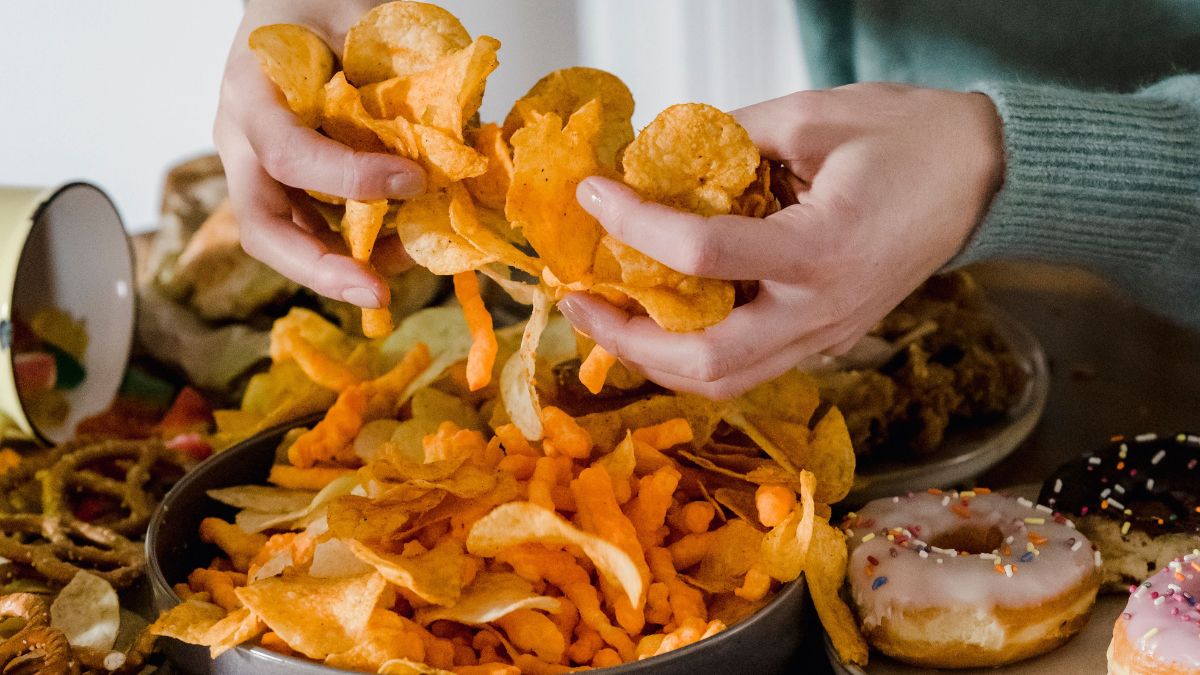
Three biscuits with chai. A small packet of namkeen at 4 pm. A handful of chips while making dinner. None of these feels like a significant eating event in the moment — each one is small, quick, incidental. But a day in which these are the dominant snacking pattern is a day in which the gut has received a meaningful salt load, very little fibre, a fair amount of fat, and several eating events so fast they barely registered. The gut reads the whole day’s pattern, not just the meals. And ultra-processed snacks have a specific signature in that pattern that’s worth understanding.
In This Piece
We’ll look at what ultra-processed snacks actually are, why they’re designed to be eaten quickly and in more volume than similar calories from whole foods, and what a snack-heavy day tends to produce in the gut: the puffiness, the salt thirst, the paradox of having eaten throughout the day while still arriving at dinner unsatisfied. We’ll also look at what the gut tends to be asking for instead, and the one habit that changes the snacking pattern more reliably than willpower does.
What the Ultra-Processed Snack Day Feels Like
A mild puffiness by late afternoon that’s distinct from the gradual bloat of fermentation. A persistent, low-level thirst that water doesn’t quite satisfy — the salt from namkeen and chips pulling water into retention rather than through normal hydration. An uncomfortable awareness that you’ve eaten throughout the day but aren’t sure you’ve actually eaten. And sometimes, by evening, a gut that’s simultaneously full and unsatisfied, a combination that’s one of the more reliably unpleasant gut experiences and one of the most specifically associated with a snack-heavy, meal-light day.
ⓘ What Ultra-Processed Food Actually Means
Ultra-processed foods (UPFs) are industrially manufactured products formulated mostly or entirely from food substances, additives, flavourings and preservatives — with whole foods largely absent from the formulation.
In nutritional terms, UPFs are typically energy-dense and high in fat, sugar, and salt, while being low in fibre.
Common UPFs in Indian snacking: packaged chips and namkeen, instant noodles, commercially produced biscuits and cookies, packaged bakery items, flavoured puffed snacks.
— NOVA Food Classification System (FAO/WHO report on ultra-processed foods); BDA Position Statement on Processed Foods
Designed to Be Eaten Quickly and in Volume
Ultra-processed snacks are engineered around palatability: the combination of salt, fat and flavourings is calibrated to produce a specific eating experience that bypasses the normal satiety signals more readily than whole foods do. This isn’t a conspiracy — it’s the applied science of food manufacturing, and it’s worth knowing about not because it makes the food dangerous but because it explains why three biscuits become six before a decision was made to continue. The speed of eating compounds this: packet snacks are consumed faster than meals, meaning more air is swallowed (the aerophagia mechanism from HGYRYP #1), fullness cues are outpaced, and more is eaten before the gut has had a chance to register what arrived.
The Salt Story
The salt load from a snack-heavy day is real and produces a specific, recognisable gut experience. High sodium intake draws water into the bloodstream and tissues rather than through the digestive system, contributing to the mild puffiness and persistent thirst that a day heavy in namkeen and chips tends to produce. This is the same mechanism behind the morning puffiness after a high-salt dinner — but distributed across a whole day of snacking, it arrives more gradually and sits lower. The gut doesn’t read this as a single meal’s salt; it reads the cumulative day’s worth.
ⓘ What the Gut Registers on a Snack-Heavy Day
High salt load: water retained into tissues, producing mild puffiness and persistent thirst
Low fibre: nothing to slow digestion or produce sustained satiety
High eating speed: more swallowed air, less time for fullness signals to register
Displacement of meals: a day built around snacks tends to produce lighter meals, which removes the fibre and protein that proper meals would carry
The cumulative effect: the gut reads the day’s pattern, not the individual packets
The Full-but-Unsatisfied Paradox
One of the most frustrating gut experiences associated with a snack-heavy day is arriving at dinner having eaten throughout the day and still wanting a proper meal. This isn’t greed; it’s information. Ultra-processed snacks are efficient at delivering calories and palatability and very poor at delivering the fibre, protein, and slow-release energy that produce sustained fullness. The gut knows the difference. Satiety is not just about caloric load — it’s about what those calories came packaged with, and low-fibre, rapidly-digested snacks consistently underdeliver on the fullness side of the equation relative to what a smaller amount of a whole food would produce.
What the Gut Is Asking For Instead
Not perfection and not elimination. The gut’s version of a better snack pattern is something that comes with fibre, protein or both — fruit, a small handful of nuts, a chikki, roasted chana, a piece of cheese with a whole-grain cracker, a cup of chai with a handful of peanuts rather than biscuits. None of these is exotic or expensive; most of them are traditional Indian snack foods that were around before the packet-snack era. The gut experiences the same mid-afternoon hunger on these options and the same palatability — but it also gets something to work slowly with, and the full-by-dinner feeling is meaningfully different.
One Gentle Thing to Try
Before opening a packet of anything, eat one piece of fruit first. A single piece of fruit changes what the snack arrives in: fibre is already in the system, blood sugar is less likely to be at its lowest point, and the fruit’s own sweetness has partially addressed the craving that was driving the reach for the packet. This doesn’t prevent eating the packet; it changes the context in which the packet is eaten. Most people find that the quantity consumed afterwards is smaller, the satisfaction is greater, and the puffy-salt-thirsty-5 pm feeling is less pronounced. It’s the smallest version of the habit change that the gut is actually asking for.
The Displacement Problem: What Snacks Push Off the Plate
The most significant gut impact of a snack-heavy day is often not the snacks themselves but what they displace. A 4 pm packet of namkeen followed by a lighter-than-usual dinner means the evening meal — typically the vehicle for dal, vegetables, whole grain and curd — is smaller and less complete than it would otherwise be. The gut misses not the snack but what the snack replaced. This is why the full-but-unsatisfied paradox is so consistent: the packet delivered calories and salt and flavour, but not the fibre, protein and slow-release energy that a proper meal would have. Snacking doesn’t have to displace meals — but when it consistently does, the gut’s ledger at the end of the day reflects the gap.
When a Snack-Heavy Pattern Is Worth More Attention
Occasional snack-heavy days are ordinary life. A consistent pattern where meals are regularly displaced by packet snacks, or where gut discomfort from this pattern is frequent and worsening, is worth a conversation with a dietitian rather than continued self-management. This piece is about pattern awareness, not dietary prescription.
Read → Do → Log → Return
Do: Log how your tummy felt after today’s meals
Ask Happy Tummy GPT: “Why do I feel puffy and unsatisfied after snacking all day?”
Reflect: “Before the next packet — have a fruit first. See what changes.”
Disclaimer: This article is for general informational purposes only — not medical or dietary advice.
FAQs
Why do I feel puffy after eating a lot of salty snacks?
High sodium draws water into the bloodstream and tissues rather than through the digestive system, producing mild puffiness and a persistent thirst that water doesn’t fully resolve.
Why am I still hungry after snacking all afternoon?
Ultra-processed snacks are low in fibre and protein, which are what produce sustained satiety. Calories from packet snacks don’t trigger the same lasting fullness as the same calories from fibre- and protein-containing food.
Are all packaged snacks ultra-processed?
Not all, but most commercially produced chips, namkeen, biscuits and puffed snacks fall into the NOVA ultra-processed category. Roasted nuts, plain puffed rice or chikki sit in a different category depending on their preparation.
Does eating snacks quickly make the gut experience worse?
Yes — faster eating means more swallowed air (adding to bloating) and less time for fullness signals to register, both of which compound the already low-fibre, high-salt gut experience of packet snacking.
What makes a snack gut-friendly?
Fibre, protein or both alongside the palatability. Fruit, roasted chana, a small handful of nuts, a traditional chikki, or curd with fruit all satisfy the snack craving while giving the gut something to work slowly with.
Is the emulsifier and gut microbiome concern about UPFs real?
The research on specific additives and gut microbiome is active and genuinely interesting, but not sufficiently settled for this platform to make specific claims about it. The gut experience this piece describes — low fibre, high salt, fast eating — is well-established and doesn’t require contested additive claims to be accurate.
You are now being directed to an external website https://www.callr.live/aashirvaadexperts/premium-plan.
This link is provided for your information and convenience only and ITC Limited is not
responsible for the contents or services provided by Brand Touch India or any information that
you share with Brand Touch India.