


Table of Contents
TL;DR
Whole moong can be soaked overnight to soften the beans and shorten the cooking they need the next morning, but soaking alone does not make dried whole moong a ready-to-eat food. Once soaked, drain and rinse the moong and cook it until properly tender before turning it into breakfast.
The soak is still doing useful work. Research on mung bean processing shows that soaking can reduce some antinutritional compounds and improve cooking quality, while subsequent cooking is more effective at reducing enzyme inhibitors and improving starch and protein digestibility. Whole green gram is also genuinely fibre- and protein-rich: the Indian Food Composition Tables list dry whole green gram at about 17g fibre and 22.5g protein per 100g, although those figures should not be read as the composition of 100g cooked moong, which contains far more water.
Why Overnight Prep Is a Genuinely Good Habit for Your Gut
Legumes are, in a sense, where overnight soaking started. Long before oats became part of wellness routines, soaking pulses and legumes overnight was simply a practical part of cooking. It helped soften them, reduce cooking time and prepare them for the heat they still needed the following day. This piece is really just noticing that the same logic that makes soaked moong easier to cook can also make it easier to build into breakfast.
The case for doing this at night specifically is the same as everywhere else in this series: five minutes before bed removes one job from the morning. Moong adds something distinct to the lineup too. Where oats and dalia are grains and chia is a seed, moong is a legume, which gives the breakfast a meaningfully different nutritional profile, with more protein alongside fibre and a naturally savoury direction for anyone whose taste buds want a break from another sweet morning bowl.
There’s also a genuine practical case for variety here, not just a nutritional one. Eating the same breakfast every day tends to mean repeating the same small group of foods, while rotating grains, seeds, pulses, fruits and vegetables naturally broadens the range of plant foods in the diet. You don’t need to turn that into a microbiome scorecard for it to be worthwhile. If you’ve already tried the oats, chia or dalia pieces in this series, moong simply gives you another familiar ingredient to rotate into the week.
The Ingredient: Whole Moong
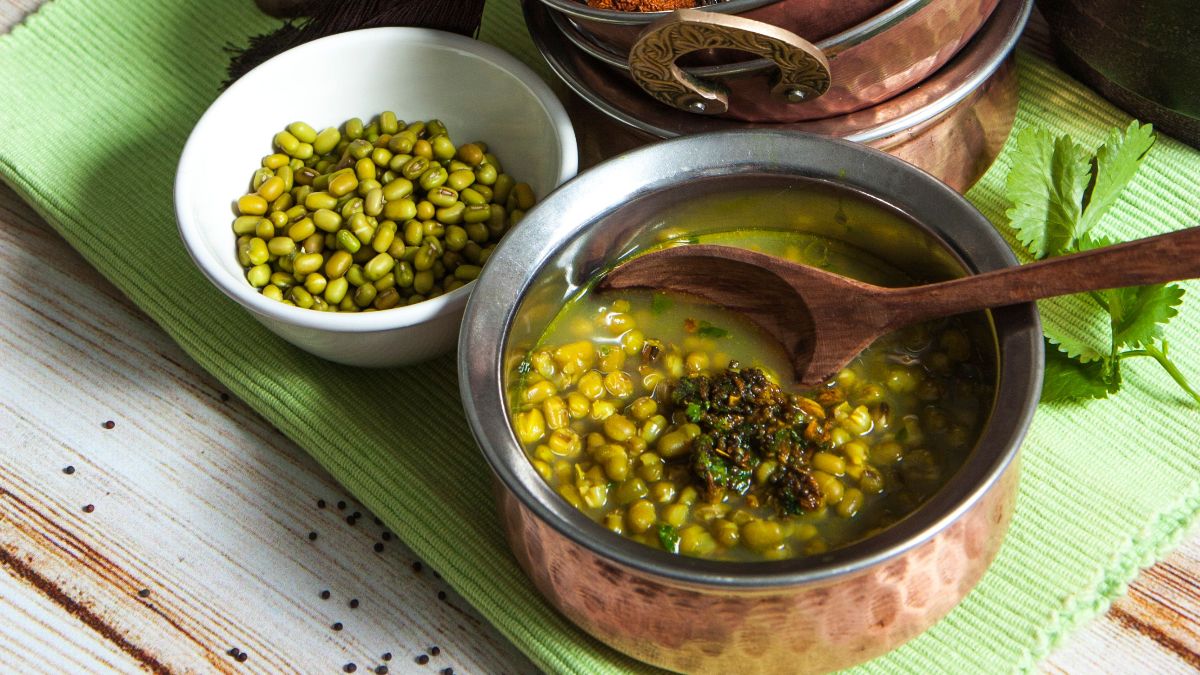
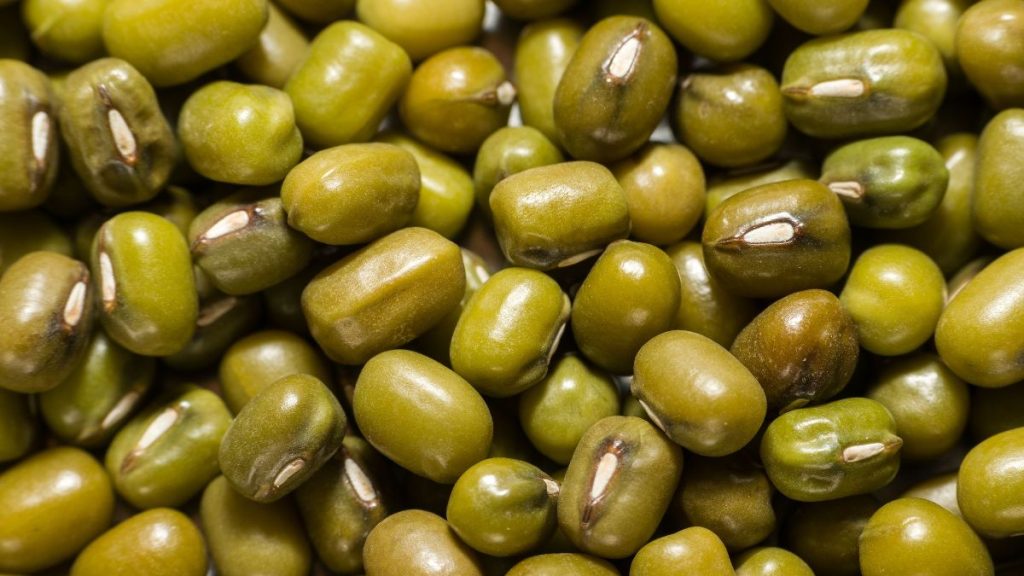
Whole moong is the small green, unhusked form of Vigna radiata. The Indian Food Composition Tables list dry whole green gram at 17.04g of dietary fibre and 22.53g of protein per 100g, which makes the combination of fibre and plant protein one of the genuine nutritional reasons to give it space alongside grain-based breakfasts.
ALSO READ | Overnight Chia Pudding for Gut Health: Benefits & 3 Recipes
The word dry is important. Once moong is soaked and cooked, it absorbs a considerable amount of water, so 100g of the finished food will not contain those same concentrated figures. That doesn’t diminish its nutritional value; it simply prevents a dry-food database number from becoming a misleading cooked-serving claim.
What Does Soaking Actually Do to Moong?
Soaking does more than make the bean larger and softer, but it isn’t a substitute for cooking.
Legumes naturally contain compounds including phytate, tannins, oligosaccharides and enzyme inhibitors. Water soaking can reduce some of these through leaching and other changes within the seed, while also allowing water to penetrate the bean and shorten the subsequent cooking time. Research specifically on mung bean describes overnight soaking as a standard pre-treatment for improving cooking quality and reducing some antinutritional factors.
Heat still matters. Across pulses, cooking soaked beans produces substantially greater reductions in protease inhibitors than soaking alone, and thermal processing improves the digestibility of legume proteins and starches.
So the useful sequence isn’t raw → soak → breakfast. It is raw → soak → cook → breakfast.
That is also how overnight soaking has traditionally functioned in Indian kitchens: it prepares the pulse for cooking rather than replacing the cooking itself.
Does Soaking Moong Reduce Gas?
It may help, but it doesn’t guarantee a gas-free bowl.
Pulses contain fermentable carbohydrates, including raffinose-family oligosaccharides, that gut bacteria can metabolise and produce gas from. Some of these water-soluble compounds can leach into soaking water, so discarding the soak and cooking the beans in fresh water may reduce the amount present. Processing research across pulses supports reductions in oligosaccharides with soaking and particularly with further cooking or fermentation.
ALSO READ | Overnight Dalia for Gut Health: Benefits & 3 Breakfasts
How comfortable a bowl feels still depends on portion size, how often you eat legumes and your individual gut. If you rarely eat pulses and suddenly begin breakfast with a large bowl of whole moong every morning, an overnight soak isn’t going to negotiate a special exemption from bloating on your behalf.
Starting with a smaller portion and increasing gradually remains the more useful approach.
Soaked Is Not the Same as Sprouted
This distinction is worth keeping because the two are often used interchangeably in recipes.
Soaked moong has simply absorbed water over several hours.
Sprouted moong has been soaked and then kept in conditions that allow germination to begin, usually over another day or more.
Sprouting produces additional biochemical changes, but it also introduces a different food-safety question. The warm, humid conditions required for sprouting can allow harmful bacteria present on the seed to multiply. FDA specifically identifies mung bean sprouts among raw sprouts that can carry foodborne pathogens and advises people at higher risk of severe foodborne illness to avoid them raw or lightly cooked.
So sprouting isn’t a convenient workaround for the cooking step in this overnight series.
This article is about soaking dried whole moong overnight and then cooking it.
A Simple Overnight Moong Prep
Rinse ½ cup whole moong thoroughly and cover it generously with clean water. Because the beans expand as they hydrate, use a bowl with plenty of spare room.
For an overnight soak, I would keep the covered bowl in the refrigerator rather than leaving hydrated pulses sitting through a warm night on the kitchen counter.
The following morning, drain and rinse the beans, add fresh water and cook until they are completely tender. A pressure cooker makes this particularly quick after soaking, but exact cooking time varies according to the age of the pulse and the appliance.
If breakfast mornings are genuinely too rushed even for that, there is an even simpler version of the habit: soak the moong during the day, cook it in the evening and refrigerate the cooked beans overnight. Then breakfast really does require nothing more than assembling the bowl.
Three Easy Ways to Have Overnight-Soaked Moong
1. The Simple Lemon and Onion Bowl
You’ll need:
- ½ cup cooked whole moong, cooled or still slightly warm
- ¼ small onion, finely chopped
- ½ tomato, finely chopped
- A squeeze of lemon juice
- A pinch of salt and chaat masala
Toss everything together just before eating. This is close to a simple moong chaat, and it’s the version to reach for when you want something light, savoury and genuinely refreshing rather than the typical sweet breakfast.
The overnight work is still earning its place here: the moong was soaked while you slept, which made the next cooking stage easier, and the finished breakfast itself needs almost no further preparation.
2. The Curd and Cucumber Version
You’ll need:
- ½ cup cooked whole moong, cooled
- ½ cup curd
- ¼ cucumber, finely chopped
- A pinch of roasted cumin powder and salt
Mix everything together in the morning. This version is closer to a light raita with moong stirred through, with the curd bringing creaminess and additional protein alongside the legume’s fibre.
If the curd contains live cultures, adding it only after the cooked moong has cooled also means you aren’t destroying those microorganisms through heating. That makes curd with live cultures a more precise description than turning the finished bowl automatically into a probiotic meal.
3. The Fruit and Nut Bowl
You’ll need:
- ½ cup cooked whole moong, cooled
- A handful of chopped seasonal fruit — pomegranate works particularly well
- A few chopped nuts
- A small drizzle of honey, optional
Combine just before eating. This is the least traditional of the three, but Adrija’s original instinct here works better than it might sound: moong has a mild enough flavour to sit beside pomegranate and nuts without the bowl feeling as strange as the ingredient list initially suggests.
If that combination still offends you philosophically, the first two versions are available.
Why Moong Feels Different From a Grain Breakfast
It’s worth saying plainly what makes moong different from the rest of this series: the balance of protein and fibre.
Oats and whole-grain dalia bring fibre and some protein, while chia contributes fibre, fat and ALA. Whole moong shifts the breakfast more decisively towards a pulse-based meal. The dry composition figures illustrate the difference, although the exact protein in your bowl depends on how much cooked moong you actually serve.
ALSO READ | Overnight Oats for Gut Health: Benefits & 3 Easy Recipes
Whether it keeps someone fuller than oats until lunch isn’t something I’d promise universally, because satiety depends on the entire meal and the individual. But a cooked pulse gives the series a genuinely different nutritional structure rather than simply swapping one grain for another.
A Few Practical Notes
Once cooked, moong can be refrigerated in a clean covered container and used for breakfasts over the following couple of days. If you’re batch-cooking, cool it and refrigerate promptly rather than leaving a warm pot sitting out for hours.
Keep chopped onion, tomato, cucumber and fruit separate until you’re ready to assemble each serving. That gives you better texture and avoids turning a two-day-old breakfast into a small experiment in vegetable water.
If you’ve soaked more moong than you need but haven’t cooked it yet, don’t simply keep extending the soak indefinitely. Drain it, refrigerate it and cook it promptly. Once beans are hydrated, they are no longer the shelf-stable dry ingredient that came out of the packet.
And if cooked whole moong feels too firm or heavy the first time you try it at breakfast, cook it a little longer next time rather than assuming you need a longer raw soak.
The Benefits, Recapped
Across all three versions, the useful idea is the same: whole moong gives this series a legume-based breakfast built around fibre and plant protein, while the overnight soak makes an ingredient that normally requires more forward planning easier to cook the following day.
Soaking can soften the beans, shorten cooking time and reduce some compounds that contribute to the digestive and nutritional limitations of raw pulses. Cooking finishes that job much more effectively and turns the hydrated bean into the food you actually want on the plate.
If you’ve worked through the series in order, that difference is useful. Oats can hydrate into breakfast. Chia gels into breakfast. Dalia benefits from soaking but still needs cooking. Whole moong follows the same logic as the Indian pulse-soaking tradition it comes from: the overnight step makes tomorrow’s cooking easier rather than making cooking unnecessary.
That may be a less dramatic promise than “breakfast makes itself while you sleep”, but it is also how the ingredient genuinely works.
Frequently Asked Questions
Can you eat whole moong after soaking it overnight without cooking?
I would not recommend treating dried whole moong as a ready-to-eat food after soaking alone. Standard dried-bean preparation uses soaking as a step before cooking, and research shows that subsequent heat treatment is more effective at reducing enzyme inhibitors and improving digestibility.
Why soak moong overnight if it still needs cooking?
Soaking allows water to penetrate the bean, softens it and can shorten cooking time. It can also reduce some water-soluble antinutritional compounds before cooking.
Is overnight-soaked moong good for gut health?
Whole moong can contribute substantial fibre as part of the diet. The Indian Food Composition Tables list dry whole green gram at 17.04g dietary fibre per 100g. The digestive effect of an actual meal still depends on the cooked serving size, the rest of the diet and individual tolerance.
Is moong high in protein?
Yes. IFCT lists dry whole green gram at about 22.5g protein per 100g. Once cooked, the protein concentration per 100g is lower because the beans have absorbed water.
Does soaking moong reduce gas?
Soaking can reduce some water-soluble oligosaccharides and other antinutritional compounds, particularly when the soaking water is discarded. Cooking further changes these compounds, but neither step guarantees that legumes will cause no gas in every person.
Should I throw away the water used to soak moong?
For this preparation, yes. Drain the soaking water, rinse the moong and cook it in fresh water. Some water-soluble compounds that leach out during soaking remain in the soak.
Is soaked moong the same as sprouted moong?
No. Soaking simply hydrates the bean. Sprouting requires additional time under conditions that initiate germination. Raw sprouts also carry a recognised food-safety risk because warm, humid sprouting conditions can allow harmful bacteria to multiply.
Can I eat raw mung bean sprouts?
Raw mung sprouts are widely eaten, but they are also a recognised source of foodborne illness. FDA advises people at higher risk — including pregnant people, young children, older adults and people with weakened immune systems — to avoid raw or lightly cooked sprouts. Thorough cooking reduces the risk.
Can I batch-cook moong for breakfast?
Yes. Soak and cook a batch, cool it promptly and keep it refrigerated in a covered container. Then use portions for breakfast over the next couple of days.