

Health Benefits of Bay leaves (Tej Patta) and its Culinary Uses
Find out about the health benefits of bay leaves, including healthier digestion and good heart health. Learn how to use them in your diet to achieve optimal health.
Table of Contents
Have you ever thought about how much more the bay leaf can do than just add flavour or visual appeal to food?
With an extensive history of medicinal use, bay leaf boasts spectacular health benefits, including enhancing digestion and boosting the immune system.
This lowly herb can be used in your soups, stews, and teas, as well as in other meals, providing natural remedies.
However, the strength of bay leaves extends beyond their taste and health benefits; one should learn how to use them correctly.
Although bay leaf may be highly advantageous, it should be handled with caution to avoid unpleasant surprises. Therefore, what can you do to maximise the use of bay leaves in your kitchen and as a wellness habit?
In this blog, we will discuss the fantastic benefits and versatile applications you should be aware of.
Together we can unlock its potential!
Laurus nobilis, or bay leaf, is a fragrant herb that has a vital place in culinary as well as in medical practice. Bay leaves are large, oval, dark green, glossy, and very attractive to the eye.
Their taste is very sharp, slightly bitter, with slight traces of herbal, spicy, and floral notes, which, when used in dishes, give them a distinct aroma.
Although bay leaves are commonly used to enhance the flavour of stews, soups, and rice dishes, they are often discarded before serving because of their rough, leather-like texture.
Bay leaf, which grows in the Mediterranean, is now produced in other regions around the world, including parts of India.
Bay leaves are also known as tej patta in Hindi, bail patra in Bengali, and tamalpatra in Marathi, and they are commonly used in regional cuisines both as food and as medicine.
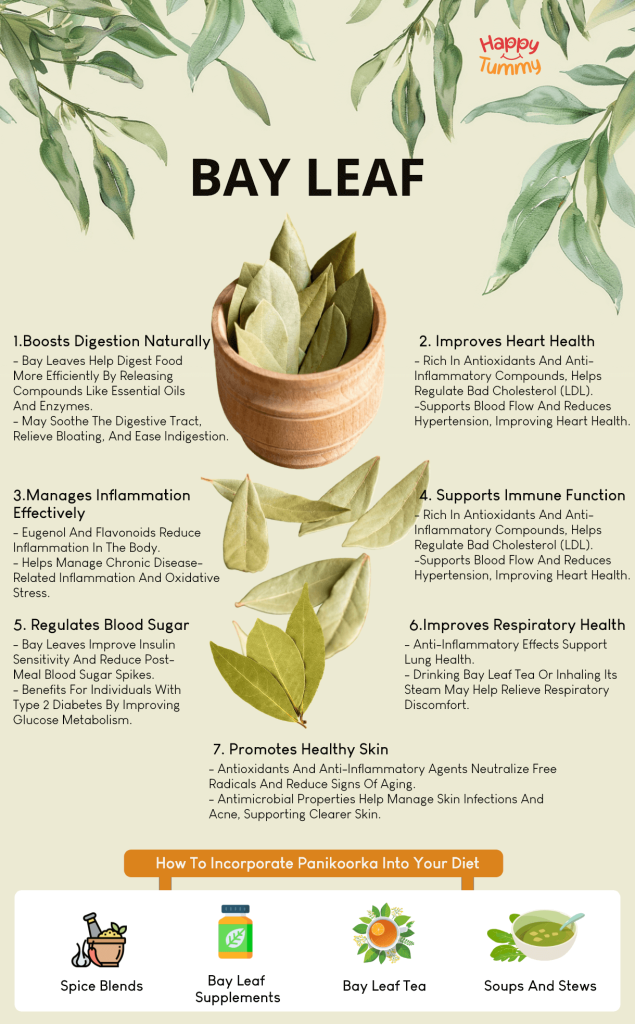
Bay leaf is not only a tasty ingredient to include in your meals but also has many health benefits. The following are just a few of the fantastic benefits the bay leaves have on your general well-being:
Bay leaves are a natural digestive stimulant, releasing compounds that may help the body digest food more effectively.
When you add bay leaves to your food, their enzymes and essential oils may help the digestive system work more efficiently, and in the process, your body can gain more nutrients.[1]
The antioxidants present in bay leaves may also help soothe the digestive tract, manage bloating, and relieve indigestion symptoms.
They have anti-inflammatory properties that may calm the stomach, leading to a smoother digestive process and relieving discomfort.
Anti-inflammatory and antioxidant compounds in bay leaves may help reduce gastric acid secretion and protect the stomach lining from ulcerative damage. [2]
The next time you cook, a bay leaf should be part of your menu in terms of both flavouring and to help in digestion.
Aashirvaad Atta and Multigrains have a 2-minute, no-rush questionnaire quiz to test your Digestion Quotient and assess the health of your digestive system. It is fast, simple, and can be a start towards a happier, healthier gut!
The richness in antioxidants and anti-inflammatory compounds may also help improve heart health, thanks to bay leaves.
The compounds may help regulate levels of bad cholesterol (LDL) and enhance blood flow, which can support heart health. [3]
The essential oils citrate and eugenol, as well as the tannins and flavonoids in the bay leaf decoction, may also help lower hypertension.[4]
Besides, magnesium found in bay leaves may help maintain a healthy heart rate by improving circulation.
When you add bay leaves to your culinary repertoire, you may be doing at least some good for a heart-healthy lifestyle, but one should not disregard other heart-healthy habits either.
The anti-inflammatory effects of bay leaves are due to such compounds as eugenol and flavonoids. Such compounds may help mitigate the inflammation in the body, which is often associated with many chronic diseases.[5]
Flavonoids present in bay leaf may manage oxidative stress. Taking bay leaves, either as tea or in cooking, can help your body deal with inflammation on its own.
Although bay leaves may help reduce inflammation, they must be used in combination with other treatments and a healthy lifestyle.
The antioxidants in bay leaves could be very helpful for your immune system. These antioxidants may help manage free radicals, which may otherwise undermine the immune system.
Besides, bay leaves contain vitamin C, which is known to strengthen immunity.[6]
Such a combination of nutrients can give your body the power to prevent infections and be strong against illnesses.
Regularly using bay leaves in your dishes may provide an added level of protection against common colds and other diseases, though it must be part of a healthy diet and lifestyle.
Pro tip: Simmer a bay leaf with a pinch of turmeric powder in 100ml water. Sip as bed tea.
The potential impact of Bay leaves on blood sugar levels is positive. Research suggests that compounds in bay leaves, such as polyphenols, may improve insulin sensitivity and reduce post-meal blood sugar spikes.[7]
Bay leaf extracts have demonstrated insulin-sensitising effects, improving glucose metabolism and insulin function, which are beneficial for individuals with type 2 diabetes.[8]
It can be invaluable to individuals managing diabetes or at risk of developing it.
Adding bay leaves to the diet may help maintain normal blood sugar levels, though you should not forget that medical care and a change in diet should be considered first before adding bay leaves to manage blood sugar levels.
Using bay leaves can be a healthy supplement to your lifestyle and help your body maintain blood sugar levels.
Aashirvaad Atta and Multigrains have collaborated with professional nutritionists to initiate My Meal Plan Test. It is a fast and simple test that will help you determine how much fibre you are already consuming each day and develop a personal diet.
Bay leaves may help maintain healthy, glowing skin, as they contain many antioxidants and anti-inflammatory agents. These substances may help neutralise free radicals, which can damage skin cells and contribute to signs of ageing.[9]
The antimicrobial properties of bay leaves would also help manage skin infections and bacteria that cause acne, resulting in clearer skin.
Nevertheless, adherence to a regular skincare routine and diet is crucial to long-term healthy skin.
Bay leaves may help support the respiratory system, especially given their anti-inflammatory effects. Some drink bay leaf tea or inhale its steam to manage issues in lungs health.[10]
You could also find relief by adding bay leaves to your diet or taking them as a natural remedy to help manage respiratory discomfort.
Nevertheless, continuous breathing problems should always be medically consulted.
The leaves of bay are highly varied and can be implemented in your diet in a large number of diverse ways.
In the following ways, you can add bay leaves to your diet:
In all these easy methods of adding bay leaves to your diet, you will not only add the deliciousness and possible health value to your meals, but you will do so without trying hard.
Bay leaves have been neglected as a cooking ingredient, but they offer numerous health benefits. Bay leaves are not just good-tasting; they can help with digestion and have a beneficial effect on heart health, immunity, and inflammation.
They can also help regulate blood sugar and promote healthy skin due to their high levels of antioxidants and natural compounds.
Bay leaves can be used in soups and stews, and taken as tea; they are an easy but effective addition to your diet.
Not all herbs are harmless. In recent years, many cases of HILI (herb-induced liver injury )have been reported, including direct confirmations of hepatic fibrosis, portal inflammation, cholestasis, chronic hepatitis, etc.
Excess consumption of any herb can lead to discomfort. Kindly check with your healthcare provider before consumption.
Nevertheless, bay leaves are good for your health, but they must be used in a balanced diet. Never change your diet drastically without the advice of a medical practitioner, particularly when you are already having some underlying health conditions.
No, bay leaves should not be consumed in their entirety because of their tough, leathery texture. They are primarily used in cooking to give flavour, which is then removed before the meals are served.
Make a soothing tea from bay leaves. Boil a few dry and fresh leaves in water (5-10 minutes). The tea can aid digestion, reduce bloating, and support a healthy stomach.
Even though bay leaves are not particularly dangerous in small doses, high doses or concentrations can cause gut irritation, liver injury, ulcers, gallbladder stones, etc. They must always form part of a balanced diet, in moderation and in case of any uncertainty, you ought to visit a healthcare institution.