Festive Eating Tips for Enjoying the Feast
Seekh kebabs, biryani, a table full of mithai and a relative insisting on one more. A little balance can help you enjoy the celebrations more comfortably.
Table of Contents
Enjoying festive food comfortably starts before the samosa. Eat your usual meals rather than skipping breakfast to save room for a feast. Arriving very hungry can make it harder to eat slowly and choose what you actually want, although it does not mean you will inevitably overeat.
At the buffet, look at the whole spread before serving yourself. Include some vegetables or a lighter accompaniment, a protein source such as dal, paneer, eggs, fish or chicken, and the rice, roti or other dishes you enjoy. This is a flexible way to build variety, not a rule about the order in which you must eat.
Fried snacks and mithai can have a place at the celebration. Choose favourites, start with a comfortable portion, and give yourself time to enjoy them. You can have more if you are still hungry. A relative offering another helping does not oblige you to accept it.
Afterwards, try a gentle stroll if it feels comfortable. Limited research suggests regular walks after meals may help some people with bloating, but one walk cannot guarantee relief. If reflux bothers you at night or when lying down, leaving at least three hours between eating and bed may help.
The next day, return to your usual meals. There is no need to earn dessert, compensate with exercise or follow a restrictive reset. Across the festive season, ordinary meals matter too. Persistent discomfort, difficulty swallowing, unexplained weight loss or blood in your stool deserve medical advice, rather than another buffet strategy.
People approach food and fitness differently. But there are some days when keeping score of every bite feels particularly out of place. Think of a meal at your grandmother’s dining table, where food arrives with a generous helping of sentiment. Festivals can feel much the same. You can appreciate the affection and still decide when you have had enough.
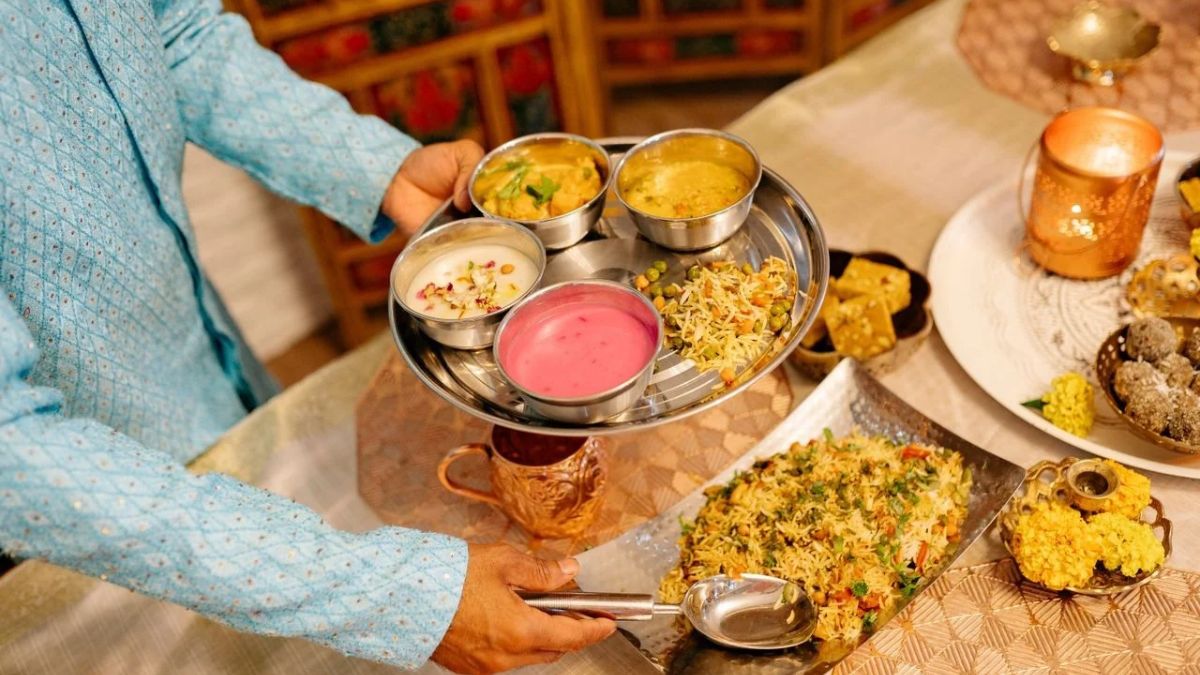
The house is lit up, music is playing somewhere in the background, family and friends are gathered, and the dining table is doing its own bit of glamming up and celebrating in a culinary manner.
The menu may feature crispy peyaji, juicy seekh kebabs, paneer tikka straight off the grill, fragrant biryani, buttery rotis and enough desserts and mithai to make the sweet shop look modest. And in the festive season, that is rarely just one day: between Diwali, family get-togethers, weddings, Christmas and New Year, the feasts tend to arrive back to back.
Sometimes, though, a feast leaves you uncomfortably full or sluggish. Enjoying festive food does not have to mean expecting discomfort, or regretting each delicious decision.
A little balance can help: choosing foods thoughtfully without turning the celebration into an exercise in strict restraint. The ICMR-NIN Dietary Guidelines for Indians 2024 emphasise variety, using oils and fats in moderation, and minimising foods high in fat, sugar and salt. These are principles for the everyday pattern, rather than a reason to feel guilty about a festive favourite.
Before a big celebration, it can be tempting to skip breakfast. The logic seems reasonable at first: you know you are going to eat a lot later, so why not save room?
But arriving at lunch or dinner desperately hungry can make it harder to eat slowly and choose foods you actually want. You may be more likely to eat quickly or serve yourself more than feels comfortable. This is a possibility, not an inevitable consequence of missing breakfast.
A practical approach is to have a familiar breakfast containing some protein, fibre and carbohydrates. Vegetable poha with peanuts, moong dal chilla with curd, idli with sambar, or eggs with wholegrain toast can work.
You do not need a special festive breakfast, unless it is going to be the gastronomical highlight of your day. Your usual balanced breakfast is perfectly adequate. If the feast is at dinner, have your usual lunch too. The idea is to arrive comfortably hungry.
If you are fasting for religious reasons or following a prescribed meal schedule, adapt the advice to your circumstances and medical needs.
Festive buffets can come with a running commentary from friends and relatives:
“Have you tried this?”
“Have some more, it is the best dish of this course.”
“You have not even touched the biryani!”
“At least have one sweet. You have hardly eaten anything!”
And before you know it, your plate resembles a miniature version of the entire buffet.
Instead of automatically taking everything, take a quick look at what is available first. Then decide what genuinely appeals to you. If you adore mutton seekh kebabs, have them. If the paneer tikka looks irresistible, make room for it. And if you have never particularly enjoyed a certain fried snack, you do not need to eat it simply because it happens to be part of the spread.
Start with portions that feel manageable. You can return for more if you are still hungry. A warm “It was lovely, thank you; I have had enough” can acknowledge the host without accepting another helping.
Moderation does not mean deprivation. There is room to enjoy the foods you came for.
A festive plate can still have a little structure amid the celebrations. Include vegetables, salad or a lighter accompaniment, if available; your preferred protein, such as grilled chicken, fish, paneer, dal or legumes; and carbohydrate-rich dishes such as pulao, rice or roti. Choose the richer dishes you genuinely want to savour too.
This is a flexible way to include different foods, not a prescribed sequence for eating them. You do not need to turn a buffet plate into a diagram.
Variety is central to WHO’s healthy-diet guidance, which includes fruits, vegetables, pulses and whole grains, while advising limits on unhealthy fats, free sugars and salt.
It is a festival. There may be samosas. There may be pakoras. There may even be hot and crispy peyajis or onion fritters. You do not need to pretend that a bowl of steamed vegetables is an equally mouthwatering replacement for every kachori.
Fried food can have a place in celebratory meals. How often you eat it, how much feels comfortable and the wider pattern of your meals matter.
Choose the fried dishes you actually love, rather than sampling every single one being served. Try eating them slowly, and include other dishes alongside them. There is no need to rush through a favourite while deciding what to try next.
If you are hosting, include grilled, roasted, steamed or lightly sautéed dishes alongside fried favourites, so that guests have genuine options. ICMR-NIN recommends moderate use of oils and fats and a variety of oilseeds and nuts; it also encourages cooking methods such as steaming, grilling and sautéing instead of frying.
There are so many delectable Indian sweets, ranging from nutty kaju katli to soft, spongy rasgulla, melt-in-the-mouth sandesh and warm, crispy jalebi. And there may be an elderly relative insisting that you have not really celebrated unless you have eaten the sweet they suggested.
You can choose your favourites without having to refuse everything or sample every sweet on the table. One piece eaten slowly can be more satisfying for some people than mechanically working through the whole selection. Other people may prefer small tastes of a few. Let preference and comfort guide you.
Many traditional sweets contain substantial amounts of sugar and fat, so modest portions are a sensible starting point. A “lighter” version is optional; it does not automatically make a sweet suitable in unlimited quantities.
And remember: you are allowed to enjoy dessert without earning it through exercise or compensating for it the next morning.
If it feels comfortable, try a gentle stroll. Walking may help some people with post-meal fullness or bloating, but the evidence needs a little context.
A 2021 trial involving 94 people with functional abdominal bloating compared a programme of 10–15-minute walks after meals with medication over four weeks. Both groups reported improvement, with a greater improvement in fullness and bloating scores in the walking group. Participants also received dietary advice, and the walking programme included specific posture instructions. Symptoms were self-reported.
It was a small, short trial in a particular group of people, not a test of one stroll after a festive feast. A comfortable walk is an option, not a guarantee against bloating or a way to cancel out what you ate.
If you are prone to acidity, avoid lying down soon after a big dinner. For people with gastro-oesophageal reflux disease, the American College of Gastroenterology suggests avoiding meals within two to three hours of bedtime. This is a conditional recommendation based on limited evidence.
NIDDK advises that, if reflux occurs at night or when lying down, eating at least three hours before lying down or going to bed may improve symptoms. This is reflux advice, not a universal deadline for everyone’s dinner.
Simply go back to your usual meals. There is no need to skip breakfast, follow a restrictive reset or exercise to make up for the celebration.
Dal, sabzi, rice or roti, fruit and other familiar foods are perfectly good places to return to. Across a festive season of back-to-back feasts, the ordinary meals in between matter too.
If pain, bloating or indigestion does not go away or keeps returning, speak to a doctor rather than assuming that festive food is the whole explanation.
Seek prompt medical assessment for unexplained weight loss, blood in your stool or difficulty swallowing. Get emergency medical help for sudden severe abdominal pain, vomiting blood, or black, sticky stools. These symptoms need more than a change to the buffet plate.
This article provides general information and is not a substitute for medical advice, diagnosis or treatment. Dietary needs vary. If you have diabetes, reflux, a food allergy, an eating disorder or another condition requiring a specific eating plan, follow your doctor’s or registered dietitian’s advice. Seek individual guidance for children, during pregnancy or for older adults where health conditions affect food choices. Do not change prescribed medicines or treatment on the basis of this article.
Eat normally beforehand, take time over the meal and start with comfortable portions of foods you enjoy. A gentle walk afterwards may help some people, but none of these steps guarantees prevention. Persistent or recurrent bloating deserves medical advice.
For most people, there is no need to skip breakfast to save room. A familiar meal such as poha with peanuts, chilla with curd or idli with sambar is a practical option. Missing breakfast does not inevitably cause overeating; the aim is to avoid arriving uncomfortably hungry. Follow individual advice if you have a prescribed meal schedule.
Yes, they can fit into a varied dietary pattern. Choose favourites, enjoy them slowly and start with portions that feel comfortable. If you have a condition requiring specific dietary limits, follow your personalised advice.
If reflux is a problem, avoid lying down soon after eating. ACG suggests avoiding meals within two to three hours of bedtime for people with GERD; NIDDK advises at least three hours before lying down for night-time or lying-down reflux. Speak to a doctor about frequent symptoms rather than repeatedly relying on meal changes alone.
Return to your usual balanced meals. There is no need for compensatory fasting, restrictive eating or extra exercise. If you feel unwell or symptoms persist, seek advice rather than trying to correct them by skipping food.