Yoga for Digestion and Constipation: Gentle Poses for a Heavy Stomach
Gentle yoga can support digestive comfort, but it isn't a cure for constipation or a way to detox the gut. A few simple poses, practised consistently, may help with bloating and heaviness.
Gentle yoga can support digestive comfort, but it isn’t a cure for constipation or a way to detox the gut. A few simple poses, practised consistently, may help with bloating and heaviness.
Expert reviewed by Qurath Ain, Certified Nutritionist and Clinical Dietitian
TL;DR
Gentle yoga isn’t a cure for constipation, but poses like Cat-Cow, Child’s Pose and Wind-Relieving Pose (pawanmuktasana) may ease bloating and heaviness as part of a broader routine — mainly through gentle movement and relaxation, not detoxing. Avoid deep twists right after eating. Give it a week of consistent practice before judging whether it’s helping.
Gentle yoga isn’t a cure for constipation or digestive problems, but for many people it can be a genuinely useful part of an overall routine that supports digestive comfort. A handful of beginner-friendly poses, done gently and consistently, may help ease bloating, sluggishness or a heavy stomach — mainly by combining physical movement with slow breathing and relaxation, not through any special detoxifying effect.
We’ve all had those days. Your stomach feels heavy, you’re bloated after lunch, or you’ve been constipated for a couple of days and nothing quite feels comfortable. Someone inevitably says, “Do a bit of yoga, it’ll sort you out.” It’s common advice, but how much truth is there to it?
Your digestive system generally likes movement — that’s one reason a short walk after meals can help some people feel less sluggish, bloated and uncomfortable. Yoga offers another way to get your body moving, while also encouraging slow breathing and relaxation. For some people, that combination helps them feel less bloated or tense, especially during stressful weeks when digestion feels “off.” Mind you, we aren’t talking about twisting your stomach into submission — instead, the aim is to move your body in a calm, comfortable way.
What does the evidence actually say about yoga and digestion?
Yoga is thought to help digestion through two separate channels. The physical postures gently compress and mobilise the abdomen, which may encourage movement through the digestive tract, while the slow breathing and relaxation components calm the nervous system, which is in constant two-way contact with the gut. A 2025 systematic review of yoga research found that gentle yoga practice was associated with meaningfully eased digestive symptoms and lower stress and anxiety in the studies reviewed, though the researchers noted the evidence is still preliminary and larger, better-designed studies are needed.
None of this makes yoga a treatment for any digestive condition. It’s best understood the way Happy Tummy’s own Briefing Bible frames it: calming practices, including meditation, breathing exercises and yoga, can ease digestive symptoms as part of a broader routine, not as a stand-alone fix.
Sources: systematic review on yoga and gastrointestinal symptoms, PMC, 2025
About that detox claim
You’ve probably heard claims like “this pose detoxes your gut,” or “this stretch squeezes toxins out of your intestines.” Those claims aren’t supported by good evidence. Yoga doesn’t detox your digestive system — your liver and kidneys already do that job continuously, with or without a stretch. What yoga can do is encourage gentle movement, improve flexibility and help you slow down — habits that may support overall well-being, including digestive comfort for some people. That’s a more modest claim than detoxing, but it also happens to be the one that’s actually true. Yoga may aid/ accelerate digestive functioning, but it can not be the treatment for any digestive issues.
Gentle yoga poses worth trying
If you’re feeling bloated or sluggish, gentle movements are usually a better starting point than advanced yoga poses. Some beginner-friendly options include:
Cat-Cow Pose — moving slowly between an arched and rounded spine on all fours, to gently mobilise the spine and the abdomen along with it.
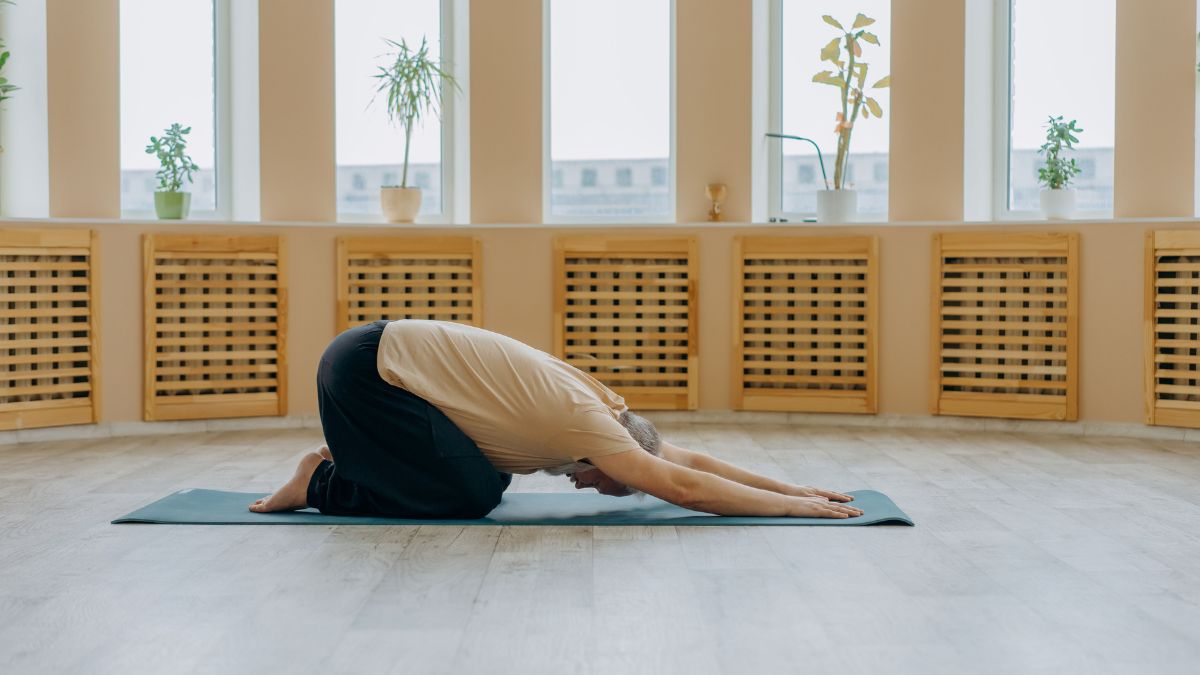
Child’s Pose — sitting back on your heels with arms extended forward, mainly for relaxation and a gentle stretch through the lower back.
Wind-Relieving Pose (pawanmuktasana) — lying on your back and hugging one or both knees towards the chest, a traditional pose some people find comfortable when feeling gassy or bloated.
Supine Spinal Twist — lying on your back and gently lowering both knees to one side, performed within a comfortable range rather than forced.
Happy Baby Pose — lying on your back and holding the outer edges of your feet with knees drawn towards the floor, if it’s comfortable for you.
The emphasis should always be on moving comfortably, not forcing your body into deep stretches. If a pose causes pain or increases discomfort, stop. If you’re pregnant, recovering from abdominal surgery, or managing a hernia, check with a doctor or a qualified instructor before trying twists or deep abdominal compressions.
A familiar pattern: Anjali’s ten-minute wind-down
Anjali used to treat constipation as something to fix in the moment, usually with whatever remedy a colleague suggested that week. Nothing stuck, and nothing seemed to make a consistent difference.
On her doctor’s suggestion, she tried something more boring: ten minutes of Cat-Cow and Wind-Relieving Pose most evenings, whether or not she felt constipated that day. The first week, she noticed nothing dramatic. By the third week, tracking a simple log alongside it, a pattern emerged — on weeks she kept up the routine most evenings, her bowel movements were more regular, and she felt less bloated overall. On weeks when work got busy and the routine lapsed, the old pattern crept back.
Anjali had been looking for a fix for a bad day. What actually helped was a boring, repeated habit that had nothing dramatic about it at all.
Right after a heavy meal vs later in the day
Timing
Gentle yoga
Vigorous exercise
Right after a large meal
Not ideal — deep twists and bends can feel uncomfortable
Not recommended either — digestion is still using blood flow and energy
An hour or so after eating
Generally comfortable for gentle poses
Better suited to this window than right after eating
Before a meal / empty stomach
Often the most comfortable time for a fuller practice
Fine for most people
When already feeling bloated
Gentle movement, including yoga, is often more comfortable
May feel uncomfortable until the bloating eases. Gentle or slow-paced walking can help manage bloating.
Yoga works best alongside other habits
It’s tempting to look for one solution — one pose, one stretch, one miracle exercise. But digestion rarely works that way. Constipation and digestive discomfort are often influenced by several factors, including a healthy, balanced diet, adequate protein, fibre intake, hydration, physical activity, sleep, stress and meal timing, among other things. Yoga is best thought of as one piece of that puzzle, not the entire picture.
Take care of the timing as well
If you’ve just finished a large meal, it’s probably not the best time for a yoga session. Gentle movement is generally more comfortable than deep bending or twisting immediately after eating. Many people prefer practising yoga before meals or allowing some time after eating before getting onto the mat. The idea is to work with your body, not against it.
Don’t expect overnight results
Trying one yoga session tonight isn’t likely to transform your digestion tomorrow morning. Like walking, staying hydrated or gradually increasing fibre, yoga tends to work best as a regular habit rather than a one-off fix. Don’t think, “Did this pose cure my constipation?” Instead, think, “Do I generally feel better when gentle movement is part of my routine?” That’s a much more useful question. Instead of deciding after one session, give yourself a few days.
Try the 7-day gentle yoga log
Day
Yoga (Y/N)
Duration
Digestive symptoms
Day 1
Day 2
Day 3
Day 4
Day 5
Day 6
Day 7
Also note:
Constipation? Bloating?
Felt less tense?
Better bowel movement?
Water intake?
Walked that day?
Meal and meal pattern
Notice whether gentle movement makes a difference to how you feel.
Ask Happy Tummy GPT
Try this prompt: “Here’s my seven-day yoga and symptom log. I’ve tracked the days I practised gentle yoga, my water intake, activity levels and digestive symptoms. Can you help me identify any patterns?”
Yoga isn’t a cure for constipation or digestive disorders. But for many people, gentle stretching, movement and mindful breathing can become part of a routine that supports overall digestive comfort.
If you’re curious, start simple. Choose a few beginner-friendly poses, stay consistent for a week and pay attention to how your body responds — because when it comes to gut health, the habits you can comfortably stick with often matter more than the ones that promise dramatic results.
Tried any gentle movement for a heavy tummy today? Log it and see how the week shapes up.
FAQs
Does yoga help with constipation?
Gentle yoga isn’t a cure, but poses like Wind-Relieving Pose and Cat-Cow may help ease constipation as part of a routine that also includes enough water, fibre and movement.
Which yoga poses are best for digestion?
Beginner-friendly poses such as Cat-Cow, Child’s Pose, Wind-Relieving Pose (pawanmuktasana) and a gentle Supine Spinal Twist are commonly recommended starting points for digestive comfort.
Can yoga help with acidity?
Gentle, non-inverted poses combined with slow breathing may ease tension that can worsen acidity for some people, but avoid deep twists or bends right after eating, when acidity often feels worse.
Does yoga detox your gut?
No. Yoga doesn’t detox your digestive system — that job belongs to your liver and kidneys. What it can genuinely do is encourage movement, flexibility and relaxation.
How soon should I expect results from yoga for digestion?
Differs from individual to individual; there is no standard timeline. Give it more than one session. Most people notice a difference, if any, over a week or more of consistent practice rather than after a single class.
Disclaimer: This is general information, not medical advice. For children specifically, follow a doctor’s guidance before making changes. If constipation, abdominal pain or other digestive symptoms are severe, persistent, or accompanied by blood in the stool, unexplained weight loss or vomiting, seek medical advice promptly.
You are now being directed to an external website https://www.callr.live/aashirvaadexperts/premium-plan.
This link is provided for your information and convenience only and ITC Limited is not
responsible for the contents or services provided by Brand Touch India or any information that
you share with Brand Touch India.