Quinoa: Is It Actually Better Than Indian Grains?
Quinoa has genuine nutritional strengths, but Indian millets offer comparable fibre and whole-grain benefits. Here’s what quinoa actually offers and when it makes sense.
Table of Contents
No. Not in the ways the marketing usually implies, anyway. Quinoa is a genuinely nutritious grain-like seed with a few real advantages — it’s a complete protein, it’s naturally gluten-free — but it isn’t categorically superior to Indian grains in fibre, and the comparison most commonly made between quinoa and rice, or quinoa and wheat, tends to flatter quinoa more than the full picture warrants. Meanwhile, millets like ragi, bajra and jowar — which have been staple crops on the Indian subcontinent for millennia — sit in a broadly similar whole-grain fibre range and offer much of the same benefit, at a fraction of the cost and without needing an import.
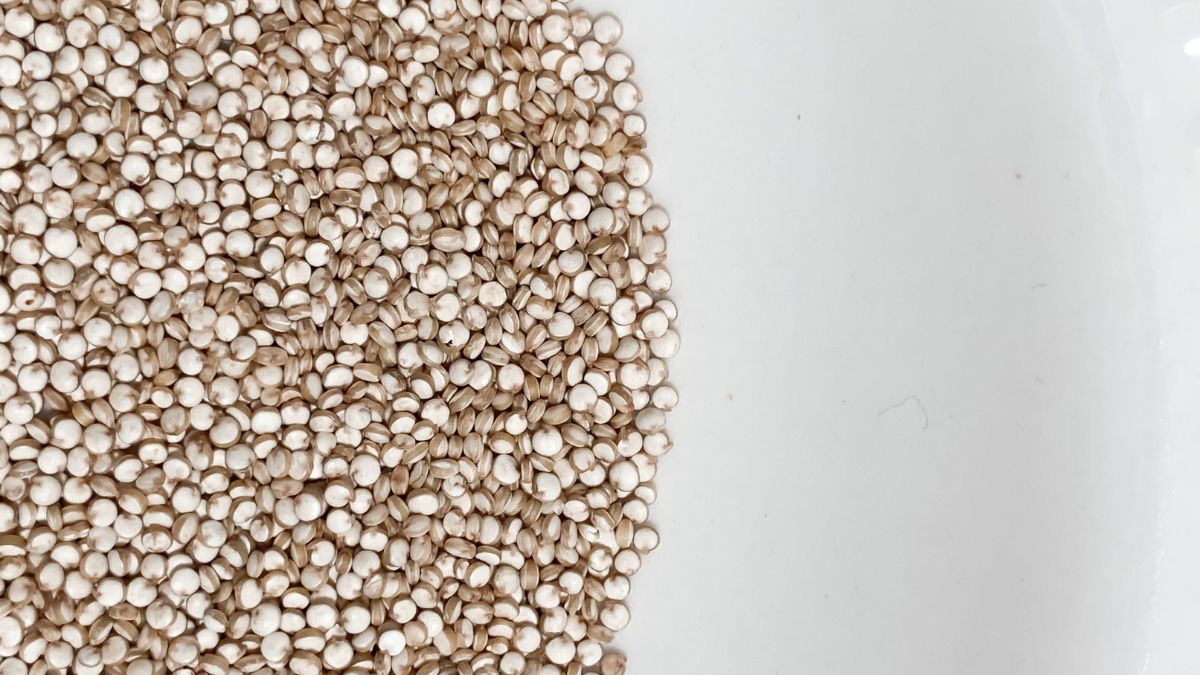
Quinoa is a seed from a plant native to the Andes region of South America, botanically related to spinach and beetroot rather than to true grains like wheat, rice or millet. It’s been cultivated in Peru, Bolivia and Ecuador for thousands of years, and arrived in mainstream global nutrition consciousness relatively recently — driven, in part, by a combination of genuine nutritional properties and significant marketing momentum. It’s naturally gluten-free, cooks like a grain, and has a mild, slightly nutty flavour.
The most honest thing this piece can say in quinoa’s favour: it’s a complete protein. That means it contains all nine essential amino acids in meaningful amounts, which is unusual for a plant-based food. For vegetarian and vegan households specifically, that’s a genuine, meaningful nutritional property rather than a marketing-invented one. It’s also naturally gluten-free, has a reasonable fibre content, and cooks relatively quickly in formats most Indian kitchens can adapt without major adjustment.
| ⓘ What Quinoa Actually Has Going for It Complete protein: contains all nine essential amino acids — unusual for a plant food, genuinely useful for vegetarian diets Naturally gluten-free: a real property, not a marketing claim Reasonable fibre: directional whole-grain range, though no IFCT-verified figure is quoted here Mild flavour: adaptable to Indian cooking contexts (upma-style, pulao-style, with dal), NOT categorically higher in fibre than Indian whole grains |
The fibre comparison is where quinoa’s reputation outruns the data most. Bajra carries about 11.49g of fibre per 100g, ragi about 11.18g, and jowar about 10.22g (IFCT 2017) — all well-verified, commonly eaten Indian grains. Whole wheat atta sits at about 11.36g. Quinoa’s fibre content, while reasonable, doesn’t dramatically exceed this range; claims that quinoa is especially high in fibre relative to Indian whole grains don’t survive a comparison with the actual figures for millets. The protein advantage is real; the fibre superiority is not.
Millets like ragi, bajra and jowar have been cultivated and eaten on the Indian subcontinent for centuries, in preparation styles that are already embedded in Indian culinary tradition — roti, bhakri, dosa, kanji, mudde. They don’t require learning a new cooking technique or substituting a foreign grain into an Indian kitchen. They’re available in most Indian markets and grocery stores, often far more affordably than imported quinoa. And they carry fibre in a range directly comparable to quinoa, with each millet having its own micronutrient character. The question ‘should I switch from millets to quinoa for gut health?’ has a fairly clear answer: probably not.
If the complete-protein advantage matters specifically to your household — a strictly vegan diet, for instance, where getting all essential amino acids from plant sources requires some intentional attention — quinoa earns its place genuinely. If it’s already something your household enjoys, it’s a nutritious food with no reason to be removed. And if the gluten-free aspect matters independently of the protein consideration, both quinoa and millets are valid choices — the difference is that millets are considerably more affordable and already part of Indian culinary tradition.
Is quinoa actually better than Indian grains? On protein completeness, yes, in a specific and genuine way. On fibre, broadly no — Indian millets compete with it directly on the numbers that matter. On availability, cost and culinary embeddedness, no — it’s an imported food with a marketing halo that’s somewhat bigger than the nutritional story justifies. Knowing what it genuinely offers, rather than what the ‘superfood’ label implies, is exactly the kind of food knowledge this series is built around.
Quinoa typically costs considerably more than Indian millets in most Indian markets — largely because it’s imported, partly because of its premium-grain positioning. This isn’t a reason to avoid it if you genuinely like it and can afford it, but it does undercut the idea that it’s a necessary addition to a balanced Indian diet. A household that’s already eating regular millet rotation and whole grains isn’t missing a nutritional gap that quinoa fills at the price it commands.
If this piece has made you curious about Indian millets specifically — what ragi, bajra and jowar actually offer, how they compare to each other, and how to start including them — this series covers all of that: Millets, Explained is the buyer’s overview; Ragi: What This Everyday Millet Really Does for You goes deeper on the most versatile of the three; and Jowar, Bajra and Ragi: India’s Big Three does the side-by-side comparison of the millets you might actually want to cook with first.
Disclaimer: This article is for general informational purposes only — not medical or dietary advice.
On complete protein, quinoa has a genuine advantage. On fibre, it doesn't clearly outperform Indian millets like bajra, ragi and jowar, which sit in a broadly comparable whole-grain fibre range.
Quinoa has a reasonable fibre content, but it isn't notably higher in fibre than Indian whole grains like bajra (~11.49g/100g) or ragi (~11.18g/100g) — the comparison tends to flatter quinoa more than the full picture warrants.
Partly because it genuinely is a complete protein — which is unusual for a plant food — and partly because of significant marketing. Its fibre isn't exceptional compared to Indian millets.
For fibre and general whole-grain nutrition, yes — millets like ragi, bajra and jowar are broadly nutritionally comparable, more affordable, and already embedded in Indian culinary tradition. For the complete-protein advantage specifically, no direct millet equivalent exists at the same level.
This series doesn't make weight-loss claims for any grain. Quinoa is a nutritious whole food, but it doesn't have special weight-loss properties beyond what any reasonably high-protein, high-fibre whole food provides.
Quinoa cooks like a grain and can be used in upma-style or pulao-style preparations, or as a rice substitute alongside dal. Its mild flavour adapts reasonably well to Indian spice profiles.
For the complete-protein advantage, possibly — especially in vegan diets. For general whole-grain fibre and nutrition, Indian millets offer comparable value at significantly lower cost.
Not for nutritional reasons — millets compete with quinoa on fibre and are cheaper, more available and already embedded in Indian cooking traditions.