Jowar for Gut Health: What This Millet Can (and Can’t) Do
A fibre-rich grain with a long Indian history, minus the hype.
Table of Contents
Jowar, also called sorghum, is a grain grouped with millets in India. In its whole-grain form, it can contribute fibre to a varied diet. That makes it a useful food, rather than a treatment for digestive problems or a guaranteed way to change your gut bacteria.
The Indian Food Composition Tables 2017 lists 10.22g of dietary fibre per 100g raw jowar. The same database lists 11.36g for wholewheat atta and 2.76g for refined wheat flour, or maida. These are raw ingredient values, not the fibre in 100g cooked roti, and they do not describe every packaged flour or millet blend.
Jowar and wholewheat atta are comparable on fibre. Choose jowar for variety, taste and the meals you enjoy, rather than expecting it to outperform wheat. Bhakri, jolada rotti, porridge and blended rotis are ways to include it.
Different fibres have different effects: some help stool hold water, some add bulk, and some are fermented by gut bacteria. A fibre figure alone does not establish that jowar lowers cholesterol, controls blood sugar or improves the microbiome.
Start with a small portion and increase gradually over several weeks if comfortable. Drink enough fluids, and keep dal or another protein source and vegetables alongside. There is no need to replace every grain overnight.
Check ingredient and nutrition labels on packaged foods. A wheat and millet blend is different from pure jowar flour. Follow prescribed dietary restrictions, and seek medical advice for persistent bloating, pain, bowel changes or other worrying symptoms rather than changing grains.
Now, a reality check on the hype. Jowar has been in Indian kitchens for generations, made into bhakri in Maharashtra and jolada rotti in Karnataka. It does not need a makeover. It needs an honest description.
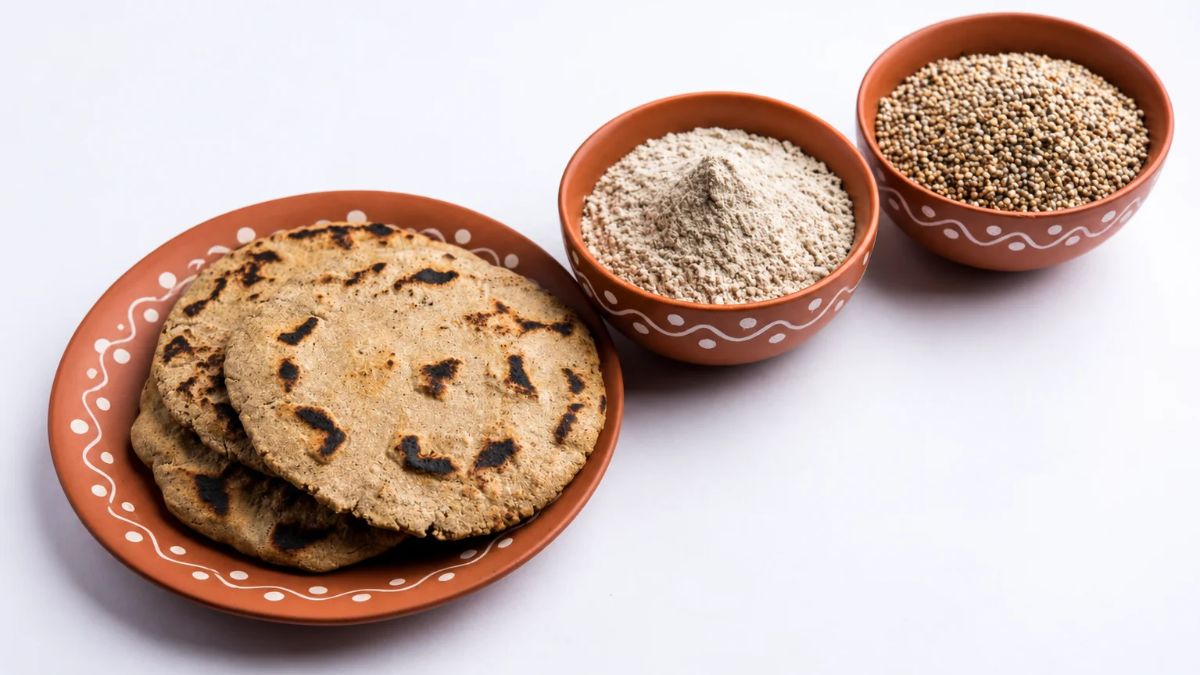
Jowar is sorghum, a cereal grain commonly grouped with millets in India. You can cook the grain or use its flour in rotis, porridge and other dishes. Wholegrain jowar retains the grain’s bran and germ; the amount of fibre in a finished food also depends on processing and the other ingredients.
That last detail matters. Pure jowar flour, a wheat-and-millet blend and a packaged jowar snack are different foods, even when the same grain appears on the front of the pack.
The Indian Food Composition Tables 2017, published by ICMR-NIN, gives these dietary fibre values:
| Food | Dietary fibre per 100g raw edible portion |
| Jowar grain | 10.22g |
| Wholewheat atta | 11.36g |
| Refined wheat flour, or maida | 2.76g |
Jowar and wholewheat atta are comparable on fibre in this database. Jowar is a way to vary your grains, not a way to beat wheat. Both contain substantially more fibre than the refined wheat flour listed here.
In kitchen terms, using 60g of whole-grain jowar flour for rotis would contribute an estimated 6g of fibre, calculated from the raw-grain value. This is an illustration, not a tested value for every flour or a standard two-roti serving. Roti size, the flour used and any blending change the calculation; use the pack’s nutrition information when available.
For context, WHO recommends at least 25g of naturally occurring dietary fibre daily for adults. Individual needs and medical restrictions vary. The useful aim is a varied diet you tolerate, rather than asking one grain to meet the entire target.
Different fibres behave differently. Some help stool hold water, some add bulk, and some are fermented by gut bacteria. Fibre can also contribute to fullness, though effects vary with the food, portion and person. NHS guidance on starchy foods explains the role of wholegrain fibre in bowel health.
These general benefits do not establish that jowar has the same effects as every other fibre-rich food. Its fibre number alone cannot tell you that a jowar roti will lower cholesterol, control blood sugar or relieve constipation.
There is human research on sorghum and gut microbes. A small eight-week trial published in 2023 studied a specific extruded sorghum preparation in men with overweight who were following an energy-restricted diet. It reported changes in some bacterial groups, but no significant changes in overall microbial diversity or measured short-chain fatty acids.
That is a reason to keep studying sorghum, not a promise about an ordinary bhakri. A processed preparation of one variety, in a small, specific study population, does not establish the same effect for everyone eating jowar at home. Enjoy it as a nutritious grain without expecting it to ‘increase your good bacteria’ on demand.
A bhakri made from wholegrain jowar flour is different from a packaged snack that carries ‘jowar’ somewhere in its ingredients list. The snack may also contain refined flour, oil, sugar or salt. The millet name does not describe the whole product.
Read the full ingredient list and nutrition panel. Look for clear information about the type of flour and, where stated, the proportion of jowar. Its place in the ingredient list is useful context, but does not establish whole-grain content or overall nutritional quality by itself.
A blend can still be a practical choice. It simply needs to be understood as a blend, with its own ingredients and nutrition values.
ICMR-NIN’s 2024 dietary guidelines recommend that at least half of cereals and other grains be whole grains or minimally polished grains. Jowar can be one of them, alongside other grains you enjoy.
Indian cooking already knows what to do with it:
One packaged option is Aashirvaad Atta with Millets, which the brand describes as a wholewheat-and-millet blend containing jowar. The pure-jowar fibre figures above do not describe this product. Check the current pack’s ingredients, nutrition and allergen information; it contains wheat.
ICMR-NIN’s daily plate model gives roughly half the plate to vegetables, fruit, leafy greens, roots and tubers. It is an across-the-day guide, rather than a requirement to put every food group on every dinner plate. Keep a sabzi and dal, or another protein source, beside your jowar rotis.
If your recent diet has been light on fibre, switching every roti to jowar overnight may leave you bloated. NIDDK recommends adding fibre gradually and drinking enough liquids to help it work better. Follow any fluid restriction prescribed for a medical condition.
Start with a small portion in one meal, then increase over the coming weeks if comfortable. A porridge, well-cooked grain dish or blended roti may be a convenient first attempt. None is guaranteed to be easier on everyone’s stomach.
You may hear that ‘millets are hard to digest’. That is too sweeping to apply to everyone. Preparation, portion and the individual matter, and some people do find particular millets uncomfortable.
If symptoms keep returning, note what you ate, roughly how much and when symptoms appeared. A short diary can help a clinician or dietitian look for patterns. It cannot prove that one food is the cause, and simply changing grains will not address every reason for bloating. NIDDK’s guidance on gas supports individual adjustments rather than blanket assumptions.
One caution: a high-fibre diet is not suitable for every medical situation. Bowel narrowing and certain post-surgical diets may require less fibre. Follow your clinician’s dietary advice if that applies to you.
Try a small jowar or blended-flour roti with your usual dal and sabzi. There is no need to turn every meal into a millet project.
If you enjoy it and feel comfortable, repeat it. If you do not, there are other whole grains. Variety is the point; enduring discomfort is not a nutritional achievement.
Seek medical advice for bloating, constipation, diarrhoea or other symptoms that persist, worsen or keep returning. Difficulty swallowing, unexplained weight loss or repeated vomiting needs prompt assessment.
Seek urgent care for blood in the stool, black tarry stools, severe or constant abdominal pain, vomiting blood, or a swollen abdomen with an inability to pass stool or gas. NHS bloating guidance and NIDDK’s gastrointestinal bleeding guidance explain relevant warning signs.
This article provides general information for adults and is not a substitute for individual medical advice, diagnosis or treatment. Nutrient values are database averages; packaged products and prepared dishes may differ. If you have a medical condition, food allergy or prescribed dietary restriction, consult your doctor or qualified dietitian before making substantial changes. Children, pregnant or breastfeeding people, and older adults may need tailored advice. Seek medical assessment for persistent symptoms or the warning signs described above.
Wholegrain jowar can contribute fibre to a varied diet. That supports its place as an everyday food, but does not make it a treatment for digestive problems or guarantee a particular microbiome change.
IFCT 2017 lists 10.22g per 100g raw jowar grain. The fibre in a cooked serving depends on how much grain or flour it contains, the processing and any other ingredients.
On the IFCT fibre figures, jowar and wholewheat atta are comparable. Choose between them, or use both, according to taste, availability, tolerance and dietary advice. Neither needs to replace every other grain.
Try a small serving of a well-cooked dish or a blended-flour roti. Increase gradually if comfortable and drink enough fluids, following any medical restrictions.
It can fit into daily meals if you enjoy and tolerate it. There is no requirement to eat it daily, and variety across grains and other food groups still matters.
Some people experience gas or bloating after eating it, especially following a sudden fibre increase. Others tolerate it well. Preparation and portion matter; persistent symptoms deserve assessment rather than guesswork.