What Is a Light Dinner? An Indian Guide for Post-Monsoon Evenings
Smaller isn’t the whole story. A light dinner still needs to be a proper meal.
Table of Contents
A light dinner is a balanced evening meal in a portion that suits your appetite and your day. It has no fixed medical definition, and it does not have to mean a tiny plate, toast or a bowl of soup.
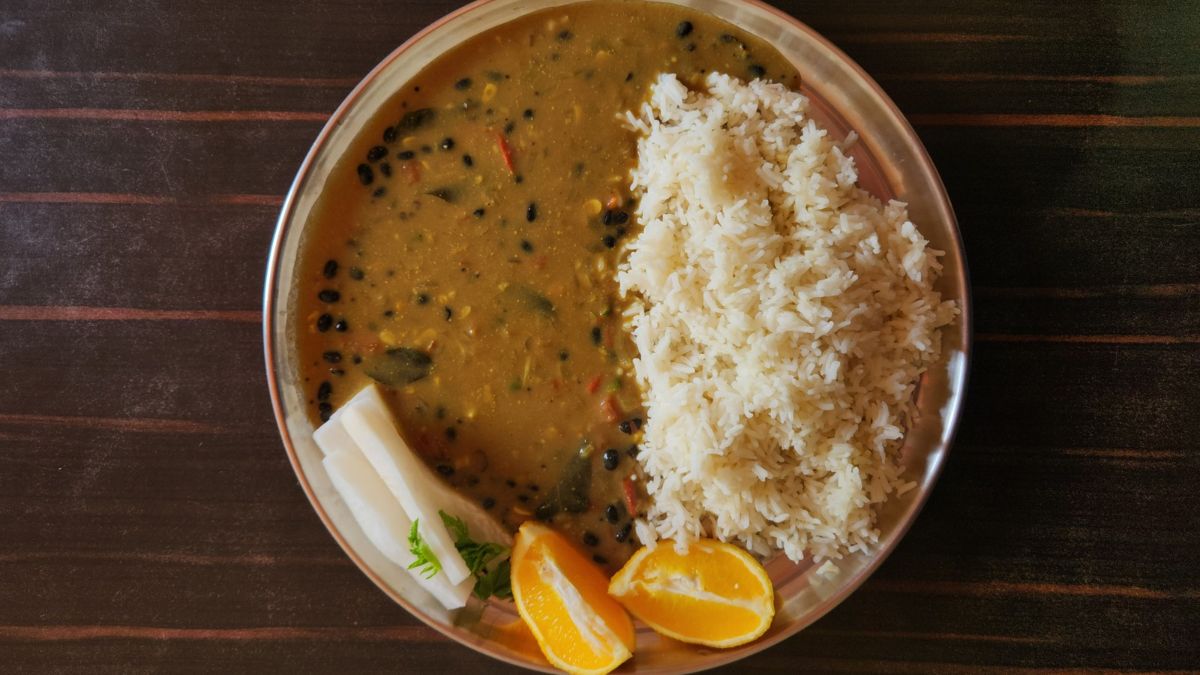
For an Indian dinner, start with roti or rice, add dal, beans, eggs, fish, chicken or another protein source, and include vegetables. Plain curd can fit if you tolerate dairy. Adjust the amount to your needs rather than following somebody else’s two roti rule. Your daily nutrition needs do not disappear in the evening.
What often makes dinner feel heavy is the combination: a large portion, fried sides, a rich gravy, dessert and a sugary drink. You do not need to remove all fat or carbohydrate. Choose a meal that leaves you comfortably satisfied and notice which foods cause symptoms for you.
Rice is fine at night. Brown rice contains more fibre, but white rice can also belong in a balanced meal. Soup can work as dinner when it contains enough nourishment; a thin broth alone may not meet your needs.
If you get acid reflux, smaller meals and finishing dinner three to four hours before bed are practical starting points. Avoid your own triggers rather than banning every spicy food.
After the monsoon, food storage deserves attention too. Refrigerate leftovers promptly and reheat safely. Persistent reflux, difficulty swallowing, unexplained weight loss or blood in the stool needs medical assessment. Start with one balanced plate, without turning dinner into punishment.
Picture the day that pushes dinner the other way: a long, sticky evening, tea with pakoras at five, then a rich curry, extra rice and a second helping of dessert at nine. Nobody needs a lecture after that. What helps is knowing what to change tomorrow, without swinging to a dinner of soup and guilt.
The first myth to retire is that a light dinner must be small and sparse. Here, ‘light’ means a balanced meal in a comfortable portion, with less reliance on rich gravies, fried sides and sugary extras. It is not a prescribed calorie count.
The introduction to ICMR-NIN’s Dietary Guidelines for Indians 2024 describes drawing nutrition from at least eight food groups across the day. Your daily nutrition needs do not disappear in the evening.
A plate of rice, dal and vegetables can provide more variety than toast with a cup of thin broth. ICMR-NIN’s daily plate model places vegetables, fruit, leafy greens, roots and tubers across roughly half the plate. It also discusses combining cereals and pulses at about 3:1 to improve protein quality. That ratio belongs to ingredient-based meal planning; it is not a rule to serve three spoonfuls of cooked rice for every spoonful of watery dal. Dal with rice or roti is the familiar practical pairing.
Portion is where the personal part comes in. Needs vary with age, body size, activity, health and what you have eaten earlier. Someone returning from a strenuous shift may need a different dinner from someone who has already eaten a substantial evening meal. There is no universal rule that dinner must be the smallest meal of the day.
A plate can look ordinary and still be rich. Add fried starters, a generous spoon of ghee or butter, a creamy gravy, fried papad, a sweet and a sugary drink, and the meal changes character quickly. This is not an argument against ghee or festive food. It is about proportion.
For adults, WHO advises limiting total fat to 30% or less of daily energy, with an emphasis on replacing saturated and trans fats with unsaturated fats. It recommends keeping free sugars below 10% of daily energy; reducing them below 5% may offer further benefits. On a 2,000 kcal diet, 5% is about 25g. Free sugars include added sugar, as well as sugars in honey, syrups and fruit juice.
ICMR-NIN separately gives a sugar limit of 25–30g in its example daily plate. These are whole-day reference points, not dinner allowances or individual prescriptions.
In practice, a vegetable cooked with a modest amount of oil next to dal and rice is a comfortable weeknight dinner. The same vegetable swimming in oil, served with fried sides and a rich dessert, is a different meal. The issue is never how Indian the cooking is. It is what the whole plate adds up to.
Tolerance matters too. Smaller meals and fewer greasy foods may help some people with bloating, but there is no universal list of foods everyone must avoid. Persistent bloating deserves attention rather than an ever-shrinking menu.
‘Acidity’ is an everyday label, not a precise diagnosis. The burning feeling in the chest that people often mean is heartburn, a symptom of acid reflux, when stomach contents travel back towards the throat. A sour taste can accompany it, and symptoms may worsen after eating or lying down.
Coffee, tomatoes, chocolate, alcohol, and fatty or spicy foods are recognised triggers for some people. Identify your own triggers rather than dropping all of them automatically. Pregnancy, excess body weight, smoking and stress can also contribute.
A smaller dinner, finished three to four hours before bed, is a practical starting point if you are prone to reflux. Stay upright after eating. For night-time symptoms, raising the head end of the bed by about 10–20cm may help; piling up extra pillows is not the same adjustment. These measures follow NHS guidance on heartburn and acid reflux.
A lighter, earlier meal can help with symptoms, but it is not a guaranteed treatment. Get medical advice if reflux happens most days, keeps returning or does not improve with simple measures.
India does not move neatly from one season to the next. Humidity, residual rain and cooler evenings arrive in different combinations depending on where you live. Regional produce differs too. There is no single ‘post-monsoon diet’ everyone needs to follow.
What does apply everywhere is food safety. Warm conditions allow microorganisms to multiply in food, and an unreliable fridge or a power cut can interrupt safe storage. Think of the dal cooked at lunch that sat on the counter through a muggy afternoon.
The WHO’s Five Keys to Safer Food gives straightforward guidance:
Rice deserves an extra reminder. NHS guidance advises cooling leftover rice quickly, refrigerating it within one hour, using it within 24 hours and reheating it only once. Reheating will not remove toxins that may have formed during unsafe storage. Yesterday’s rice can be useful; a night on the counter is the problem.
The most common mistake in chasing a ‘light’ dinner is removing so much that the meal no longer satisfies you. A clear soup can be pleasant, but if you are hungry again soon afterwards, it may need company.
Protein can come from dal, beans, curd, paneer, eggs, fish or chicken, depending on what you eat. Curd is optional: include it if you tolerate dairy, rather than forcing it into every dinner.
Rice is the most unfairly judged dinner food. A serving with dal, lauki or parwal and perhaps some fish or paneer is very different from a much larger meal with fried sides and dessert.
The Indian Food Composition Tables 2017 lists 4.43g dietary fibre per 100g raw brown rice, compared with 2.81g per 100g raw milled rice. These are uncooked ingredient values, not the fibre in 100g cooked rice. Brown rice offers more fibre, but white rice can still fit into a varied meal. The portion and accompaniments matter too.
The same applies to roti. Rotis made with Aashirvaad Namma Chakki 100% Khapli Atta are one option if that is the flour you prefer; regular whole-wheat atta also fits this everyday meal. Keep dal and vegetables alongside, rather than expecting a particular flour to make dinner balanced on its own.
Your daily food does not need a special label. Your plate just needs balance.
These are starting points, not fixed portions. Adjust the quantities to your appetite and needs.
If your evening snack already amounted to a meal, you may want less at dinner. Let appetite and your needs guide the adjustment, rather than making a rule to skip it.
Build one dinner around a protein source, a vegetable and a portion of roti or rice that suits you. Eat without rushing, and notice whether you finish comfortably satisfied.
If evening discomfort keeps returning, a simple food-and-symptom record may help a clinician identify patterns. One uncomfortable night does not prove that rice, roti or any other single food is the culprit.
Seek medical advice for reflux most days, persistent bloating or symptoms that keep returning. Difficulty swallowing, unexplained weight loss, repeated vomiting, blood in the stool or black, tarry stools need prompt assessment. Severe or sudden abdominal pain or vomiting blood requires urgent care.
Do not assume new chest pain is ‘acidity’. Seek emergency help for sudden chest discomfort that does not settle, particularly with sweating, breathlessness or pain spreading to the arm or jaw. NHS guidance on chest pain explains why these symptoms need immediate attention.
This article provides general information for adults and is not a substitute for individual medical advice, diagnosis or treatment. Portion sizes and dietary needs vary with age, activity, health and other circumstances. If you have a medical condition or a prescribed diet, consult your doctor or qualified dietitian before making substantial changes. Persistent symptoms and the warning signs described above require medical assessment.
A balanced evening meal in a portion suited to your needs, with a protein source, vegetables and enough nourishment to leave you satisfied. ‘Light’ has no fixed medical definition or universal calorie target.
Dal, roti or rice and a seasonal sabzi is a practical starting point. Vegetable khichdi, or egg bhurji with rotis and vegetables, can work too. Include curd if you tolerate it.
Yes. Rice can be part of a balanced dinner. Choose a suitable portion and include dal or another protein source and vegetables; there is no need to avoid rice simply because it is evening.
It depends on the soup and the portion. A substantial soup containing lentils, beans, chicken or tofu, plus vegetables and a source of carbohydrate, may make a meal. A thin broth alone may provide too little nourishment.
For people with reflux, NHS guidance recommends avoiding food in the three to four hours before bed. There is no single dinner time that suits everyone’s schedule or medical needs.
No particular seasonal diet is required for everyone. Focus on balanced meals and safe food handling. Follow individual dietary advice if you have an illness or a medical condition.