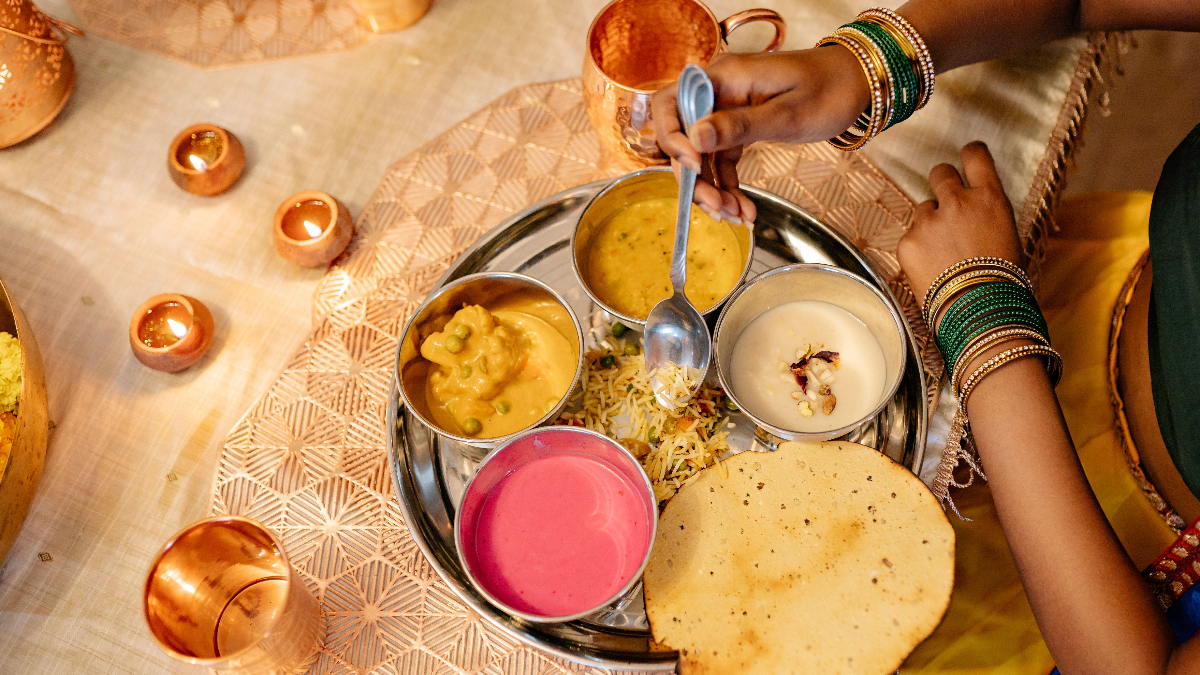
‘Bas Thoda Sa Aur’: How to Avoid Festive Overeating
How hosts and guests can keep the warmth of Indian hospitality while respecting a simple ‘I’m full’.
Table of Contents
Festive overeating often begins with a familiar offer-and-refusal ritual: the guest says no, the host lovingly insists, and a genuine ‘I’m full’ sounds like polite hesitation. Hosts can keep the warmth of mehmaannawazi by serving modest first portions, accepting a clear refusal and offering food to take home. Guests can praise the food, choose what they genuinely want and stop at comfortable fullness. Before several visits, eat normally rather than skipping meals to ‘save room’. True generosity gives guests the freedom to choose, enjoy their food and stop when they have had enough.
The idea of treating guests with exceptional care appears in many Indian hospitality traditions. In Hindu contexts, ‘atithi devo bhava’ is a well-known expression of this ideal, found in the Taittiriya Upanishad; ‘mehmaannawazi’ is an Urdu term for hospitality. In many households, feeding a guest generously can feel close to an obligation, and a guest leaving hungry can feel like a small failure on the host’s part.
That warmth is not the problem. The problem begins only when care is measured by how much another person eats. A host can serve abundantly, share a family speciality and make a guest feel cherished while still letting the guest decide when they have had enough.
Many people who grew up in Indian households will recognise the choreography. The host offers. The guest declines out of politeness. The host insists because, in some families, accepting too quickly may be read as eagerness while taking the first no literally may feel stingy. The guest relents. More food arrives.
As a social ritual, it can be charming. As communication, it has one obvious flaw: a ceremonial refusal and a real refusal sound almost identical. ‘No, really, I couldn’t’ may mean ‘please ask once more’, or it may mean ‘I am genuinely full’. If the host assumes the first meaning every time, the guest loses the practical ability to say no.
Even the plate is an unreliable messenger. In some households an empty plate attracts another serving; in others it simply means the guest has finished. Clear words are kinder than asking people to leave food behind or expecting them to know a local signal.
‘Bas thoda sa aur lijiye’ is only one version of the invitation. Similar offers appear across Indian languages and regions, although the exact words, politeness level and meaning vary from one family to another. What travels most reliably is the sentiment: take a little more, because feeding you is how I show care.
The useful change is not to retire that sentence. It is to let the answer count. If a guest sounds uncertain, one gentle check can honour the ritual. A clear refusal needs no follow-up; continuing after it turns affection into pressure, even when the intention is entirely loving.
For many people, an occasional extra helping is simply a comfort issue. The festive season changes the arithmetic. Diwali visits, wedding functions and puja invitations can place mithai, namkeen and a full meal close together, sometimes ending with a rich dinner late at night.
Large meals and eating quickly can contribute to temporary bloating. Rich or fatty foods may also worsen indigestion in some people. For people prone to reflux, large or heavy meals close to bedtime may increase symptoms, particularly if they lie down soon afterwards. Occasional discomfort after a heavy meal is often short-lived, but severe, persistent or recurrent symptoms need medical attention.
None of this requires turning a celebration into a nutrition lecture. It simply makes respecting a guest’s stopping point part of good hosting rather than an exception to it.
For take-home portions, use clean, food-safe containers. Refrigerate perishable food within two hours, or within one hour if the temperature is above 32°C. Count the time on the table and in transit together; a takeaway box does not restart the clock. If guests have several stops ahead, offer to keep it refrigerated for collection later.
If it is hard to tell appetite from social autopilot, read Trust Your Gut: Are You Actually Hungry, Or Just Eating on Autopilot?
Refusing a neighbour’s third helping is one thing. Refusing your grandmother, an aunt or a mother-in-law can feel considerably harder, because the insistence carries years of affection and sometimes a quiet question: did you like what I made?
The answer can still be warm and firm. Praise the specific dish. Ask how it was made. Say plainly that you are full. Ask for some to take home if you want it. Appreciation does not have to be proved by physical discomfort.
Children deserve the same respect. Responsive feeding means adults offer age-appropriate foods and a supportive setting, while the child decides whether and how much to eat. Avoid turning sweets or extra servings into a test of love, gratitude or obedience. A child’s ‘no, thank you’ is a useful boundary, not bad manners.
A guest may decline food because of diabetes, an allergy, medication, pregnancy-related nausea, a digestive condition, religious practice or a personal boundary. Hosts do not need to know the reason to respect the answer.
When a guest has a food allergy, not pressing food is only the first step. Ingredients and allergen cross-contact, such as an allergen transferring through shared utensils or serving dishes, also matter. Ask before the gathering what the guest needs, and be honest about what your kitchen can safely provide.
Mehmaannawazi does not need to become smaller. Only the assumption that a full plate measures a good host needs retiring. Offer generously, believe people when they are full, and send the rest home if they want it. Give your guests the warmth to remember, without the pressure of one last gulab jamun.
Disclaimer: This article provides general food and hosting information, not individual medical advice. Cultural practices, appetite and health needs vary. If digestive symptoms are severe, persistent or recurrent, speak to a qualified healthcare professional. If you have a diagnosed condition, food allergy or prescribed diet, follow the guidance of your own healthcare professional.
No. Customs vary, and some households may read a bare refusal differently, but guests are still entitled to decline. Appreciation along with a clear answer — ‘It was delicious, but I’m full now’ — usually communicates both warmth and a boundary.
Do not skip meals to ‘save room’. Keep your usual eating pattern, take small portions, pause before accepting more and choose the foods you genuinely want. Drink water as you normally would, ask to take food home if you want it and stop when you are comfortably full.
There is no universal number. Offer warmly, check once if the guest seems unsure and accept a clear refusal straight away. The important part is letting the guest’s answer count.
Eating quickly, large meals and rich or fatty foods can contribute to bloating or indigestion. Eating close to bedtime may worsen reflux. Constipation, food intolerance and other digestive conditions can also cause bloating. Seek medical advice if symptoms are severe, persistent or recurrent.
There is no need to skip meals to ‘save room’. Arriving extremely hungry can make comfortable choices harder. Keep your usual eating pattern where possible, or have a normal, satisfying meal or snack before a long evening of visits.