Can You Eat Roti and Rice Together? How to Balance the Meal
Rice and roti are both carbohydrate-rich staples, but that doesn’t automatically make eating them together unbalanced. Portion size — and everything else on the plate — matters more.
Table of Contents
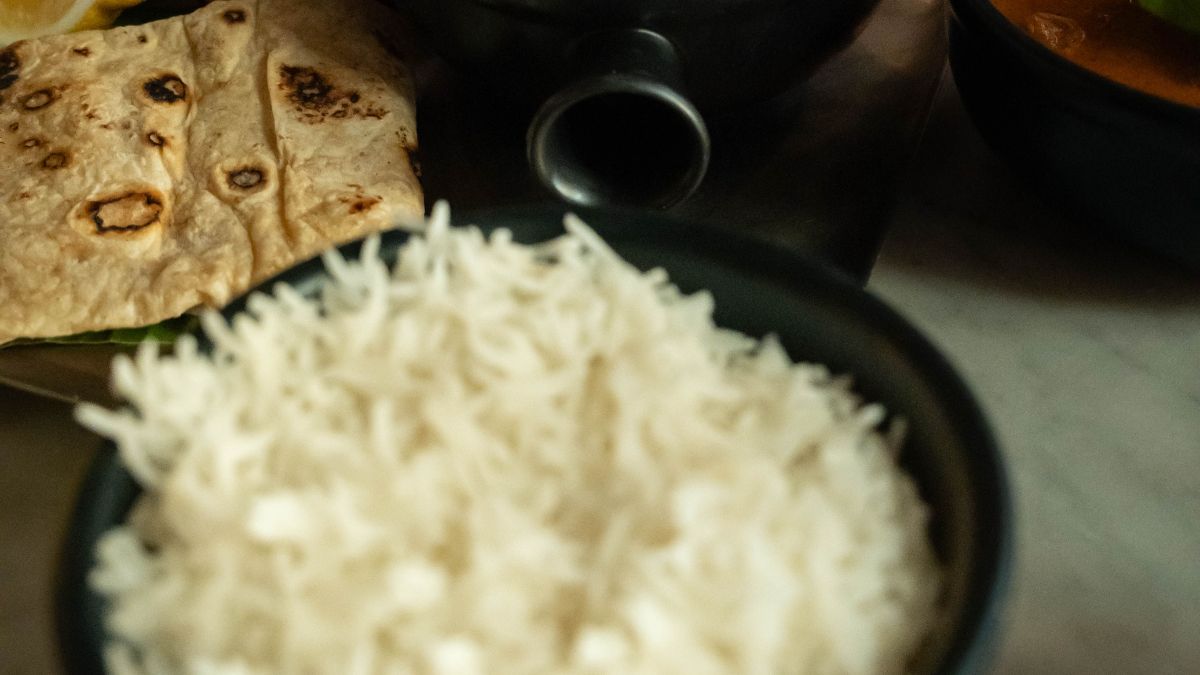
Walk into homes across India at lunchtime, and you will notice something interesting. In many households, the meal begins with roti and sabzi before moving on to rice and dal. In several others, rotis take centre stage while rice appears only in a small portion. Along the coastal belt, rice may dominate the plate, while in many northern and western states, rotis are the everyday staple. Then there are families who happily serve both together, with no debate at all.
Despite this long-standing culinary tradition, one question has started to surface in conversations around healthy eating: Can you eat roti and rice in the same meal?
The concern usually comes from the fact that both foods are sources of carbohydrates. As a result, some people automatically assume that combining them creates an unbalanced or excessively carb-heavy meal.
In reality, nutrition is rarely that simple. Whether a meal is balanced depends on the total quantity and quality of carbohydrate, portion sizes, what accompanies the grains, and an individual’s overall diet — not simply on whether two carbohydrate-containing foods happen to appear on the same plate.
ALSO READ | Is Khapli a Millet or Wheat? Emmer and Dicoccum Explained
This is particularly relevant when one of those staples is made using Aashirvaad Namma Chakki 100% Khapli Atta, which is made entirely from Khapli wheat. The useful way to look at Khapli roti is the same way we should look at any staple grain: in the context of the entire meal rather than as a solo nutritional presence. Aashirvaad states that its Khapli atta is made entirely from Khapli wheat and uses its Chakki Jaisi Pisai process.
Quick answer: Can you eat Khapli roti and rice together?
Yes. There is no nutritional rule that says rice and roti cannot appear in the same meal. Both contribute carbohydrate, so what matters is the combined portion and what else is on the plate. A smaller serving of rice with one or two rotis, dal or another protein food, vegetables and curd can be quite different from eating several rotis alongside a large mound of rice with little else.
Serving both rice and roti together has existed across Indian food traditions for generations.
A Gujarati thali may include rotli or phulka as well as rice. Many Maharashtrian and Karnataka meals move comfortably between bhakri or chapati and rice depending on the dishes being served. Punjabi family meals frequently offer roti alongside sabzi, with rice appearing later with dal or rajma. In many Bengali households, rice dominates lunch while roti is more common at dinner — but there is no universal household rule.
These combinations did not evolve because anybody was consciously trying to “double up” on carbohydrates. They developed because different staples work differently with different foods.
A soft Khapli roti works beautifully with a dry sabzi or thick curry. Rice absorbs dal, sambar and thinner gravies and makes mixing flavours effortless. Put both on the same table and you get variety in texture, flavour and the way the meal is eaten.
That is a culinary reason, not a nutritional problem.
Khapli wheat, also known as emmer wheat, is an older cultivated type of wheat with a long history in India. Aashirvaad Namma Chakki 100% Khapli Atta is made entirely from Khapli wheat sourced from farmers in Karnataka and Maharashtra.
Because it is a whole-wheat atta rather than refined flour, it retains the grain components that would otherwise be removed during refining. Its mildly nutty flavour and different dough character also make it useful for everyday rotis, phulkas and other homemade breads.
But it is important not to turn that into a miracle-grain story.
Khapli atta remains one component of the meal rather than the sole determinant of its nutritional quality. Current Happy Tummy product information, for example, lists the fibre content of Aashirvaad’s Khapli atta as broadly comparable with its regular whole-wheat atta comparison, while its protein content is higher.
So if your plate is mostly grain with hardly any vegetables or protein, choosing Khapli does not magically rebalance it.
Yes — but that is not the same as saying they should never be eaten together.
Carbohydrates are one of the body’s main sources of energy, and they occur in many foods: grains, pulses, fruits, vegetables and dairy all contribute carbohydrates in different forms and quantities.
WHO’s current healthy-diet guidance says that, for most people, carbohydrates can provide a significant share of total dietary energy, with the emphasis placed on quality: whole grains, vegetables, fruits and pulses should be the primary sources.
So the useful question isn’t: “Does this meal contain two carbohydrate foods?”
It is: “How much grain am I eating altogether, and what else is on the plate?”
Consider two meals.
Meal one: several large rotis, multiple servings of rice and a small portion of sabzi.
Meal two: one or two normal-sized Khapli rotis, a modest serving of rice, dal, seasonal vegetables, salad and a bowl of plain curd.
Both contain roti and rice. But the second meal contains a much wider mix of grain, pulses, vegetables and dairy, while the grain portions themselves are more moderate. That difference matters considerably more than counting how many carbohydrate-containing foods are present.
Not automatically.
What can happen, however, is very simple: when two staples are available, the total grain portion can quietly become larger.
If you normally eat two rotis and then add a full serving of rice without reducing anything else, you have increased the amount of food and carbohydrate in that meal. That is quite different from dividing the grain portion you would normally eat between a roti and a little rice.
ALSO READ | A High-Protein Khapli Weekly Meal Plan: 7 Easy Indian Menus
Think of the two staples as sharing space rather than each demanding its own full-sized serving.
If you want both, you might have one or two rotis and a smaller portion of rice rather than your usual full portion of each. There is no universal number because needs differ with body size, activity, appetite, health and everything else eaten during the day.
This is portion awareness, not food restriction.
Instead of using a rigid half-quarter-quarter formula, it is more useful to borrow the broader principle from the ICMR-NIN dietary plate: grains are one part of the diet, not the entire plate.
Its illustrative 2,000-kcal pattern includes cereals and millets alongside a substantial amount of vegetables, pulses/eggs/flesh foods, milk or curd, fruit, nuts and seeds. It is an example rather than a prescription for every individual, but its logic is useful here.
So if rice and roti are both present, build around them.
A meal could look something like this:
Khapli roti + a modest serving of rice + dal or rajma/chana + a generous vegetable preparation + curd + salad or another vegetable side.
If you eat eggs, fish, chicken or another animal protein, that can occupy the protein part of the meal instead.
The idea isn’t to count the grains obsessively. It is to make sure they haven’t crowded everything else off the plate.
For most healthy people, there is no compelling reason to turn the sequence into another food rule.
Some households naturally eat roti first and rice later because that order suits the dishes on the table. Others do exactly the reverse. If you enjoy both, the more useful things to notice are how large the combined portion becomes, what accompanies it and whether you are comfortably full.
There is no prize for timing the first spoonful of rice correctly.
Not really.
This is another either-or question that doesn’t need to be one.
Khapli roti and rice are different staple foods with different textures, nutritional profiles and culinary uses. Rice itself is also not one uniform product: polished white rice, parboiled rice, brown rice and different traditional rice varieties do not have identical nutritional profiles.
Khapli atta is a whole-wheat flour, while highly polished white rice has had more of the outer grain layers removed. But that still doesn’t make a Khapli roti automatically “good” in unlimited quantities or rice automatically “bad”.
WHO’s guidance is useful precisely because it shifts the conversation away from demonising carbohydrate and towards carbohydrate quality, dietary variety and the overall pattern of eating.
If you enjoy Aashirvaad Namma Chakki 100% Khapli Atta and rice in the same meal, keep the approach simple:
Yes.
There is no reason rice and Khapli roti cannot share the same meal simply because both contain carbohydrates.
Current WHO guidance continues to recognise whole grains, vegetables, fruits and pulses as valuable carbohydrate sources within a healthy diet, while ICMR-NIN’s Indian dietary pattern places cereals and millets alongside vegetables, pulses and other food groups rather than eliminating grains.
For many people, the most useful strategy is therefore not choosing rice or roti, but adjusting the combined grain portion and making sure the rest of the meal brings vegetables and a meaningful protein source.
And in India, meals have never been only about nutrient arithmetic.
There is emotion and nostalgia interwoven with them. Perhaps your grandmother always served rice after everyone had finished their rotis. Maybe Sunday lunch never felt complete without the choice of both phulkas and pulao. Those customs survive because meals create satisfaction, continuity and connection around a shared table.
Balanced eating does not require abandoning traditions that have fed families for generations. Sometimes it simply means letting both staples stay — without letting either one take over the entire plate.
Yes. There is no general nutritional rule prohibiting the two together. Both contribute carbohydrate, so portion size and what accompanies them matter more than the fact that they appear on the same plate.
Not necessarily. It can become a higher-carbohydrate meal if you eat your usual full portion of rice and your usual full portion of rotis together. A smaller serving of each, alongside vegetables and protein-rich foods, is a different proposition.
There is no universal serving that suits everyone. If you want both, a practical approach is to let them share the grain portion — for example, reducing your usual rice serving when you also have roti, rather than simply adding one staple on top of the other.
Neither is automatically “better”. Khapli atta is a whole-wheat flour, while the nutritional profile of rice varies considerably according to the type and degree of polishing. The overall meal and your individual needs matter more than declaring one staple universally superior.
For most healthy people, there is no established need to eat them in a particular order. Choose the sequence that suits the meal and your household’s way of eating.
Add vegetables and a meaningful protein source such as dal, beans, paneer, curd, eggs, fish or meat. The aim is to prevent the two grain staples from occupying almost the entire meal.
Aashirvaad Namma Chakki 100% Khapli Atta is made entirely from Khapli wheat using the brand’s Chakki Jaisi Pisai process, which it states retains the grain’s bran and germ.
There is no one answer for everybody. The combined carbohydrate quantity, type of rice, size and number of rotis, other foods in the meal, medicines and individual glucose response can all matter. If you are managing diabetes or another condition requiring carbohydrate planning, follow the meal plan advised by your doctor or dietitian rather than relying on a general serving rule.
This article provides general food and nutrition information and is not a substitute for personalised medical or dietary advice.