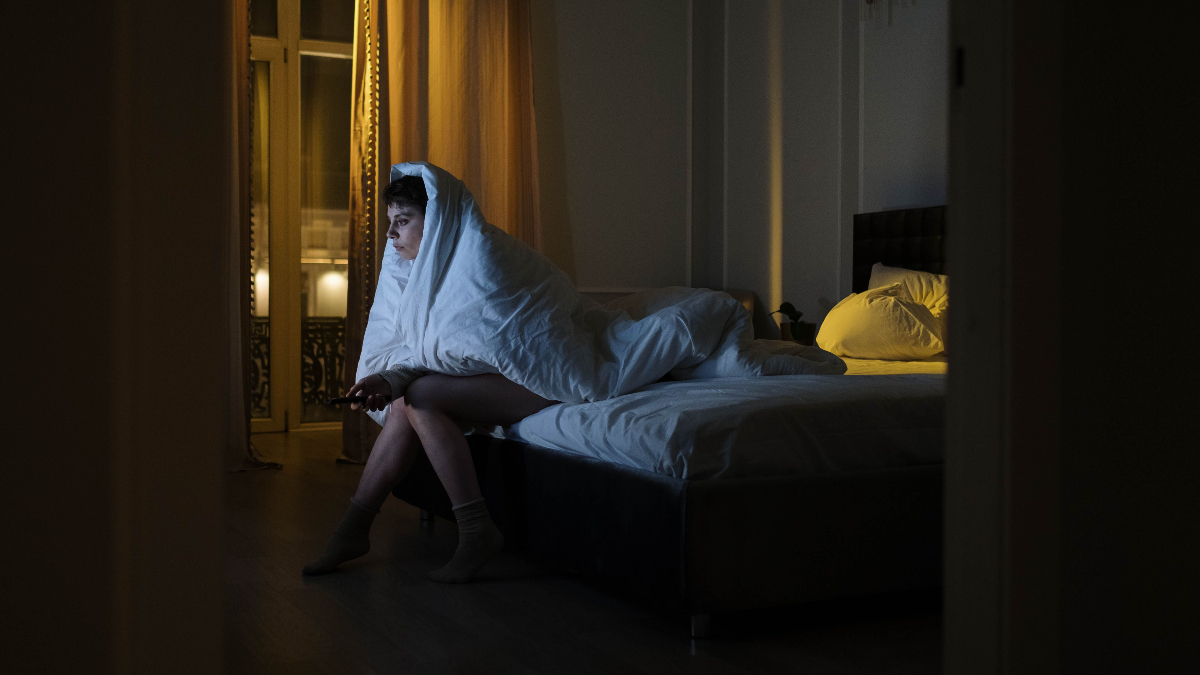
Can Food Give You Nightmares?
This Halloween, the scariest thing in the house might be the cheese platter. What the science actually says about late dinners, dairy, spicy food and bad dreams, and how to sleep a little more peacefully.
Table of Contents
It can play a part, though not quite the way folklore suggests. No food has been shown to put a monster in your dreams. But what and when you eat can disturb your sleep: a heavy late dinner, night-time acidity, or a stomach that doesn’t agree with dairy can leave you uncomfortable or awake. A 2025 survey of more than 1,000 students found a link between nightmare severity and lactose intolerance. It did not prove that dairy causes nightmares. Your gut may be part of the story.
It’s an old suspicion, and cheese has always been the prime suspect. In Charles Dickens’s A Christmas Carol (1843), Scrooge tries to dismiss the ghost of Marley as a case of indigestion: “You may be an undigested bit of beef, a blot of mustard, a crumb of cheese, a fragment of an underdone potato.” Six decades later, an American newspaper comic strip called Dream of the Rarebit Fiend built its entire premise on people having bizarre dreams after eating Welsh rarebit, which is essentially cheese on toast.
The belief has stuck. When dream researchers surveyed nearly 400 students in 2015, about 18% said food or eating late affected their dreams, and dairy was the most blamed food, named in roughly four in ten of the food reports. Spicy food was mostly blamed for disturbing dreams, and sweets for bizarre ones. Of course, believing it isn’t the same as proving it. So what happened when researchers looked again?
In 2025, the same research team surveyed 1,082 university students about their sleep, dreams and eating habits. About a third reported regular nightmares. Around 40% said particular foods either helped or worsened their sleep; roughly a quarter said foods made it worse. Sweets, spicy food and dairy were again the usual suspects. Interestingly, only 5.5% thought food or eating late affected their dreams: more people reported effects on sleep than on dream content. Women were more likely than men to report nightmares and poor sleep, and nearly twice as likely to report food intolerances or allergies.
The striking finding was about lactose intolerance. Nightmare severity was associated with self-reported lactose intolerance and food allergies, and lactose intolerance was also linked to stomach symptoms and poorer sleep. “Nightmare severity is robustly associated with lactose intolerance and other food allergies,” the lead researcher, Dr Tore Nielsen, said. The researchers’ explanation is decidedly unspooky: dairy can cause gas and tummy pain overnight in people who don’t digest lactose well, and that discomfort may affect both sleep and dreams.
The caveats matter. This was a survey of one group of students, it shows an association rather than cause and effect, and the link could run either way: poor sleep can change how people eat, too. The researchers themselves say experiments are needed. But it does point to a plausible route from your plate to your dreams.
Your gut has its own network of nerves and is in two-way contact with your brain, so a troubled stomach doesn’t stay a private matter at night. There are a few possible routes.
Discomfort: if your body doesn’t digest lactose well, dairy can cause bloating, wind and tummy cramps, which are hardly a recipe for deep sleep.
Acidity: lying down soon after a big meal can make acid reflux worse, which is why the NHS advises not eating within three or four hours of bed. A burning chest at 2am is hardly restful.
Spicy food: research has not established that spicy food causes nightmares. One small 1992 experiment in six healthy young men found that a spicy evening meal disturbed sleep and raised body temperature during the first sleep cycle. That is a clue about sleep, not proof of scary dreams.
Alcohol: it can fragment your sleep and leave you waking earlier, even if it initially makes you feel sleepy.
What ties these together is the possibility of a disrupted night. Waking from a dream can make it easier to remember, but the 2025 survey did not establish that late eating makes people remember more dreams. Which brings us closer to home.
It’s a question plenty of people ask, and the honest answer is: there’s no evidence that Indian food, as a cuisine, causes nightmares. What’s more useful to look at is your particular dinner: was it rich, spicy or very close to bedtime, with a dessert or a glass of milk to finish?
Some Indian dinners include plenty of dairy, too: paneer, raita, kheer, rasmalai, a haldi doodh before sleep. That’s no problem if dairy agrees with you. Lactose content varies between foods, and so does individual tolerance. But if it doesn’t agree with you, the NHS notes that symptoms can start within minutes or a few hours of having lactose, which, for a late dinner, may be right when you’re trying to sleep. Fortunately, what helps is often about the gap between dinner and bed.
Eat earlier. Aim to finish dinner three or four hours before bed, especially if acidity is an issue.
Make lunch the big meal, if that suits your routine. Try keeping the richest, heaviest food for the middle of the day and going lighter at night.
Watch the dairy, if it disagrees with you. If you often feel bloated or crampy after paneer, milk or kheer, it’s worth noticing, and worth a conversation with your doctor.
Move the spice earlier. If fiery food leaves you restless, save it for lunch.
Mind the late chai. Tea, coffee, cola and chocolate contain caffeine, which can keep you awake.
Don’t go to bed hungry, either. If dinner was early and you’re peckish later, a small, light snack may suit you. If you have reflux, follow advice on avoiding food close to bed. A heavy, late plate is more likely to disturb your night.
Go easy at Halloween parties. Alcohol, sweets and a midnight snack in one evening is a classic recipe for a restless night.
These small changes may help if meals are disturbing your sleep. But sometimes bad nights are a sign of something worth checking.
If nightmares are frequent or affecting your sleep and everyday life, speak to a doctor, whatever you’ve been eating. Stress, some medicines and sleep conditions can also be involved. If you suspect lactose intolerance, the NHS advises seeing a doctor or dietitian rather than cutting out dairy on your own. And frequent or persistent acid reflux should be checked by a doctor.
Unexplained weight loss, blood in the stool, or persistent abdominal pain need medical assessment. Difficulty swallowing, black or tarry stools, or bloody diarrhoea need urgent medical advice. If symptoms continue, are severe, or keep coming back, speak to a doctor.
Seek emergency care for sudden severe abdominal pain, vomiting blood, heavy or continuous rectal bleeding, or abdominal pain with black or tarry stools or an inability to pass stool or gas.
This is general information. For children, during pregnancy, or for older adults, follow a doctor’s guidance before making changes.
2. Frontiers. Researcher comments and summary of the 2025 study.
4. Charles Dickens. A Christmas Carol (1843), Stave One. Project Gutenberg.
6. NIDDK. Your Digestive System & How it Works.
7. NHS. Heartburn and acid reflux.
9. NIAAA. Hangovers: disrupted sleep.
10. NHLBI. Healthy Sleep Habits.
11. NHS. Night terrors and nightmares.
12. NHS. Stomach ache: warning signs and emergency advice.
13. NHS. Bleeding from the bottom (rectal bleeding).
Disclaimer: This article is for general information only and is not a substitute for medical advice. If you have frequent nightmares, ongoing sleep problems, acidity or a food intolerance, speak to your doctor.
Food may play an indirect part by disturbing sleep or causing digestive discomfort, but research has not proved that a particular food directly causes nightmares. A 2025 survey linked nightmare severity with lactose intolerance; it could not establish cause and effect.
There is no good evidence that cheese generally causes nightmares. A 2025 survey found a link with lactose intolerance, possibly involving digestive discomfort. That does not mean everyone needs to avoid cheese before bed.
Research has not established that spicy food causes nightmares. A small experiment in six men found disturbed sleep after a spicy evening meal, but did not show that it caused bad dreams. If fiery food leaves you restless, try it earlier.
A late, heavy meal can cause reflux or discomfort that interrupts sleep. That may be part of the picture, but does not prove the meal caused your dream. If reflux is an issue, try finishing dinner three or four hours before bed.
It has been linked with nightmare severity, but not proved to cause nightmares. The 2025 study was a survey of 1,082 students, so it cannot establish whether lactose intolerance causes bad dreams or how the connection works.
There is no evidence that Indian food, as a cuisine, causes nightmares. Look instead at meal timing, size, spice and whether particular ingredients, including dairy, agree with you. Frequent nightmares deserve medical advice, whatever the menu.