



Table of Contents
Bloating is common, but the fix is rarely about cutting out one “bad” food. Here’s what your eating habits, fibre, hydration and gut health have to do with it.
Few things can ruin a perfectly good day faster than bloating. Your clothes fit fine in the morning. By evening, the waistband suddenly feels tighter. Lunch seemed normal, yet your stomach feels oddly stretched, heavy, or uncomfortable. Someone offers dessert and your immediate reaction is: “Yaar, pet mein jagah hi nahi hai.”
The frustrating part is that bloating is incredibly common, but the advice around it is often unhelpful. One person tells you to stop eating wheat. Another blames dairy. Someone on Instagram insists you need a detox. And before you know it, you are eliminating half your diet without ever understanding what caused the problem in the first place.
The truth is far less dramatic. Most bloating is not caused by one “bad” food. It is usually the result of how your digestive system responds to a combination of eating habits, food choices, fibre intake, gut bacteria, hydration, and sometimes individual sensitivities. Once you understand what is happening, bloating often becomes much easier to manage.
What causes bloating after meals?
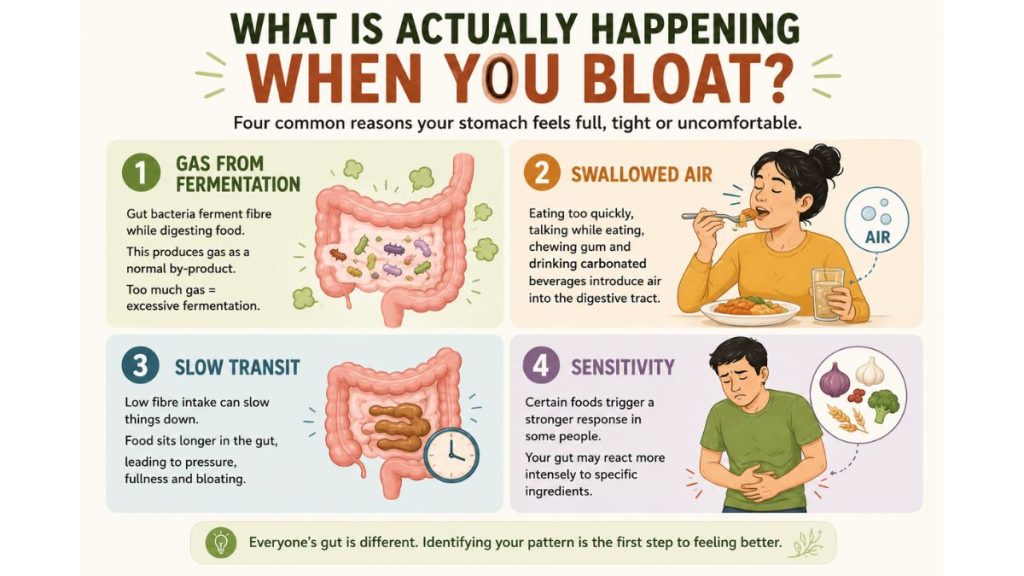
Bloating after meals is most commonly caused by gas produced during digestion, swallowed air from eating too quickly, slow digestive transit due to low fibre intake, or the gut bacteria fermenting certain foods more intensively than usual. Identifying which of these applies to your situation is the first step toward managing it.
What exactly is bloating?
Bloating is not always excess fat or weight gain. It is usually a feeling of fullness, abdominal pressure, tightness, swelling, and trapped gas. Sometimes the stomach visibly expands, and sometimes it simply feels uncomfortable. Bloating is a symptom, not a diagnosis. The goal is figuring out what is causing it.
Biggest myth: “Wheat causes bloating”
Many people assume, “Mujhe bloating hoti hai, toh wheat hi problem hoga.” Sometimes that is true. Often it is not. For most people, bloating is more commonly linked to eating too quickly, overeating, low fibre diets, sudden fibre increases, excessive processed food, poor hydration, or gut sensitivities.
There is an important distinction worth making here. Coeliac disease is a serious autoimmune condition in which the immune system attacks the gut lining in response to gluten. It affects roughly 1% of the population globally and requires a formal medical diagnosis, not a self-diagnosis based on a few uncomfortable meals. Non-coeliac gluten sensitivity is a separate and less well-defined condition; research continues to evolve. The reason this matters: eliminating wheat because you assume it is the cause of bloating, without any investigation, means you may spend months on an unnecessary restriction while the actual cause — eating speed, fibre intake, hydration, gut bacteria — goes unaddressed. If you genuinely suspect a gluten-related condition, the appropriate step is to see a gastroenterologist rather than to self-diagnose.
Foods most commonly associated with bloating
Different people react differently, but common triggers include:
- Highly processed foods: packaged snacks, bakery products, instant foods
- Excessive sugar alcohols: found in sugar-free gum, sugar-free desserts, some protein products, and carbonated beverages
- Very large meals: even healthy foods can contribute to bloating when portions are excessive
- Certain high-FODMAP foods in sensitive individuals: onion, garlic, beans, cauliflower, and certain fruits
These foods are not inherently “bad”. They simply affect digestion differently in different people. The goal is not elimination but understanding your own pattern.
The fibre paradox
Low fibre can contribute to bloating, but suddenly increasing fibre too quickly can also contribute to bloating. Both can be true simultaneously.
A low-fibre diet may lead to sluggish digestion, slower transit time, and irregular bowel movements, all of which can produce feelings of heaviness and bloating. Now imagine eating very little fibre for years and suddenly deciding to add chia seeds, salads, oats, and bran to every meal. The gut bacteria that ferment fibre have more material to work with than they are used to, and they produce more gas during the adjustment period.
The gut microbiome typically adapts to gradual fibre increases over a period of several weeks. Research suggests most people can increase fibre intake by roughly 5g per week without triggering significant additional bloating. The bacteria responsible for fermentation gradually adjust their populations in response to new food inputs. This adaptation period is a reason to add fibre slowly, not a reason to avoid it altogether. The short-term discomfort, when it occurs, is usually temporary and is often a sign the microbiome is adapting.
Why gut bacteria matter
Your digestive system contains trillions of microbes. Many of them feed on fibre. When these bacteria ferment certain fibres, they produce gases as a natural by-product. This is often a sign that fermentation is working — the gut bacteria are doing their job. The key is balance. A healthy gut generally adapts over time to a fibre-rich diet. A poorly adapted gut may react more intensely initially, particularly when fibre intake changes suddenly.
Eating habits matter more than most people realise
Sometimes bloating is not about the food itself. It is about how you eat it.
- Eating too quickly: fast eating means more swallowed air, less thorough chewing, and a heavier digestive load
- Talking constantly while eating: more swallowed air
- Lying down immediately after meals: digestion works better with gravity on its side
- Very large meals: the digestive system simply has more to process
Thorough chewing does two useful things. It reduces food into smaller particles, giving digestive enzymes more surface area to work on and making the whole process more efficient. It also slows the pace of eating, which gives the stomach time to signal fullness before the meal is over. Fast eating regularly produces too much swallowed air and a larger food load than the gut was ready to handle. Slightly more deliberate attention to the pace of eating tends to make a noticeable difference.
Where Khapli enters the conversation
Khapli is not an anti-bloating cure. Anyone claiming otherwise is oversimplifying digestion.
What makes Khapli relevant is that many people find it easier to incorporate into digestion-friendly eating patterns. It offers higher fibre, whole grain integrity, slower digestion characteristics, and a different protein composition from many modern wheat varieties.
Khapli contains gluten. Let’s be absolutely clear about that. It is not suitable for people with coeliac disease or a confirmed wheat allergy. However, because it is an ancient Emmer wheat variety, its gliadin protein composition differs from that of many modern wheat strains. Some people find that meals based on Khapli feel lighter and more comfortable, though individual experiences vary significantly and this does not apply to people with gluten-related conditions.
Foods that may help support better digestion
- Fibre-rich whole grains: Khapli wheat, oats, millets
- Fermented foods: curd, chaas, fermented batters like idli-dosa
- Vegetables: especially when spread throughout the day rather than in one large serving
- Fruits: papaya, kiwi, guava
- Adequate water: fibre works best when hydration keeps pace with intake
A practical Indian meal structure for better digestion
Nothing fancy. Nothing extreme. Meals that support the gut rather than overwhelm it:
Breakfast: vegetable cheela, curd, fruit. Lunch: Khapli rotis or rice, dal, sabzi, salad, protein source if non-vegetarian. Evening: fruit or a small handful of nuts. Dinner: lighter than lunch, with vegetables and a protein source. Water consistently throughout the day.
Where Aashirvaad Chakki Khapli Atta fits in
One practical step in the direction of more digestion-friendly eating is the grain you use for your daily roti. Aashirvaad Chakki Khapli Atta is stone-ground from authentic Khapli wheat — an ancient Emmer variety with a naturally higher fibre content and a different grain structure from heavily refined flour. Because rotis are already part of daily Indian meals, switching to Khapli can be a practical way to improve fibre quality without changing how you eat.
When should you consult a doctor?
Occasional bloating is common and usually manageable through the dietary adjustments described above. Persistent bloating deserves professional attention. Speak to a healthcare professional if bloating is severe, worsening over time, painful, associated with unintended weight loss, accompanied by changes in bowel habits, or linked to ongoing digestive distress. A nutrition article can help identify patterns, but it cannot diagnose medical conditions.
Five things to try this week
- Slow down your meals: even slightly.
- Increase fibre gradually: not overnight.
- Drink enough water: especially if fibre intake is rising.
- Identify personal trigger foods: keep a simple food diary for one week.
- Improve your grain quality: consider switching from heavily refined flour to a whole grain option like Khapli.
FAQs
Why do I feel bloated even when I eat healthy food?
Healthy food and digestion-friendly eating are not always the same thing. Even nutritious foods can contribute to bloating if eaten too quickly, in very large portions, or in combinations the gut finds challenging. High-fibre foods eaten in suddenly large quantities, raw vegetables when the gut is not used to them, or legumes when the microbiome has not adapted to them — all can produce bloating despite being genuinely healthy. How you eat often matters as much as what you eat.
Can low fibre cause bloating?
Yes. A low-fibre diet can slow digestive transit, leaving food sitting in the gut longer than it should. This slower movement can produce a feeling of heaviness and distension that is functionally bloating, even without significant gas production. Gradually increasing fibre intake generally improves this pattern over time.
Why does increasing fibre sometimes make bloating worse initially?
When fibre intake increases, the gut bacteria that ferment it have more material to work with. As their population adjusts and grows, they produce more gas during the transition period. This is a sign of the microbiome adapting, not a sign that fibre is harmful. Gradual increases spread across several weeks generally minimise this effect.
Is bloating after every meal normal?
Mild fullness after a meal is normal. Significant discomfort, visible distension, or bloating that occurs consistently after every meal regardless of what you eat is worth discussing with a healthcare professional. Consistent post-meal bloating can indicate digestive sensitivity, gut motility issues, or other conditions that a nutrition article cannot diagnose.
How long does it take for dietary changes to reduce bloating?
This varies by cause. Habit changes — slowing down, drinking more water, eating smaller portions — can produce noticeable improvement within days. Fibre-related adaptations in the gut microbiome typically take several weeks of consistent change. Underlying sensitivities may require longer investigation and professional guidance.
Can dehydration make bloating worse?
Yes. The large intestine absorbs water from food waste as it passes through. When the body is dehydrated, it absorbs more water than it should, resulting in harder, slower-moving waste. This can produce a feeling of heaviness and abdominal pressure. Adequate hydration — especially when fibre intake is higher — generally supports more comfortable digestion.
Are fermented foods good for bloating?
Fermented foods like curd, chaas, and fermented batters contribute beneficial bacteria to the gut microbiome. A well-populated, diverse microbiome generally handles fermentation more efficiently, producing less gas from the same fibre inputs. For some people, fermented foods initially produce some gas as the gut adjusts. Introducing them gradually tends to produce better outcomes.
Is Khapli wheat gluten-free?
No. Khapli is an ancient variety of Emmer wheat and contains gluten. It is not suitable for people with coeliac disease or a confirmed wheat allergy. As discussed in this article, Khapli’s protein composition differs from that of many modern wheat varieties — some people find it easier to digest — but it is not a gluten-free grain and should not be treated as a substitute for medically required gluten-free products.
Can switching atta help reduce digestive discomfort?
For some people, yes. A switch from heavily refined flour to a whole grain flour with higher fibre — such as Khapli — provides more dietary fibre to support digestive regularity and a healthier gut microbiome. This is not a cure for bloating, and individual responses vary. It is one practical step that may support more comfortable digestion over time.
What is the difference between bloating and water retention?
Bloating is typically caused by gas in the digestive tract — the result of fermentation, swallowed air, or slow digestive transit. It usually appears and resolves over the course of hours and is linked to eating patterns. Water retention is the accumulation of excess fluid in body tissues, often linked to sodium intake, hormonal fluctuations, or underlying health conditions. Both can cause the abdomen to feel or appear larger, but their causes and management differ. Persistent or severe symptoms of either warrant professional assessment.
This article is for general informational and educational purposes. It is not a substitute for medical or dietary advice. If you are experiencing persistent or severe digestive symptoms, please consult a qualified healthcare professional.