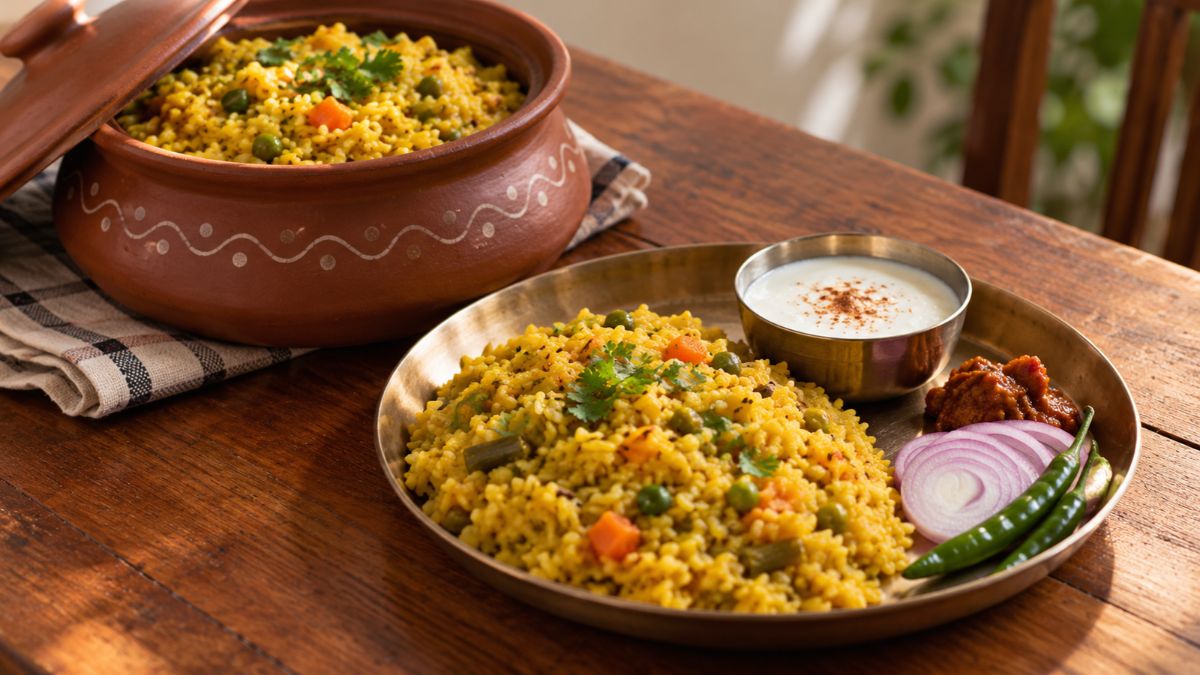
Three One-Pot Meals for Nights When You Have No Patience
Vegetable tehri, savoury masala oats and dalia khichdi: three grains, fewer vessels and a little less to think about at dinner.
Table of Contents
Vegetable tehri, savoury masala oats and vegetable dalia khichdi are one-pot meals for evenings when you want fewer decisions and less washing up. They use rice, oats and broken wheat, so dinner does not have to be the same bowl every night.
They are not all twenty-minute meals. Chopping, heating the cooker, bringing it to pressure and letting pressure fall all count towards the time before eating. Oats need no pressure cooker and are the quickest option here. Tehri needs pressure release; the open-pot dalia version needs a longer simmer. Prepared vegetables can reduce the work, but cannot reduce cooking time.
The nutrition differs too. Tehri combines rice and vegetables, with protein from peas. Masala oats provide grain and vegetables, but a teaspoon of urad dal is not a substantial pulse serving. Add curd, dal, tofu, paneer or another suitable protein alongside either dish. Dalia khichdi already includes moong dal as well as broken wheat and vegetables.
Oats contain beta-glucan, a soluble fibre that gut microbes can ferment. That is a useful feature, not proof that one bowl will change your microbiome. Frozen vegetables are a practical option; their nutrient content can compare well with fresh produce, depending on the vegetable and storage.
Curd adds protein if dairy suits you; live cultures depend on how it was made and processed. Follow your cooker’s instructions and never force it open. Cool leftover rice quickly, ideally within an hour, refrigerate and eat within twenty-four hours. Increase fibre gradually and drink enough fluid.
Most weeknight cooking advice quietly assumes an hour and a reasonable mood. The nights this piece is about have neither. You have one vessel you are willing to wash and a strong preference for not thinking.
That rules out a long onion-browning base and several dishes competing for the stove. What it leaves is the one-pot meal, which Indian kitchens arrived at long ago: khichdi, tehri, pongal and plenty of regional variations.
A one-pot meal is not nutritionally superior to a varied thali. But on a tired evening, the choice may be something you can assemble at home or something ordered in. Delivery meals vary too; the useful thing about these recipes is that they make a vegetable-containing dinner easier to put together.
They ask for limited hands-on work, rather than promising that every bowl will be ready in twenty minutes. Pressure build-up and release count as cooking time. So does chopping.
Use a 240 ml measuring cup, a 5 ml teaspoon and a 15 ml tablespoon for the recipes below. Servings are approximate; appetite and accompaniments matter.
Serves: approximately 3, with a protein accompaniment.
One-pot rice with vegetables from the North Indian repertoire. Peas bring some protein, but this remains a rice-and-vegetable dish. A bowl of dal, curd or another protein alongside makes it a fuller dinner.
This method is for a 5-litre conventional stovetop pressure cooker operating at about 15 psi. Follow your model’s liquid, filling and operating instructions; electric cookers need their own settings.
Rice variety and vegetable moisture affect the result. The water quantity above suits this basmati version; other rice types may need adjustment. Do not force the cooker open or use a shorter pressure-release method to meet a dinner deadline.
Serves: approximately 2, with a protein accompaniment.
The quickest option here, and the one most likely to be met with suspicion. Oats cooked upma-style make a useful savoury dinner. They will be softer than rava upma, which is part of the dish rather than a mistake.
Oats contain beta-glucan, a soluble fibre that can be fermented by gut microbes. Research on oat beta-glucan includes laboratory evidence of fermentation and production of short-chain fatty acids. That is a useful property, rather than proof that this dinner will produce a particular microbiome change.
Rolled oats generally retain more texture than finer quick or instant oats. Water and cooking time still matter. Variety across grains is the point; oats do not need to replace rice or wheat.
Serves: approximately 3.
Broken wheat, moong dal and vegetables cooked together into a soft khichdi. This one already combines a grain, a pulse and vegetables: substantial enough for an ordinary weeknight, with spices adjusted to suit you.
This version needs more simmering time than the oats. If you prefer pressure cooking, use a dalia-and-dal method approved for your particular cooker; allowable foods, filling limits and timings differ between models.
Fresh and frozen vegetables are both useful. A study comparing vitamins in eight fruits and vegetables found frozen produce often comparable to fresh, although results varied by nutrient and food. That supports keeping frozen vegetables in the rotation, rather than declaring either form always superior.
The accompaniments do different jobs:
No single bowl automatically supplies everything you need. Portions and variety across the day still matter. The appeal of this format is that it leaves some attention for the small things that make dinner enjoyable.
Cool leftover tehri quickly in small portions, ideally within an hour, then refrigerate and eat within 24 hours. Reheat only once, until steaming hot throughout. Do not leave rice cooling in the closed cooker. These are the Food Standards Agency’s rice-handling precautions.
Refrigerate leftover oats or dalia promptly in shallow containers and eat within 2–3 days. Reheat thoroughly, stirring for even heating. Follow safe leftover-handling guidance; reheating does not make improperly stored food safe.
This article provides general cooking and nutrition information, not individual medical advice. Increase fibre gradually and drink adequate fluid; follow any prescribed dietary or fluid restriction. Dalia contains wheat, and accompaniments may contain dairy, soy or other allergens. Check labels and choose ingredients that suit you. Follow your cooker’s instructions and safe food-storage practices. Seek medical advice for digestive symptoms that persist, are severe or keep returning.
Not reliably from the first chop to serving. Oats are the quickest here. Pressure-cooker tehri needs heating and pressure-release time, and open-pot dalia needs a longer simmer. Prepared ingredients reduce hands-on work, rather than guaranteeing a fixed total time.
Not inherently. Nutrient retention varies by vegetable, processing and storage, and frozen produce can compare well with fresh. Choose what you will use, keep it stored correctly and follow its cooking instructions.
Yes. Use a heavy-based saucepan and an ordinary lid. Water needs and cooking time change because more moisture escapes; follow the rice pack or a tested open-pot tehri recipe rather than transferring the pressure-cooker ratio unchanged. Oats and the dalia method above already use ordinary pans.
Masala oats and oats upma are modern adaptations using familiar Indian tempering and vegetables. Oats do not have to be eaten as sweet porridge.
Rolled oats usually hold more texture. Quick and instant varieties soften faster and may need less cooking time or water. They are usable, but will not give the same result without adjustment.
It depends on the ingredients and portion. Dalia khichdi includes wheat, moong dal and vegetables. Tehri and masala oats benefit from a more substantial protein addition. Keep variety across your other meals too.