How to Increase Fibre in an Indian Diet: A Practical Guide
It is one of the most common pieces of dietary advice given in Indian consulting rooms, and one of the least specific. Here is how to turn it into something you can actually cook.
Table of Contents
If you have been told to eat more fibre, the useful first step is not to buy a supplement or overhaul every meal at once. Find out whether your doctor means a general increase or a specific therapeutic target, then look at where the gap can be filled using foods you already eat: dals and whole pulses, whole grains, vegetables, fruits, nuts and seeds.
Increase fibre gradually rather than jumping from a low intake to a very high one overnight, and make sure your fluid intake remains adequate as you do. Some digestive conditions require a particular type of fibre, or even temporarily less fibre, so specific medical or dietary instructions always take precedence over general advice.
Read this if you have been told to eat more fibre and left the appointment without knowing how much, or from what; you want to know where fibre already exists in the food you cook; or you have tried adding fibre before and felt worse rather than better.
This is not the article for you if you have been given a specific therapeutic diet — a low-fibre diet, a low-FODMAP diet, or restrictions after surgery or during a flare-up of a bowel condition. Those instructions are tailored to you and they override anything general written here. Follow them.
ALSO READ | Is Khapli Atta Gluten-Free? Here’s What the Evidence Says
If a doctor has told you to eat more fibre, the useful next step is not to buy anything. It is to work out three things: roughly how much fibre you are getting now, what sort of increase you have actually been asked to make, and where that gap is going to come from. Almost nobody is given all three at the appointment, which is why the advice so often ends in a tin of something expensive and a fortnight of good intentions.
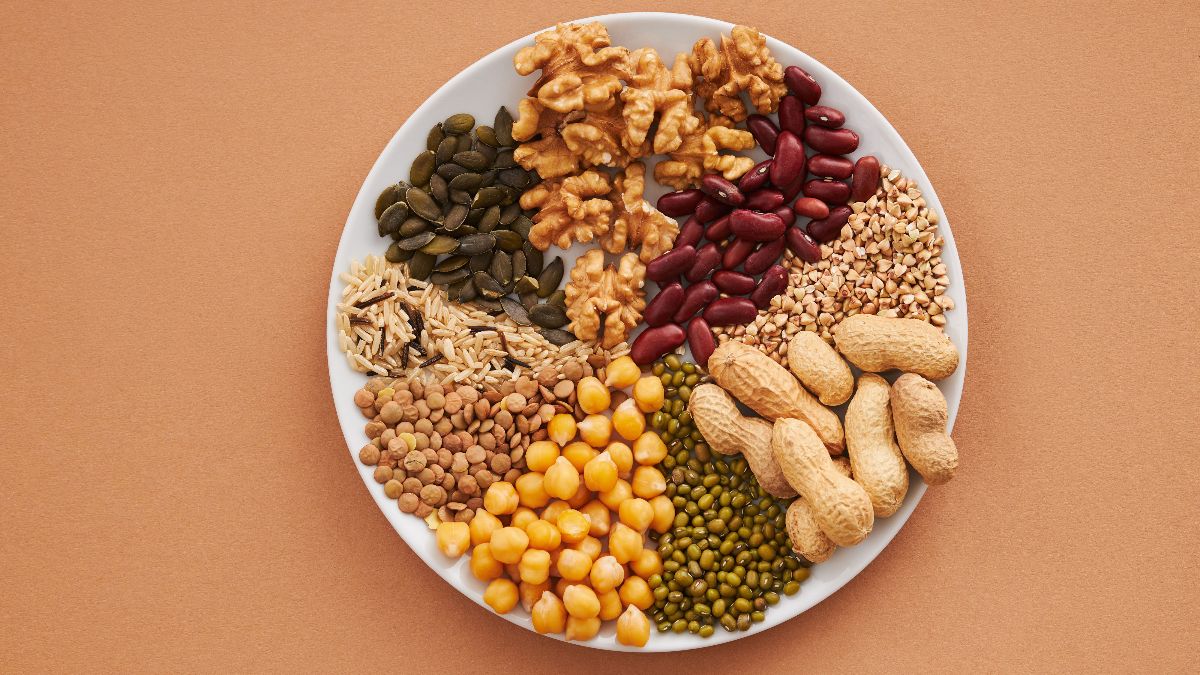
The good news is that an Indian kitchen is already unusually well set up for this. Many of the fibre-rich foods in the Indian Food Composition Tables are not imported superfoods. They are chana, rajma, moong, til, flaxseed and whole grains that households already cook with.
The work is mostly rearrangement, not acquisition.
Before changing anything substantially, it is worth a phone call or a message to whoever gave you the advice.
What is my target? “More” is not a quantity. Ask whether the intention is simply to bring a low intake upwards or whether there is a specific target for your situation.
Is there any type of fibre I should be careful with? This matters more than people realise. Some conditions respond differently to different fibres, while others may call for an overall reduction at least temporarily. A general “eat more fibre” article cannot know which applies to you, and neither can the internet.
Your doctor knows why the advice was given. This article is about the how, not the why — and the how is where most people get stuck.
Dietary fibre refers broadly to carbohydrates in plant foods that are not digested in the small intestine in the same way as ordinary starches and sugars. They pass into the large intestine largely intact or only partly broken down, where different fibres behave in different ways.
That plural matters. Fibre is not one substance, and the kind you add can sometimes matter just as much as the total amount.
Soluble fibre includes fibres that dissolve or disperse in water; some form viscous gels and some are readily fermented by gut microbes. Foods containing useful soluble fibres include oats, pulses, fruit and psyllium.
Insoluble fibre does not dissolve in water in the same way and can contribute bulk to stool. Wheat bran, whole grains, nuts and many vegetable components contain substantial insoluble fibre.
Most whole foods contain mixtures rather than belonging perfectly to one category.
EXPERT LENS | Fibre Is More Complicated Than ‘Soluble’ and ‘Insoluble’
Solubility is a useful first distinction, but nutrition science also considers properties such as viscosity, fermentability and water-holding capacity. Two fibres classed as soluble may therefore behave quite differently once eaten. One may form a viscous gel, another may be readily fermented by colonic microbes, while a less fermentable fibre may contribute more to stool bulk.
That is one reason dietary variety is more useful than trying to obtain all your fibre from one “high-fibre” ingredient.
There is no single fibre number that fits every adult in every circumstance.
Indian guidance has commonly used around 40g per day for a 2,000-kcal diet as a general population reference point, while individual needs can vary with energy intake and activity. WHO recommends that everyone over the age of ten aim for at least 25g of naturally occurring dietary fibre a day.
If your doctor has specifically told you to increase fibre, therefore, do not assume that “40g” is automatically your prescription. Ask what target makes sense for the reason you were given the advice.
ALSO READ | The Questions People Ask Me Most About Atta, Answered Honestly
A roughly 40g day is nevertheless perfectly possible using ordinary Indian food. Whole-grain rotis, a substantial serving of dal or another pulse, vegetables, fruit and something like roasted chana or seeds can collectively take you a long way towards it, depending on portions.
That is not a specialist diet. It is mostly familiar food, eaten deliberately.
Before reading this table, one warning: these are per-100g composition figures, not suggested serving sizes. For grains and dals in particular, the values generally refer to the dry food. A katori of cooked dal is not 100g of dry dal.
| Food | Dietary fibre (g/100g) | Where it might fit |
|---|---|---|
| Flaxseed (alsi) | 26.17 | A spoonful in chutney or dough |
| Bengal gram, whole (kala chana) | 25.22 | Chaat, sundal, curry |
| Green gram, whole (sabut moong) | 17.04 | Whole-moong curry, usal, khichdi |
| Rajma | 16.6–17.7 | Rajma, salads, mixed-pulse dishes |
| Sesame (til) | ~17 | Chutney, laddoo, tempering |
| Chana dal | 15.15 | Dal, chilla, mixed dishes |
| Urad dal | 11.93 | Dal, idli and dosa batter |
| Bajra | 11.49 | Rotla, khichdi |
| Aashirvaad Namma Chakki 100% Khapli Atta* | 11.4 | Roti, paratha |
| Whole-wheat atta | 11.36 | Roti, paratha |
| Ragi | 11.18 | Roti, porridge |
| Masoor dal | 10.43 | Everyday dal |
| Groundnut | 10.38 | Snack, chutney |
| Jowar | 10.22 | Bhakri, roti |
| Toor dal | 9.06 | Everyday dal |
| Guava, white flesh | 8.59 | Whole fruit |
| Amla | 7.75 | Fresh, chutney or other preparations |
| Brown rice | 4.43 | Rice meals |
| White milled rice | 2.81 | Rice meals |
| Maida | 2.76 | Refined-flour foods |
*Product-specific figure supplied in the brand’s quality documentation. Other values are from the Indian Food Composition Tables 2017.
Notice what the table does not tell you. One hundred grams of flaxseed is not a sensible everyday serving, while 100g of dry dal becomes several cooked portions. The figures are best used for understanding where fibre is concentrated and comparing similar foods rather than building meals directly from the numbers.
There is also a useful comparison near the bottom and middle of the table. Whole-wheat atta and this particular Khapli atta are effectively level on total fibre. Both contain far more than refined maida.
EXPERT LENS | Fibre Quantity and Fibre Type Are Different Questions
Two flours can contain similar amounts of total dietary fibre while differing somewhat in the individual fibre compounds they contain. Those differences can be scientifically interesting, but the figures available here do not establish that Khapli has a clinically superior fibre profile to ordinary whole-wheat atta.
The verified comparison is simpler: Aashirvaad Namma Chakki 100% Khapli Atta reports 11.4g fibre per 100g, while ICMR-NIN lists whole-wheat atta at 11.36g and maida at 2.76g per 100g.
In practical terms, the large fibre shift occurs when a refined flour is replaced by a whole-grain one, not when one whole-wheat flour is treated as nutritionally magical compared with another.
Four Swaps That Do Most of the Arithmetic
If you change nothing else, these four can move the number meaningfully without requiring a new cuisine.
Whole-wheat atta and the Khapli atta measured here contain roughly 11.36g and 11.4g fibre per 100g, respectively — for practical purposes, the same. Either has around four times the fibre of maida.
Three rotis made with approximately 30g flour each from an atta containing around 11.4g fibre per 100g would contribute roughly 10g of fibre. That is a meaningful amount from one part of the meal, before the dal or vegetables have entered the calculation.
There is no need to make Khapli nutritionally superior to regular whole-wheat atta to make the case for it. If you enjoy its flavour or want another whole-grain wheat in rotation, that is reason enough.
ALSO READ | 5 Questions to Ask Before You Believe a Nutrition Claim Online
Brown rice contains more fibre per 100g than white milled rice. That is a real difference, but not necessarily the largest lever in the meal.
What goes beside the rice often matters more. A rice meal with rajma, chana, dal or plenty of vegetables may make a much larger contribution to the day’s fibre than changing the rice alone.
The grain matters. The plate matters more.
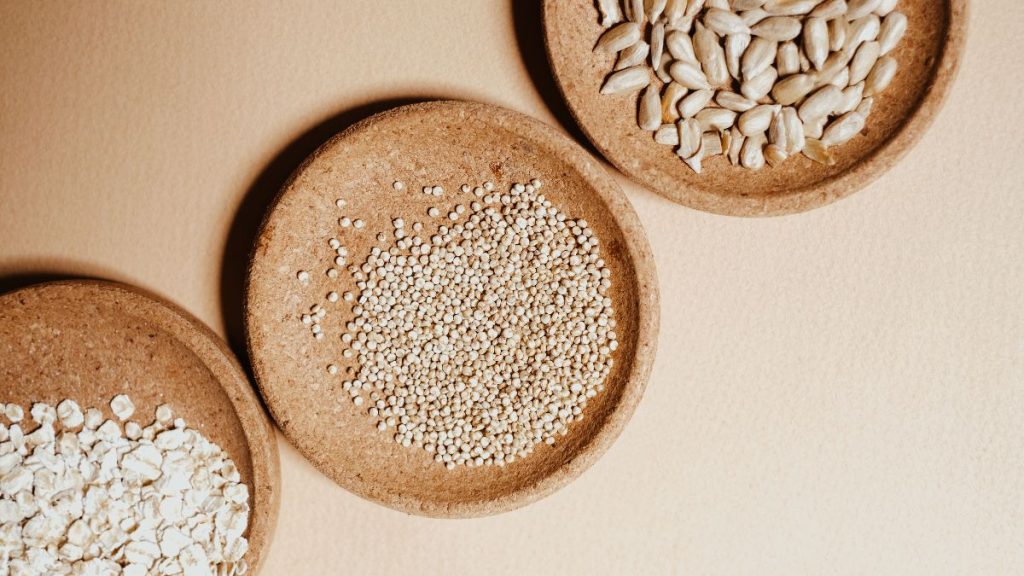
Roasted chana, boiled chana or sundal, peanuts and seeds are all familiar foods that can contribute useful fibre without needing to masquerade as health food.
If your regular snack is mostly refined flour, replacing it occasionally with roasted chana or another pulse-based option is one of the simplest ways to move some fibre into the day.
Whole fruit retains the fibre-rich structure that juicing usually removes or greatly reduces. Juice still contains the fruit’s sugars, and WHO classifies sugars naturally present in fruit juice as free sugars.
A guava, for example, is a remarkably fibre-rich fruit by ordinary Indian standards.
Leaving edible skins on fruits and vegetables can also preserve some additional fibre where the skin is normally safe and pleasant to eat, although the amount differs substantially between foods.
This is the part that gets skipped, and it is one reason people sometimes try to eat much more fibre, feel bloated and windy, and conclude that fibre does not agree with them.
The British Dietetic Association specifically advises increasing fibre gradually to reduce the likelihood of gas and bloating and give the gut time to adjust.
Going from relatively little fibre to a very high intake over a weekend is an excellent way to make the experiment unpleasant.
Add one change. Give it time. Then add another.
As fibre intake rises, fluid intake matters too. Some fibres absorb or retain water, and the BDA advises drinking plenty of fluid alongside a fibre-rich diet.
That does not mean forcing litres of water beyond thirst simply because you ate a dal. It means not substantially increasing dry, fibre-dense foods while letting your ordinary fluid intake fall by the wayside.
If your fibre intake goes up, adequate fluid needs to travel with it.
EXPERT LENS | What Happens When Fibre Reaches the Large Intestine?
Fibres differ considerably in their fermentability. Some pass into the colon and are metabolised by gut microbes, producing short-chain fatty acids including acetate, propionate and butyrate. These compounds participate in normal colonic physiology; butyrate, for example, is an important fuel used by colon cells.
Not all dietary fibre is fermented in the same way or to the same degree, however. That is why it is too broad to say that any high-fibre flour automatically “feeds good bacteria” or produces a predictable microbiome effect. Variety across pulses, grains, vegetables, fruits, nuts and seeds gives the gut a wider range of substrates than one ingredient can provide.
It is worth saying clearly that more is not always better.
People with irritable bowel syndrome, for example, may find that particular fibres worsen symptoms rather than easing them. NICE specifically advises reviewing fibre intake in IBS, generally discourages insoluble fibre such as wheat bran, and recommends soluble fibre such as ispaghula or oats when an increase is appropriate.
ALSO READ | Teaching Kids to Make Roti: An Age-by-Age Safety Guide
People recovering from particular gastrointestinal procedures or experiencing a flare of certain bowel conditions may also be advised to modify or temporarily restrict fibre.
If any of that describes you, this is territory for the clinician and dietitian who know your case, not a generic online fibre challenge.
That is not a disclaimer added at the end for form’s sake. It is the actual right answer for a meaningful number of people reading this.
For everyone else, the instruction is genuinely simpler than it sounds: keep whole grains somewhere in the day, keep pulses regularly on the plate, eat vegetables and fruit, use nuts and seeds in ordinary amounts, increase gradually and keep fluids adequate.
Most of what you need is probably already in the kitchen.
There is no single number that applies perfectly to every adult. Indian guidance has used around 40g per day for a 2,000-kcal diet as a general reference, while needs vary with energy intake and activity. WHO recommends at least 25g of naturally occurring dietary fibre daily for everyone over ten.
If your doctor has specifically told you to increase fibre, ask whether they want you to aim for a particular amount.
About 10g, if each roti is made with roughly 30g of a whole-grain flour containing around 11.4g fibre per 100g.
The actual amount varies with roti size and flour.
Whole pulses and dals, seeds, whole grains and particular fruits are useful sources. IFCT values include whole kala chana at 25.22g/100g dry weight, whole moong at 17.04g, chana dal at 15.15g, whole-wheat atta at 11.36g and white guava at 8.59g.
Remember that these are composition figures per 100g, not recommended serving sizes.
No, not in the figures used here. They are effectively equal: 11.4g and 11.36g per 100g respectively.
The much bigger fibre difference is between either whole-grain flour and refined maida at 2.76g per 100g.
Not necessarily. A rapid increase in fibre can cause gas or bloating, particularly if your previous intake was relatively low. Step back, increase more gradually and make sure you are drinking adequately.
Persistent, severe or otherwise concerning symptoms should be assessed rather than pushed through.
Neither is universally “better”. They perform different functions, and foods usually contain mixtures of fibre types.
For some conditions the distinction matters. NICE, for example, recommends soluble rather than insoluble fibre when increasing fibre for people with IBS.
Not necessarily. Many people can increase fibre substantially through ordinary foods.
Supplements such as psyllium can be useful in particular situations, but the appropriate fibre and dose depend on why you are using it. If a clinician has recommended supplementation, follow that advice rather than assuming a food-only or supplement-only approach is always superior.
If you have been given a low-fibre, low-FODMAP or other therapeutic diet, or specific instructions following surgery or during a gastrointestinal flare, those instructions override the general guidance in this article. Follow the clinician or dietitian managing your care.