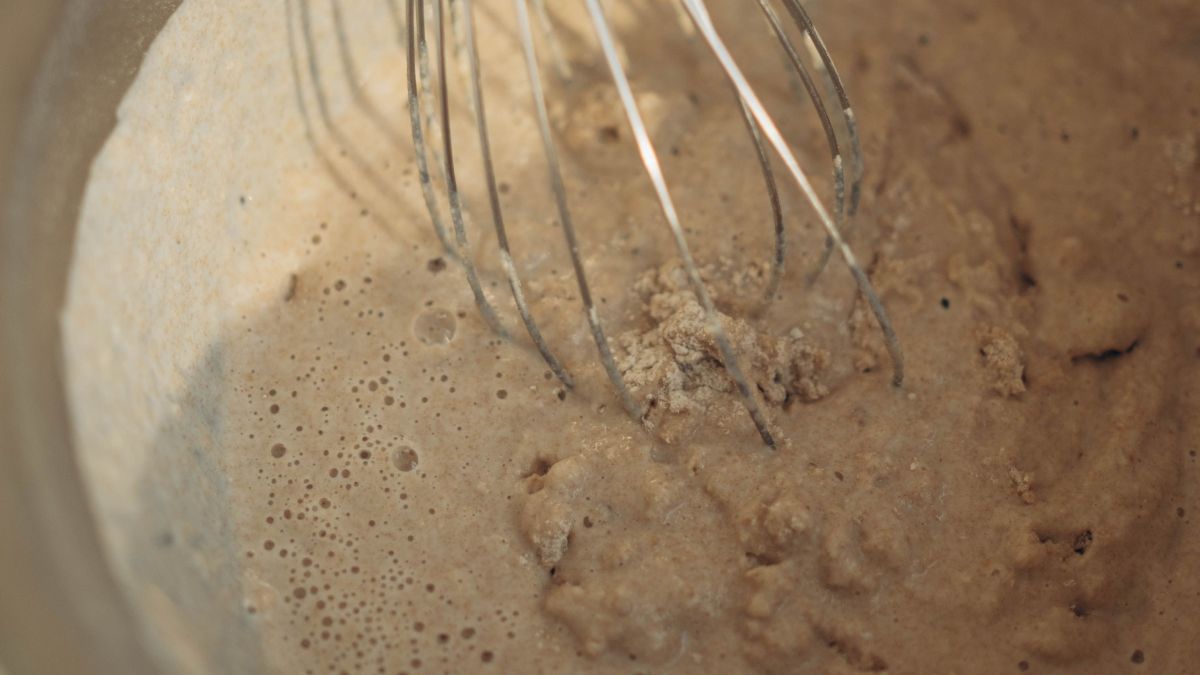
Soaking, resting and fermenting wheat are not quite the same thing. Here’s what these processes can change in Khapli atta — from dough texture to phytic acid — and where the evidence needs a little more caution.
Soaking, resting and fermenting wheat are not quite the same thing. Here’s what these processes can change in Khapli atta — from dough texture to phytic acid — and where the evidence needs a little more caution.
Indian kitchens understood the practical value of waiting long before fermentation became a wellness buzzword.
Rice and dal are soaked before they become dosa batter. Batter is left to ferment overnight. Curd begins with a little of the previous batch. Dough is rested because an experienced cook knows it behaves differently after it has had time to sit.
Something really is changing during these processes.
But soaking, resting and fermentation are not interchangeable, and neither is an automatic shortcut to “better digestion”.
With Khapli atta — made from emmer wheat, or Triticum dicoccum — adding water and time can change dough behaviour and texture. True fermentation can go further, altering acidity and helping break down some phytic acid naturally present in whole wheat. Research on whole-wheat sourdough supports that effect.
What the evidence does not establish is that Khapli is uniquely transformed by fermentation, becomes low-GI simply because it has been fermented, or is automatically easier for everyone to digest.
So what actually happens?
Soaking, Resting and Fermenting: What’s the Difference?
They are related, but they are not the same process.
Process
What is happening?
What you may notice
Soaking
Grain or flour is exposed to water
Hydration; changes in cooking behaviour
Resting dough
Water redistributes through the dough over time
Softer, more evenly hydrated dough; easier handling
Fermentation
Microorganisms such as yeasts and lactic-acid bacteria actively transform the food
Acidification, gas, flavour development and changes in certain food components
This distinction matters particularly with roti dough.
If you knead Khapli atta at night and put it straight into the refrigerator, you have primarily given the dough a long refrigerated rest. Some microbial activity may occur, but that is not the same thing as a deliberately fermented sourdough or dosa batter.
A dough becoming softer overnight is therefore not proof that it has been substantially fermented.
What Actually Happens When Wheat Is Fermented?
During a true cereal fermentation, microorganisms use available carbohydrates and produce compounds including organic acids. The pH of the food falls, flavour changes and a number of enzymatic reactions occur.
One particularly well-studied effect in whole wheat is the breakdown of phytate, or phytic acid.
Whole grains naturally contain phytic acid. It performs useful functions in the plant, but it can bind minerals including iron and zinc and reduce how available they are for absorption during a meal.
During sufficiently acidic wheat fermentation, naturally occurring phytase enzymes can break down some of that phytate.
In studies of whole-wheat sourdough, prolonged fermentation substantially reduced phytate. One study reported a roughly 62% reduction with sourdough fermentation, while another found that lowering dough pH to around 5.5 significantly increased phytate breakdown.
That gives us a much more precise claim than simply saying:
“Fermentation unlocks the nutrients in Khapli.”
A better version is:
Fermentation can reduce some of the phytate in whole-wheat foods, which may improve the accessibility of certain minerals.
Does Soaking Do the Same Thing?
Not necessarily to the same extent.
Soaking introduces water and can change the food in useful ways, but its effects depend heavily on temperature, duration, pH and whether intact grain or flour is being soaked.
Research on wheat has found that steeping alone may produce relatively modest phytate changes, while particular combinations of germination, acidity, temperature and time can produce much larger reductions.
So “soaked” and “fermented” should not be used as though they promise identical nutritional effects.
Sometimes soaking is simply valuable because the ingredient hydrates and cooks differently.
That is useful enough.
Why Does This Matter for Whole-Grain Wheat?
Phytate is concentrated largely in the outer portions of cereal grains.
That means whole-grain foods generally retain more phytate than highly refined flour — alongside retaining more of the grain’s fibre and other components.
This is not a reason to fear whole grains.
It simply explains why fermentation has attracted so much scientific interest in whole-wheat bread making: researchers have been looking at whether processing can retain the advantages of the whole grain while reducing some of the phytate that can inhibit mineral absorption.
There is no evidence, however, that Khapli needs fermentation more than other whole wheats simply because it is an ancient grain.
That distinction is important.
Does Fermentation Make Khapli Easier to Digest?
It may change aspects of wheat that affect digestion, but “easier to digest” is too universal a promise.
Specific sourdough processes can reduce wheat fructans, which belong to the FODMAP group of fermentable carbohydrates. But the effect depends strongly on the microorganisms, fermentation time and process used.
And lower FODMAP content does not guarantee that everybody will feel better afterwards. In a small randomised trial among people with IBS who reported poor wheat tolerance, long-fermented sourdough bread contained fewer FODMAPs than yeast-fermented bread but did not produce a significant difference in gastrointestinal symptoms.
So the reader-facing answer should be:
Fermentation changes wheat. Whether those changes make a particular fermented Khapli food feel more comfortable to you is individual.
That is different from promising that fermentation “pre-digests” Khapli for everybody.
Can Fermentation Lower a Meal’s Glycaemic Response?
Possibly — but again, this needs careful wording.
A systematic review of clinical trials found that sourdough bread produced a somewhat lower rise in post-meal blood glucose than comparator breads or glucose solutions. The authors rated the certainty of the evidence from low to very low, however, and results varied according to the bread and study.
That evidence concerns sourdough breads generally.
It does not establish that:
fermented Khapli dosa is automatically low-GI;
soaking Khapli atta lowers its GI;
fermented Khapli provides “steady energy” for everybody;
a Khapli breakfast prevents the mid-morning slump.
Those were all stronger claims than the available evidence supports.
The safer conclusion is:
Fermentation can alter the metabolic behaviour of cereal foods, but the response depends on the grain, recipe, fermentation process and complete meal.
What About Fermented Khapli Dosa?
This is where the science meets a genuinely useful kitchen idea.
Khapli flour can be incorporated into a fermented dosa-style batter. Fermentation can bring acidity and a more developed flavour, while the Khapli contributes its distinctive wheat character.
It is also a completely different use of the flour from roti.
For someone who finds a 100% Khapli roti too large a leap from their regular atta, using some Khapli in a familiar fermented batter can simply offer another way to cook with the grain.
A Practical Khapli Dosa Approach
Start with a dosa or idli batter method you already know and trust, and incorporate Khapli flour into it rather than inventing a completely new fermentation process.
Allow the batter to ferment according to the established method for that recipe and your kitchen conditions.
Signs such as an increase in volume, bubbles and the characteristic fermented aroma can indicate that the batter has become active, but fermentation time varies substantially with temperature, ingredients and starter organisms.
There is no scientifically meaningful universal rule that says:
“Khapli batter needs exactly eight hours.”
Your warm August kitchen and somebody else’s January kitchen are not running the same fermentation experiment.
What About Overnight Khapli Roti Dough?
An overnight rest can be useful — but call it what it is.
Overnight Khapli Dough Rest
Knead your Khapli dough as usual, cover it and refrigerate it promptly.
The next day, allow the portion you plan to use to lose some of its refrigerator chill before rolling, then cook the rotis thoroughly.
A longer hydration period may alter how the dough feels and can make it easier to handle.
But a refrigerated overnight rest should not be sold as a guaranteed nutritional fermentation technique.
It is principally a dough and convenience technique.
That makes it no less useful.
One Important Food-Safety Point
Flour is a raw agricultural food and can carry harmful microorganisms. Cooking, rather than fermentation or soaking, is what makes ordinary flour-based food safe to eat. The FDA specifically advises against eating or tasting raw flour, dough or batter.
So:
use clean hands, utensils and containers;
refrigerate ordinary roti dough promptly rather than leaving it sitting overnight in a warm kitchen;
do not taste raw flour or batter to judge fermentation;
cook flour-based foods thoroughly;
discard anything showing mould or obvious spoilage.
Traditional fermentation is valuable. Food-safety rules still apply.
Does Fermentation Make Khapli Gluten-Free?
No.
Khapli is emmer wheat and contains gluten. It is not safe for someone with coeliac disease simply because it is an ancient wheat or because it has undergone fermentation.
Research comparing ancient and modern wheats also does not support the blanket claim that ancient wheats such as emmer universally contain less gluten. Some analyses have found ancient wheats contain as much or more total gluten and coeliac-active proteins than modern bread wheats.
So remove the phrase “Khapli is low-gluten” entirely. The useful statement is much simpler: Khapli contains gluten and is not suitable for people with coeliac disease.
Does Aashirvaad Chakki Khapli Atta Ferment Differently?
There is not enough published evidence to claim that this specific atta ferments faster, more predictably or more beneficially than another Khapli flour.
What can be said from the brand’s product information is that Aashirvaad’s Khapli wheat is sourced from farmers in Karnataka and Maharashtra, is milled using its Chakki Jaisi Pisai process and undergoes more than 40 quality checks per batch.
Those are useful provenance and quality-control points.
They should not be converted into unverified statements such as:
“The grain hydrates evenly and ferments reliably every time.”
Fermentation behaviour depends on far more than quality control — including the microorganisms present, water, temperature, recipe and time.
A Quick Fermentation Reality Check
When you come across a claim about soaking or fermenting grain, ask:
Was the food merely soaked, or actually fermented?
Was it rested in the refrigerator or fermented at controlled conditions?
Is the evidence about wheat generally, or Khapli specifically?
Was phytate measured, or is “better mineral absorption” simply being assumed?
Was glycaemic response actually tested in people?
Is “easier to digest” being presented as a universal experience?
Does the food still contain gluten?
Traditional kitchen wisdom and nutrition science can work beautifully together. They work best when neither is asked to prove more than it actually does.
FAQs About Soaking and Fermenting Khapli Atta
Does soaking Khapli atta make it healthier?
Soaking or hydrating flour changes its water content and may affect enzyme activity, but it does not automatically produce all the changes associated with true fermentation. The effects depend on time, temperature, acidity and preparation method.
Does fermentation reduce phytic acid in wheat?
Yes. Studies of whole-wheat sourdough show that fermentation and acidification can substantially reduce phytate under appropriate conditions.
Does lower phytic acid mean better mineral absorption?
Reducing phytate can improve the accessibility or solubility of some minerals, particularly iron, zinc and magnesium, although the effect on actual human absorption depends on the complete food and meal.
Is overnight Khapli roti dough fermented?
Not necessarily. Dough refrigerated overnight has undergone a long hydration and resting period. True fermentation specifically involves microbial activity and associated biochemical changes.
Is fermented Khapli easier to digest?
Some fermentation processes alter fructans, proteins and starches, but individual digestive tolerance varies. Fermentation should not be described as making Khapli universally easier to digest.
Does fermented Khapli have a lower GI?
There is not enough evidence to assign a lower GI to fermented Khapli specifically. Sourdough fermentation has produced lower post-meal glucose responses in some bread studies, but the certainty of the evidence is limited and cannot automatically be transferred to Khapli roti or dosa.
Can I ferment Khapli atta for dosa?
Khapli flour can be incorporated into fermented dosa-style preparations. Use an established batter method and remember that fermentation time varies with the recipe and ambient temperature.
Is fermented Khapli safe for coeliac disease?
No. Khapli is wheat and contains gluten. Fermentation does not make ordinary Khapli preparations suitable for people with coeliac disease.
“I want to use Khapli atta in a soaked, rested or fermented recipe. Ask me what I’m making and explain which process is actually involved, what it may change in the food, and which benefits are supported by evidence rather than assumed.”
The Bottom Line
Indian kitchens were right about one important thing: time can change food.
A soaked grain does not behave exactly like an unsoaked one. Rested dough can handle differently from freshly kneaded dough. A truly fermented wheat batter undergoes chemical and microbial changes that can alter acidity, flavour, phytate and other components.
But every overnight bowl is not automatically a ferment. Every fermented food is not automatically easier to digest. And Khapli does not become uniquely nutritious simply because it has been left to sit. The genuinely interesting science is more specific.
Whole-wheat fermentation can reduce phytate. Sourdough processing can alter carbohydrate behaviour. Fermentation can change flavour and texture in useful ways.
Khapli atta gives an Indian kitchen another whole-grain wheat with which to explore those techniques. That is already a good story. It does not need fermentation mythology added to it.
Disclaimer:This article is intended for general educational purposes and is not personalised medical or food-safety advice. Khapli is wheat and contains gluten. People with coeliac disease or a diagnosed wheat allergy should not consume it. Flour is a raw food; do not eat uncooked dough or batter, and follow appropriate hygiene, refrigeration and cooking practices.
You are now being directed to an external website https://www.callr.live/aashirvaadexperts/premium-plan.
This link is provided for your information and convenience only and ITC Limited is not
responsible for the contents or services provided by Brand Touch India or any information that
you share with Brand Touch India.