

Table of Contents
Whole-wheat dalia can add fibre to breakfast and works easily with vegetables, dal, fruit or nuts. Here is what it can (and cannot) do for digestion, plus two simple recipes.
IS DALIA GOOD FOR DIGESTION? It can be a useful fibre-containing breakfast, particularly when it is made from whole broken wheat and combined with vegetables, pulses, fruit, nuts or seeds.
The answer is not an automatic yes for everyone. Dalia contains wheat and gluten, and some people may experience gas, bloating or other symptoms after eating wheat or increasing fibre quickly. Its nutritional value also depends on the finished bowl: vegetable-and-moong dalia is quite different from a preparation made with large quantities of jaggery.
The useful case for dalia is therefore straightforward. It is an adaptable wheat-based breakfast that can help broaden the fibre sources in a meal, without needing to be treated as a digestive cure or superfood.
What Is Dalia or Broken Wheat?
Dalia is wheat that has been broken or cracked into smaller pieces rather than ground into fine flour. When it is made from the whole wheat kernel and retains the bran and germ, it qualifies as a whole-grain food. (Check the product description or ingredient list rather than assuming that every broken-wheat product is nutritionally identical.) This distinguishes it from maida (which is refined to remove the bran) and places it firmly in the whole-grain category alongside wheat atta, millets and other whole cereals. It’s been a breakfast staple across North and Central India for centuries, eaten most commonly as a savoury vegetable khichdi-style porridge or as a sweet porridge with milk and jaggery.
Does Dalia Contain Fibre?
When dalia is produced from the whole wheat kernel and retains its bran and germ, it contributes dietary fibre. Fibre forms part of a varied diet that may help support bowel regularity, particularly when fluid intake is adequate.
A single universal fibre figure should not be assigned to every dalia product. Wheat variety, bran retention, processing, moisture and serving quantity can all change the number. Check the current nutrition label for the product being used rather than applying the whole-wheat atta figure automatically.
It is also sensible to increase fibre gradually. For some people, a sudden increase in whole grains can cause gas or bloating rather than immediate digestive comfort.
| ⓘ Dalia At A Glance Made from: Cracked or broken wheat Whole grain: Yes, when the full kernel and its bran and germ are retained Contains gluten: Yes Fibre: Varies by product and serving; check the current nutrition label Can be prepared as: Savoury upma, khichdi-style dalia or sweet porridge Worth remembering: Vegetables, pulses, fruit, nuts and seeds change the nutritional value of the finished bowl |
Why Dalia Can Work at Breakfast
Breakfast is where whole-grain fibre makes the most perceptible difference to the rest of a day for many people — a fibre-containing breakfast slows the absorption of the meal’s carbohydrates, contributes to feeling full through the morning, and adds to a day’s fibre total before lunch has even happened. Starting with a plain white-rice poha, plain toast or packaged cereal (many of which are low in fibre despite marketing framing) puts more pressure on the rest of the day to make up the fibre difference. Starting with dalia or a millet porridge removes some of that pressure naturally.
How to Build a More Balanced Dalia Bowl
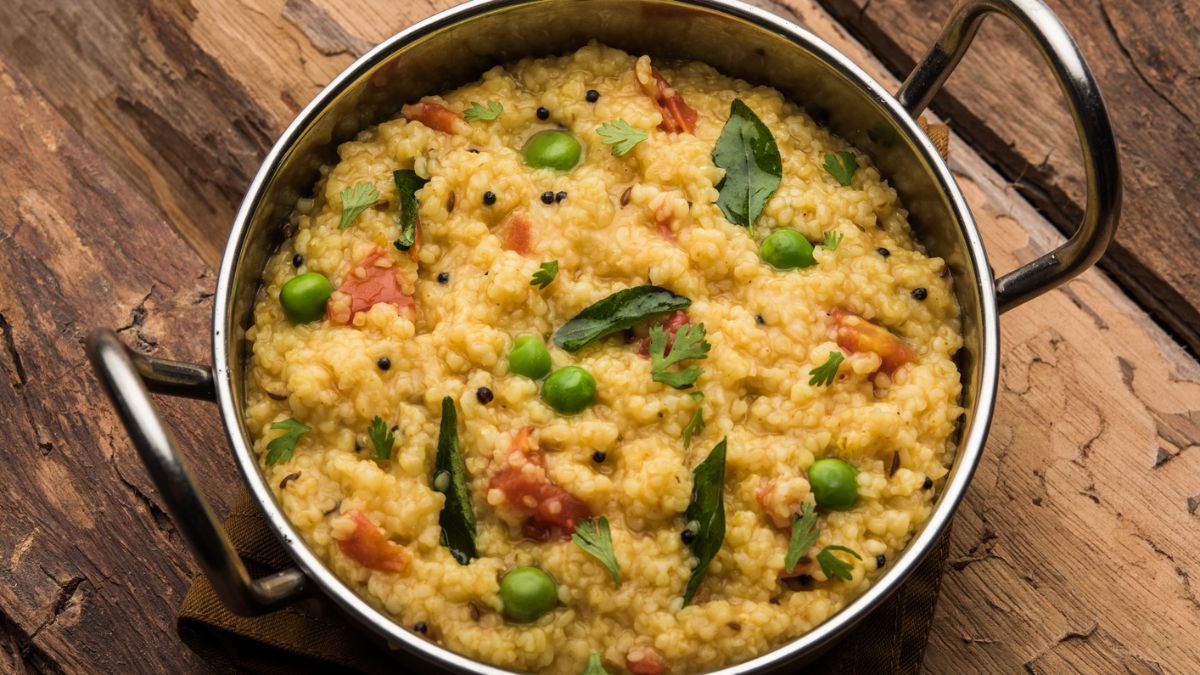
The savoury version — dalia upma or khichdi, cooked with tempered spices, onion, tomato and whatever vegetable is available — is the most fibre-complete preparation, since it adds a vegetable source to the grain. The sweet version — dalia porridge with milk and jaggery — is quicker and suits a household that wants a minimal-effort breakfast. Both are valid starting points, and neither requires treating dalia as a ‘health food’ preparation rather than an ordinary breakfast. Packaged broken wheat, including Aashirvaad Samba Broken Wheat, can be used for savoury or sweet dalia preparations. Check the grain size and pack instructions, since cooking time and water requirements differ between products.
Recipe 1: Vegetable and Moong Dal Dalia
Serves: 2
You need:
½ cup broken wheat, ¼ cup yellow moong dal, 1 cup chopped mixed vegetables, 1 small onion, ½ teaspoon cumin, a pinch of turmeric, 1 teaspoon oil or ghee, salt and approximately 2½–3 cups water.
Method:
Rinse the broken wheat and dal. Heat the oil or ghee in a pressure cooker and add cumin, followed by the onion and vegetables. Stir in the wheat, dal, turmeric, salt and water. Pressure-cook until the grains and dal are soft, following the cooker and product instructions. Add hot water after cooking where you prefer a looser consistency.
Why this combination works: The dal and vegetables broaden the meal beyond the wheat alone, adding further fibre, protein and variety.
Recipe 2: Apple, Nut and Cardamom Dalia
Serves: 2
You need:
½ cup broken wheat, 1½ cups milk or an appropriate alternative, 1 cup water, 1 small chopped or grated apple, 1 tablespoon chopped nuts, cardamom and optional jaggery to taste.
Method:
Cook the broken wheat with the water until nearly soft. Add the milk, apple and cardamom and continue cooking until creamy. Stir in the nuts. Where using jaggery, add a modest amount after cooking rather than assuming that every sweet dalia requires it.
Why this combination works: Fruit and nuts add texture and variety, while sweetness can be adjusted rather than built into the recipe automatically.
Dalia vs Oats, Poha and Rava
Dalia, oats, poha and rava are different products rather than interchangeable versions of the same breakfast.
Whole-wheat dalia retains more of the wheat kernel than refined semolina or rava. Oats contain beta-glucan and have a different fibre profile. Poha is made from flattened rice, and its nutritional contribution depends on the rice and processing as well as the vegetables, nuts or pulses added during cooking.
The most useful comparison is therefore between complete breakfasts rather than plain grains. A vegetable dalia with moong dal, a vegetable poha with peanuts and an oat bowl with fruit and nuts may all be more varied meals than their unaccompanied grain bases suggest.
Is Dalia Good for Everyone?
No single breakfast suits every digestive system. Dalia contains wheat and gluten, so it is not suitable for people with coeliac disease and may be inappropriate for those with a diagnosed wheat allergy.
Some people with irritable bowel syndrome or recurring bloating also find that certain wheat-based foods aggravate symptoms, although the reason and appropriate dietary response vary. Persistent symptoms should be discussed with a doctor or dietitian rather than managed by eliminating foods on the basis of a general article.
For people who tolerate wheat, whole-grain dalia can simply be one of several useful breakfast options. It should not be presented as a remedy for constipation, bloating or an unhealthy gut.
How to Make Dalia Easier on Busy Mornings
The most common barrier to a regular dalia breakfast isn’t motivation, it’s time. Pressure-cooking can shorten the preparation time, while soaking or batch-cooking may help on busy mornings. Follow the pack instructions for the particular broken-wheat product you are using. A simple sweet dalia with pre-boiled milk and jaggery is also effortless. Batch-cooking dalia at the weekend and reheating portions through the week is a common practical approach. And for days when none of this is realistic, the point isn’t perfect dalia every morning — it’s that having it in rotation at all, whenever it fits, is more useful than treating it as an all-or-nothing habit.
A Closing Note on Simplicity
The most enduring whole-grain breakfasts in Indian cooking — dalia, ragi kanji, upma from rava or broken wheat — share a common trait: they’re simple, require no special equipment, use accessible ingredients, and have been made in Indian kitchens across generations without any particular health framing. That longevity is its own recommendation. None of these foods needs to be positioned as a ‘superfood’ or a gut intervention to justify its place in a morning routine — they’ve already earned it.
FAQs
Is dalia good for digestion?
Whole-wheat dalia can contribute fibre to breakfast, which may support bowel regularity as part of an overall fibre-containing diet. It is not a digestive treatment, and some people experience gas, bloating or symptoms after eating wheat.
How much fibre does dalia contain?
The amount varies by the wheat, processing method, bran retention and product. Check the nutrition label for the specific broken wheat used rather than applying the fibre figure for atta to every dalia product.
Is dalia a whole grain?
Dalia can be a whole-grain product when it is made from the complete wheat kernel and retains the bran and germ. The word “broken” alone does not confirm how much of the kernel remains.
Is dalia gluten-free?
No. Dalia is made from wheat and contains gluten. It is unsuitable for people with coeliac disease.
Is dalia better than oats?
Neither is universally better. Both can form part of a balanced breakfast, but oats and wheat have different fibre profiles. The recipe, serving size, accompaniments and individual tolerance matter.
Is sweet or savoury dalia better?
Neither format is automatically better. Savoury dalia makes it easy to add vegetables and pulses, while sweet dalia can include fruit and nuts. The amount of added sugar or jaggery changes the final bowl.
Can dalia be made in advance?
Yes. Cooked dalia can be refrigerated promptly in a covered container and reheated thoroughly, adding water or milk to loosen it. Follow ordinary food-safety practices and avoid leaving cooked cereal at room temperature for long periods.
Next Steps
- Do hook: Scan Your Plate — did a whole grain show up in your breakfast today?
- Ask Happy Tummy GPT: “What’s a good dalia recipe for a quick weekday breakfast?”
- Reflect: “What other whole grains can you include in tomorrow’s breakfast?”
Disclaimer: This article is intended for general educational purposes and is not a substitute for personalised medical or dietary advice. Dalia contains wheat and gluten. Digestive responses to wheat and fibre vary; consult a qualified healthcare professional if you have coeliac disease, a wheat allergy or persistent digestive symptoms.
Sources:
Indian Food Composition Tables 2017 — ICMR–National Institute of Nutrition
NIDDK: Eating, Diet and Nutrition for Constipation
NIDDK: Eating, Diet and Nutrition for Gas in the Digestive Tract