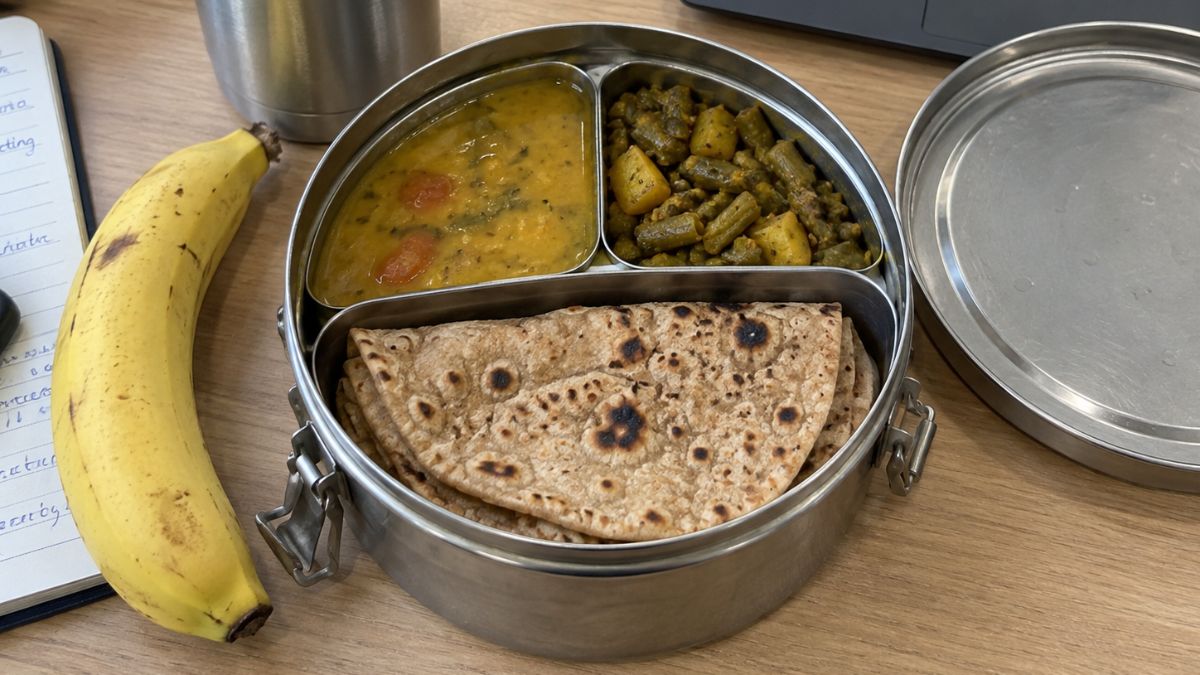
The Lunchbox Roti Upgrade: Making Packed Meals Work Harder for Your Gut
A packed roti lunch can be simple and fibre-varied. Small additions such as pulses, vegetables, fruit and water can make a tiffin more complete without complicating meal prep.
Table of Contents
A packed lunch — roti rolled or stacked into a tiffin, eaten a few hours after it was made — is a different meal from a freshly plated lunch at a table, and it rewards different kinds of attention. The roti is usually slightly cooler and firmer by the time it’s eaten; the accompaniments have been sitting with it for a few hours; there’s less flexibility in what’s on the plate. This piece is about making that fixed format work a bit harder from a gut and fibre perspective, without requiring a complicated meal-prep routine.
The main thing that makes a lunchbox different from a home-plated meal is that it’s a closed system — whatever goes in is what gets eaten, with no opportunity to add more dal or grab a glass of water from the tap mid-meal. This makes the initial packing decisions matter more than they might at a table, where gaps can be filled spontaneously. A packed lunch that’s missing a protein or fibre source because there wasn’t time to add one is unlikely to be supplemented once it’s in the bag.
Roti, by the time it reaches a lunchbox at lunch, will have rested for a few hours and cooled considerably — firmer and chewier than it was fresh off the tawa, which is fine from a food safety perspective and entirely normal texturally, as covered in Fresh, Reheated, Leftover Roti elsewhere in this series. How it was made matters a bit more for the lunchbox than for home: a wetter dough and a proper rest before rolling tends to produce a roti that holds up better over a few hours than a rushed, dry-dough one, which can become noticeably harder by midday.
| ⓘ What Makes a Lunchbox Roti Travel Well A wetter dough than usual — rotis made with slightly more water hold up better over a few hours A proper dough rest before rolling — produces a softer start, so the finished roti stays more pliable by lunch Wrapped or stored covered while still slightly warm — helps prevent the roti drying out and going stiff A thin layer of ghee before packing can help retain moisture and softness |
A genuinely fibre-varied lunchbox follows the same four-source logic as any roti plate — a whole-grain roti, a dal or pulse, a vegetable, and water alongside the meal. In a packed-lunch context, the water is often the thing most easily left out, since it’s assumed to be available later — but if the lunchbox is eaten somewhere without easy access to water (a classroom, a long journey), it’s worth thinking about in the packing stage, not as an afterthought.
A tiffin of rotis and dry sabzi is common and convenient — but it’s missing the dal or pulse that, at home, would usually sit alongside. Adding a katori of chana or rajma (room temperature is fine), a hard-boiled egg if that suits the household, or even a small portion of sprouted moong is one of the easiest ways to make a roti-based packed lunch more complete. These travel well, don’t need reheating, and add a genuinely meaningful contribution to the day’s protein and fibre.
For households that use multigrain atta, the lunchbox is a natural place to feature it — the denser texture often travels slightly better than a thinner wheat roti, and the grain variety it adds is the same regardless of whether it’s eaten fresh or a few hours later. This isn’t a reason to switch from regular wheat specifically for a packed lunch; if multigrain is already in rotation, packing it is a reasonable, easy choice.
A small portion of fruit — a guava, an apple, a banana — packed alongside the roti adds fibre and a natural sweetness without complicating the rest of the lunch. Roasted chana or a handful of seeds in a small container adds a fibre-dense snack that travels well and can be eaten separately or alongside the main lunch. Neither of these requires extra cooking; they’re packing decisions, not preparation ones.
None of this needs to become a full meal-prep production. The most useful lunchbox improvements are usually the simplest ones: a small addition that was previously missing (a fruit, a small pulse portion, a glass of water packed or a reminder to find one), rather than an overhaul of the whole lunch. The goal is a packed meal that’s reasonably complete, travels well, and doesn’t feel like it required significantly more effort than what’s already happening.
A child’s tiffin follows the same fibre-variety logic as an adult’s — grain, something pulse-based, a vegetable, a fruit — but in smaller portions reflecting a smaller appetite. Soft, easy-to-eat accompaniments tend to work better in a child’s tiffin than harder or fibrous ones that require more chewing; a small katori of dal or soft rajma travels better than a dry, fibrous sabzi. The roti itself benefits from the same dough-preparation care as an adult’s lunchbox roti: slightly wetter and rested before rolling.
There will be rushed mornings when the tiffin is just rotis and whatever’s fastest to grab alongside — that’s genuinely fine as an occasional pattern. The goal isn’t a perfect, four-source fibre tiffin every single day; it’s a nudge towards slightly better than plain roti-and-pickle when the conditions allow it, without that nudge becoming its own source of stress.
Disclaimer: This article is for general informational purposes only — not medical or dietary advice.
A slightly wetter dough, a proper dough rest before rolling, and covering the roti while still warm before packing all help it stay more pliable over a few hours.
A dal or pulse source (chana, rajma, sprouted moong), a vegetable, and something to drink alongside — the same four-part plate logic that applies at home.
Yes — multigrain roti often travels slightly well due to its denser texture. Any atta works for a packed lunch; the preparation (dough wetness, resting) matters more than the flour type.
A guava, apple or banana for fibre and natural sweetness; roasted chana or seeds for a fibre-dense snack. Neither requires extra cooking — just packing.
It's had a few hours to cool and firm up, which is normal. Starting with a wetter dough and a rested roti before packing reduces how stiff it gets by lunchtime.
Generally yes for a few hours in a covered container, though in very hot weather or for longer stretches, refrigerating is safer. The accompaniments (dal, dairy-based sabzi) need more attention than the roti itself.
A slightly wetter dough, a rested base before rolling, and covering the roti while still slightly warm before packing all help; a thin layer of ghee also helps retain moisture.
Adding one missing element: a small portion of chana or rajma, a piece of fruit, or a reminder to find water to drink alongside the meal — a single small addition rather than an overhaul.