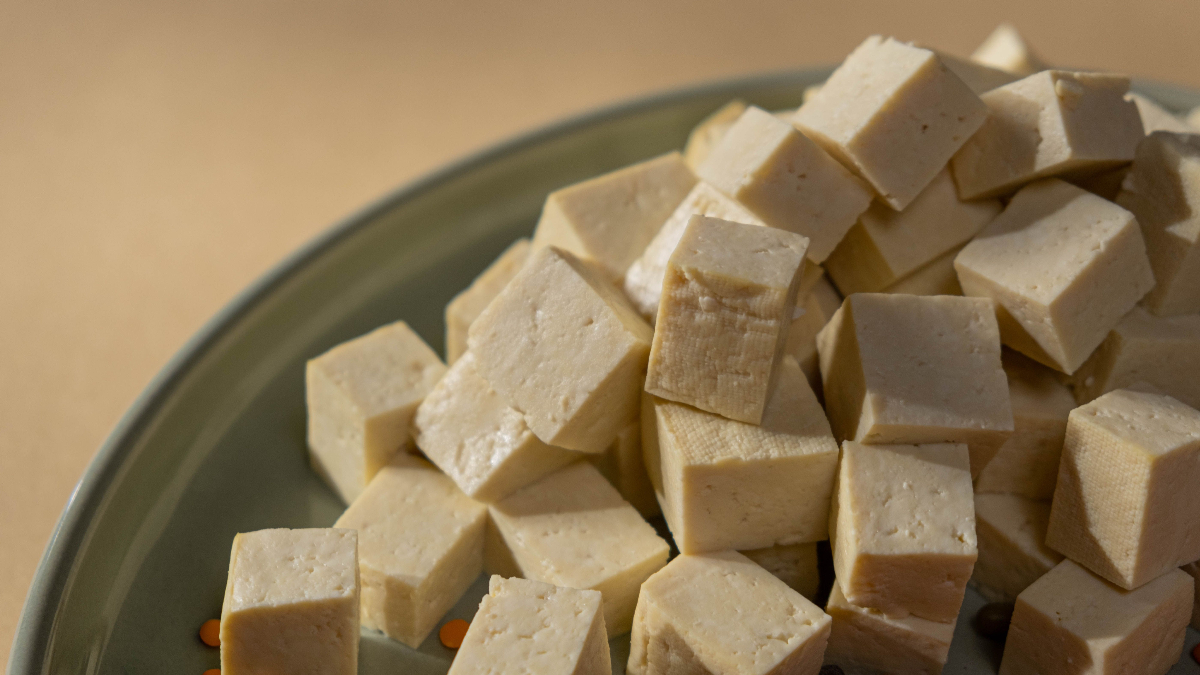
Tofu vs Paneer: Which Suits Your Gut and Your Plate?
Both paneer and tofu bring useful protein to the table. Their differences in calcium, iron, fat and digestive tolerance are where the choice gets more personal.
Table of Contents
Neither wins outright. Both provide good-quality protein: paneer is made from milk and suits a vegetarian diet, while plain tofu is made from soy and suits a vegan diet too. In the specific IFCT and USDA entries compared below, paneer provides more protein, calcium, fat and energy per 100 g; regular calcium-set tofu provides more iron. Other tofu types can have quite different values. For your gut, the choice depends on tolerance, portion size, preparation and what you eat alongside them.
It helps to start with how alike they are. Paneer is made by curdling hot milk with an acid — lemon juice, vinegar or citric acid — then draining the whey and pressing the curds into a block. Firm tofu is made by coagulating soy milk, often with a calcium or magnesium salt, then draining and pressing the curds. Think of it as paneer’s soy-based cousin.
That shared approach explains the similarities: a mild-tasting protein block that takes on the flavours you cook it with. The starting ingredient explains many of the differences. Silken tofu is different again: it is not pressed in the same way, which gives it a softer, custard-like texture.
| What you’re comparing | Paneer | Plain tofu |
| Main ingredient | Milk | Soybeans |
| Dietary suitability | Vegetarian; not vegan | Vegan and vegetarian |
| Protein quality | Supplies all essential amino acids | Supplies all essential amino acids |
| Lactose | Contains lactose; amount varies | Naturally lactose-free |
| Main food allergen | Milk | Soy |
| Normally fermented | No | No; fermented tofu is a separate product |
| Nutrient | Amount |
| Energy | Approximately 305 kcal |
| Protein | 18.86 g |
| Total fat | 24.78 g |
| Calcium | 476 mg |
| Iron | 0.90 mg |
Source: ICMR–National Institute of Nutrition, Indian Food Composition Tables 2017, paneer entry L003. Energy is converted from the table’s kilojoule value and rounded.
| Nutrient | Amount |
| Energy | 76 kcal |
| Protein | 8.08 g |
| Total fat | 4.78 g |
| Calcium | 350 mg |
| Iron | 5.36 mg |
Source: USDA FoodData Central, SR Legacy dataset, entry 172476, “Tofu, raw, regular, prepared with calcium sulfate”.
These are reference values for the foods described, before adding oil, sauces or other ingredients. The tofu figures are for regular calcium-set tofu, rather than every type sold as firm or silken. Milk composition, water content, processing and coagulants can change the numbers. For the product you buy, check its nutrition panel and ingredients.
Both are useful sources of high-quality protein, supplying the essential amino acids the body needs from food. Soy protein is a complete protein, which is one reason tofu is valued in vegetarian and vegan eating.
In the entries above, paneer has 18.86 g of protein per 100 g, compared with 8.08 g in regular tofu. That is a substantial difference, rather than a slight lead.
The one trap worth knowing is the word “tofu” itself. USDA’s separate entry for firm, calcium-set tofu lists 17.27 g of protein per 100 g — much closer to the paneer figure. Silken and softer tofu generally have less protein than denser varieties. If protein is the reason you’re choosing it, check the amount per 100 g on the pack rather than relying on the name alone.
Full-fat paneer is richer in fat, including saturated fat, which contributes to its creaminess. That doesn’t make it a food to fear. It does make portion size and the rest of the meal worth considering, especially when the gravy also contains cream, butter or plenty of oil. Tofu generally has less saturated fat, although frying changes the finished dish.
Calcium depends partly on how the tofu was made. Tofu set with calcium sulphate can provide substantial calcium; varieties made only with magnesium salts may provide less. Check the coagulant in the ingredients and the calcium value if the label gives one. “Tofu” by itself isn’t a reliable calcium figure.
Iron is another useful difference. The regular tofu entry above contains more iron than paneer. But the values vary across tofu types, so it is better to compare the products you actually buy than declare every tofu block nutritionally identical.
This is where the whole plate matters. Paneer does not provide useful dietary fibre. Tofu’s fibre content varies: the USDA regular entry contains 0.3 g per 100 g, while the firm calcium-set entry contains 2.3 g. So “tofu has no fibre” is too sweeping a claim.
Neither ordinary paneer nor ordinary tofu is normally fermented, and neither should automatically be treated as a probiotic food. Tempeh, natto and fermented tofu are different products.
Both can belong in a balanced meal. Think of the vegetables in the sabzi, the dal alongside, and a wholegrain roti. These add a variety of fibre sources that support digestion. A palak paneer or a tofu stir-fry full of vegetables gives you a different meal from a plate of either protein on its own.
Soy contains plant compounds called isoflavones. One of them, daidzein, can be converted by certain gut bacteria into a compound called equol. The catch is that not everyone’s gut bacteria can make it, as research on equol formation describes.
Its potential health effects are still being studied, and producing equol is not a guarantee of a particular benefit. But it is an interesting illustration of a bigger idea: what a food does for you can depend partly on the bacteria already living in your gut.
For some people, this is the question that actually decides it.
Paneer is not lactose-free. Some lactose leaves with the whey during preparation, but the amount left in the finished product varies. Lactose intolerance can cause bloating, abdominal discomfort, diarrhoea or constipation; indigestion can also be part of the discomfort people describe. Symptoms after paneer don’t, by themselves, confirm that lactose is the cause.
If you have mild lactose intolerance and know that a small portion of paneer suits you, it may fit your diet. If even a little repeatedly triggers symptoms, don’t force it. Plain tofu is a lactose-free alternative, provided you tolerate soy. Your own response matters more than a blanket rule about how much dairy someone with “mild” intolerance ought to manage.
Firm tofu may also suit some people who are sensitive to fermentable carbohydrates called FODMAPs. Monash University’s testing found drained firm tofu low in FODMAPs at a standard serving, while silken tofu was high at a standard serving. Processing and drainage help explain the difference. Serving size still matters; if you follow a prescribed low-FODMAP diet, use the current app guidance with your dietitian’s advice.
Allergies are a different matter. If you have a milk-protein allergy, avoid paneer; if you have a soy allergy, avoid tofu. A small-portion experiment for intolerance is not appropriate for a food allergy.
GOOD TO KNOW | Analogue Paneer: Is Your Paneer Really Paneer?
Tofu comes with more anxiety attached than paneer, much of it about soy and hormones. Soy foods can generally be part of a healthy adult diet. Isoflavones are plant compounds with hormone-related activity, but a serving of tofu is not the same as a concentrated isoflavone supplement. If you have a condition requiring dietary guidance, follow advice from your treating clinician.
There is a possible benefit worth discussing without overselling it: menopausal hot flushes. NCCIH notes that soy protein or isoflavone preparations may help, but any effect may be small and research findings are inconsistent. The Menopause Society’s 2023 position statement does not recommend soy foods or extracts as a treatment for hot flushes. Enjoying tofu as food is a different decision from relying on it to treat symptoms.
One point is practical, and it concerns both foods. If you take levothyroxine, a thyroid-replacement medicine, food timing can affect how well the medicine is absorbed. Soy foods can interfere, and research on milk also supports caution about taking the medicine alongside dairy. Ask your doctor or pharmacist how to separate your dose from soy and calcium-rich foods such as paneer, and keep your routine consistent. This does not automatically mean avoiding either food or changing your medicine.
Paneer has the home advantage: it’s familiar, widely available, and holds its shape beautifully in a gravy. Tofu works in many Indian preparations too — gravies, sabzis, starters and snacks. A few practical choices make it easier to cook with.
I would start with the person’s diet, digestion and tolerance. For a vegan eater, tofu is the straightforward choice. For someone who repeatedly gets digestive discomfort from paneer, tofu may be more comfortable if soy suits them. Someone who tolerates a little paneer can include it in an amount that works for them.
Both are nutritious protein options with different strengths. Paneer supplies protein, calcium and more energy in the reference comparison; tofu contributes protein and iron, and calcium-set varieties can contribute calcium too. You can include either, or rotate both if you enjoy them. You don’t need to eat both every day to make your meals wholesome.
Tofu and paneer are closer cousins than rivals. Choose paneer when you want richness and familiarity, and tofu when you want a vegan or lactose-free option. Let the nutrition label, your overall diet and your own tolerance help you decide. And give the vegetables, dal and whole grains next to them some attention too.
Disclaimer: This article is for general information only and is not a substitute for personalised medical advice, diagnosis or treatment. If you have a food allergy, diagnosed intolerance, medical condition or prescribed diet, follow advice from your doctor or qualified dietitian. If you take medication, ask your doctor or pharmacist about relevant food interactions before making substantial dietary changes. If symptoms continue, are severe or keep coming back, speak to a doctor.
Neither is healthier for everyone. Both are nutritious protein foods. In the reference comparison, paneer has more protein, calcium, fat and energy; regular calcium-set tofu has more iron. Tofu type, portion size, allergies and digestive tolerance can change which suits you.
Not in the regular-tofu comparison above: 100 g of paneer provides 18.86 g of protein, while the regular tofu provides 8.08 g. Some firm tofu comes much closer — USDA’s firm calcium-set entry has 17.27 g. Check your pack.
It depends on your tolerance and the product. Paneer contains lactose. Some people can manage a small portion, while others get symptoms even after a little. If paneer repeatedly causes discomfort, a lactose-free alternative such as plain tofu may be easier, provided you tolerate soy. Milk allergy requires avoiding paneer.
Yes. Plain tofu is made from soy and is suitable for vegan and vegetarian diets. Paneer is made from milk, so it is vegetarian but not vegan. Check the other ingredients in a prepared dish: tofu cooked in ghee or cream does not make a vegan meal.
Soy foods can generally fit a healthy adult diet. Findings about concentrated supplements should not automatically be applied to tofu on a plate. Follow your clinician’s advice if you have a condition-specific treatment or dietary plan.
If you take levothyroxine, the timing matters because soy and some calcium-rich foods can affect absorption of the thyroid medicine. Ask your doctor or pharmacist what gap to leave for your prescription. Do not change the dose yourself.