Does Eating Dahi Every Day Improve Your Gut Bacteria? What the Research Says
How fermented-food research applies to the familiar bowl of curd on your plate
Table of Contents
Eating dahi every day can be a sensible habit if you tolerate dairy, but it has not been shown to reliably improve everyone’s gut bacteria. ICMR-NIN includes milk or curd in its reference plate. That supports dahi’s place as food; it does not establish a microbiome treatment.
Dahi is milk fermented by lactic acid bacteria. It provides protein and calcium and may contain live cultures. The organisms and their numbers vary with the starter, milk, fermentation and storage. Home-set dahi is not automatically a probiotic: that term requires live microorganisms with evidence of a health benefit in adequate amounts.
A 2021 study found increased gut bacterial diversity in adults eating a mixture of fermented foods. It did not test one daily katori of Indian dahi. Reviews of fermented dairy also report some microbial changes, but the products, participants and methods differ. A change in bacteria alone does not guarantee better digestion.
Fresh, unheated dahi, raita and chaas may retain live cultures. Thorough cooking, as in kadhi, generally greatly reduces or eliminates them. Cooked dahi remains a fermented food.
If lactose causes symptoms, dahi may be easier to tolerate than milk, but it is not lactose-free. Milk allergy is different and requires medical guidance. After diarrhoea, lactose digestion can temporarily worsen.
Choose a portion that suits your meals, keep it refrigerated, and pair it with varied foods such as dal, vegetables and whole grains. Persistent symptoms, blood in stool, unexplained weight loss or swallowing difficulty need medical assessment; seek help promptly.
For people who tolerate dairy, dahi can be a sensible everyday food. Whether it improves your gut bacteria is a different question. The research discussed here does not establish that a daily katori of home-set dahi reliably raises bacterial diversity or improves everyone’s digestion.
ICMR-NIN’s My Plate for the Day includes milk or curd in its daily reference pattern. That is food-group guidance, not a recommendation to use dahi as a gut treatment. If dairy doesn’t agree with you, you needn’t force it.
Here is what the research does and doesn’t say, and how to fit dahi into an ordinary Indian day.
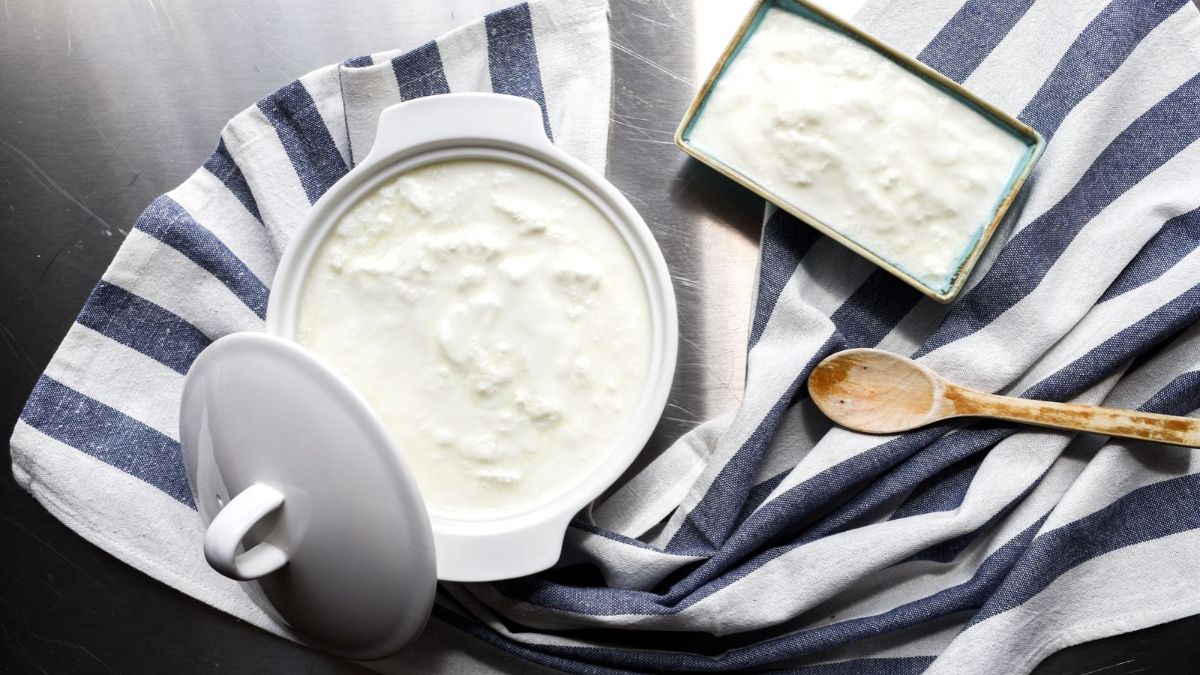
Dahi is milk fermented by lactic acid bacteria. As they work, the bacteria turn some of the milk’s lactose into lactic acid, which gives dahi its tang and helps it set. Alongside the microbes, a katori brings protein and calcium from the milk.
What it doesn’t come with is a fixed microbial recipe. A spoonful of yesterday’s dahi as starter, the kind of milk, the warmth of the kitchen, how long it sets and how it is stored all shape the final bowl. Research on traditional Indian dahi describes variation linked to household preparation and starter cultures.
The dahi that sets in a Kolkata summer may differ from one set slowly through a Delhi winter, even if both look and taste alike. Two bowls can differ in which bacteria they hold and how many are alive. That helps explain why ‘does dahi change my gut bacteria?’ has no single answer.
Not automatically. A probiotic contains live microorganisms that confer a demonstrated health benefit when consumed in adequate amounts. The microbes need to be well characterised, and evidence must support the relevant benefit. Fermentation alone does not establish this.
Ordinary home-set dahi is best described as a fermented food that may contain live cultures. A product containing identified probiotic strains needs supporting evidence; that evidence cannot simply be carried over to every bowl set at home.
‘Live’ is not a guarantee of outcome either. Microbes can pass through the digestive tract without becoming permanent residents. Permanent residence is not required for a probiotic benefit, but the organisms, amount and evidence still matter.
The ISAPP consensus statement on fermented foods adds another point: a food still counts as fermented even if its microbes are no longer alive when you eat it.
The study most often cited was published in Cell in 2021. Wastyk and colleagues analysed 36 healthy adults, 18 in each diet group. The dietary intervention lasted ten weeks within a 17-week study protocol.
One group increased a mixture of fermented foods, including yoghurt, kefir, fermented cottage cheese and fermented vegetables. The other increased dietary fibre. Bacterial diversity rose in the fermented-food group, and several inflammatory markers decreased. The high-fibre group did not show the same diversity increase; that does not mean fibre had no effects or lacks value.
Notice what the trial did not test: one katori of Indian dahi with lunch. It was small, used several fermented foods and cannot establish a dahi serving or a guaranteed health benefit. Changes in microbial diversity and blood markers are not the same as proving better digestion for every reader.
Studies on dairy alone are mixed. A 2020 systematic review included eight trials. Some reported changes in bacteria such as Lactobacillus and Bifidobacterium, but the products and methods differed, and broader health implications remained unclear.
A 2024 review of dairy in gastrointestinal-disease research also found encouraging results in some studies. It included both human studies and animal models, mainly involving fermented milk and yoghurt, and called for further human research.
The fair reading is promising, not proven. Findings from particular fermented dairy products or clinical populations cannot automatically be applied to home-set dahi eaten by everyone.
Heating after fermentation is an important distinction. Thorough cooking generally greatly reduces or eliminates live bacteria. The food remains fermented, but it is not equivalent to unheated dahi as a source of live cultures. Freshness alone cannot confirm the organisms or their numbers.
| Food | Live cultures likely? | What to know |
|---|---|---|
| Fresh home-set dahi | Likely with a live starter | Starter, setting conditions and storage affect the microbes present. |
| Packaged plain curd | Depends on the product | Check for live-culture information, heat treatment after fermentation and storage instructions. |
| Fresh chaas, lassi or raita | Likely if made from unheated, live-culture dahi | Dilution does not itself remove cultures, but changes the amount of dahi per serving. |
| Shrikhand | It depends | Preparation, storage and any heat treatment matter. |
| Kadhi and cooked curd gravies | Generally not after thorough cooking | They remain fermented-dairy dishes without being equivalent live-culture sources. |
Sunday’s kadhi-chawal and Monday’s cold raita are both made with dahi. They are not equivalent as sources of live cultures.
Use clean utensils, refrigerate dahi promptly once it has set, and follow packaged curd’s storage instructions. Fermentation does not make poor handling safe.
Fermentation breaks down some lactose, and many people with lactose intolerance find yoghurt easier to tolerate than milk. Dahi is not lactose-free, though, and home-set preparations vary. Your portion matters too. NIDDK advises individual approaches to lactose tolerance, rather than assuming all dairy must be excluded.
After acute diarrhoea, some people temporarily find lactose harder to digest. NIDDK’s adult diarrhoea guidance explicitly notes that this can last a month or more. That is a possible recovery issue, not a reason to wait a month before seeking help for continuing diarrhoea. If dahi worsens symptoms, do not force it; ask a clinician about recovery and reintroduction.
Lactose intolerance is different from milk allergy. If you have a diagnosed milk allergy, follow medical advice rather than experimenting with curd.
Think of dahi as something to include when it suits your meals, not a daily dose taken for a result. A katori with lunch, raita alongside a meal or fresh chaas are easy ways in. Chaas is diluted dahi, so a glass is not nutritionally equivalent to the same volume of undiluted curd.
The plate around the bowl counts too: dal, a seasonal sabzi and whole-grain rotis contribute plant foods and fibre.
For example, two rotis made using 60g flour altogether would provide about 6.4g fibre using Aashirvaad’s listed Khapli atta value of 10.7g per 100g: 60 × 10.7 ÷ 100 = 6.42g. Roti sizes vary, and the figure refers to flour used, not cooked-roti weight. Check the pack you buy.
Ordinary whole-wheat atta and Khapli atta are broadly comparable on fibre. Using that product value and IFCT 2017’s figures for atta and maida, each has about four times maida’s fibre per 100g. This is a comparison between a product figure and generic food-table values, not identical specifications for every flour.
If you don’t eat dairy, you needn’t start for the sake of your gut bacteria. A varied pattern of plant foods can support gut health too; make sure your overall diet meets your nutritional needs.
Dahi is not a substitute for finding the cause of persistent bloating, diarrhoea or abdominal pain. Speak to a doctor if symptoms continue, are severe or keep returning. Unexplained weight loss, blood in stool or difficulty swallowing need prompt medical assessment.
Seek urgent help for sudden severe abdominal pain, black or tarry stools, significant bleeding, or vomiting that prevents you keeping fluids down. Do not use a food trial or diary to delay care.
For mild symptoms without warning signs, you could note three things after meals containing dahi: its form, what else was on the plate and how you felt afterwards. Check in around two hours later, and record symptoms that develop later too.
A week of notes may help describe repeating patterns. It cannot measure gut bacteria, establish a diagnosis or prove that dahi caused a symptom. There is no need to start eating dahi just to complete the log.
This article provides general nutrition information, not medical advice or a treatment plan. Responses to dairy vary, and research on particular fermented foods cannot predict an individual’s microbiome or symptoms. Seek individual advice for milk allergy, persistent digestive symptoms or a prescribed diet, and before changing a child’s diet. Dahi does not replace medical assessment or treatment. Follow the storage instructions on the product you buy.
Dahi can fit daily meals if you tolerate dairy. Research does not establish that daily home-set dahi improves everyone’s gut bacteria.
Not automatically. It is fermented food that may contain live cultures; probiotic status requires well-characterised live microbes and evidence of benefit at adequate amounts.
Some people tolerate it better than milk, but it still contains lactose. Portion size matters; follow individual advice if symptoms occur.
There is no established dahi dose for changing gut bacteria. Choose a portion that suits your meals, nutritional needs and tolerance.
Thorough cooking generally greatly reduces or eliminates live bacteria. Kadhi remains fermented food but is not equivalent to unheated dahi for live cultures.